
Ancient Greek astronomers made important observations regarding the night sky long before the first telescope was invented in the 1600s.
These pioneering astronomers relied on naked-eye observations to understand the cosmos. A key figure in Ancient Greek astronomy, Hipparchus, crafted a meticulous star catalog based on his observations. Though this was long believed to have been lost to time, a hidden copy survived for centuries.
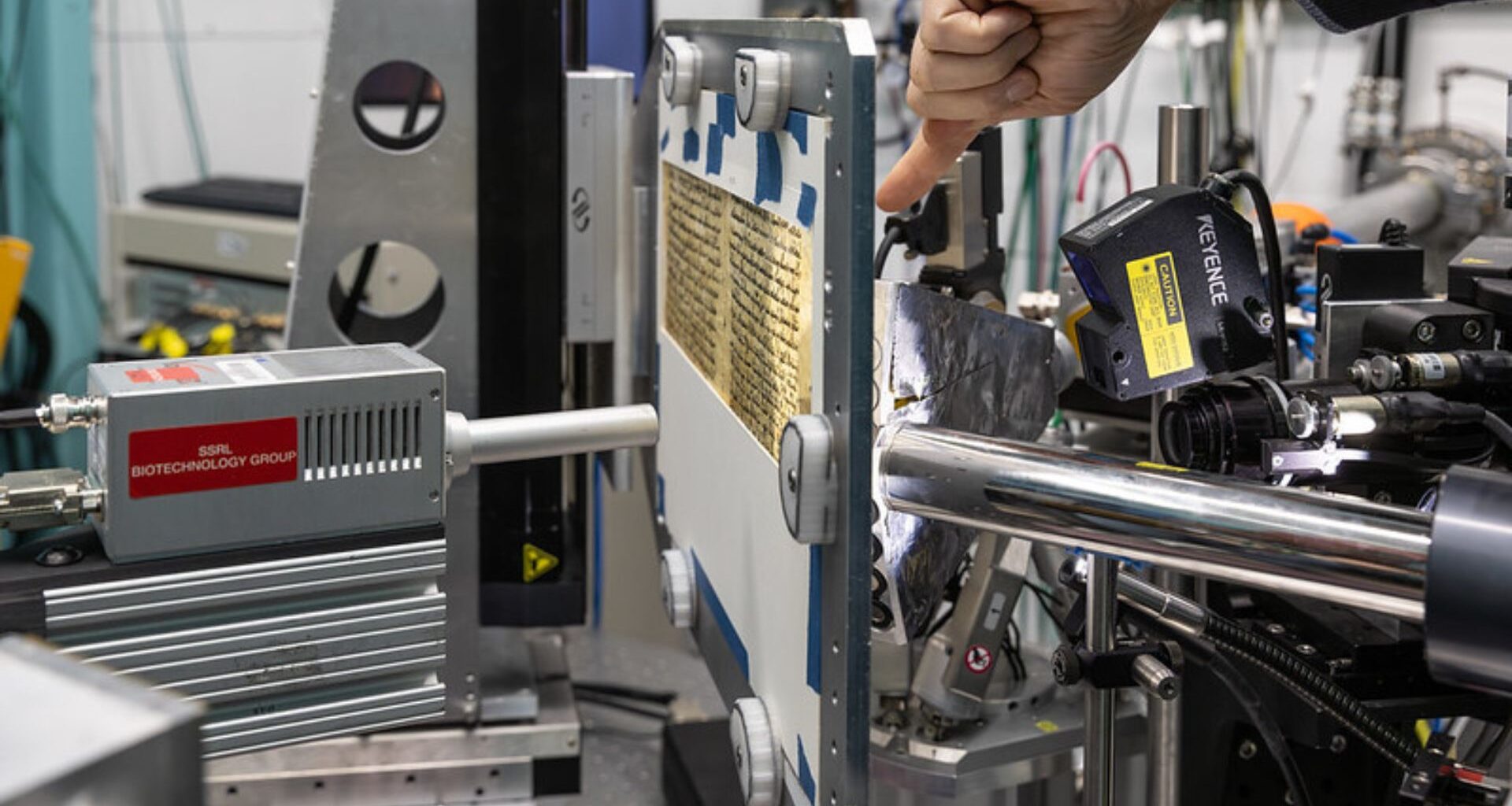
That copy was buried under layers of other text in a medieval codex, making it practically unreadable. Amazingly, a team of scientists claims to have finally unearthed some of this lost text using a type of particle accelerator called a synchrotron. They believe their work could help bring Hipparchus’s methods to light.
The hidden secrets of the Codex Climaci Rescriptus
The scientists first became interested in the codex document in 2021, when they discovered constellation names and measurements related to Hipparchus’ work. These were hidden beneath layers of other text in the Codex Climaci Rescriptus, a palimpsest dating back to the fifth to tenth centuries C.E.
A palimpsest is an ancient text that has been erased and overwritten. This was common practice in ancient times, as parchments were expensive, leading scribes to reuse old manuscripts to archive new information.
The trouble is that, in many cases, the older, overwritten text has more historical value. For centuries, scientists have tried using different chemicals and lighting techniques to bring back these ancient texts.
In a recent interview with Scientific American, Victor Gysembergh, a researcher at the French National Center for Scientific Research (CNRS), noted: “Since this star catalog is so important for understanding the birth of science, it made us want to pull out all the stops.”
The scientists used a particle accelerator, which offers the best technique devised to date for reading erased ancient texts. “What we’ve been seeing is amazing in comparison to previous imaging,” Gysembergh added.
Particle accelerator uncovers ancient manuscript
The particle accelerator the team used is called the synchotron. It is located at the SLAC National Accelerator Laboratory in Menlo Park, California.
The synchotron works by accelerating charged particles to nearly the speed of light. These speed around a curved track, constantly changing direction. As they do so, they emit bright beams of X-ray light that are capable of creating an extremely detailed X-ray image of an object.
The team used this technique to shed light on the Codex Climaci Rescriptus. The accelerator’s X-ray beams interacted differently with inks used in different eras—either scattering, diffracting, or being absorbed.
The researchers focused on the ink used to transcribe Hipparchus’s catalog, which was a few hundred years older than the ink above. Although erased, a calcium-rich residue allowed them to map out the text using the accelerator.
The text will now go through a careful analysis process. However, the scientists said they have already been able to decode text from their raw data. Once the analysis is complete, they expect the Codex Climaci Rescriptus to have provided the most complete historical sample of Hipparchus’s observations.