
From sleeping on chairs to parking fines, patients say everyday barriers are pushing the NHS to breaking point
PATIENTS across West Wales are describing a health service under such strain that some say they now expect to be penalised simply for trying to access care.
At Glangwili Hospital, stories of patients sleeping on chairs for days due to a lack of beds have been accompanied by growing frustration over issues that begin long before anyone reaches a ward — including parking, access, and the sheer difficulty of getting through the hospital doors.
One disabled patient said they had resigned themselves to receiving a £25 parking fine in order to attend hospital appointments.
“I now accept I will be fined,” they said. “Parking is impossible, but it’s that or miss my appointment. I am too disabled to park miles away and the disabled spaces are always full.”
Others have described spending days in A&E or side rooms, unable to lie down, while waiting for a bed to become available. One patient admitted on New Year’s Day with pneumonia said they slept in a chair for four nights without a pillow or blanket before being moved, only to later discover they also had flu and should have been isolated sooner.

Across social media and in correspondence with the Herald, patients and families repeatedly stress that frontline NHS staff are not to blame — instead pointing to a system that they say is buckling under years of structural strain.
Glangwili, the largest hospital managed by Hywel Dda University Health Board, serves Carmarthenshire and is home to the county’s only accident and emergency department following the closure of A&E at Prince Philip Hospital. That closure, along with reductions in services elsewhere, is frequently cited by patients as a turning point.
Several people said the loss of local A&E and cottage hospitals has forced more patients into already stretched units, increasing ambulance reliance and long-distance travel — particularly difficult in a largely rural region.
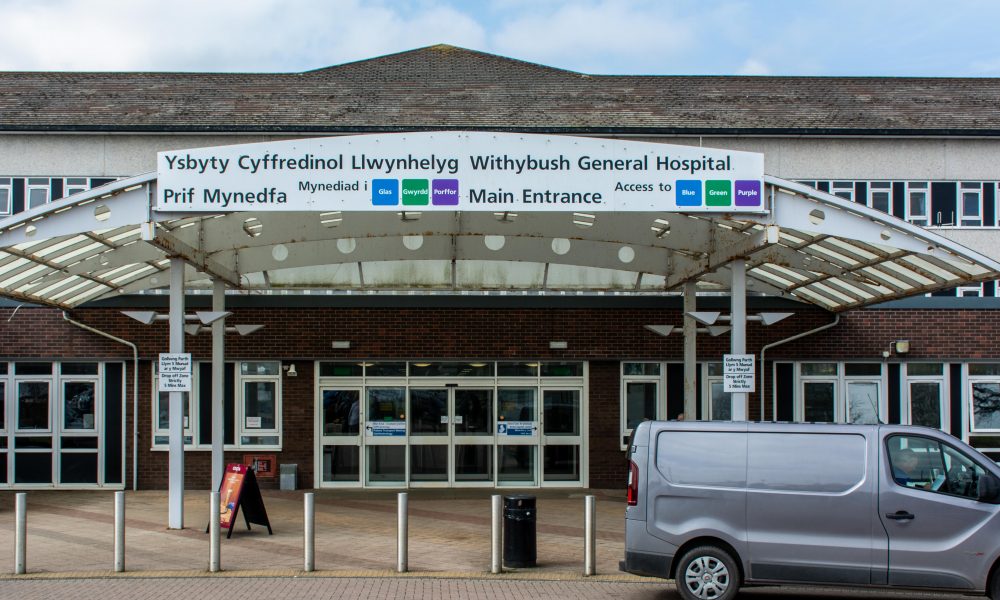
Further west, uncertainty over services at Withybush Hospital continues to fuel anxiety, especially given the scale of reinforced autoclaved aerated concrete (RAAC) identified across the site.

Hywel Dda has acknowledged that almost 90% of Withybush is affected by RAAC, while Glangwili itself is the oldest acute hospital in Wales. The health board says more than £50 million has been spent on the two hospitals in recent years, largely to address critical safety and infrastructure risks rather than expand capacity.
Patients, however, question where that money is felt on the ground.
Some have criticised NHS procurement and management structures, while others point to social care as the missing piece. Repeated comments highlight the lack of care packages and closed care homes, which many believe are leaving medically fit patients unable to be discharged — effectively blocking beds and creating bottlenecks throughout the system.

“There’s nowhere for people to go,” one reader said. “Until social care is sorted, nothing will change.”
Concerns have also been raised about staff morale, with some alleging bullying cultures and burnout contributing to recruitment and retention problems. Again, blame is consistently directed upward rather than at nurses, doctors or porters.
Behind it all looms the long-promised new ‘super hospital’ for Carmarthenshire — first discussed in 2006 and formally launched in 2018. Eight years on, construction has yet to begin, and public confidence in the project is fading.
While Hywel Dda and the Welsh Government insist improvements are under way — including additional funding to expand capacity at Glangwili and improvements to patient experience — many patients say their reality feels far removed from official assurances.
For those attending appointments, sleeping in chairs, or weighing up a parking fine against missing care, the crisis is no longer abstract.
“It’s not politics,” one patient said. “It’s whether you get treated — and how.”