
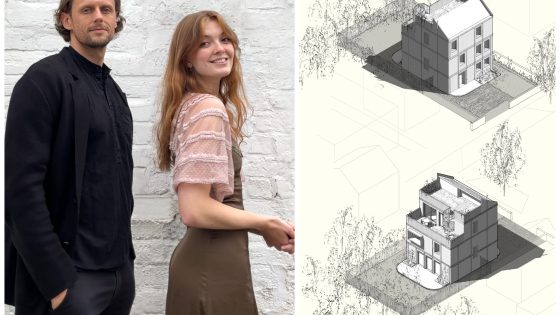
Practice name: Bartlett | Mettham
Based: York, UK
Founded: 2025
Main people: Eleanor Mettham and Dean Bartlett (founding directors)
Regarding the practice name, the decision to use our surnames intentionally follows a long tradition within British architecture. We don’t want to hide behind a clever brand or abstract identity; using our own names provides the clearest sense of authorship.
Putting our names above the door signals personal accountability, care in our craft, and a promise of quality.
Where have you come from?
We met while working at the Manser Practice under the guidance of Guy Barlow. Collaborating on a number of projects there, including the Hull South Blockhouse intervention, and the Bradford Royal Infirmary ‘Home from Home’. The latter is being developed with the Sick Children’s Trust charity, which is now fundraising for the scheme following planning approval.
It was immediately apparent that we worked well together. Sharing an appreciation of scale and proportion, developed by a mutual admiration for works by architects like Guimard, Horta, Aalto and Scarpa.
With each project, the idea of establishing our own practice became more compelling, until it felt inevitable.
How are you marketing yourselves?
The most effective form of marketing is doing great work. We’re dedicated to the creative reinvention of existing buildings. We use thoughtful, context-driven design to revitalise inadequate and underused spaces, whether through refurbishment, extension, or change of use.
We approach creative reinvention with a careful assessment of what already exists, to sensitively select which tangible and intangible qualities to retain. This approach can reduce the environmental impact, lower construction costs, and shorten project delivery, often making our services cost-neutral for the client over the course of a project. More importantly, this approach leads to thoughtful, conscious and historically grounded outcomes that are worthy of their time and place.
What work do you have, and what kind of projects are you looking for?
We have a really nice balance of commercial, residential and healthcare projects. These include: a family home on the site of an old brick and tile works, which starts on site this month; a farm project located on green belt land; and the transformation of an old Barclays bank into a children’s day nursery. We were relieved to learn the clients were only joking about keeping the old safe room to hold naughty children.
We are looking to work with open‑minded and ambitious clients who see the potential in what already exists. People who value thoughtful reinvention and understand that character, history, and material memory are assets that add unquestionable value to a project, regardless of sector or building size.
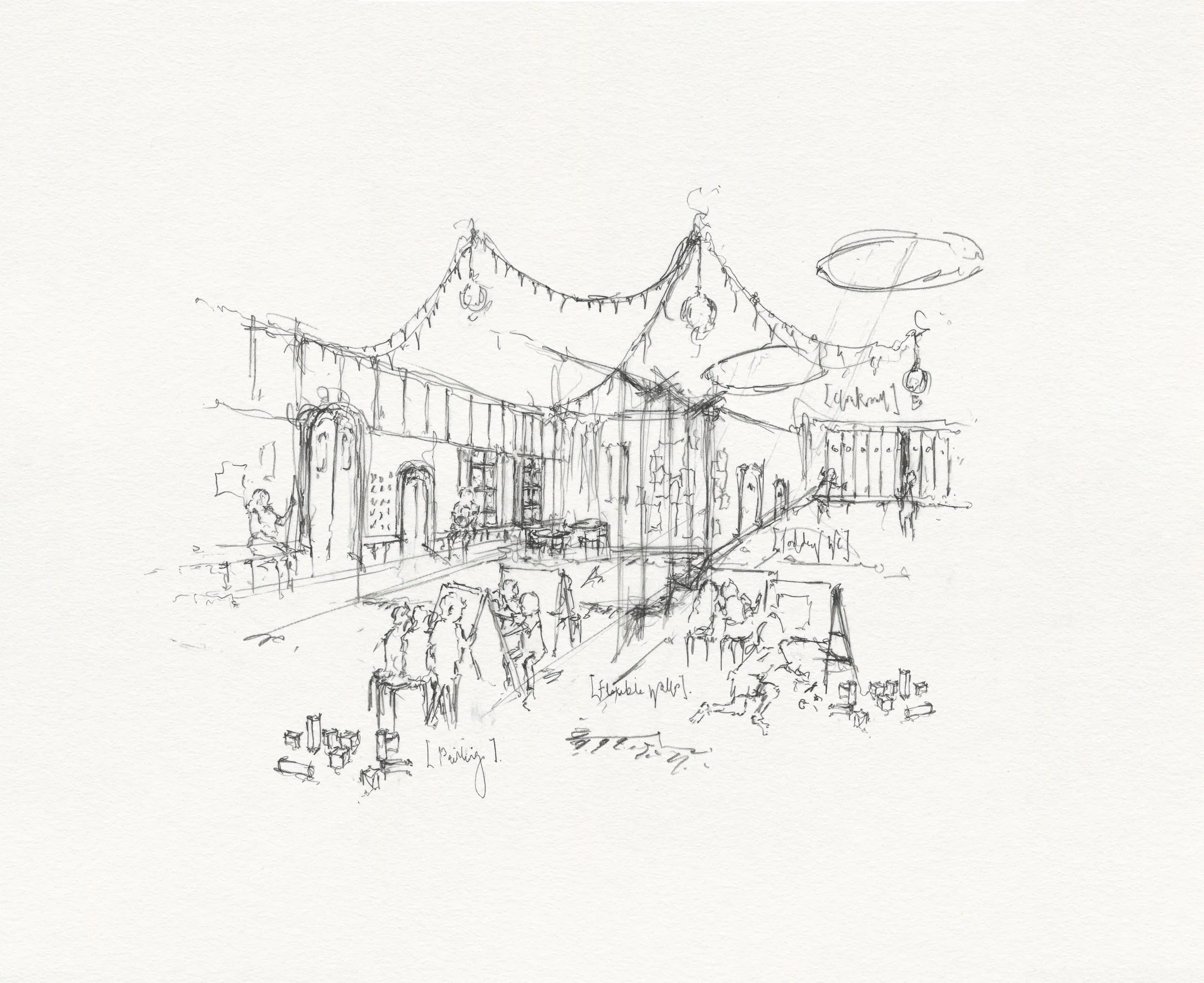
Concept sketch for children’s day nursery
What are the biggest challenges facing yourself as a start-up and the profession generally?
As a new practice, the sheer number of competitors is huge. Redundancies from larger firms, architects seeking more independence, and unqualified individuals all setting up studios have created a crowded landscape. Micro businesses vastly outnumber the amount of opportunities available.
The issue is compounded in York where large institutions like York Minster, The National Railway Museum, and York City Council are hiring London-based architects to deliver statement projects in the city.
‘We missed out on a project to provide full planning drawings for a retired architect whose fee was £150’
This imbalance inevitably pushes fees down and creates a race to the bottom. We recently missed out on a project to provide full planning drawings to reconfigure a six-unit residential building for a retired architect whose fee was £150. While the profession continues to devalue itself, developers and clients will do the same.
Less fee ultimately means less time and care can be spent on a project, which produces many cheap and joyless buildings. This is reducing most new British architecture to a diluted and value‑engineered quasi‑Modernism.
The built environment in the UK needs architects to have a protection of function, so we can improve quality, sustainability and long‑term value. Until that protection exists, our biggest challenge remains navigating low fees while not compromising our ambition to meaningfully reinvent existing buildings.
Which scheme, completed in the last five years, has inspired you most?
It is not a building completed within the last five years (not even close), but David Chipperfield’s approach to the Neues Museum in Berlin changed our views of what architecture could and should be.
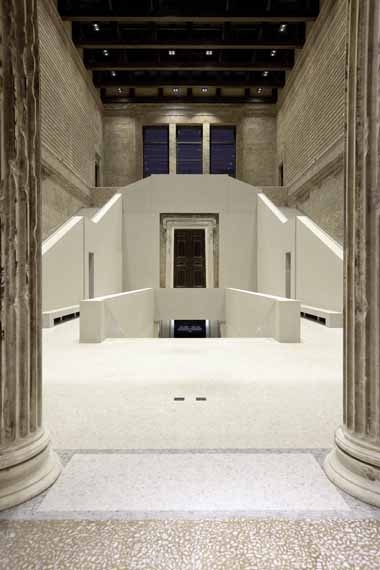
David Chipperfield Architects and Julian Harrap Architects’ Neues Museum, Berlin. Photograph by Ute Zscharnt
The building feels like an archaeological site given a new purpose, without losing any of its history. The new chapter of the building’s story is every bit as interesting as past elements. The modest approach to materiality allows expectations to repeatedly be surpassed, with each space providing a more rewarding experience as the scale changes throughout the museum.
The junctions between old and new, along with the thresholds between each space, provide a precedent for all architects on how to thoughtfully work with existing buildings.
What are your ambitions?
Ultimately, we want to produce architecture that enriches the lives of occupants – to build a collective body of work that allows us to retain and reinvent many underappreciated buildings, while being able to develop and test our own understanding of what good architecture is.
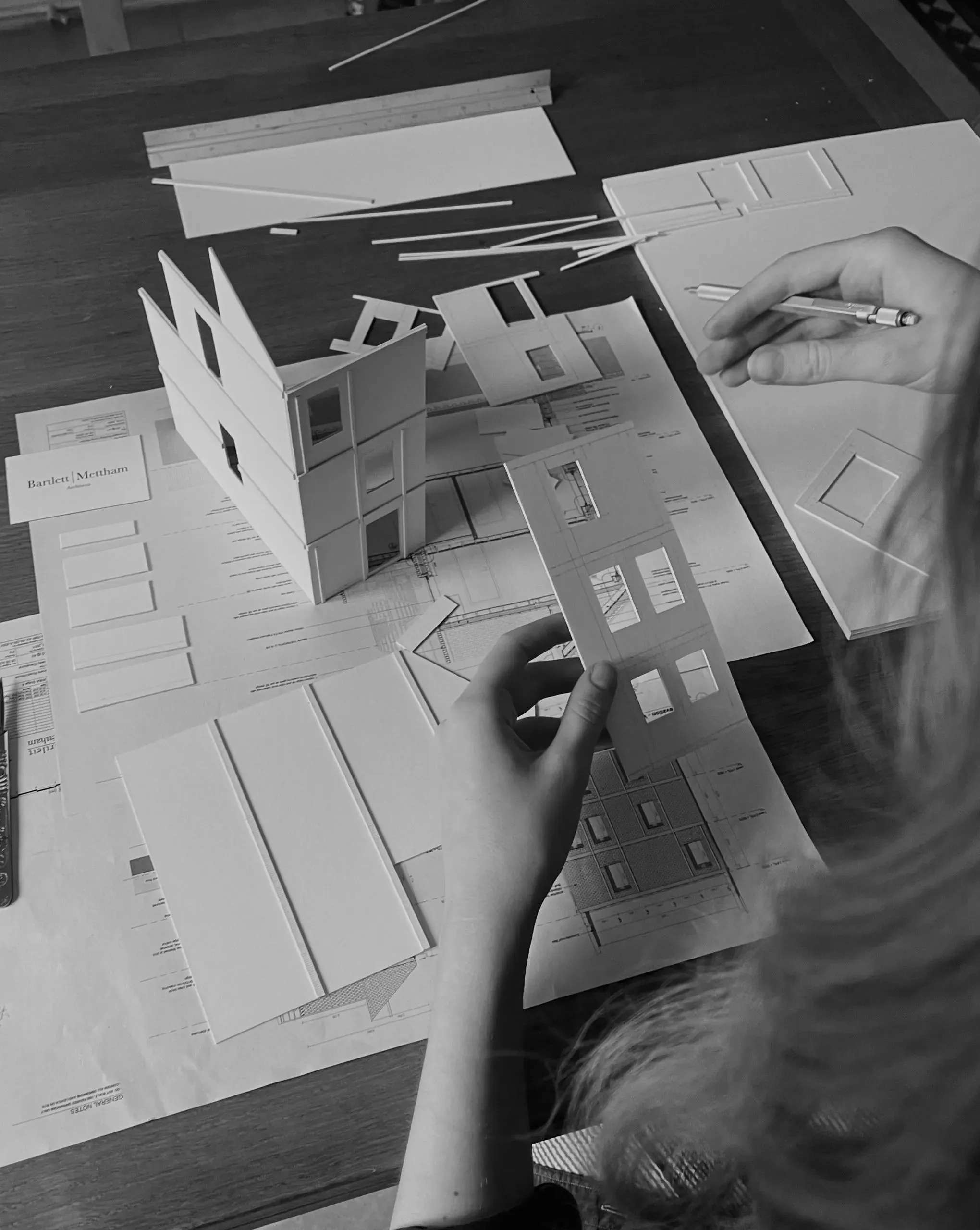
Exploring scale through model-making
Dean will be tutoring at the University of York’s new school of architecture next semester, and we would like to create a lasting bridge between the practice and academia. Supporting students and staying connected to the experimental and speculative side of architectural thinking. We hope teaching can allow us to share the realities of practice, while remaining open to new ideas, research and critical questioning that keeps a studio intellectually relevant.
Are you using any new design techniques, such as AI?
Drawing is used as our primary way of designing. It remains the most effective way for us to express our thinking. It is a critical means of representation able to capture emotion with a vivacity that is difficult to replicate using pixels on a screen. We therefore don’t take our work into Revit until the concept design has been developed.
‘Until AI can experience pleasure and pain, the act of designing will remain in human hands’
To avoid being left behind, we are actively exploring how AI can enhance how we work. Exploring and testing where AI can be incorporated within our existing processes, without reshaping ourselves to fit around it. This has mostly been used to simplify project management, invoicing, and office admin. Until AI can experience pleasure and pain, the act of designing meaningful architecture will remain firmly in human hands.
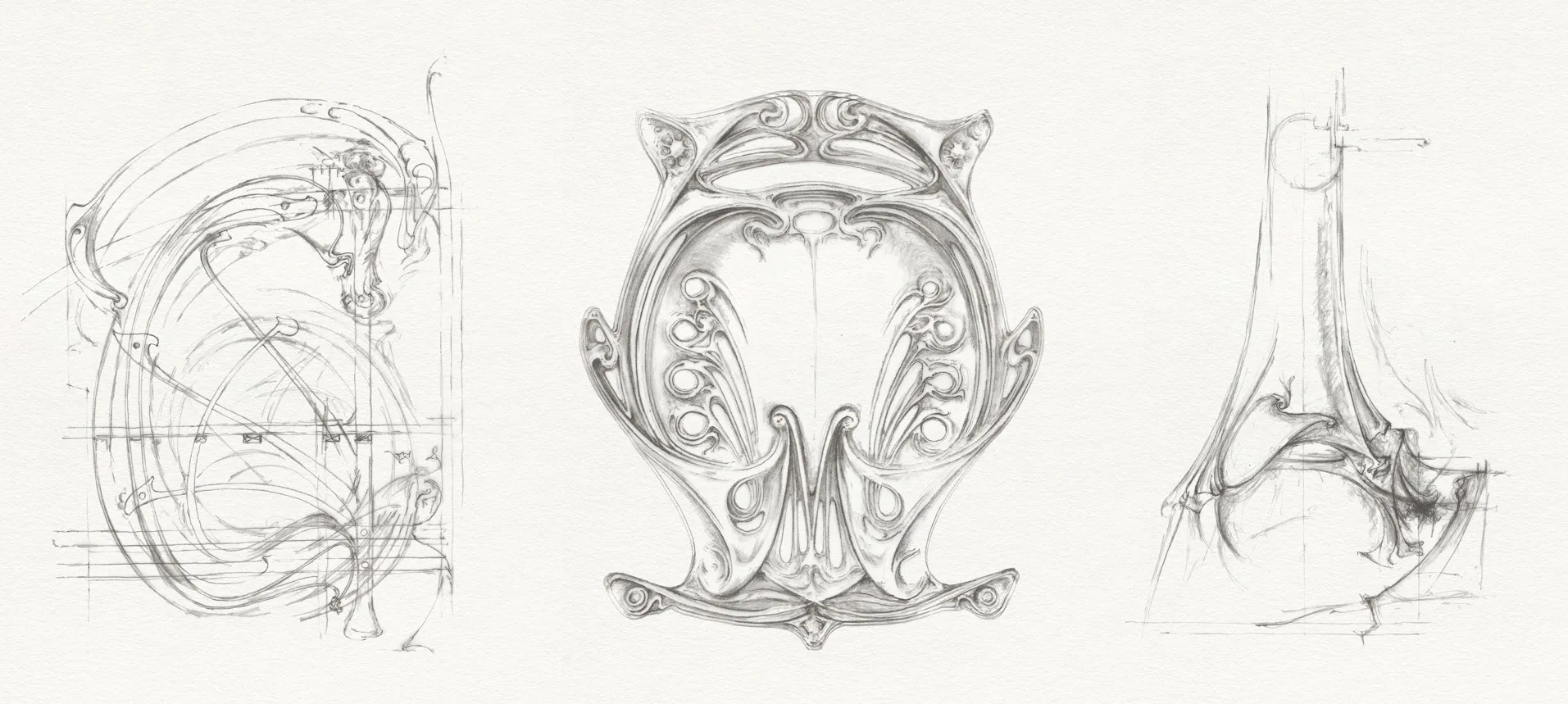
Sketch exploration of works by Hector Guimard from recent research trip
Website : www.bartlettmettham.com
Instagram: @bartlettmettham
Email: studio@bartlettmettham.com
Phone: 01904 231 181