
norman lebrecht
February 06, 2026
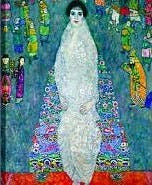
Here she is again, properly captioned this time. This past November, the Portrait of Elisabeth Lederer by Austrian artist Gustav Klimt sold at Sotheby’s in New York for $236.4m(£179m), becoming the second most expensive work of art ever sold at auction. The 1914–1916 masterpiece, which survived the Holocaust, set a new record for 20th-century art, highlighting the continued, immense value of his work.
At the turn of the 20th century, Vienna was a center of political power as well as avant-garde culture, home to some of the world’s greatest composers, architects, writers, and artists. One who helped define this age of glamour, elegance, and decadence was the artist Gustav Klimt.
Klimt would have never have believed that a painting of his could become one of the most valuable art works in the world. As a child, his family had no fewer than five different addresses, each time forced to move in search of cheaper accommodation. He survived his poverty-stricken childhood to become a leading member of the Vienna Secession Movement. His work helped to define Art Nouveau and he was a fashionable portraitist of the Viennese Golden Age.
Klimt’s primary subject was the female body, and his works are marked by a frank eroticism. Klimt had many relationships with women and fathered at least fourteen children although he never actually married his lifelong companion, Emilie Floge.
He is best known for The Kiss and Portrait of Adele Bloch-Bauer I but the portrait that disappeared into Nazi hands during WW2, Portrait of Elisabeth Lederer, was thought to be lost forever until it turned up in the collection of American collector Leonard Lauder after his death and was sold by Sotheby’s along with many other works from his collection.
This portrait is one of only a few of Klimt‘s works to survive World War II intact. It depicts Elisabeth Lederer, an heiress and the daughter of one of Klimt’s patrons, wearing a white robe and standing in front of a blue tapestry covered in Asian motifs.
Born Jewish, daughter of the industrialist August Lederer, Elizabeth married Baron Wolfgang von Bachofen-Echt in 1921, converting to Protestantism, but reverted and became Jewish again after their divorce in 1938. The assumption is that, with war threatening, the Baron didn’t want to be married to a Jew, even a Protestant one. Following the Anschluss of 1938, much of her family fled and the Lederer art collection was looted by the Nazis.
Gustav Klimt died 108 years ago this week on February 6, 1918.