
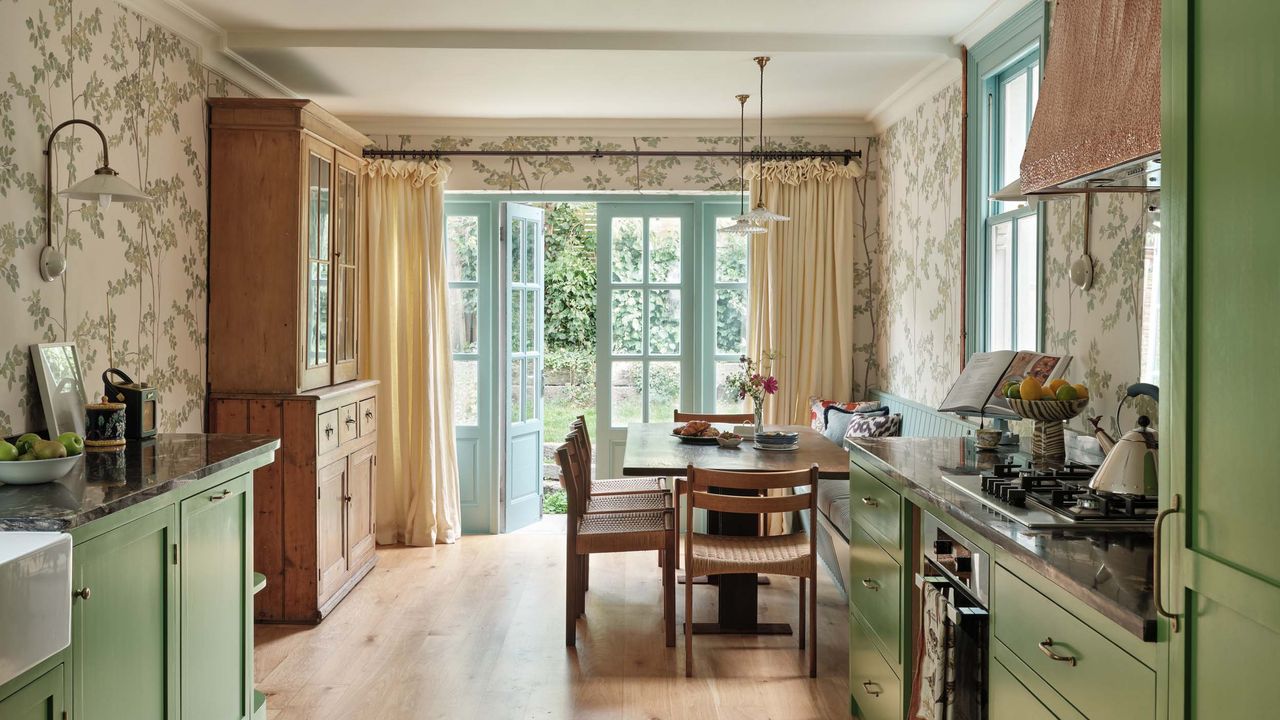
In the introduction to his book on country houses, the renowned architectural historian and writer Clive Aslet searches for a definition for the very topic on which the tome focusses. After suggesting, among other things, that it must be in a rural location, he resolves that it is essentially just ‘an idea’. At House & Garden, our archive backs up this theory. Because while we have, in our nearly 80-year history, featured hundreds of truly beautiful country houses, there are plenty of properties that prove you don’t necessarily have to live in the countryside to experience everything that is appealing about country living.
As Ros Byam Shaw observed, the endurance of country house style may be down to its adaptability. The fact that it is equally possible to deploy it in a house in Barnet or Berkshire makes it endlessly attractive to designers. And several have done just that, creating ‘mini-Arcadias’ as Aslet dubs them, right in the midst or on the edges of the city, taking inspiration from the images of pastoral idyll that these homes conjure up and translating them into a metropolitan context.
The results are warm, cosy, green, urban country homes that evoke so much of what appeals to us about living in rural areas, cleverly balancing the best of city and country living.
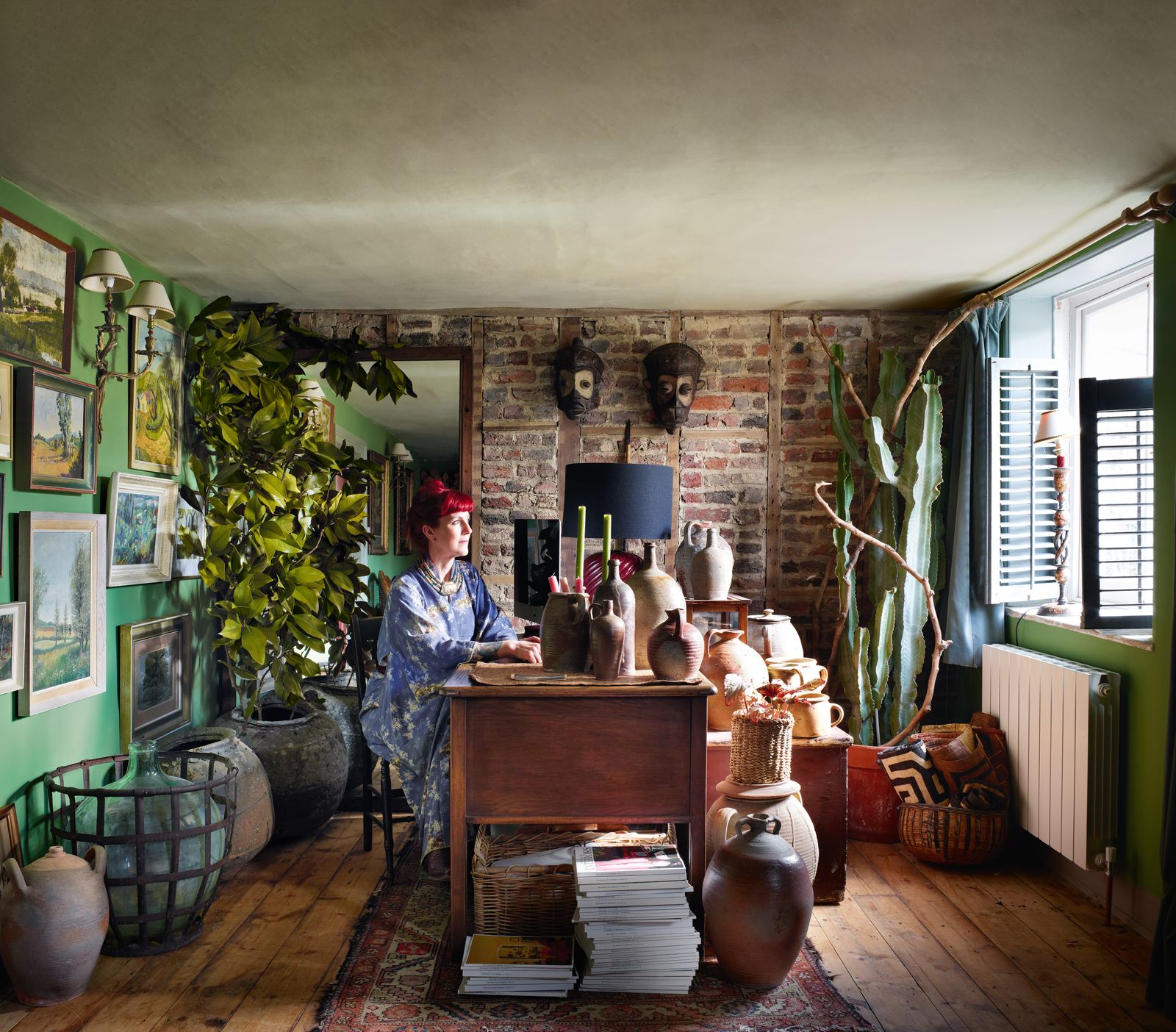
Fiona de Lys has since transformed her cottage once again, but when House & Garden featured it, the living room was a vibrant green evoking the bucolic scene outside her doorstep
Rachael Smith
The living room is colour consultant Fiona de Lys’s favourite room to work on, feeling it to be the space that most ‘defines who we are as a whole’. Having spoken of her own penchant for hues that evoke the earth and trees, it is unsurprising that in her own home in High Barnet, the living room was once painted in ‘Invisible Green’ and ‘Natural Brown’ by Edward Bulmer. The colour scheme evokes the English woodlands for which Fiona feels a deep affinity and was part of her approach to making this 18th century cottage a little ‘country-fied’. She removed the pebble dash that had been installed in the 1970s, restoring the white weatherboard cladding which immediately added a rural touch.