
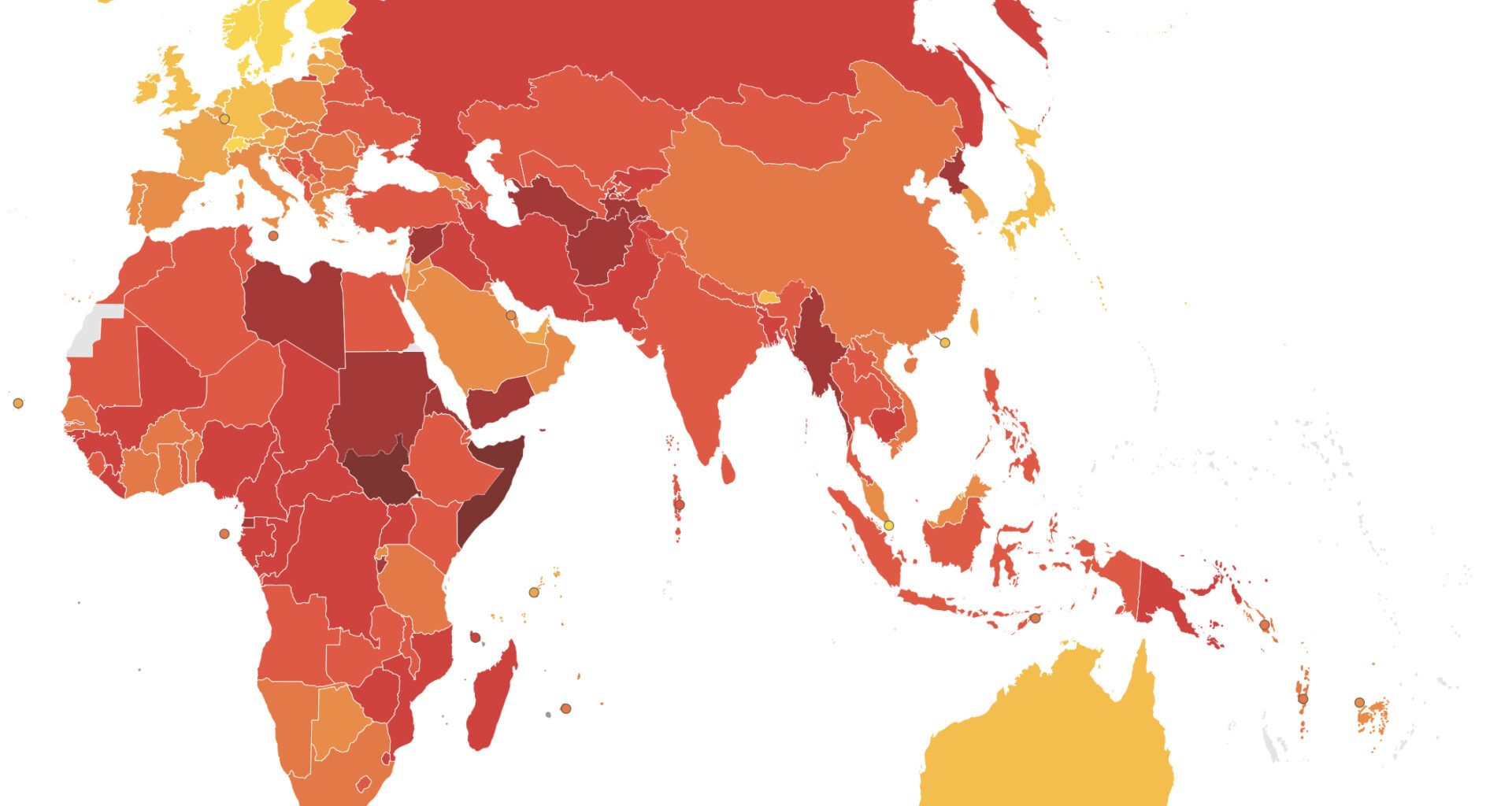
According to Transparency International’s Corruption Perceptions Index 2025, Estonia is one of the least corrupt countries in the world, and less corrupt than old democracies like the United Kingdom or the United States.
According to the Corruption Perceptions Index 2025 – measures the perceived levels of public sector corruption in 182 countries and territories around the world – Estonia is ranked eighth least corrupt countries in the world. Estonia is sharing its spot with Australia, Hong Kong and Ireland.
The index assigns each country a score, with 100 being “very clean” and 0 being “highly corrupt”. Estonia’s score in the 2025 index is 76.
Transparency International doesn’t comment on Estonia’s rather good standing other than mentioning that a “persistent consolidation of anti-corruption efforts has driven progress in countries like Estonia (76), South Korea (63), Bhutan (71) and Seychelles (68).
The least corrupt country in the world is Denmark (89), followed by Finland (88), Singapore (84), New Zealand and Norway (both 81).
 Perceived corruption in the US is worse than in Estonia and many other old democracies. The photo is illustrative. Photo by Sasun Bughdaryan on Unsplash.
A worsening corruption trend in democracies
Lithuania’s score is 65 and Latvia’s 60.
The United Kingdom scored 70 in this year’s index while the United States only 64 – making both of these countries more corrupt than Estonia.
The 2025 Corruption Perceptions Index measures perceived levels of public-sector corruption in 182 countries and territories, drawing on 13 independent data sources. This year, the global CPI average has dropped for the first time in more than a decade to just 42 out of 100.
The vast majority of countries are failing to keep corruption under control: 122 out of 182 score under 50 in the index. At the same time, the number of countries scoring above 80 has shrunk from 12 a decade ago to just five this year.
“In particular, there is a worrying trend of democracies seeing worsening perceived corruption – from the United States (64), Canada (75) and New Zealand (81), to various parts of Europe, like the United Kingdom (70), France (66) and Sweden (80),” Transparency International says.
The organisation is calling on governments and leaders across the world to take action to strengthen justice systems, ensure independent oversight of decision making and public spending, guarantee transparency about how political parties and election campaigns are funded, and protect civic space, democracy and media freedom.
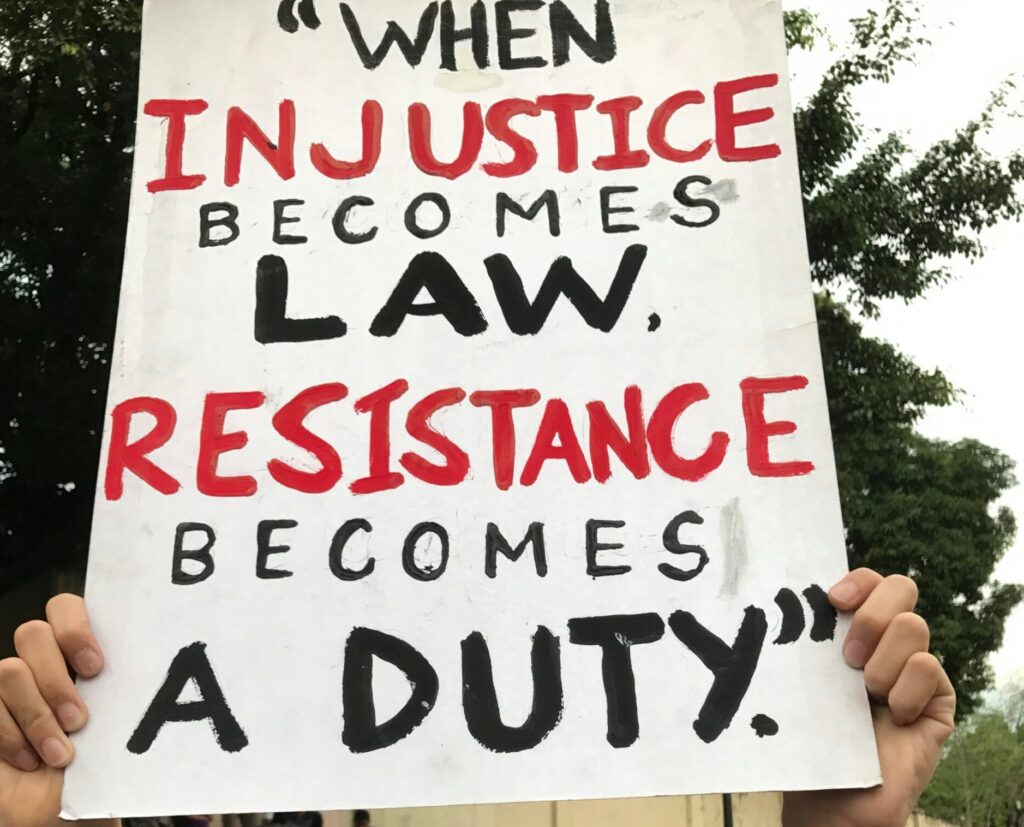 Governments who fail to address their citizens’ concerns may find themselves toppled by popular protest movements. Photo by Vic Alcuaz on Unsplash.
Do-nothing governments may get toppled by the people
“At the same time, they should collaborate to tackle shared challenges – for example, closing the cross-border channels that enable transnational corruption, such as laundering and hiding stolen funds.”
“As we saw this year, governments who fail to address their citizens’ concerns may find themselves toppled by popular protest movements. What’s more, businesses may look elsewhere to invest, costing countries economic opportunities and jobs. By choosing to act for the public interest, not private gain, governments and leaders can live up to their responsibilities to shape and nurture safe, fair and healthy societies where everyone can thrive.”
Since its inception in 1995, the Corruption Perceptions Index has become one of the leading global indicators of public sector corruption. The index scores 182 countries and territories around the world based on perceptions of public sector corruption, using data from 13 external sources, including the World Bank, the World Economic Forum, private risk and consulting companies, think tanks and others.
Transparency International is a German non-governmental organisation founded in 1993. Based in Berlin, its nonprofit purpose is to take action to combat global corruption with civil societal anti-corruption measures and to prevent criminal activities arising from corruption.