
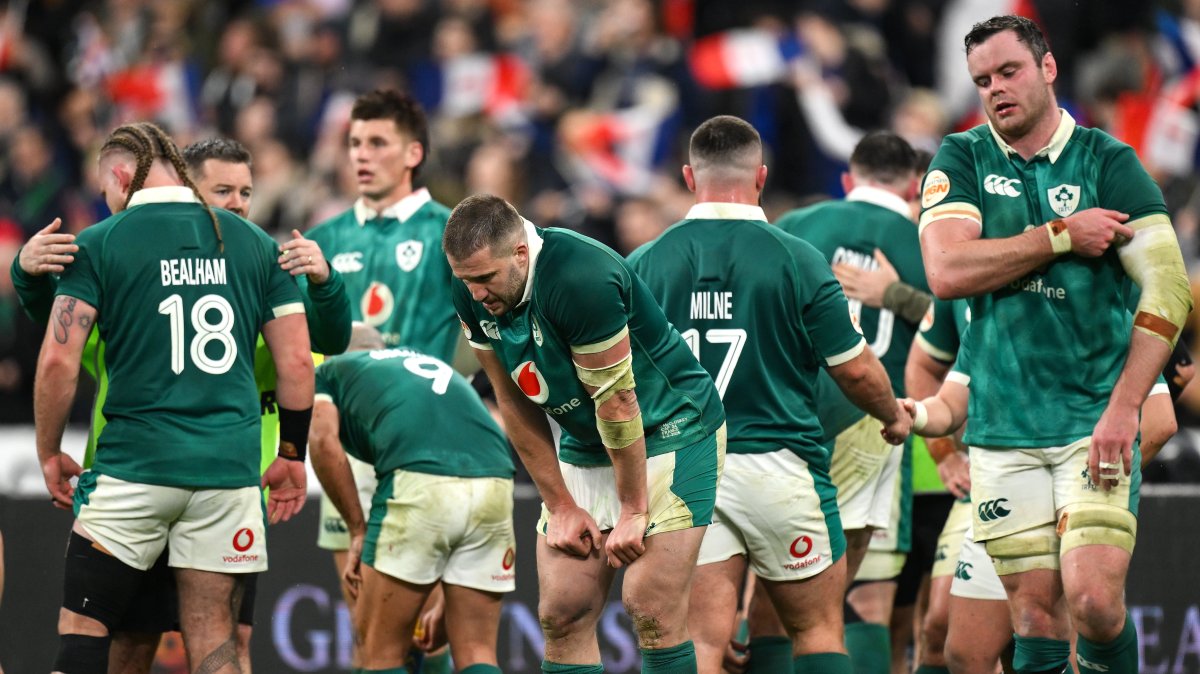
Ireland slipped unceremoniously to fifth place in the World Rugby rankings this week, the first time they have been out of the top four since early 2022. Whatever you say about these rankings and their arcane workings, this felt significant, a formal confirmation of what has been obvious for more than a year: Andy Farrell’s team are in decline.
Farrell’s scrum coach, John Fogarty, took issue with the “D” word, describing its use in this context as “a bit disingenuous”. What Fogarty probably means is that “decline” implies a team growing old together, whereas in reality Farrell has already begun a process of regeneration. Witness his team selection for Saturday’s Test against Italy in Dublin, which has nine players in the starting XV with 25 caps or fewer, and three in single figures.
At the same time, is it realistic to suggest that Ireland still belong in the same bracket as South Africa (who humiliated them in Dublin last November), New Zealand (three straight defeats), France (two consecutive wallopings now) or even England, who lie in wait at Twickenham next week?
Over the past decade, Ireland’s emergence as a major force ranks alongside South Africa’s resurgence as the two biggest tectonic shifts in rugby’s landscape, a fact masked only by Ireland’s failure to deliver at World Cups. During that time, an island with a relatively tiny playing population enjoyed two extended spells at the top of the world rankings. This is extraordinary.
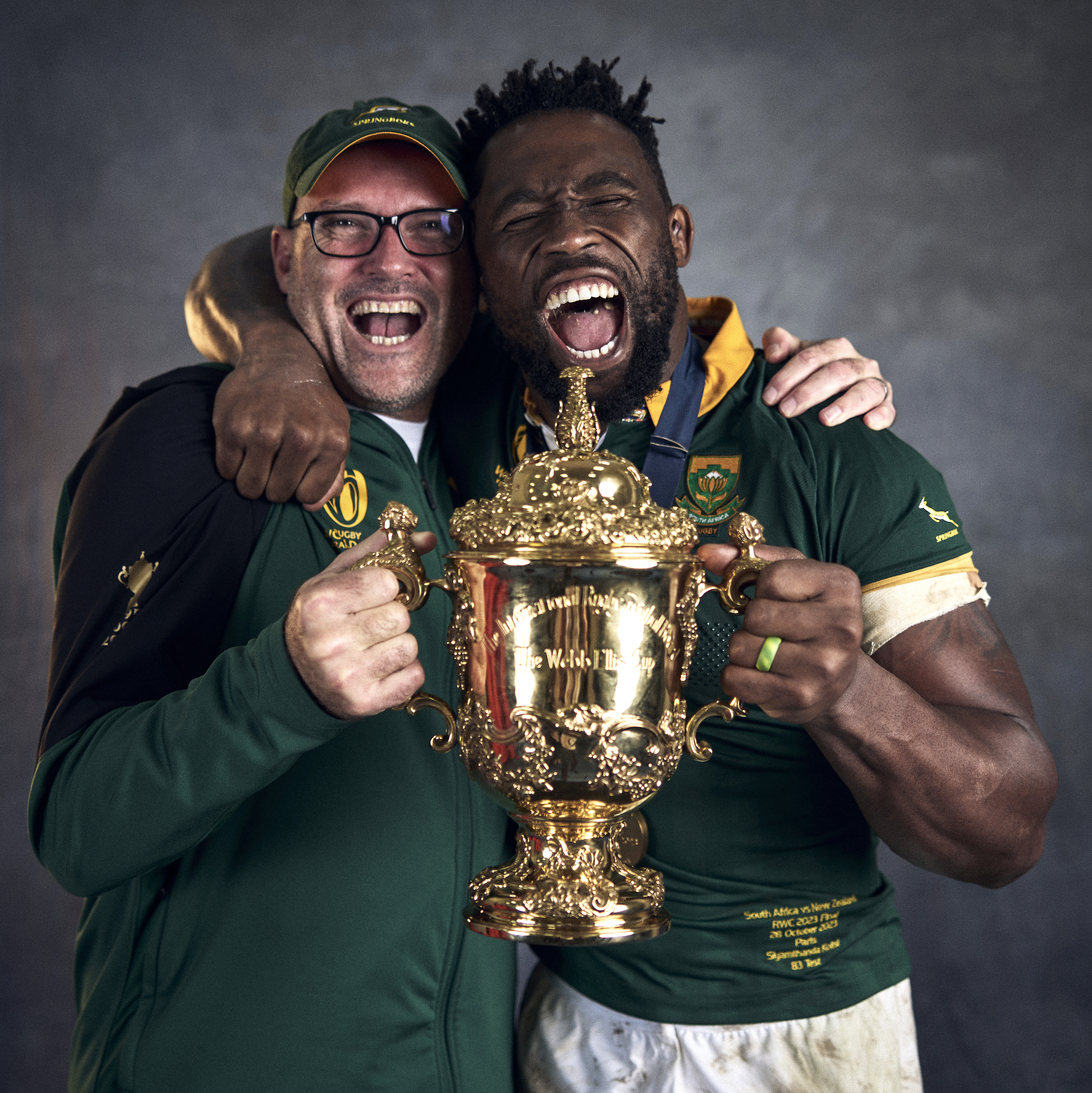
Nienaber was South Africa’s head coach and Erasmus’ right-hand man at the 2023 World Cup, the stage on which Ireland have wilted
ADAM PRETTY – WORLD RUGBY/WORLD RUGBY VIA GETTY IMAGES
When the magic fades, it is inevitable that there is some navel-gazing within the Irish rugby community, some knee-jerk reactions and even the odd conspiracy theory. If you’re in Dublin this weekend, at some stage you’ll probably hear, from the side of someone’s mouth, that it’s all Rassie Erasmus’s fault. Sure, wasn’t it Rassie who planted his old mucker Jacques Nienaber at Leinster to spy and destabilise and then head back to the Springboks in time to prepare for next year’s World Cup?
It’s fair to say that Nienaber has reshaped the way that Leinster play, especially the way they defend, and that this has disrupted some of the club-country cohesion that inspired Ireland’s most productive two-year phase between 2021-23. But to suggest that Erasmus sent him on a secret mission?
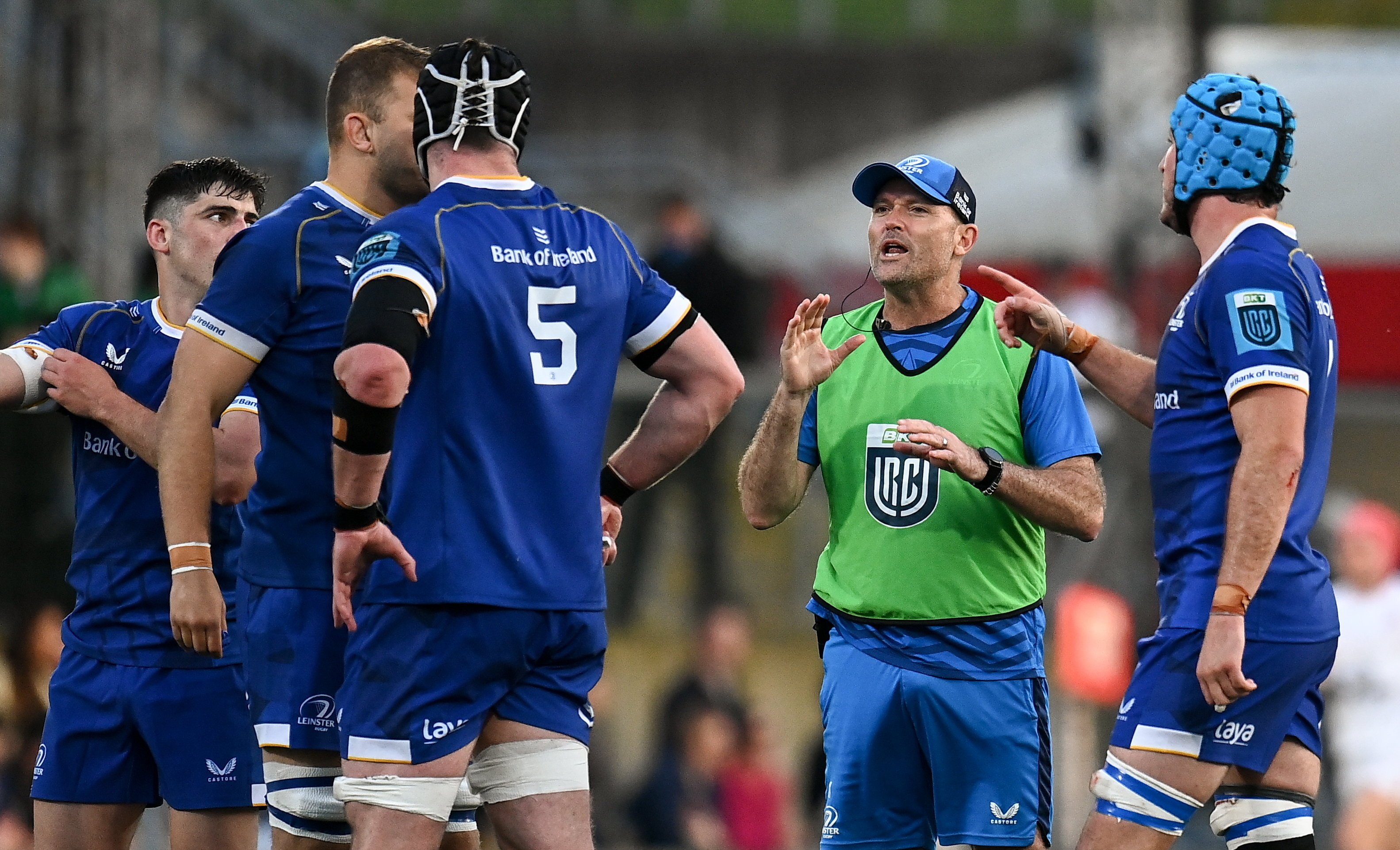
Nienaber joined Leinster in 2023, and is set to stay at the province until at least the end of next season
HARRY MURPHY/SPORTSFILE
Springbok sabotage theories will only get you so far. The reasons for Ireland’s decline — and there is no other word — are complex, layered. They also present Farrell with the greatest challenge of his six-year career as an international head coach.
One of his main problems is that so many competitors continue to improve and develop. There has always been a realisation in Ireland that if the countries with the biggest rugby-playing populations — France, England and South Africa — ever got their development systems in order, then the rest of us were in trouble.
The results of recent junior World Cups suggest that this is coming to pass. Last weekend’s results were especially ominous for Ireland. The three men’s representative teams — senior, A team and under-20 — met respectively their French, English and French counterparts and the aggregate points total was 138-49 in favour of the opponents.
Justifiable questions are now being asked about the effectiveness of Ireland’s production line, especially given that the opportunity to recruit “project” players as valuable as Bundee Aki, Jamison Gibson-Park and James Lowe has effectively been removed since the qualification period was extended from three to five years.
For so long, the Irish system was held up as an example of best practice. The IRFU was applauded for the way that it managed its best players and thus extended the careers of Johnny Sexton, Cian Healy, Peter O’Mahony et al into their late 30s. This reduces opportunities for young talent coming through, however.
It is understandable that Farrell encouraged Sexton and his pals to keep going until 2023, which will go down as Ireland’s best chance of winning the trophy. But the retirement of so many influential characters creates a leadership vacuum. It is telling that Farrell invited retirees like Healy and Keith Earls into camp this week, so that younger players could pick their brains.
Sexton has already been co-opted into the coaching group, as if to mentor the three players vying to be his successor — Sam Prendergast, Jack Crowley and Harry Byrne. The debate surrounding this trio has seemed divisive. More damaging for Farrell is that his team has looked technically and strategically off the pace.
When Ireland have been at their best, they have been trend-setters, forcing rivals to catch up. Recall how Joe Schmidt’s side wore opponents down with the speed and accuracy of their high-phase recycling, or how the 2022-23 team kept defences guessing with their multi-option short-passing game.
Now, how the game is being refereed has changed. Kick-chase and aerial skills are paramount. Multi-phase attack is physically draining. Yet Ireland seem slow to catch on. Yes, the plan in Paris was to try to beat France in the air, but their execution was poor. Both wings — Tommy O’Brien and Jacob Stockdale — were summarily dropped.
It is worth bearing in mind that injury has robbed Farrell of important players such as Hugo Keenan, Mack Hansen, Andrew Porter and Ryan Baird. There also appears to be a general shortage in confidence, which doesn’t quite tally with 18 of the squad having been on tour with the British & Irish Lions last summer.
Traditionally we think of Lions tours as a growth opportunity for players, who can thrive when surrounded by so many high achievers. However, as Owen Slot argued recently, it was hard for Irish players to benefit from cross-pollination of ideas and skills when so many of their team-mates, and coaches, were already familiar. If anything, English players derived the greatest benefit from the sharing of information.
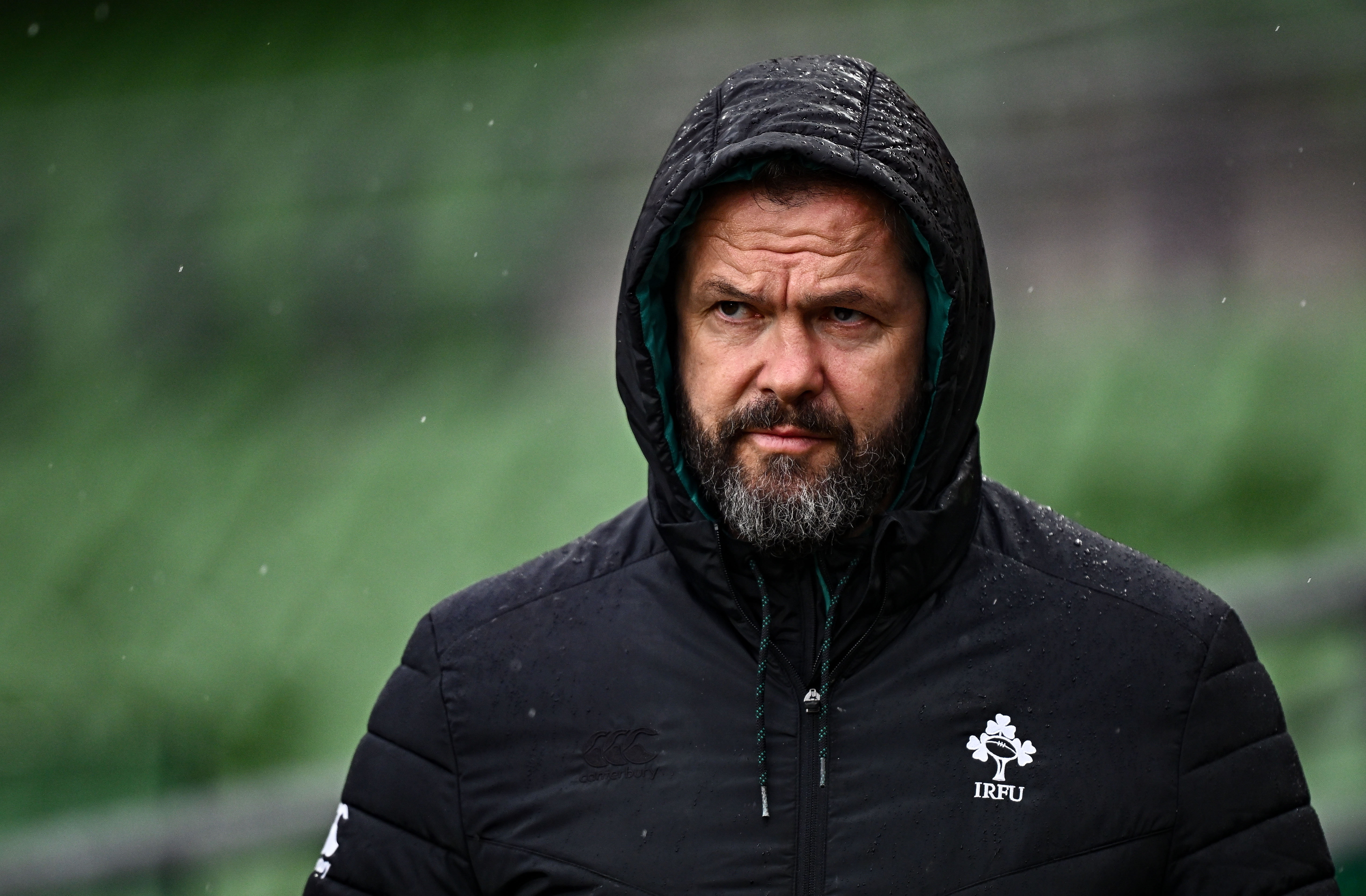
Farrell was downcast after his side’s loss to France
SEB DALY/SPORTSFILE
Farrell may believe that Ireland can recoup a Lions dividend next year, when Australia’s hotels, stadia and training facilities will all feel so familiar. Ireland also play two games in Australia this July, as part of the Nations Championship.
At least Farrell can’t be accused of peaking between World Cups. His priority now — judging by selection trends — is to find and infuse some X-factor. Power athletes Edwin Edogbo and Cormac Izuchukwu have been included for Italy, while Ulster’s explosive 21-year-old loose forward Bryn Ward may feature later in the championship.
It’s rare that you see Farrell looking as annoyed as he was in Paris last week, when he publicly accused his players of “lacking intent”. We can expect a response from the players against Italy, and they will surely enjoy the idea of travelling to Twickenham as underdogs next weekend.
You can understand why Farrell would abhor a word like “decline”, also how he would avoid one such as “transition”, as it appears to leave room for excuses. But Ireland are in transition, as well as being in a rush to complete that phase in time for the World Cup. Farrell’s words on Thursday made this much clear.
“My attention is always on the here and now because it matters massively but where the squad is at is always completely different for every generation,” Farrell said. “We just happen to have lost a lot of experience and people are coming in. We‘ve a lot of new caps, certainly a lot of players under ten caps, and they have to go through this.
“They have to go through Paris on a Thursday night for us to grow and learn — along with the players that are injured, but also the potential of the players that we’re trying to give this experience to. I’m super excited about what’s down the track and that track is not too far away. You always have to go through a little bit of pain to get to that point. We’ve always gone through that with every generation.”
Ireland v Italy
Guinness Six Nations
Aviva Stadium, Dublin
Saturday, 2.10pm
TV ITV1