
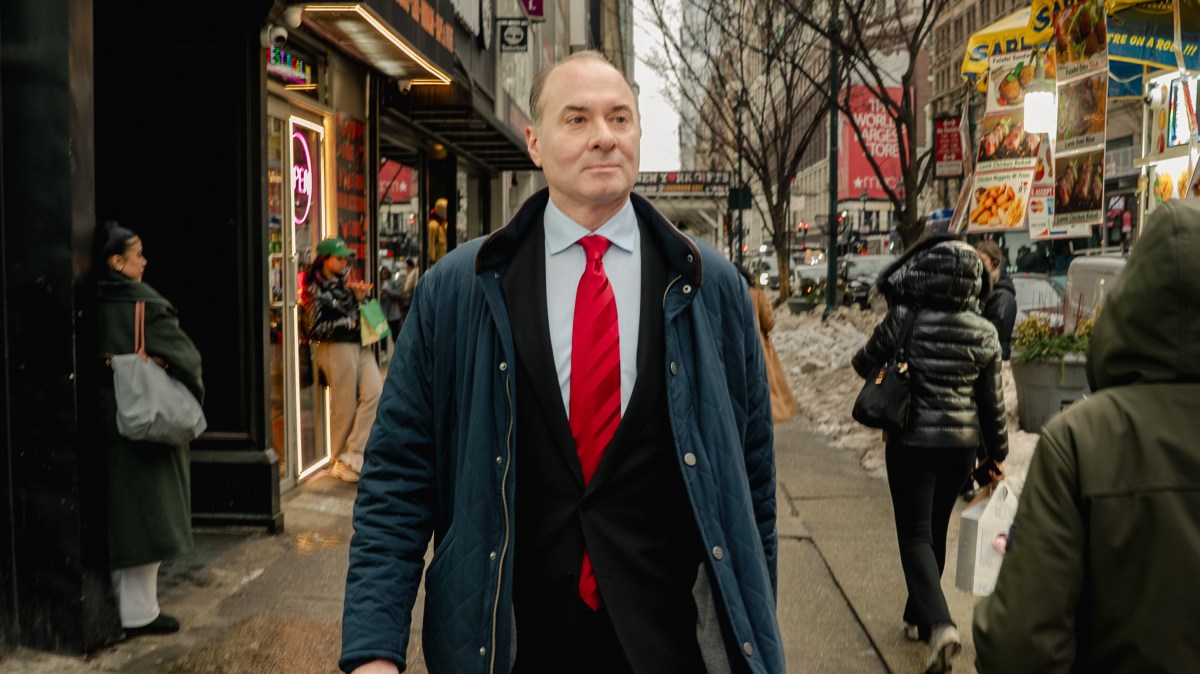
“Yes, yes, Harvey, I know,” said Juda Engelmayer as he opened the door of his office, wireless headphones in, phone in hand, rolling his eyes theatrically. “Yes, Harvey, I’ll try.”
From the 72nd floor of the Empire State Building, Engelmayer has created a niche: the publicist who takes on clients so nuclear that no one else will touch them.
The “Harvey” on the phone was the disgraced movie producer Harvey Weinstein, who calls him most days from prison. Taking the job was a “calculated” decision, said Engelmayer. “I thought it was a good way that I could propel myself and make myself a better-known PR person.”
It worked. In the years since, 56-year-old Engelmayer has headed crisis communications for Sean “Diddy” Combs (50 months in prison for two prostitution-related charges); the “fake heiress” Anna Sorokin (aka Anna Delvey, four years for eight theft-related charges, then 18 months fighting deportation) and the leader of the “orgasm cult”, Nicole Daedone (awaiting sentencing for a forced labour conspiracy).
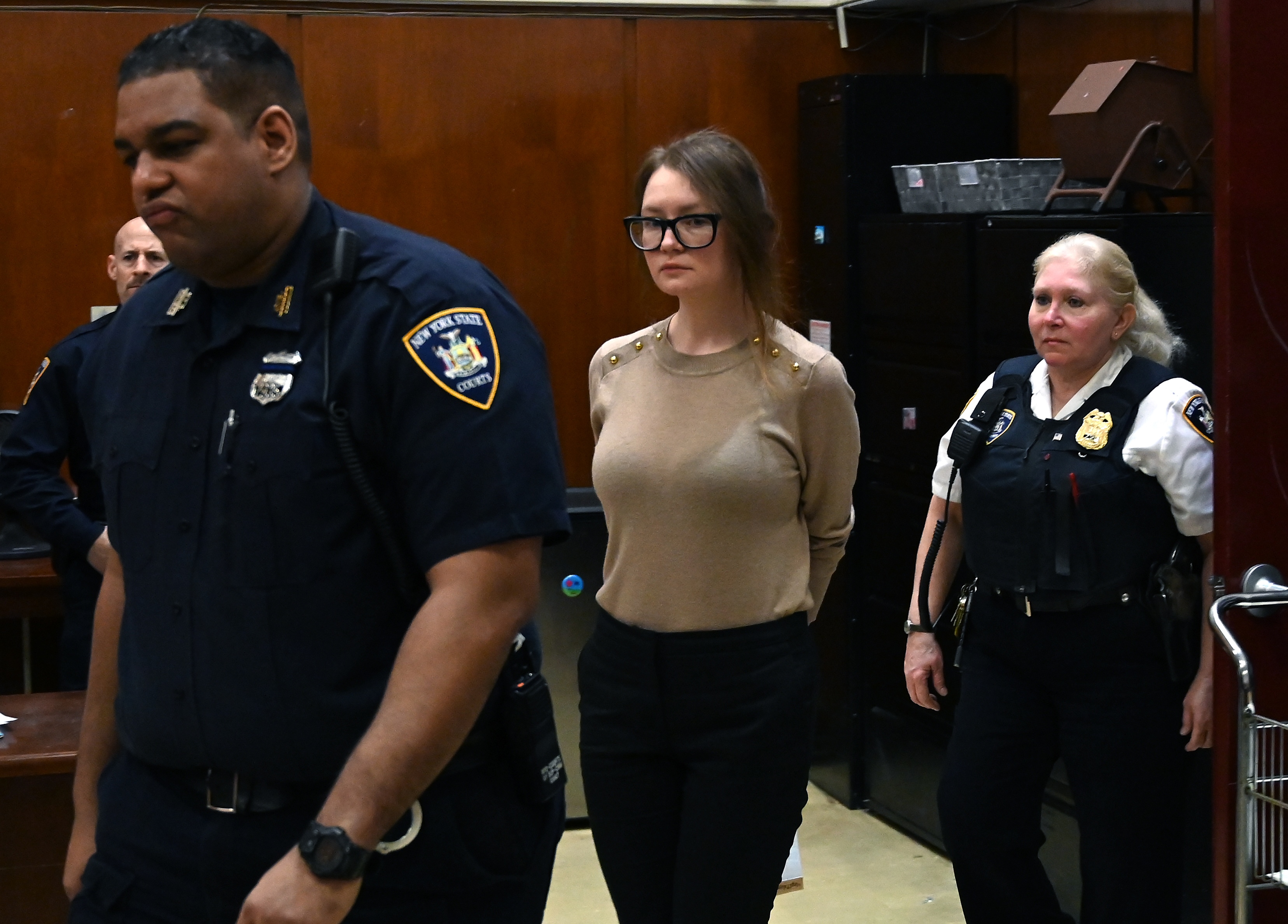
Anna Delvey posed as a wealthy heiress to infiltrate New York’s high society
TIMOTHY A CLARY/AFP/GETTY IMAGES
Engelmayer is currently attending a federal court in Manhattan where the Alexander brothers — Tal, Oren and Alon — are being tried on sex trafficking charges. While he has been taking notes to fire out press releases each night, the alleged victims have testified that they were drugged and raped, sometimes by more than one of the brothers — estate agents and socialites from Florida — at once. The brothers claim all the incidents were consensual.
“There are people who think I’m good at what I do and there are people who think that I’m a horrible human being,” Engelmayer said. “But if you’re looking for someone who’s unabashed and willing to go [in to] bat for you on an unpopular issue, I’m going to do it.”
These are the dark arts of PR — and Engelmayer is their overlord.
How Weinstein hired me
In November 2017, a month after the first New York Times and New Yorker investigations into Weinstein were published, Engelmayer received a call from the media mogul’s lawyer, Benjamin Brafman. Engelmayer’s former boss, Ronn Torossian, had turned down the job and recommended him instead. “I had to sit down with my [adult] children and my wife [now ex] and ask them if they would mind if I did this. I said, ‘I know it could negatively affect us, I can get cancelled and doxed [posting online private information about him]. But it’s gonna be monumental.’” Two months later, Engelmayer had signed a contract.
The issue was “tense” — few others wanted to go near it. “But when you work for a guy like that, in a case like that, the media calls you right away and I don’t have to go begging,” he said. “It was really a way of getting my name out there. It helped propel me into a world that I wasn’t in beforehand.”
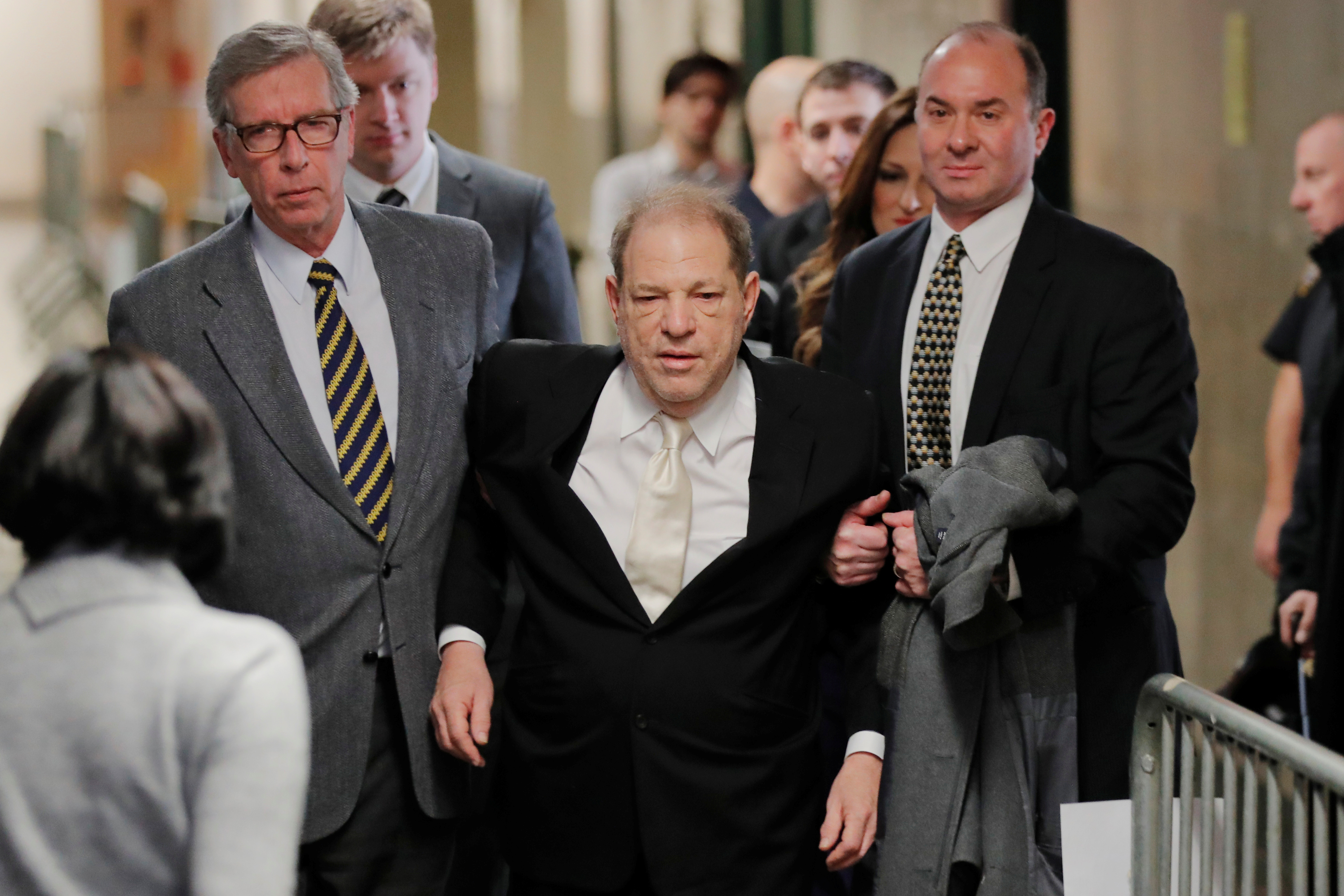
Weinstein with Engelmayer, right, outside court in 2020
LUCAS JACKSON/REUTERS
Weinstein was found guilty in a Los Angeles court of rape and two sexual assaults involving an actress and sentenced to 16 years in prison in 2022; in a New York retrial last year, he was found guilty on one charge of sexual assault but acquitted on another a year after his first conviction was overturned.
Today Engelmayer acknowledges that Weinstein is a “bully” who “abused his power, who abused position, who made people feel bad”. However, he maintains that “none” of the incidents he was accused of were non-consensual. “Would I say that any of these people [clients] are totally innocent? It’s the wrong word to use. Are they responsible for their actions? Yes. Did they do bad things? Yes. Did they make really poor choices? Absolutely. Are they people I want to trust my daughter with? No. But did what they do fit the charge? No.”
Does he like Weinstein? “I do!” said Engelmayer. The two talk most days. Weinstein, he said, also spoke regularly to “his sons, his daughters” (he has three children with his first wife and two with his second). According to Engelmayer, people still ask Weinstein to review their scripts. “But producing is not a big thing for him [any more],” he said. “I think he wants to write a memoir.”
So how do you solve a PR problem like Weinstein? Well, he’s certainly going to try. Weinstein has limited access to the internet each day and on a daily basis he wants Engelmayer to correct stories which he believes are inaccurate — specifically the most recent Epstein files, in which an FBI document contained a claim that Epstein “told [an accuser] to give Weinstein a massage”. It is what Weinstein was calling about the day we met. “He’s like: ‘Get to those reporters and tell them I wasn’t there, I didn’t do that, I don’t want to be associated with that,’” said Engelmayer.
More broadly, Weinstein is on a mission for his “legacy to be protected”. He recently conducted his first sit-down interview from his jail cell, which will be broadcast before the Oscars ceremony on March 15. “He wants people to acknowledge that he had a positive impact on Hollywood,” Engelmayer said. “He doesn’t believe he was a criminal.”
• Hadley Freeman on Weinstein: Oh I see — he’s just a playboy again
Engelmayer has about 14 clients. Many are in prison awaiting trial; some have been sentenced; others are in “potential legal trouble”. “They are not all major-crazy people,” he said. “Some are just low-key crazy.” He is driven, he continued, by a “passion for idealism”. “I started realising that legal cases are no longer just tried in the courtroom, they’re tried in the court of public opinion, too.” In the US, jurors are instructed not to read the news each night but there are no reporting restrictions during criminal proceedings. “If you’re entitled to a defence, you should also be entitled to a public defence, too.” However, he refuses to take on any case related to minors because he “can’t defend the charges being put in court”.
Would he represent Andrew Mountbatten-Windsor? “I’m not interested. Don’t want to get involved.” The former prince has denied wrongdoing.
‘Money and power let you get away with things’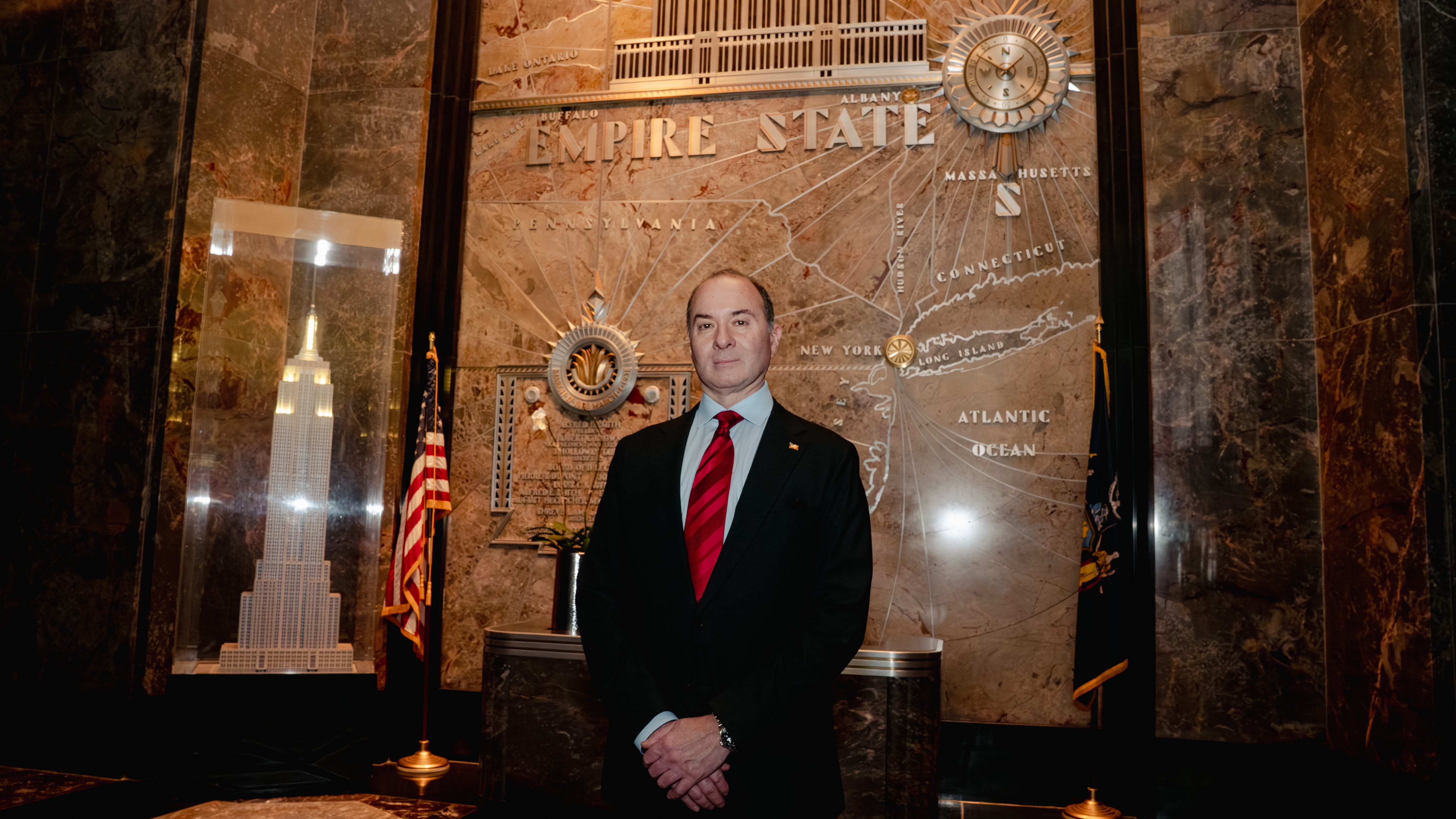
In the lobby of the Empire State Building
SHURAN HUANG FOR THE SUNDAY TIMES
Engelmayer was born on the Lower East Side of Manahattan, his mother a secretary, his father a journalist and later a rabbi. “I was cynical from day one,” said Engelmayer. It was a lesson he learnt after the children in his school tried to alert their parents that the principal was “fondling” students. The allegations never went anywhere.
Later, Engelmayer was expelled for “mouthing off all the time”. However, the board of directors were reliable advertisers in his father’s newspaper. His father made a call to them, who then called the principal — who reinstated Engelmayer. “I learned that it’s about who you know, it’s not necessarily what they do,” he said. “And that if you have money, power and influence, it doesn’t matter, you can get away with it.”
Engelmayer graduated from the City University of New York in English and journalism, going on to work for the speaker of the New York assembly, Sheldon Silver, who was later convicted on corruption charges, serving six years in prison, where he died in 2022. “Shelly was a great mentor of mine,” said Engelmayer. “He was such a savvy politician.” Then followed stints in the press office of politicians and non-profit organisations. Between 1998 and 2013, he also owned Kossar’s Bialys, a bagel shop in Manhattan.
In 2000, Engelmayer moved into crisis communications, first at Howard Rubenstein Public Relations, working for clients including the Israeli foreign ministry, and Torossian’s 5WPR, where his clients included Vitali Klitschko, the Ukrainian former boxer and mayor of Kyiv, and evangelical Christian ministers who were under federal investigation for practising the “gospel of prosperity”.
Engelmayer clearly finds a thrill in his proximity to power. “I like being in the middle of [things],” he said . “Not a lot of people have that kind of access or have the opportunity to be there with people in power like that and have them address you and know who you are. I found that to be just fascinating.”
‘Influencing juries? I’m not saying that’
In 2016, he founded HeraldPR, but it was only after his association with Weinstein that he became notorious. His clients generally pay between $10,000 and $30,000 each month. The skill, he said, was targeted messaging: understanding what the client wants to achieve and who the audience is to ensure that.
“With the Alexander brothers, for example, getting into The Washington Post and having the world care about their issues is not going to help me. I’m looking more at: if there’s a conviction, can we get a potential pardoning, so you want to appeal to the Washington DC crowd. If you want to believe that a jury might be reading news every night when they’re not supposed to, you want to get news that’s local, so that they can see the narratives in there, potentially. But you can’t influence a jury, so I’m not saying that,” he said.
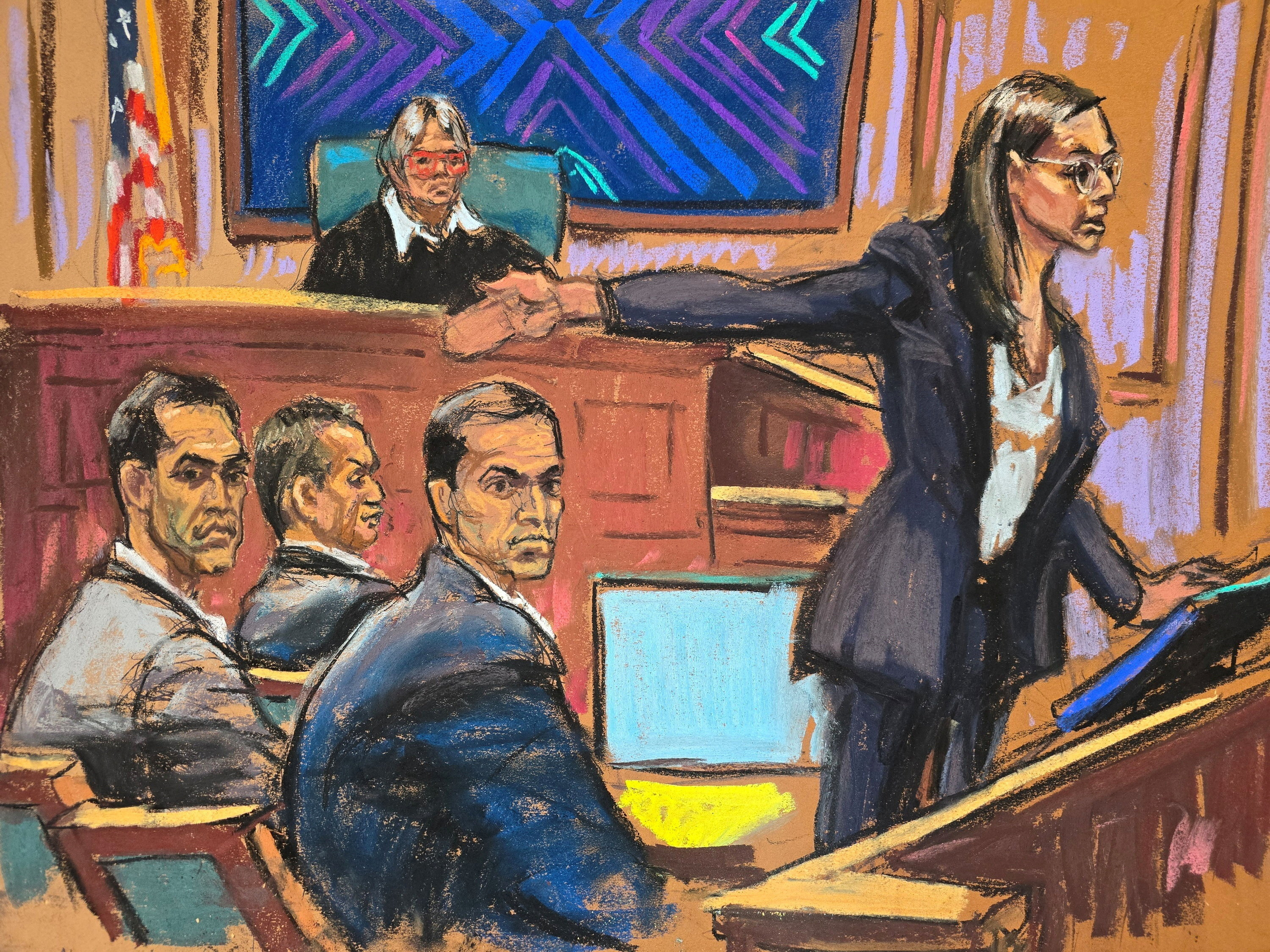
Tal, Alon and Oren Alexander in a court sketch from a hearing last month
JANE ROSENBERG/REUTERS
During trials, he’s brazen, sending out press releases each night. Last year he was reprimanded by Judge Diane Gujarati for one of his posts which depicted a swastika superimposed over the justice department’s logo. Engelmayer claimed he did not choose the image himself.
The publicist also employs influencers. “You look for key placements, people who have a certain amount of followers,” he said, paying them between “$5,000 to $100,000” for a series of videos supporting his client’s case. “It’s a whore’s world.”
At home in Teaneck, New Jersey, Engelmayer said his social life was more active than ever. “I get a little bit of hate mail here and there, but for the most part people are more fascinated by my job. People are gawkers.” His marriage of 29 years, however, recently ended. “Because of Harvey!” he said, cracking into laughter. “No, no, joking.” His new girlfriend is a physical therapist whom he met on the dating app Bumble.
In his spare time he watches Star Trek and goes to a shooting range — he owns seven handguns and has a carry permit for “38 different states”, including New York and New Jersey.
His job has further “confirmed” his cynicism. “I don’t like the way the world works,” he said with a smile, lip curling. “But I’ve learnt how to use it.”