
Michael Pollan is an American food writer and popular science author. He is a very good one, although as the dust jacket says, ominously, he is also an “activist” and lives in the Bay Area of California. He is best known for This Is Your Mind on Plants, a thoughtful exploration of his experiences and experiments with opium, caffeine and mescaline.
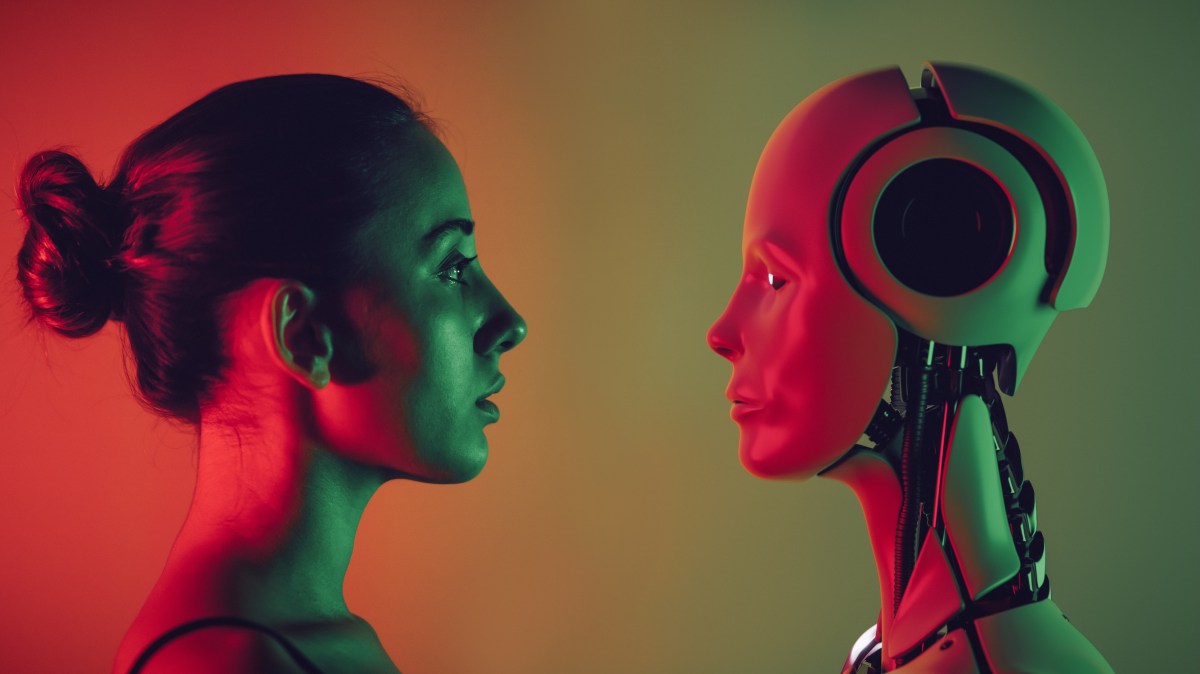
With this book he goes one further. I don’t mean that he experiments with magic mushrooms, although he does. He tries to pin down what the mind is doing when it is not “on” anything. What is consciousness? Why does it exist, if it exists at all? And — question of the moment — could it arise in a machine?
Pollan’s method is standard American non-fiction. First you hunt down all the leading thinkers in the field and interview them. And Pollan has bagged a veritable parade of neuroscience, philosophy and psychology professors — everyone from Antonio Damasio to Anil Seth via Alison Gopnik. Then you tie it all together with a narrative of personal development. Pollan tries not just mushrooms, but hypnosis and Buddhist meditation.
But he does it very well. You could not hope for a more judicious or readable summary of the scientific state of affairs. And his professorial pen portraits are razor-sharp. The field-leading neuroscientist Antonio Damasio is “dressed head to loafer in designer leisurewear… to describe him, one feels compelled to dust off words like debonair and dapper”. The British cognitive scientist Anil Seth’s “jug ears and intense gaze made me think of a hyperalert animal jutting up from its burrow to survey its environment”.
Pollan can be impish. When he asks the neuropsychoanalyst Mark Solms about his attempts to create a conscious, feeling AI, “I sensed him getting excited and began to feel like I was interviewing Dr Frankenstein on the verge of declaring his monster to be alive”. (Solms has promised that if his machine does develop consciousness, he will literally pull the plug.) Interviewing the French scientist turned Buddhist monk Matthieu Ricard, on Zoom, Pollan has to ask his questions while Ricard circles his room in his maroon robe, trying to complete his 10,000 steps. “This was the first time I got motion sickness from doing an interview.”
The test of a book on this subject, though, is the quality of the thought. Pollan treads the borderline between scepticism and open-mindedness nimbly. He thinks that science may have “hit a wall” in its investigations of consciousness, because it began with the assumption that the phenomenon was related to higher-order thought. That it is something the rational brain does. Something, perhaps, that evolved only in humans.
• Are animals conscious beings? Philosophers seem to think so
Yet some neuroscientists — notably Damasio — have suggested that if consciousness is located anywhere in particular, it may not be in the cerebral cortex, the brain’s most evolutionarily recent layer. They are looking instead in the deepest, oldest region: the brainstem. A damaged cortex does not seem to affect consciousness, but a damaged brainstem will switch it right off.
This helps if, like Pollan, you are inclined to believe that consciousness depends on “the moist facts of biology” — rather than being something that a computer, say, could acquire or generate. The brainstem, tellingly, is where body and brain mingle. The neurons there interrogate chemical information coming from the body, and many of them lack the usual insulating sheaths. Brainstem neurons don’t just pass the body’s electrical signals along, Pollan says, “they bathe in its biochemical reality”.
Consciousness might be evolutionarily older and deeper still. Some scientists believe that plants have it. Before you spatter the page with your coffee, consider these recent botanical discoveries: plants can learn and predict changes in their environments. They can distinguish their own leaves from those of other species, and family members from competitors. They can even be anaesthetised, using the same drugs as us. Put them to sleep and a sensitive plant won’t fold up its leaves at a touch. A Venus flytrap will fail to snap shut. Darwin thought plants could be conceived of as upside-down animals, with their roots as brains.
Our extension of who — or what — is conscious moves apace. As recently as the 1980s surgeons were (sometimes) operating on infants without anaesthetic on the grounds that they were not conscious and could not feel pain. Now it is pretty much agreed that, at a minimum, “a great many mammals”, “several” bird species and all octopuses are conscious.
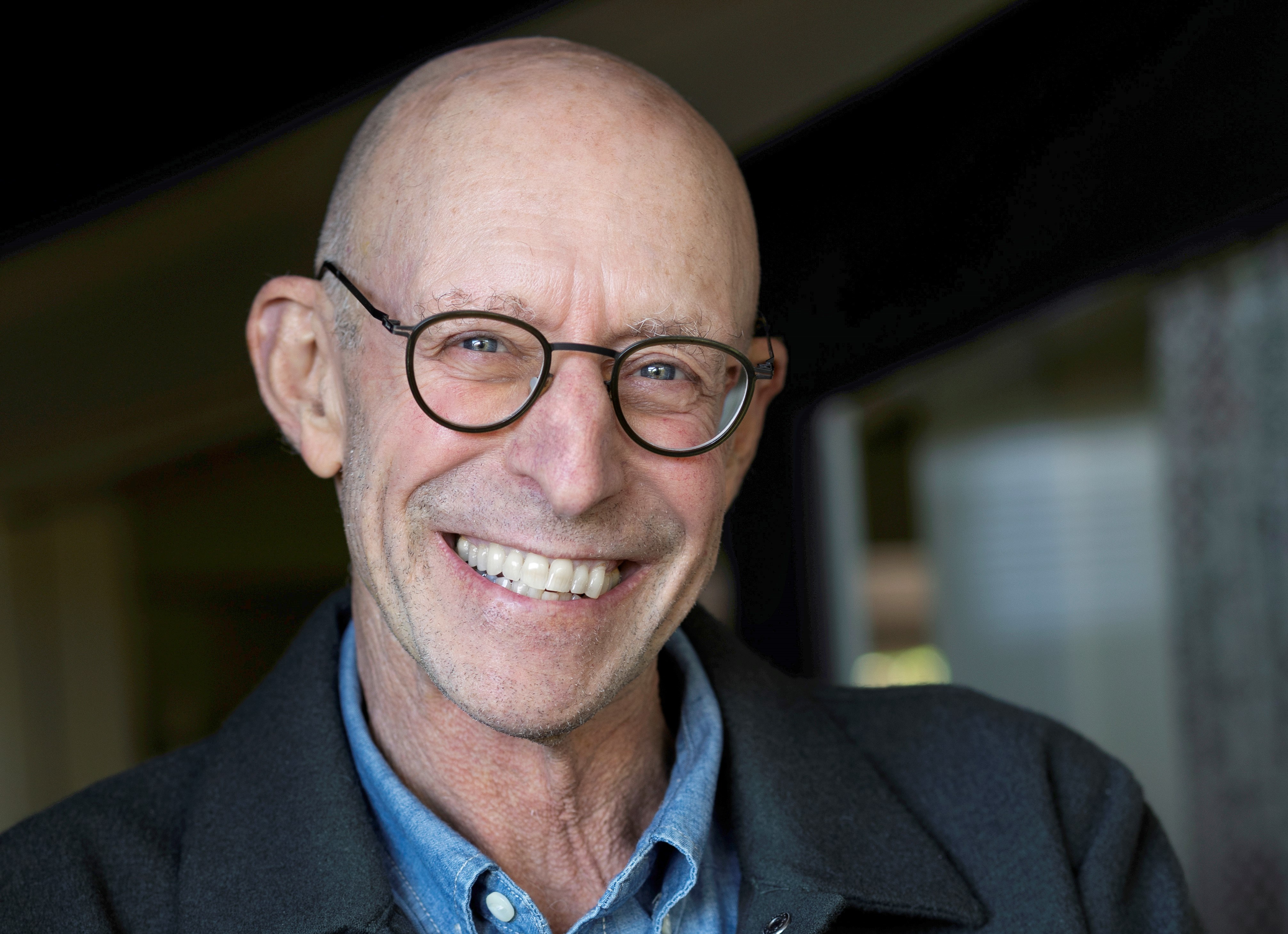
Michael Pollan is best known for his book This Is Your Mind on Plants
Some — and not just the psilocybin-addled — go further even than plants. Panpsychics think that all matter “possesses some teensy-weeny quotient of psyche, or mind”. Idealists believe that the universe itself is “made up of mind”, and that our brains may tune into it in some way. Quantum physicists are prone to this kind of thinking, but it is not just them. There are no fewer than 84 competing theories that seek to go beyond the usual “physicalist” notion that consciousness is something that brains do, or acquire.
Mercifully, Pollan does not dwell too long on the 84. Nor does he have much patience with the excitable engineers and data scientists (and, let’s be honest, chief executives boosting their share price) who want you to believe their large language models (LLMs) are about to come to life. As Pollan points out, neurons are not transistor chips. Memories are not software run on hardware — it’s a misleading metaphor. And asking an LLM if it is conscious won’t work “when the AI has been trained on pretty much everything that’s been said and written about consciousness”.
“One has to wonder if these people have ever read Frankenstein!” Pollan protests. He is reassuringly sceptical, sensitive and grounded — an old-fashioned well-read liberal humanist. Yet he does leave gaps. The promised material on writers’ investigations doesn’t go much beyond James Joyce and Marcel Proust. (Although you could do a lot worse.) There’s nothing on dreaming, or anaesthetics, and that foray into hypnosis peters out.
• Read more book reviews and interviews — and see what’s top of the Sunday Times Bestsellers List
My main doubt, though, is that the whole subject is just so male. All this is plant-based meat substitute for the kind of navel-gazing California nerd who likes The Matrix, microdosing and sentences such as: “You can’t turn the beam of attention on the source of the light.” You’d think Pollan would be against that sort of thing, but for a kind of finale he retreats into a meditation cave. Alone. In search of himself. What could be more stereotypically male than that?
To be fair, this last act is a respectable philosophical manoeuvre: a thoughtful resistance to drawing hard conclusions. Because perhaps the most exciting thing about consciousness is that it is still unsolved.
The German philosopher Thomas Metzinger relates a telling story here about how Francis Crick was bragging to him in the 1990s that neuroscience would “crack” consciousness in “the next two decades”. Metzinger coolly replied: “What, exactly, is it that you would like to explain?” Crick allegedly exploded in anger. We’re still waiting for an answer.
A World Appears: A Journey into Consciousness by Michael Pollan (Allen Lane £25 pp320). To order a copy go to timesbookshop.co.uk. Free UK standard P&P on orders over £25. Special discount available for Times+ members