
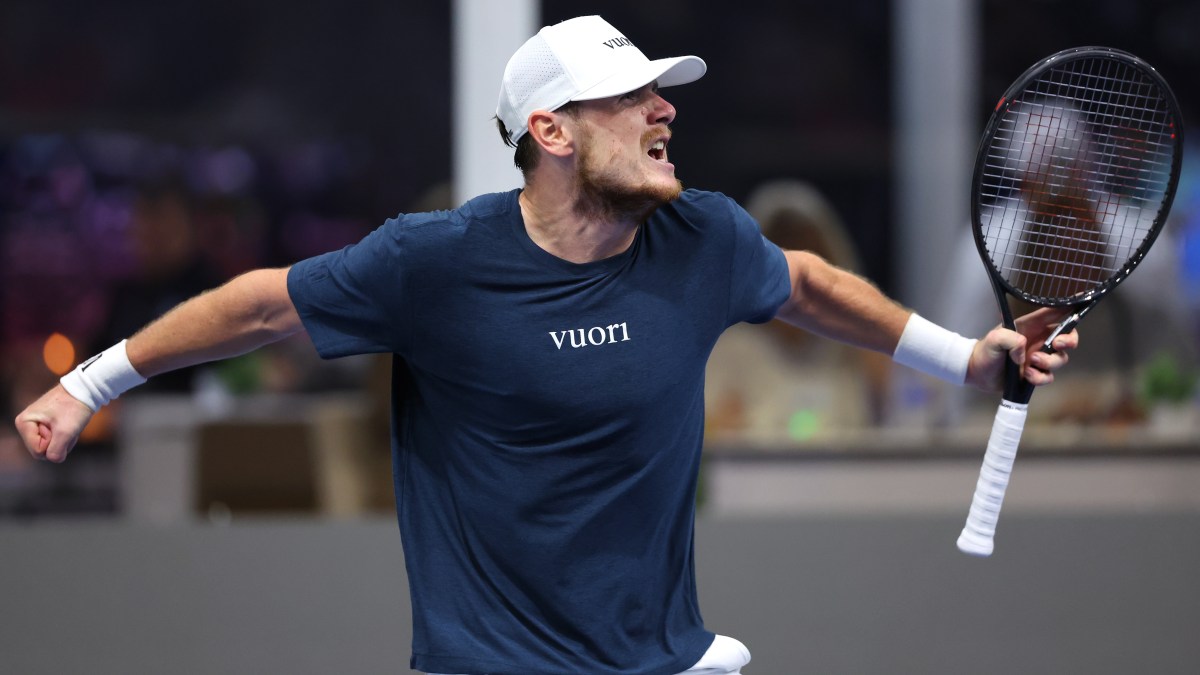
Jack Pinnington Jones used to hitch rides in Jack Draper’s battered Volkswagen Polo to the National Tennis Centre in Roehampton when the pair were teenagers. Friends and junior rivals from the neighbouring villages of Cobham and Ashtead in Surrey, their paths diverged abruptly in 2021 when Draper announced himself by making the quarter-final at Queen’s and taking a set off Novak Djokovic as a wild card in the first round at Wimbledon.
Meanwhile, Pinnington Jones, who is 15 months younger, spent a year toiling on the bottom-rung ITF World Tennis Tour, playing unglamorous events in places such as Egypt and Romania before conceding he wasn’t ready and heading to college in the United States.
But after three years at Texas Christian University (TCU), a path well trodden by the likes of Cameron Norrie and Jacob Fearnley, Pinnington Jones has taken to the professional tour for the second time with much greater aplomb. Since winning on his Wimbledon singles debut last summer the 22-year-old has picked up two Challenger titles — the latter without losing a set.
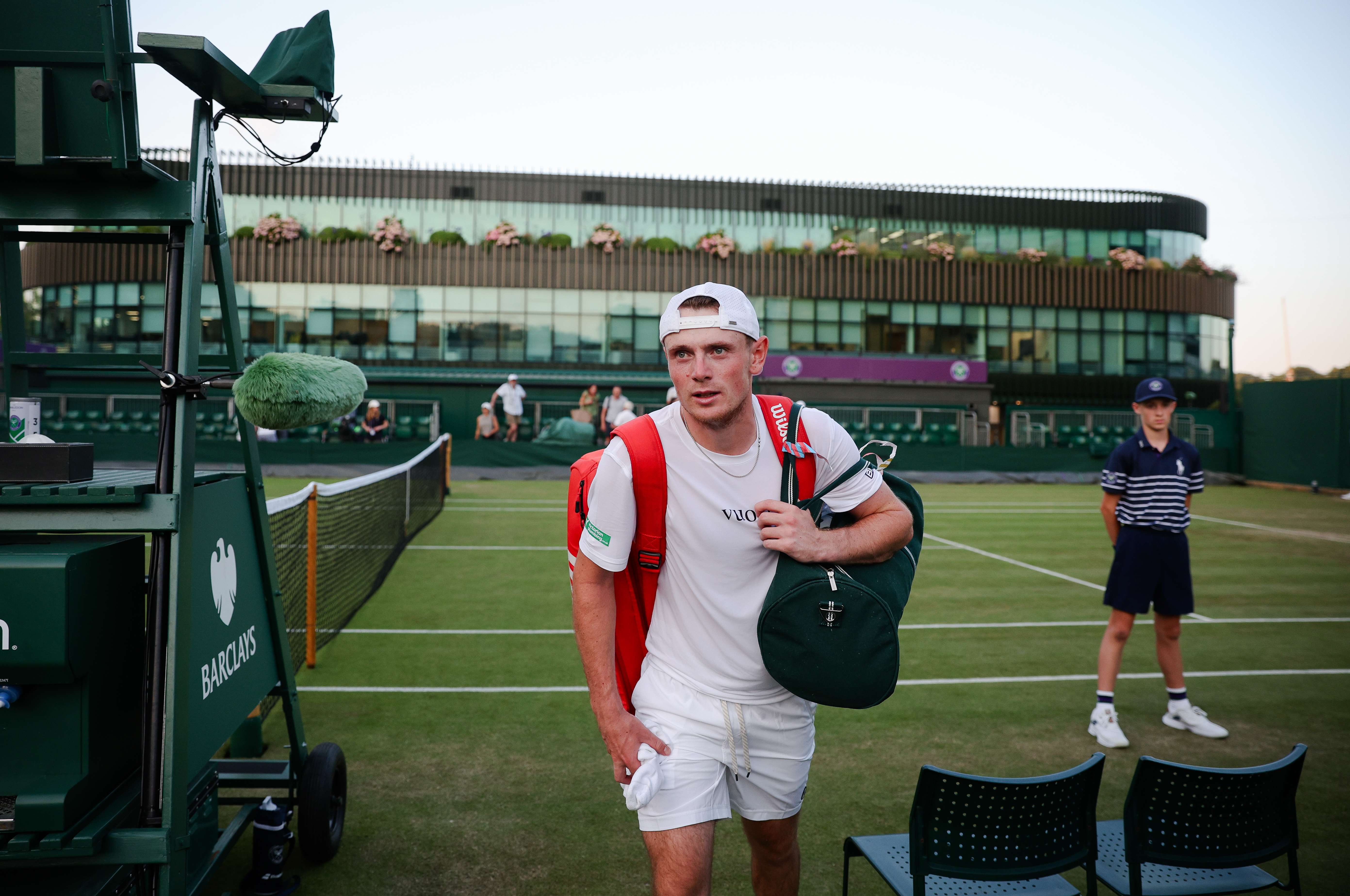
Pinnington Jones reached the second round of Wimbledon last year
TIMES PHOTOGRAPHER BRADLEY ORMESHER
Then, after coming through two rounds of qualifying at the Dallas Open, Pinnington Jones reached the first ATP Tour quarter-final of his career last week — a run that included victory over world No20 Flavio Cobolli. Up to No136, having started college outside the top 500, he has forged his own route to being a genuine British contender.
“He can be as good as anybody as long as he knows he needs to keep developing,” says David Roditi, head coach at TCU. “The part Jack’s best at is the part that’s hardest to teach, and that’s having that confidence in the moment, wanting the pressure, loving to compete. He loves tennis. He’s got a lot of support and backing with his team and the LTA, so all those are good things. He gets bored at practice easily. As long as he knows that there are going to be days that are boring and sucks it up, he can be as good as anybody.”
Pinnington Jones’s breakthrough is the latest testament to the benefits of the college route. Oliver Tarvet, 22, who also reached the second round at Wimbledon last year, is still in his final year at the University of San Diego. “Historically, players would have felt going to college was a way of saying, ‘I don’t want to be a pro.’ That’s certainly not the case now and I think most — if not all — players should entertain the idea,” says Mark Hilton, the men’s national coach at the LTA, who was Pinnington Jones’s “case manager”.
“The reality is it’s also very expensive at 18 years old if you’re not ready to play pro tennis, whereas college can really support you through that process and they come out on a steep trajectory.”
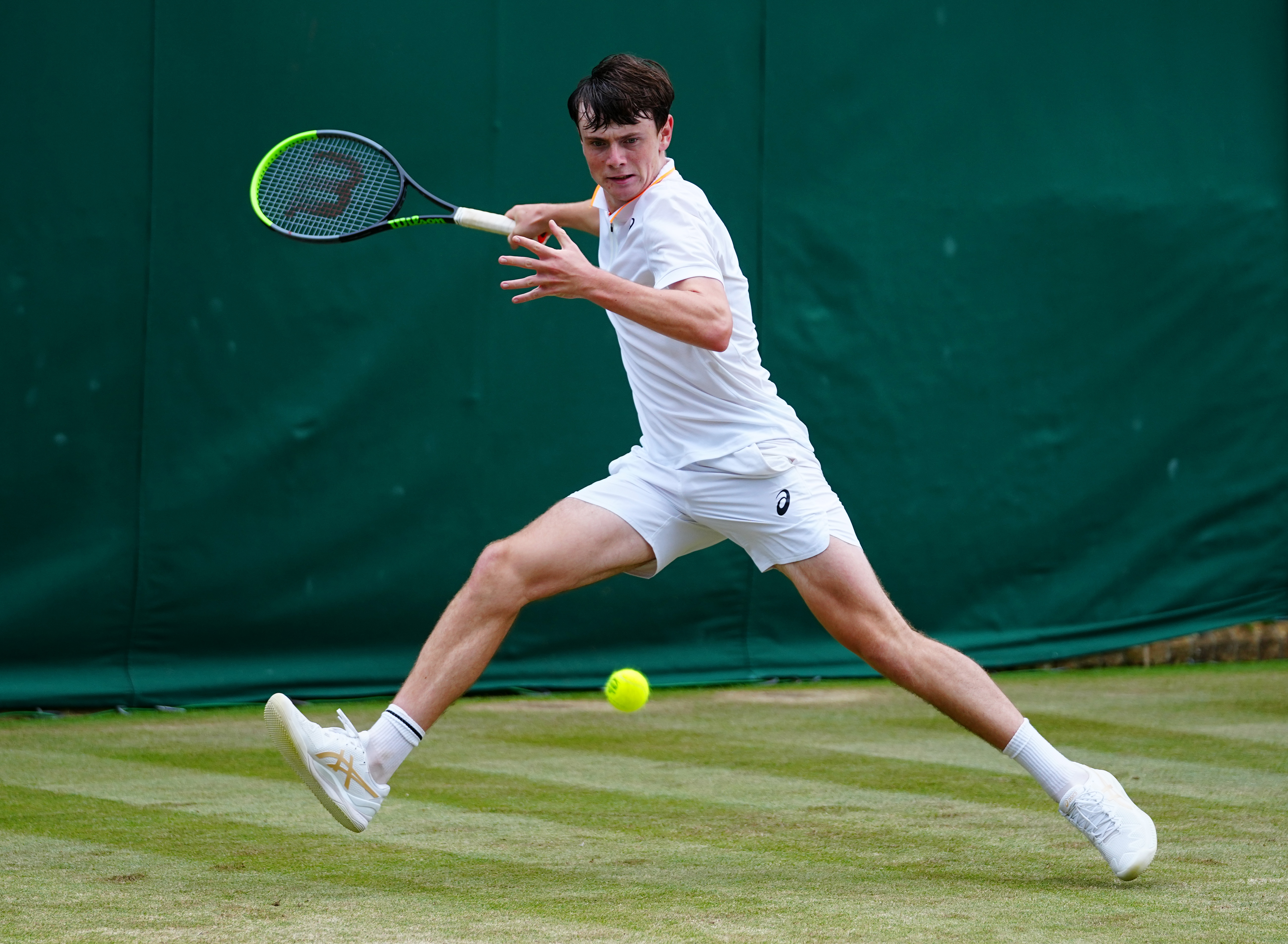
Pinnington Jones competes at Wimbledon in the boys singles in 2021
MIKE HEWITT/GETTY IMAGES
Pinnington Jones was still highly regarded when he arrived at TCU but Roditi admits there was a “maturity aspect of his development that needed to happen”. He didn’t struggle academically but naturally wanted to enjoy the social scene and his propensity to get bored meant, in Roditi’s words: “When it’s 11pm and you want to go hang with your mates, that’s what he did.” On the court, Pinnington Jones was “set in his ways and confident about what he thinks he needs”, but that stubbornness could often prove a “double-edged sword”.
Roditi recalls one match when Pinnington Jones told him he didn’t need any in-game coaching. “I said, ‘OK, no problem Jack, we’ll leave you alone and we’ll be here if you need us.’ ” After Pinnington Jones lost the first set Roditi offered a few words of encouragement.
“I was like, ‘Let’s go, let’s go. You got this.’ And he just yells out loud: ‘Well maybe I would if I could get any coaching out here,’ ” Roditi says, laughing. “He’s got a little bit of that Andy Murray in him of lashing out [at his coaches]. He just absolutely hates to lose.”
Another common trait was Pinnington Jones’s reluctance to spend too long warming up. While team-mate Fearnley would err on the side of caution and hit for up to an hour before matches, Pinnington Jones preferred to restrict that to 20 minutes, even when TCU were competing in the final of the NCAA Championships. “In college you start with doubles and it’s only one set so it’s a bit of a sprint,” Roditi says. “There was only about 20 minutes left and it was super, super windy and he hadn’t hit a ball yet and even I was freaking out.”
Pinnington Jones won his doubles match regardless, although Roditi points out it was because their opponents double-faulted three times in one game, and he then came back from a set and a break down to beat Eliot Spizzirri in the crucial singles match. “He was a big hero that day,” Roditi says. “He just kept hanging in there and somehow turned it around. He wants the ball on his strings in that big moment. If it was soccer, he would want to be the one taking a penalty in the shoot-out. That’s what makes him such a great competitor.”
From a technical standpoint Pinnington Jones’s serve has improved markedly, a facet of his game he’s worked on painstakingly, along with his ability to come into the net and finish off points. He was deemed ready for the tour a year before finishing his degree, but the fact Pinnington Jones’s breakthrough run on the ATP Tour came in Dallas meant Roditi and some of his old team-mates were there to support him. Ironically, Pinnington Jones’s opponent in the round of 16 was Spizzirri, who is now ranked No67 in the world.
Pinnington Jones is now coached by David Felgate, who was instrumental in both Tim Henman and Dan Evans’s careers, while James Trotman can also offer advice as and when required since splitting with Draper after four years in October and returning to the LTA as a national men’s coach.
“He’s got a very good team around him and James is there to offer a line of support as well, which is brilliant for Jack [Pinnington Jones] because James has gone through this experience with Jack Draper the last few years and that guidance can be invaluable,” Hilton says. “The demands are different on tour. Jack won a lot of matches straight away so then you pull him back and go again. He’s still very young in body and in mind, so it’s making sure he stays fresh for as long as possible, and he’s got a really good window over the next few months to elevate himself into an even higher position.”