
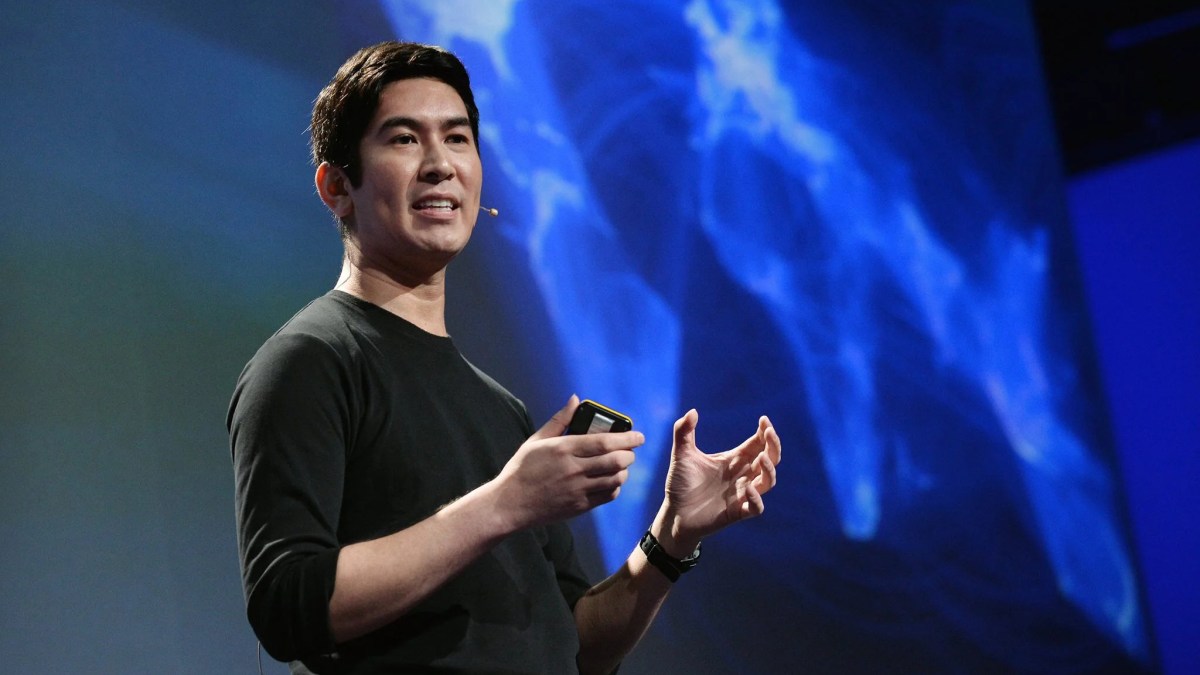
The world is sleepwalking into disaster with artificial intelligence that will create an elite class living in luxury while the majority languish, a former Google executive has warned.
Dex Hunter-Torricke, who was formerly a communications chief for Google DeepMind and also worked for Mark Zuckerberg and Elon Musk, issued a wake-up call to governments about the march of AI, saying “the path we are currently on leads to disaster”.
In an essay titled Another Future is Possible, Hunter-Torricke, who joined the Treasury as a non-executive board member after leaving Google’s AI division, urged governments to work together. “It’s crystal clear to me now: there is no plan,” he wrote.
At the heart of his warning was the displacement of jobs by AI. He said the International Monetary Fund’s estimate that 60 per cent of jobs in advanced economies were vulnerable to displacement “likely low-ball the true impacts because they don’t account for how much more advanced AI will become in the next decade”.
He said: “The writing is on the wall in every industry that processes information for a living. The productivity gains will be real — but there is no automatic mechanism that translates them into broadly shared prosperity. The most likely outcome is an economy in which corporate profits explode as labour costs fall, while workers’ share of output shrinks. Wealth concentrates at an unprecedented rate at the top, while the vast middle loses ground.
“By mid-century, on this trajectory, we arrive at something that goes beyond inequality and begins to look like economic speciation: an elite class with AI-augmented capabilities enabling lives of luxury, equipped with medical breakthroughs that deliver longer lifespans, living in parallel with a global majority whose economic prospects, healthcare access and political power have been permanently curtailed. This is not a prediction I make lightly.”
Meanwhile, George Osborne, the former chancellor, has said that countries which do not embrace AI risk “Fomo” and could be left weaker and poorer.
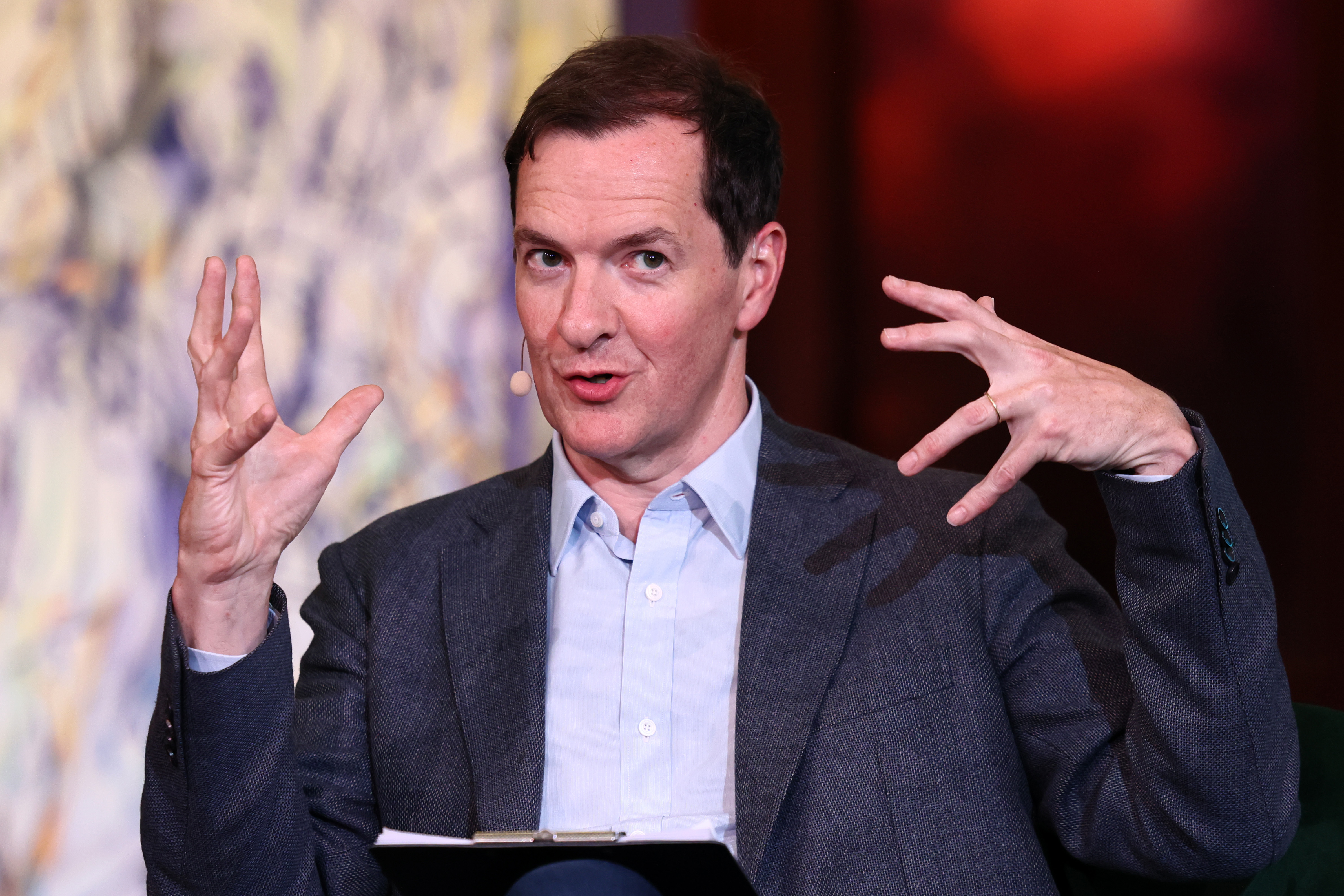
George Osborne speaking last year at the SXSW festival
JACK TAYLOR/GETTY IMAGES
Osborne, who is two months into a job as head of OpenAI’s “for countries” programme, told leaders gathered for the AI Impact summit in Delhi: “Don’t be left behind.” He said that if they do not implement AI rollouts, their workforce could be “less willing to stay put”, hoping instead to seek AI-enabled riches elsewhere.
“A lot of countries who aren’t the United States of America and who aren’t the People’s Republic of China essentially face two kind of slightly contradictory feelings at the same time,” Osborne said.
“The first is a Fomo: are we missing out on this huge technological revolution? How to be part of it? How do we make sure that our companies feel the benefits of it? How do we make sure our societies feel the benefits of it?”
At the same time, he said, these countries wanted to safeguard their national sovereignty while relying on AI systems controlled in the US and China.
Osborne said: “There’s another kind of sovereignty, which is: don’t be left behind, because then you will be a weaker nation, a poorer nation, a nation whose workforce will be less willing to stay put.”
• Tony Blair Institute warns UK risks falling behind in biotech
The essay is the latest warning from those in the tech industry or leaving it because of their concerns. Last week a safety researcher left the leading AI company Anthropic, claiming that “the world is in peril” and an OpenAI employee resigned over its decision to run adverts in ChatGPT.
Separately, Michael Wooldridge, a professor of AI at Oxford University, said the lack of safety testing meant AI risked a Hindenburg-style disaster. Giving the Royal Society’s Michael Faraday prize lecture, titled This is Not the AI we Were Promised, Wooldridge said on Wednesday: “The Hindenburg disaster destroyed global interest in airships; it was a dead technology from that point on, and a similar moment is a real risk for AI.”
The leading AI models from Anthropic, OpenAI and Google appear to be increasingly capable, especially in the field of coding. It runs counter to the views from some critics who say that the technology’s capabilities are flattening.
DeepMind’s chief executive says artificial general intelligence could be here within the next five years
Hunter-Torricke said: “Researchers inside the leading labs sometimes struggle to keep up with the pace of advances across the industry. Last week, new model releases made the systems of six months ago feel almost quaint. The curve has not flattened.”
After 15 years in Big Tech, Hunter-Torricke has turned his back on the industry to start a new London-based non-profit, the Center for Tomorrow, which will address the issue. He has pledged it will not take money from Big Tech and has funding from Sir Tom Hunter, the Scottish billionaire, who is also the uncle of Hunter-Torricke’s wife.
• Google DeepMind to establish automated science laboratory in UK
Hunter-Torricke left Google DeepMind in October and signed a non-disclosure agreement, but hints that what he saw in the industry was not positive. He said: “What I had seen in those rooms, over those years, now made it impossible to stay.”
He told Time magazine of his career: “I only told half the story … that was something which, personally, I consider a failing.”
Hunter-Torricke signed a non-disclosure agreement when he left Google
JOSE SARMENTO MATOS/BLOOMBERG/GETTY IMAGES
Hunter-Torricke predicted that the world had ten years to readjust its institutions and policies to cope with AI. Among his proposals to tackle the issues was a global Marshall Plan, referring to the post-war scheme to rebuild Europe by the US. It would involve “sharing technologies and economic surpluses across borders, rather than hoarding them as instruments of dominance”.
He also called for progressive taxation of AI-powered corporations, well-funded support for displaced workers and a universal basic income: an unconditional payout from the state for all citizens.