
Japan’s biggest toilet maker has the capacity to become an exciting business in the artificial intelligence revolution, according to a London-based hedge fund pushing for reforms at the company.
The value of Toto Ltd could be boosted by 55 per cent, or $3.5 billion, according to Palliser Capital, if it did a better job of promoting and investing in the AI chipmaking technology it has developed in its advanced ceramics division.
Toto’s expertise originally used in the manufacture of toilet bowls for 108 years is being harnessed to help develop enhanced ceramics critical in the manufacture of complex AI chips.
According to Palliser, an aggressive activist investor better known for calling for reforms at British companies including WH Smith, Rio Tinto and Capricorn, formerly Cairn Energy, Toto was “the most undervalued and overlooked AI memory beneficiary”.
Shares in Toto were marked 4.3 per cent higher to ¥6,025 on Tuesday and are up by more than 50 per cent in the past three months as investors speculate on its opportunities in AI.
Its advanced ceramics division was “a critical enabler of next‑generation semiconductor manufacturing, supplying highly specialised electrostatic chucks used in cryogenic dielectric etching tools for advanced 3D NAND memory production,” Palliser said in a presentation.
Chucks are the clamping devices used to secure the thin and fragile silicon wafers that are manipulated in freezing conditions to develop finished chips.
• Pinewood has a fighting chance to outrun the AI apocalypse
Palliser said it was now a top-20 shareholder in Toto, adding that the toilet maker could “unlock more value” by disclosing more about the advanced ceramics division and its growth trajectory and by prioritising investments delivering the best result on capital.
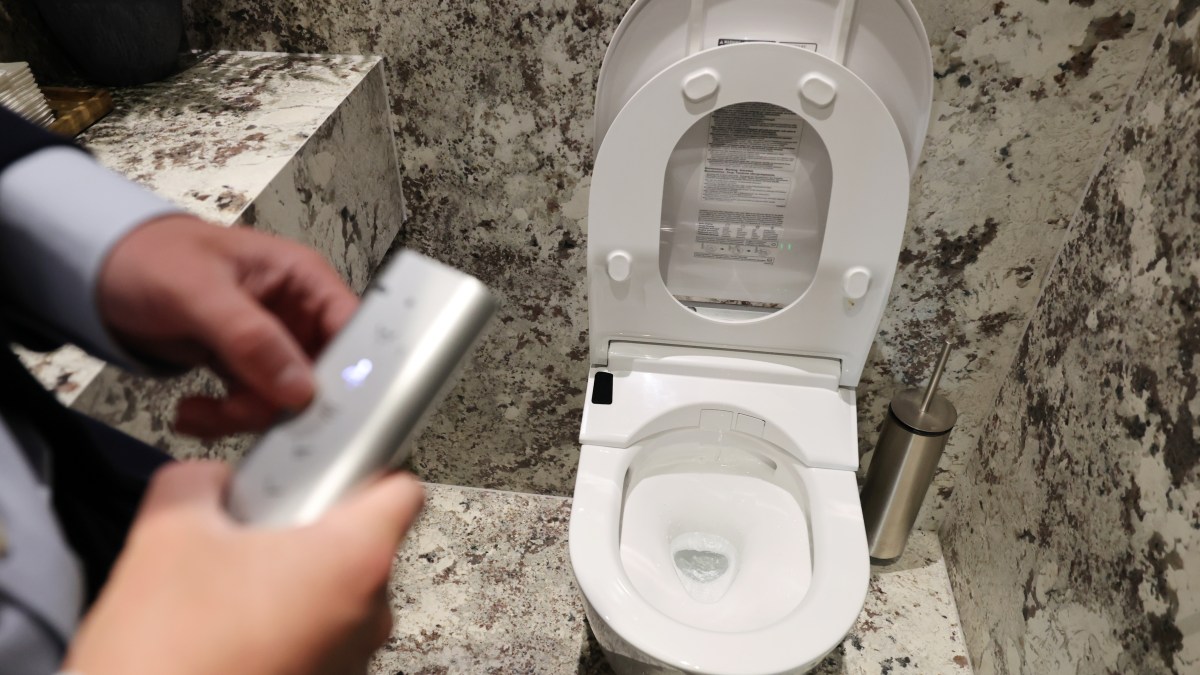
Toto is well known in Japan for its sanitary-ware including its bottom-showering, rear-washing, odour-dispersing toilets known as “washlets”, which commonly retail in the UK for more than £2,000.
The stock market is seeking out the AI potential of conventional businesses in the same way that companies with digital capabilities were championed in the dotcom boom of 30 years ago.
Toto, formerly known as Toyo Toki, was founded in 1917 and employs 33,000 people. Last year it said it has sold more than 70 million “washlets”.