

Ministers are in discussions about easing the burden of student loan repayments on graduates facing crippling interest charges on their debt.
The government is facing growing pressure to help students who graduated between 2012 and July 2023, who are paying, on average, almost 10 per cent of their salary each year in loan charges, with interest of more than 6.2 per cent.
Some are struggling to get mortgages as banks have been taking into account their repayment burden when deciding how much they are prepared to lend them.
While the Treasury insisted it would not U-turn on the terms of the loans, senior government sources confirmed that preliminary discussions were taking place behind the scenes about possible measures to make the loans fairer.
One said that ministers “knew they had a problem on their hands” and that an increasing number of MPs had raised the issue after a campaign run by The Sunday Times.
• Three ways to end the student debt injustice
Another said ministers “wanted to see what they could do” to reduce annual payments and interest rates. “This was not a problem that we created but one we inherited from the Tories,” the source said. “But we realise it is something that we need to try and address.”
The source added that it was “too early” to say what specific measures might be taken because these were being “scoped” by officials. It could include reducing annual payment rates or the rate of interest due on the loans.
Pressure on ministers to perform an about-turn is expected to increase after the Conservatives indicated that Kemi Badenoch, the party leader, would campaign against the policy.
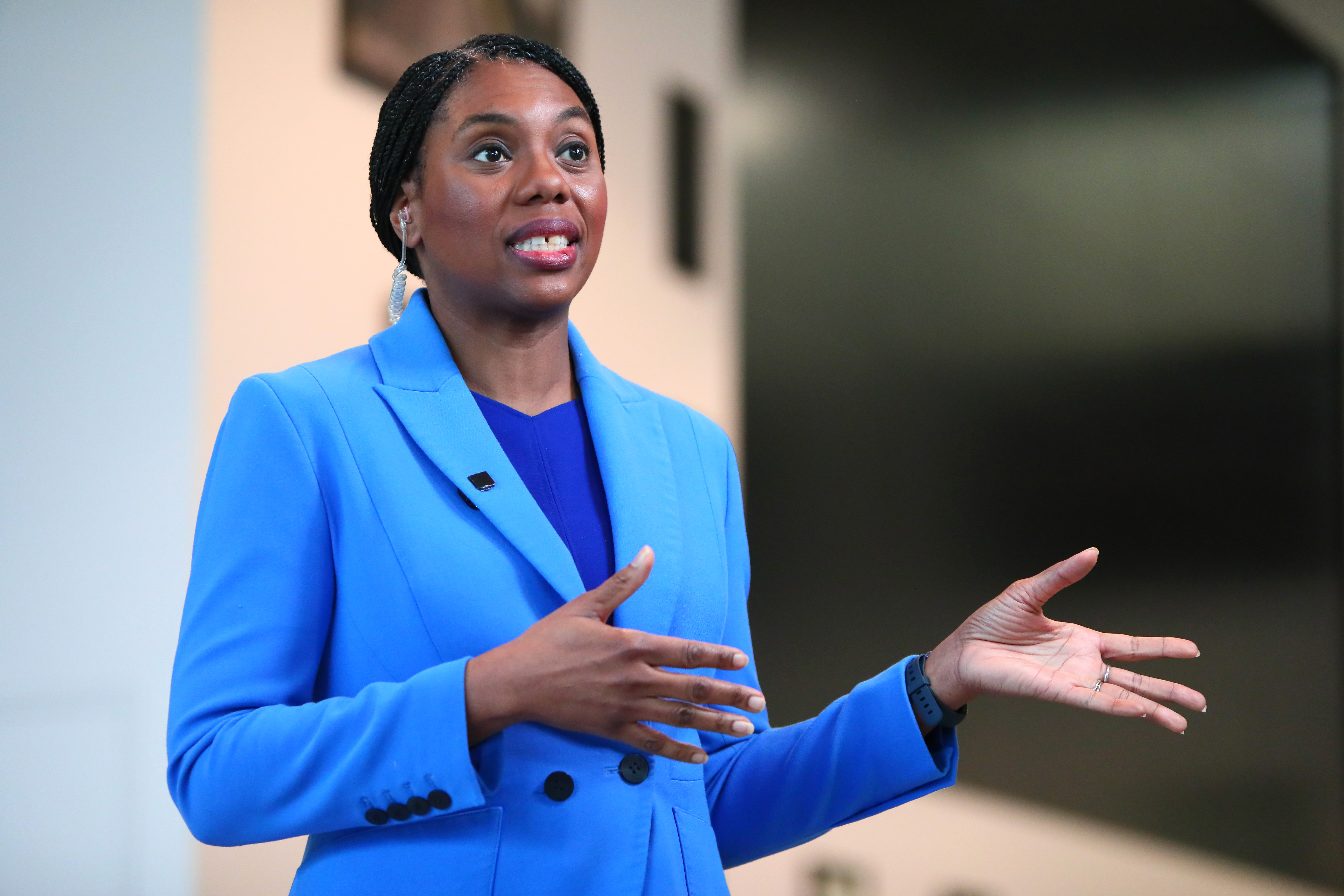
Kemi Badenoch during an interview in January
ALISHIA ABODUNDE/GETTY IMAGES
The Green Party has pledged to write off student loan debt and scrap tuition fees.
One Labour MP said they knew of “dozens” of backbench MPs who wanted the government to reform the system. The MP added: “We were outfoxed [by the Conservatives] on the social media ban. Kemi is going to try and outfox us again on this. Have we learnt our lessons?”
The MP added that some backbenchers were personally affected by the Plan 2 loans, adding: “There’s obviously internal chats among the Plan 2 generations of backbench MPs, so they’re bubbling up.”
Another MP said: “I’m worried about the Labour Party ending up behind the curve on this. You’re seeing the Conservatives, hypocritically, and the Reform party starting to make noises about this. And it would be wrong for the Labour Party not to acknowledge that what we inherited here was a broken system. And, yes, the financial circumstances are difficult, but that doesn’t mean we should be defending the broken Tory system.”
• Student loans chair to be paid £59,000 a year for 96 days’ work
Chris Curtis, the MP for Milton Keynes North and co-chairman of the Labour Growth Group, said: “Plan 2 student loans are effectively a badly designed graduate tax that’s further stacking the tax system against younger workers. If we imposed these marginal rates on older workers, people would call it absurd but it’s been normalised for my generation.
“That’s not just unfair, it’s also bad economics. When young people see over half their next pay rise disappear, it becomes harder to justify pushing for the promotion or the better job. That is a drag on economic growth, which we all pay the price for.”

Chris Curtis
ROGER HARRIS PHOTOGRAPHY
• My student loan is a curse and the data proves it
Plan 2 loans, issued to students who started university between 2012 and July 2023, have come under scrutiny since a Sunday Times investigation shed light on their punitive terms. The End the Graduate Rip-Off campaign is calling for a reform of the system.
The chancellor, Rachel Reeves, announced in the budget that she would freeze the salary threshold for repaying Plan 2 student loans at £29,385 from April 2027.
Graduates who make more than the threshold pay 9 per cent of their salary above the limit towards their student loan debt. The freeze means more graduates will be dragged into repaying their loans more quickly as their wages grow.
Reeves also announced that the national minimum wage would rise by 4.1 per cent next year to £24,800. The Office for Budget Responsibility forecasts that this would rise again to £28,995 by 2030, meaning that combined with the freeze, graduates who earn as little as £400 above the minimum wage will pay back their loans by the end of the decade.
The Treasury said the changes were “fair” because graduates generally earned more than others.
Another problem raised by graduates about Plan 2 loans is the interest rate. The interest rate on Plan 2 loans is set at the retail prices index (RPI) measure of inflation plus up to 3 percentage points, depending on how much a graduate earns. It changes every September in line with the RPI figure from the previous March.
The RPI generally rises faster than the consumer price index, which is used for almost all other government inflation calculations. The government has said it will phase out the use of RPI by 2030.
A Department of Education spokesman said: “We inherited the student loans system, including Plan 2, which was devised by the previous government. Threshold freezes have been introduced to protect taxpayers and students now, alongside future generations of learners and workers. The student finance system protects lower-earning graduates, with repayments determined by income and outstanding loans and interest being cancelled at the end of repayment terms.
“Since we were elected, we have been committed to supporting the aspiration of anyone who can and wants to attend higher education, including by reintroducing targeted maintenance grants to support the prime minister’s target of two thirds of young people taking a gold standard apprenticeship, higher training or heading to university by the age of 25.
“This is all alongside our ongoing support for working people starting off in life, as we build 1.5 million new homes, expanding government-funded childcare, introducing free breakfast clubs and freezing rail fares.”