
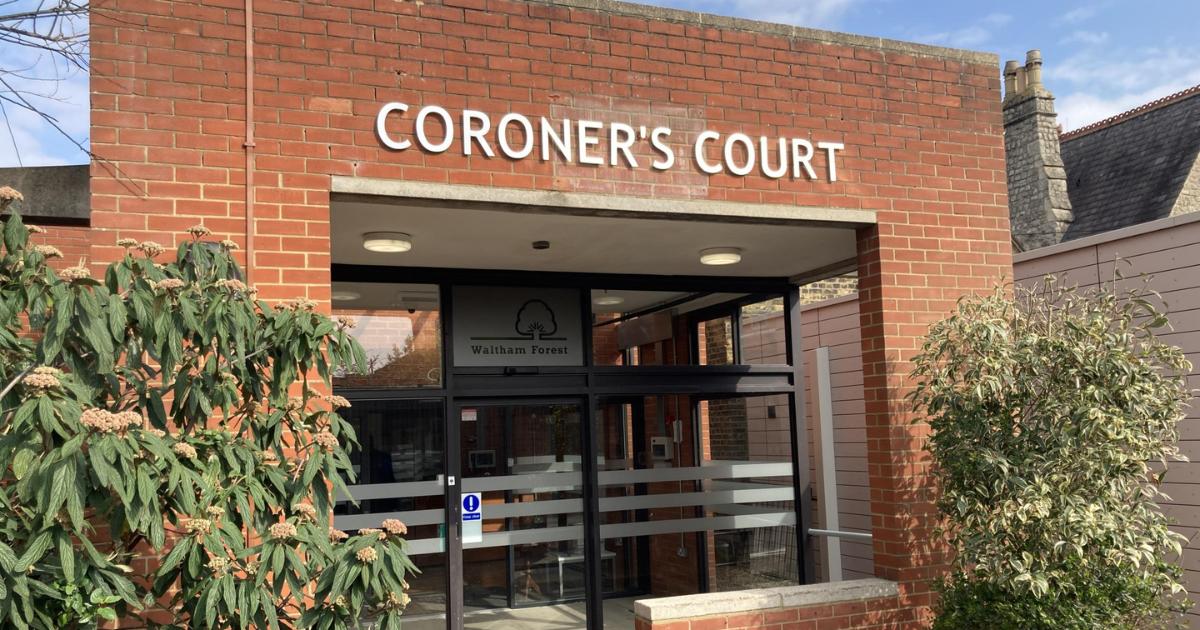
The infant was born at a residential address in east London where his mother was staying with her family.
East London Coroner’s Court heard that she chose to conceal the pregnancy due to concerns about her safety.
Ms Persaud saw evidence revealing that the mother and baby did not receive any antenatal care as a result, and there appeared to have been no plans made for after the baby’s arrival, reports our sister title London Now.
The court heard that after the lone birth the mother discovered her baby “was not crying”, but no ambulance was called and no attempt at CPR made despite earlier evidence of web searches showing she had researched resuscitation steps and more.
Ring doorbell footage showed her travelling by Uber to a hospital with the baby placed in a “white bag” around two hours after the estimated birth time.
Upon arrival at the hospital, the court was told that the baby appeared “blue” and “lifeless” and resuscitation was unsuccessful.
A paediatric pathologist found in a post mortem exam that the infant had a “severe malformation” to do with the urinary bladder, which was outside the body.
The doctor expressed his understanding that, if detected, malformations such as this can be attempted to be rectified successfully by paediatric surgeons.
But the medical cause of death was established at the hearing as meconium aspiration syndrome.
The court heard that within the baby’s lungs, evidence of his first stool discharge, meconium, was discovered, consistent with him breathing .
The doctor advised that, if suctioned immediately, they would have a “window of a few minutes” to save the baby.
It was unable to be established how long the infant had been breathing with meconium in his lungs, but this is estimated to have been “a couple of minutes at most”.
The doctor said: “What I do know is that those babies will not survive if there is no immediate suctioning.”
He likened it to “choking”.
“Unless we take the obstruction away immediately the person would not survive.
“If meconium is not removed, suctioned, out of the airways very promptly following a baby’s delivery, then baby will likely die in a short period of time.”
A second doctor, who agreed with this cause of death, reported he believed that the prognosis and outcome “could have been improved” with intervention.
Area coroner Nadia Persaud confirmed it was the opinion of the medical professionals that it is not known if a baby could cry if it has aspirated meconium, but said she believed it would be “very difficult”.
Also discovered in a toxicology report was evidence of drugs, specifically synthetic spice in a sample of blood from the infant.
The court heard evidence of confirmed consumption of THC, found in cannabis, during pregnancy.
The coroner gave a narrative conclusion, requiring time to establish whether the natural cause of death was contributed to by “negligence”.
She said: “An ambulance should have been called when he was delivered. What I do not have is evidence that had that call had been made, that there would have been a different outcome. He would have needed suctioning and emergency attention.
“It is not known whether the presence of a synthetic cannabinoid contributed to his death.
“He was deprived of a safe delivery, either at hospital or in a safe setting at home. He had not been checked on by any health care professionals during the course of the pregnancy. There was no plan for a safe delivery or after his birth.
“He would have required urgent medical intervention to survive. He was not offered any opportunity to receive any lifesaving treatments.”
Ms Persaud voiced her concerns about the care and delivery of the infant, including about the use of cannabis during pregnancy, lack of antenatal care sought, and lack of preparation for a safe delivery.
She also stated that she had concerns with the mother’s intention to nursing, and requested a referral so that future employers are aware of her circumstances.
It was her opinion that the legal test for negligence would not be met.