
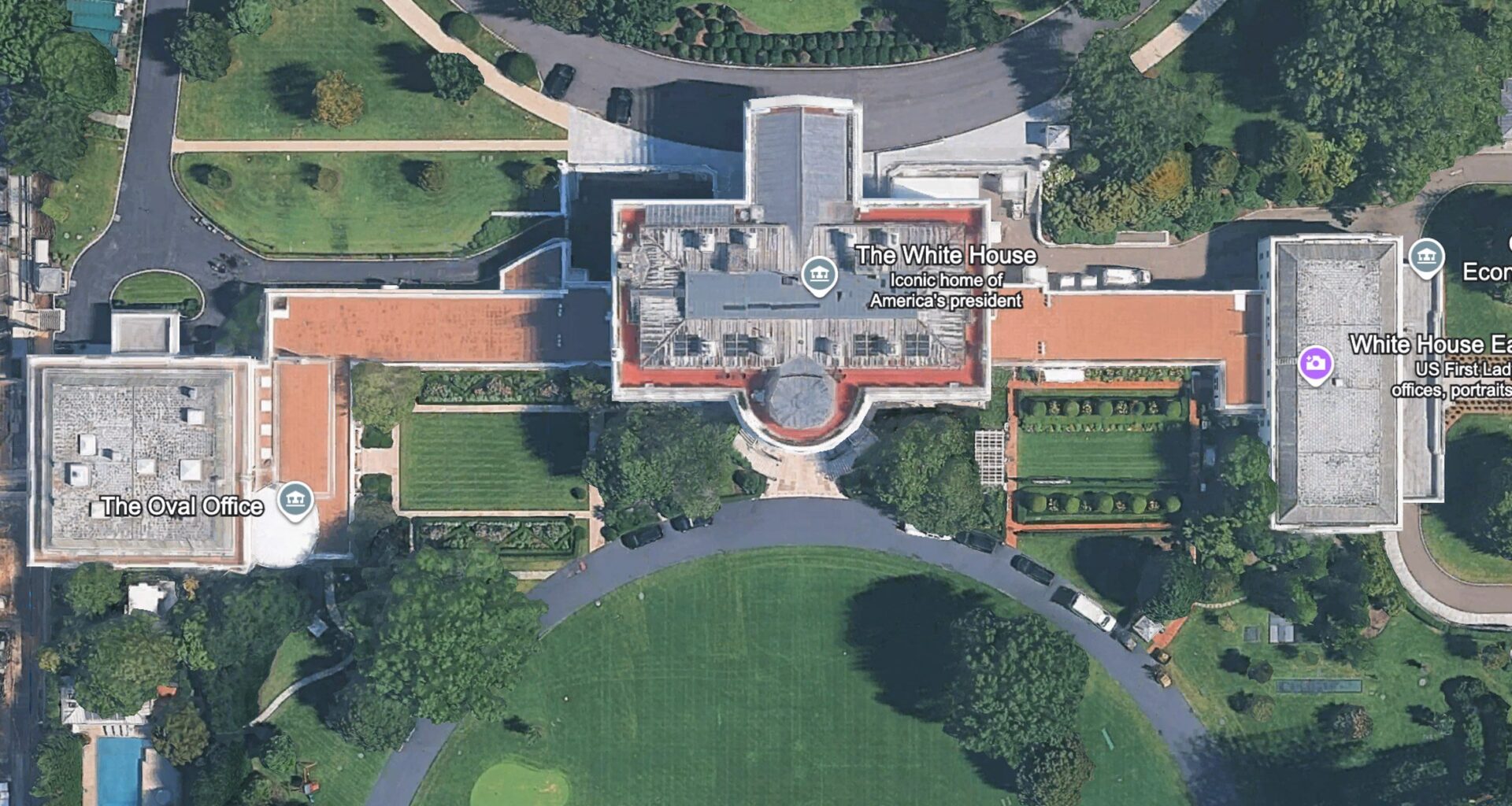
Four months after the demolition of the East Wing, US president Donald Trump has continued his plans to build a ballroom at the White House. We explain everything you need to know about the controversial architectural project.
On 20 February, advisory body the Council on Fine Arts (CFA) gave approval to the project on aesthetic grounds, with new renderings of the project showing the 90,000-square-foot (8,360 square metre) ballroom dwarfing the Executive Residence and the West Wing.
Though not the final say, the approval by CFA – which Trump himself staffed after firing the holdover members from the Biden administration – signals forward movement on the project.
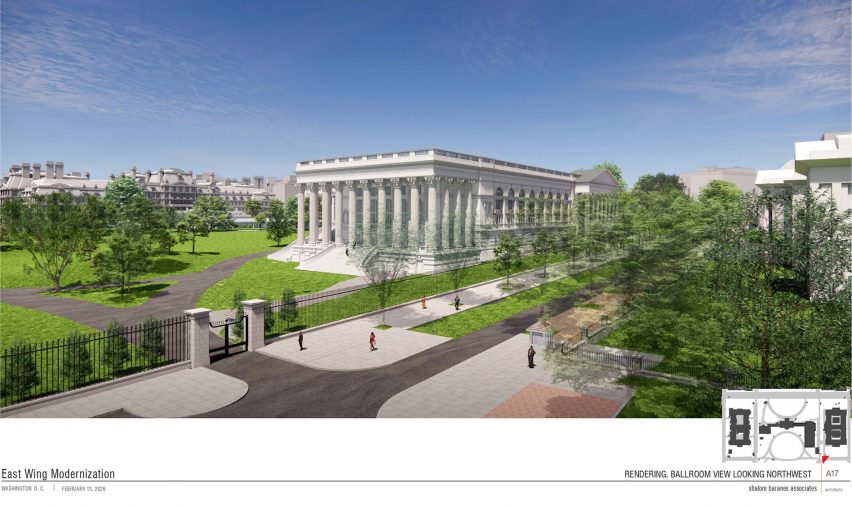 Trump’s White House plans were approved by the CFA
Announced last summer, the ballroom project has taken many twists and turns over the last six months, with the quick demolition of the East Wing and the dismissal of the original architect, James McCrery.
According to reports, McCrery clashed with the president, leading Trump to select DC-based Shalom Baranes Associates for the project, which is responsible for the most-recent set of renderings.
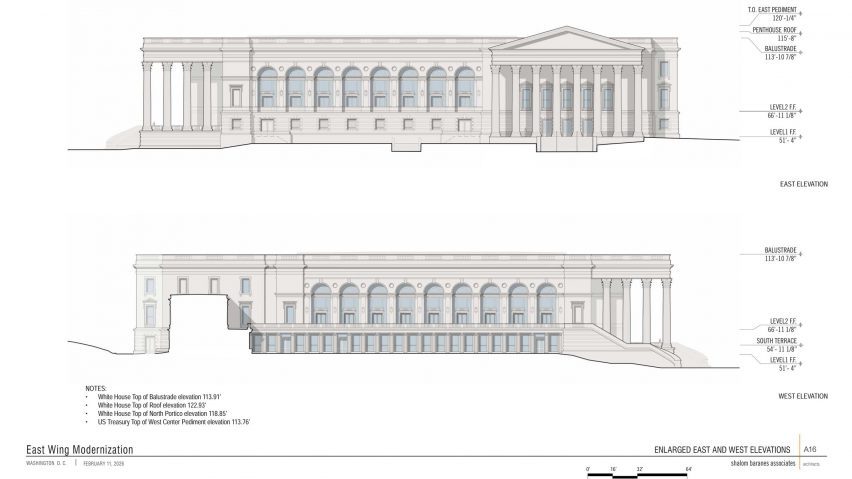 The East Wing ballroom features a massive collonade
Before he was president, Trump had been involved in the real estate and construction industries, and is perhaps best known for the flashy Trump wordmark slapped on skyscrapers from New York to Istanbul.
The president has unveiled plans to bring his vision of architecture to the grounds of the White House, where American presidents have lived and worked for hundreds of years.
Demolition of the existing East Wing began in October 2025 as Trump moved forward with his plans and as of 23 October last year, aerial footage shows the preexisting structure completely demolished.
What’s the plan for Trump’s White House extension?
In late July 2025, Trump released renderings of a proposed 90,000-square-foot (8,360 square metres) ballroom. The somewhat ambiguous renderings showed a larger, taller structure with neoclassical facades similar to the existing architectural language of the White House.
At the time, the White House said the site of the ballroom would be “where the small, heavily changed, and reconstructed East Wing currently sits”, which suggests the plan was always to demolish the structure.
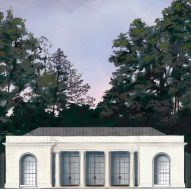
Melania Trump unveils classical Tennis Pavilion at the White House
However, in a press conference, Trump suggested that the construction wouldn’t “interfere” with the current building, perhaps referring only to the central Executive Residence.
Original renderings for the new ballroom showcase gilded interiors with coffered ceilings, chandeliers, and large, arched windows – but since Baranes took over, there haven’t been many details on how the new architect will treat the interior.
The administration has claimed that the construction of the ballroom will be completed “long before the end of President Trump’s term”.
To the shock of many, Trump has also signalled that changes may be made to the West Wing as well, with Shalom Baranes stating in January that there are tacit plans to add a storey to this other structure.
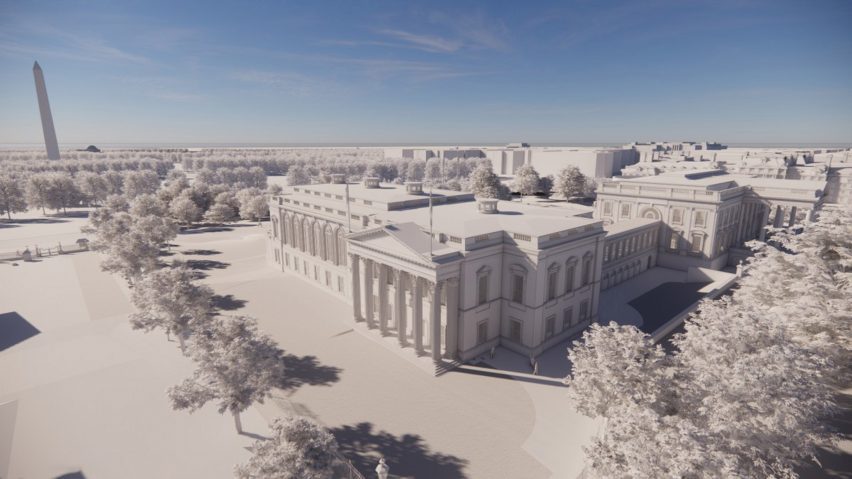 Donald Trump has planned to build a neoclassical ballroom extension to the White House. The image shows the first set of concept images by James McCrery
When is the extension being built?
Trump first showed renderings of the project in July 2025 and stated that the ballroom would be completed well before the end of his second term in 2028.
Demolition of the East Wing began on 20 October 2025 and was completed by 24 October. It is still unclear when construction will start, and though the project has been given the nod by the CFA, it still needs the approval of the National Capital Planning Commission (NCPC), which is set to have another hearing on the project in early March 2026.
Many commentators were shocked at the speed at which the administration executed the demolition in late October, and many in the preservation community have come out against the project, with the National Trust for Historic Preservation filing suit to stop the construction.
What was the East Wing?
The East Wing of the White House referred to the area to the east of the White House complex.
This portion of the property abutted the Treasury Building and has traditionally held offices for the First Lady and a welcome section for tourists.
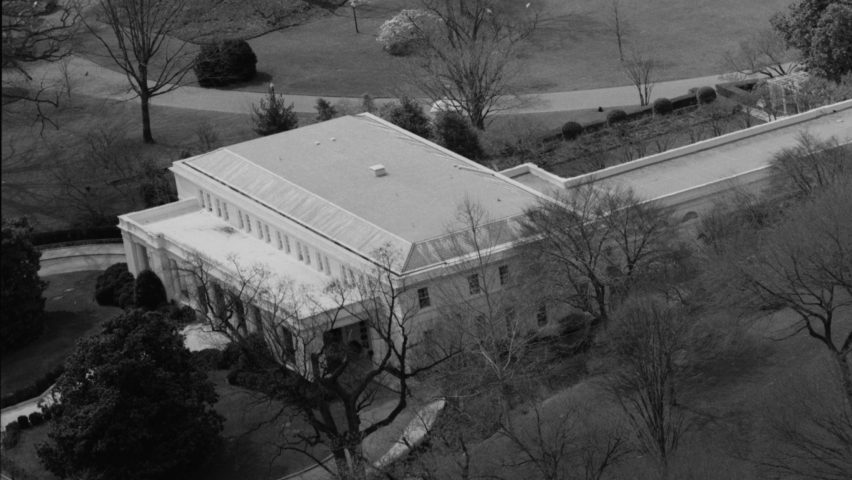 The East Wing in 1992. Photo by Jack Boucher
This area has mostly served as a welcome area to the White House complex throughout history, with a terrace built to serve this function in the early 1900s.
In the 1940s, the structure that stood until 24 October 2025 was built. It was a relatively simple two-storey structure fronted by a collonaded covered drive, colonial-style windows, and a hipped roof.
Who is designing Trump’s gilded ballroom?
The first architect, James McCrery, was a former student of the postmodern architect Peter Eisenman, who has since become a stalwart supporter and practitioner of traditional and neoclassical architecture.
McCrery is a founding member of the conservative National Civic Art Society and is an associate professor at Catholic University of America’s (CUA) department of architecture, and remains relevant to the project due to his status as vice chair of the CFA.
Shalom Baranes leads Shalom Baranes Architects and runs a studio considerably larger than McCrery’s.
His firm is responsible for dozens of commercial projects across DC.
At the announcement of Baranes’ takeover, the White House called him an “accomplished architect whose work has shaped the architectural identity of our nation’s capital for decades and his experience will be a great asset to the completion of this project”.
Shortly after Baranes was announced as the architect, an open letter from American Institute of Architects (AIA) members was sent to Baranes suggesting that his involvement violated ethical clauses in the AIA charter.
The AIA has expressed continued concern over the project.
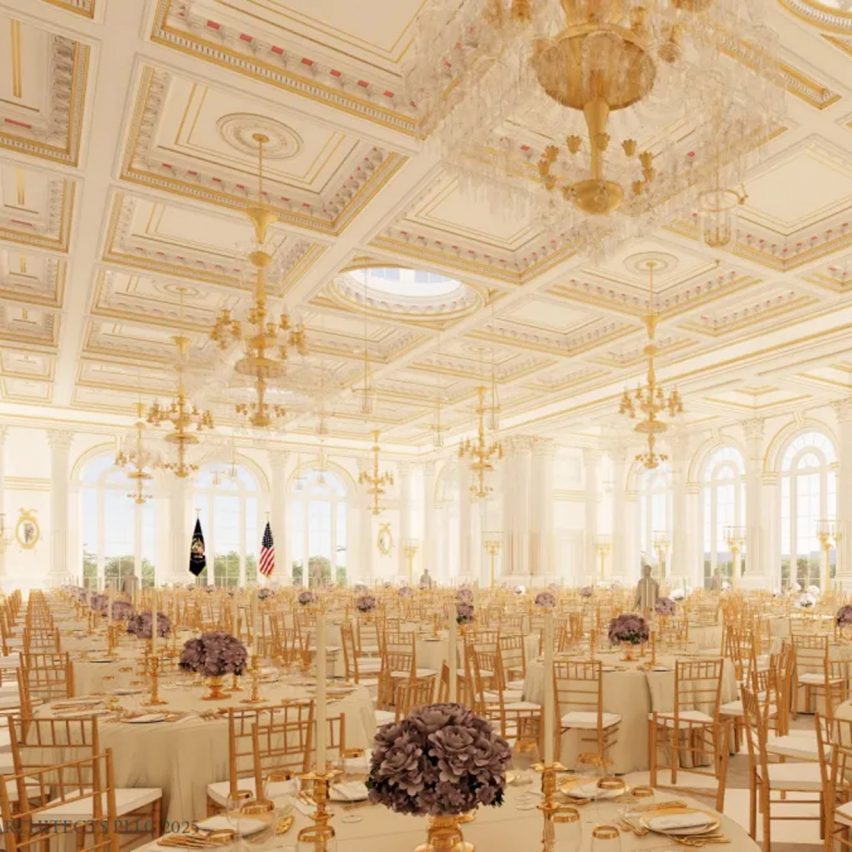 McCrery Architects’ original renderings featured gilded interiors
Clark Construction has been announced as the contractor for the ballroom, while AECOM, a staple of government contracts, has been announced as the engineer.
The project comes with additional engineering concerns surrounding security, given the high-security status of the White House and the presence of an underground bunker in that part of the complex.
Why is Trump building a ballroom for the White House?
At the time of the first announcement in late July 2025, the White House staff cited the ongoing “longing” for a space in the White House grounds to host more dignitaries at events, upping the indoor capacity from 200 to as many as 999 people.
The White House claimed that Trump “expressed his commitment to solving this problem on behalf of future Administrations and the American people”.
Trump has emphasised the auxiliary nature of the structure, and reemphasised the insufficiency of the size of the building.
“It was never thought of as being much,” Trump said of the East Wing. “It was a very small building.”
What is the precedent of White House renovations?
The White House consists of a central Executive Residence where the president and their family live. Theodore Roosevelt built the West Wing in 1902, while his distant cousin, Franklin D Roosevelt, built the recently demolished East Wing in 1942, converting it from a terrace that was used to welcome visitors.
Both wings are connected to the Executive Residence via long passageway volumes lined with exterior colonnades.
Structural and interior upgrades have been made to the Executive Residence, but the facade and basic character of the structure have remained mostly unchanged in its more than 200-year lifespan.
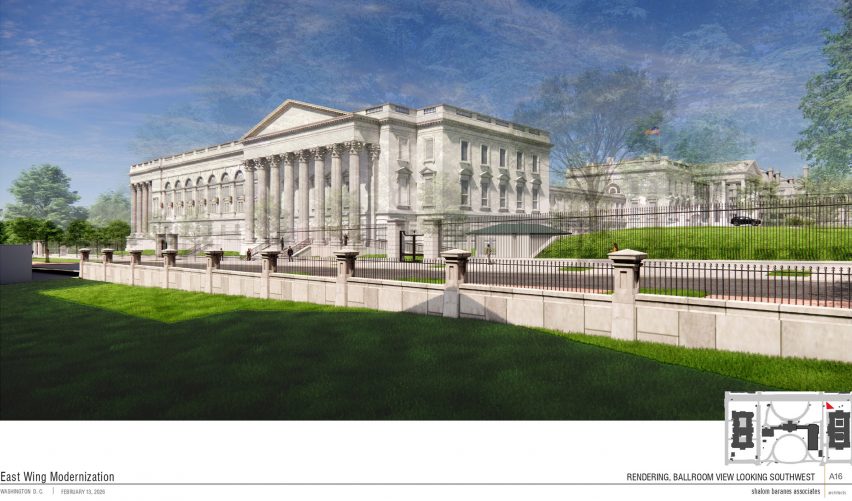 Baranes’ designs are the most detailed look at how the ballroom will sit on the White House complex
Other presidents have added less substantial additions, such as swimming pools and sports courts, while in 1962, John F Kennedy installed the Rose Garden, which was recently paved over at the behest of the Trumps.
Harry Truman carried out a full renovation of the Executive Residence, leaving only the exterior walls to shore the building up against severe structural issues and adding an additional level.
The Trumps’ addition from the first administration includes a tennis pavilion.
Are Trump’s demolition and addition allowed?
While the NCPC typically reviews significant projects, and other entities are typically consulted, the White House is exempt from the review processes required for many other historic federal buildings.
The current head of the National Capital Planning Commission is a Trump appointee, Will Scharf, who reportedly said approval was not needed for the demolition and that the commission expected formal plans before the start of construction.
“How many more monuments to Trump’s implacable vanity can we expect?” asks commenter
In the past, there has been congressional oversight and oversight from the CFA, as with Truman’s gut renovation of the building in the 1950s – but that renovation was carried out with government funds.
According to historian Neil Flanagan, after a compromise in the early 1900s between the legislative and executive branches, mediated by architecture studio McKim, Mead & White, the approach to White House renovations has mostly relied on informal norms, easily bypassed.
In December, the National Parks Service released a required environmental report that stated the ballroom would have “adverse” but not “significant” impacts.
Who is paying for it?
The White House said in its July announcement that private funds from “patriot donors” would be sought to fund the $200 million project. He has also suggested that he will be using personal funds for the project.
Dozens of American companies and people were named as funders in October 2026, including Apple, Adelson Family Foundation, Amazon, Google, Meta, Coinbase, Palantir, and Lockheed Martin.
Columbia professor of law Richard Briffault told Time of the potential ethical concerns with such public donations, as many companies involved vie for government contracts. Briffault called Trump’s “leaning” on the contributors “quasi-coercive”.
Lawyer Richard Painter told the BBC this represents an “ethics nightmare”.
How have architecture experts responded?
Architecture and preservation bodies have taken mostly sceptical stances toward the project.
The Society of Architectural Historians (SAH) expressed “great concern”. It stressed the public status of the White House and called for a “rigorous and deliberate design and review process”, despite demolition being well underway.
SAH said it followed the previously released review process called for by the AIA shortly after the announcement.
The National Trust for Historic Preservation has claimed that the new building will negatively affect the White House itself and asked for a more formal review process.
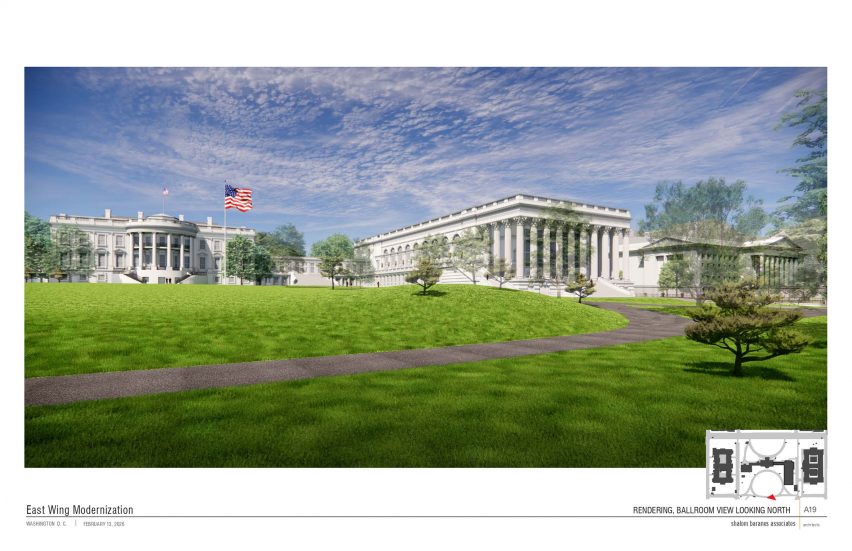 The new wing dwarfs the other aspects of the White House
Recent concept renderings developed by the New York Times illustrate the disproportion between the former East Wing and the proposed structure.
From a strictly stylistic point of view, experts have said the style generally matches that used in the historic White House.
British architect Robert Adam told Dezeen that McCrery’s design fit, with some caveats.
“No doubt some will associate the greater detail of the Corinthian order with the Trumpian bling, as much as the white and gold interior,” he said.
In a statement released after the beginning of demolition, the White House said “In the latest instance of manufactured outrage, unhinged leftists and their fake news allies are clutching their pearls over President Donald J Trump’s visionary addition of a grand, privately funded ballroom to the White House.”
How does it fit into Trump’s wider architectural agenda?
Since the first day of his second term, Trump has made architecture a priority, issuing an executive order mandating a preferred classical and traditional style for federal architecture across the country.
He has directly announced the building of neoclassical-style monuments, such as a proposed celebratory arch, which commentators have dubbed the “Arc de Trump”.
Others have also noted the president’s choice in decor for the Oval Office, complete with gilded mouldings, festoons and decorative items.
This article was originally published on 27 October, 2025, and was last updated on 20 February, 2026.