
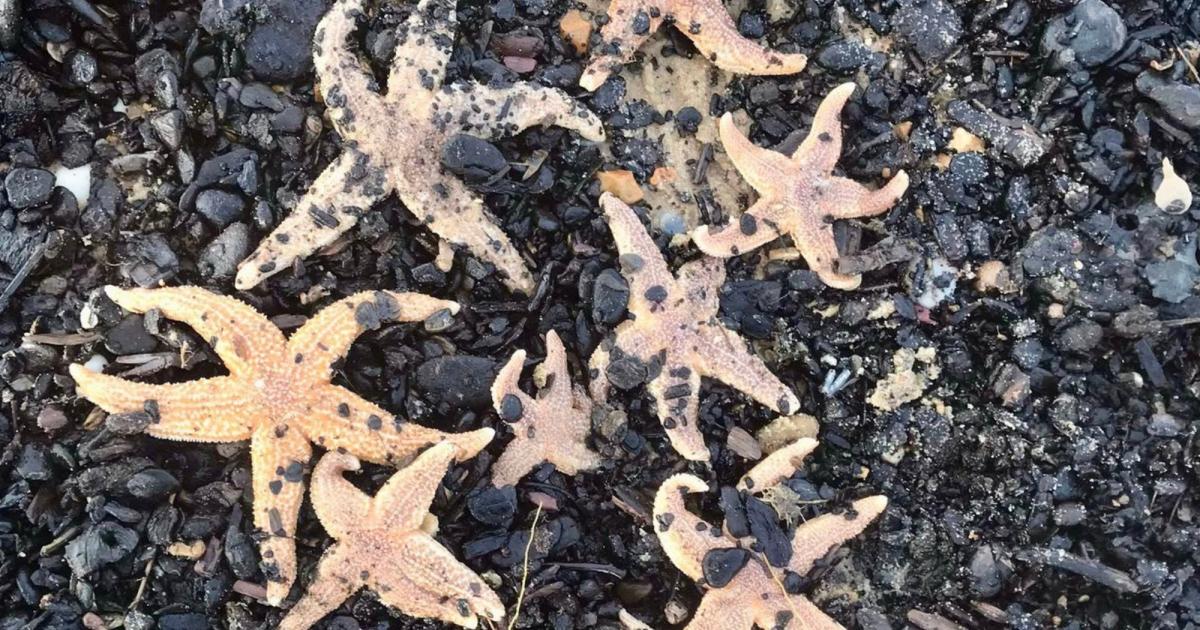
The animals washed up on Southwold and Thorpeness beaches over the weekend.
Galaxy is the term used to describe a group of starfish, as it reflects their star-like arrangements on the sea floor.
Dan Goldsmith, who has volunteered with wildlife since he was a child (Image: Newsquest)
Dan Goldsmith, who works for the Marine and Wildlife Rescue charity, said that weather and the ongoing climate issues could be contributing to the number of dead animals washing up on the beaches.
READ MORE: Porpoise found washed up on Thorpeness beach in Suffolk
Mr Goldsmith, who has volunteered in wildlife rehabilitation since the age of 11, said: “Harsher winters and the storms could be what’s causing the amount of wildlife washing up on our beaches.
“Higher tides, more rain, and the changing seasons have a knock-on effect on the wildlife living in the sea.”
A galaxy of starfish are the latest sea creatures to be found dead on Suffolk’s beaches (Image: Diane Stroud)
READ MORE: Two dead dolphins found washed up on Pakefield beach
The hoard of starfish was found less than two weeks after a porpoise washed up on Thorpeness beach. Three other animals were spotted dead on the shore in the same week.
If you find a deceased animal on a beach, it should be reported to the Cetacean Strandings Investigation Programme on 0800 652 0333.
You should give a description of the location and date found, overall length, condition of the animal, as well as your contact details, should further information be needed.