
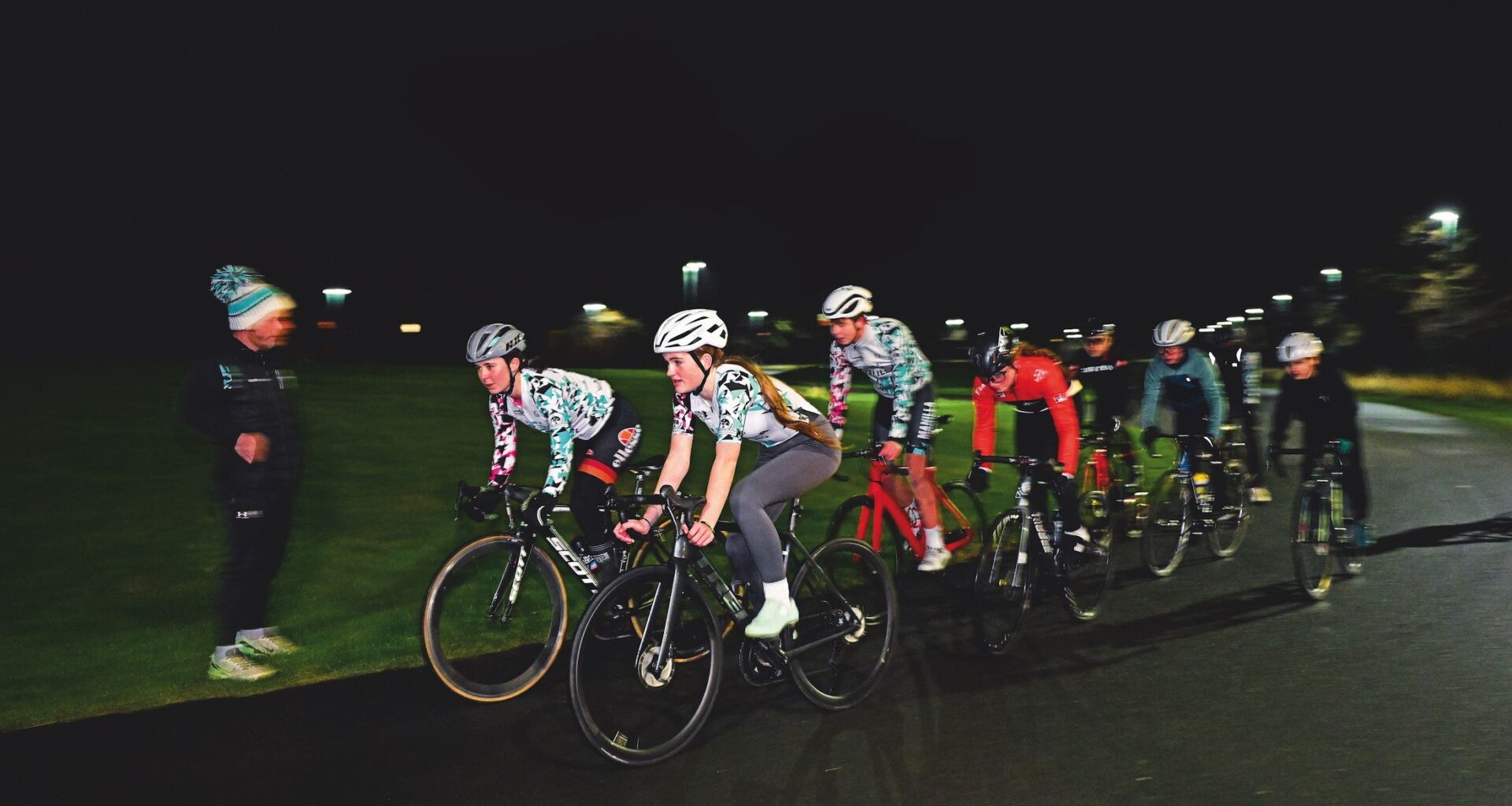
Getting into competitive cycling has never been cheap. Bikes and kit are just the start; for the parents of ambitious youngsters who want to travel to high-quality junior or youth races, there is also fuel, accommodation, entry fees, and time off work. It all adds up. For families supporting young riders, the financial strain can be overwhelming and many can only manage by making sacrifices. For others the costs are prohibitive – and they don’t even attempt it.
The result, according to those at the grassroots, is a shrinking talent pool. Anecdotally, fewer children are racing, and from the people we speak to, cost is cited again and again as the main barrier. As another season approaches, Cycling Weekly spoke to three families in the UK to understand what youth cycle racing really costs – and what that means for the sport’s future.
Adam Brooks: “The cost is a huge problem”
Hartlepool-based Adam Brooks was named British Cycling’s 2025 volunteer coach of the year. CEO and co-founder of the North East Cycling Academy, he counts Visma-Lease a Bike‘s Matthew Brennan among his alumni. His 15-year-old daughter Sophia and 13-year-old son Charlie both compete, and youngest daughter Sienna, eight, is just beginning.”
You may like
“The cost of youth racing is a huge problem. With my kids, we focus on doing around 75-85% of all the national road races they’re eligible to do, and most but not all regional races. For families whose children ride cyclo-cross, it means they are travelling around the country for almost 52 weeks of the year. I did some rough sums and calculated that for travel to and from races, overnight stays and race entries, it costs £6,000 per kid.”
“That’s £12k for two children, and we’re not doing everything we could be doing. The national races are spread out all over the place and the Isle of Man Tour is so expensive: it’s £500 just for the ferry alone, a few hundred quid for the races, and accommodation isn’t cheap. It can easily add up to a minimum of £1,000 for a long weekend.”
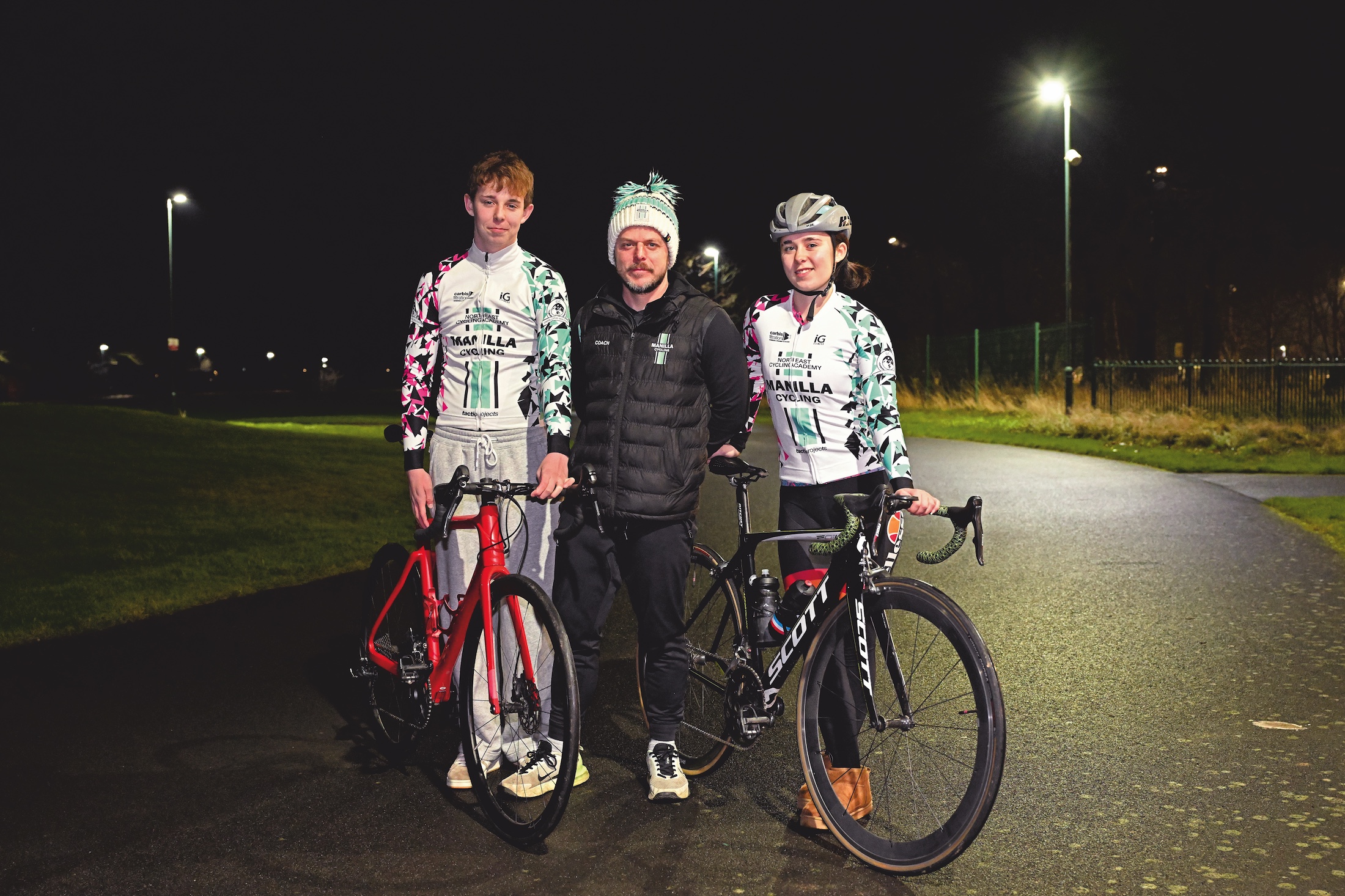
Adam Brooks (middle) with Charlie and Sienna
(Image credit: Andy Jones)
“These are astronomical figures – basically another full-time wage. And that doesn’t even touch on equipment. My daughter is racing on a 12-year-old Scott Foil that I bought second-hand for £700 and then upgraded myself to electronic shifting. Most of the field she’s up against are on brand-new carbon aero bikes with disc brakes.”
“Most kids have multiple bikes; if they want to have a chance of being picked up by the British Cycling pathway, they’ll need to race track, and a track bike will cost between £500 and £1,000. If they’re riding cyclo-cross, you need a pit bike as well as a race bike, so that’s at least £3,000 for the pair. Kids also grow quickly between the ages of 13 and 17 so you’re probably looking at three lots of new bikes in that period, per discipline. “
“It doesn’t stop there, either. The average kid has at least two helmets – road and track/aero.They need replacing at most every two years and cost about £200 a pair. Shoes are £100 minimum and need replacing after a year or two, and then you’ve got bike computers and possibly smart turbo trainers that are several hundred quid each.”
“There are subscriptions to stuff too: Zwift and TNT Sports, if people want to pay that, and maybe even a private coach. We’ve already said we can’t do as much next year for our kids, and that’s a shame because as a coach I can see that my kids have a good opportunity to do well. But if we’re struggling – I’m not poor but we’re certainly not well off – then other families must be having huge struggles.”
“Kids who get into the sport now do so because their parents were cyclists and they’ve got a bit of disposable income.”
Adam Brookes
“We’re going to have to cherry-pick which races we do and stay local and train more. We won’t be able to go to smaller races that we don’t have to be at. Historically this was a working man’s sport, but it’s definitely not these days. Kids who get into the sport now do so because their parents were cyclists and they’ve got a bit of disposable income.”
What to read next
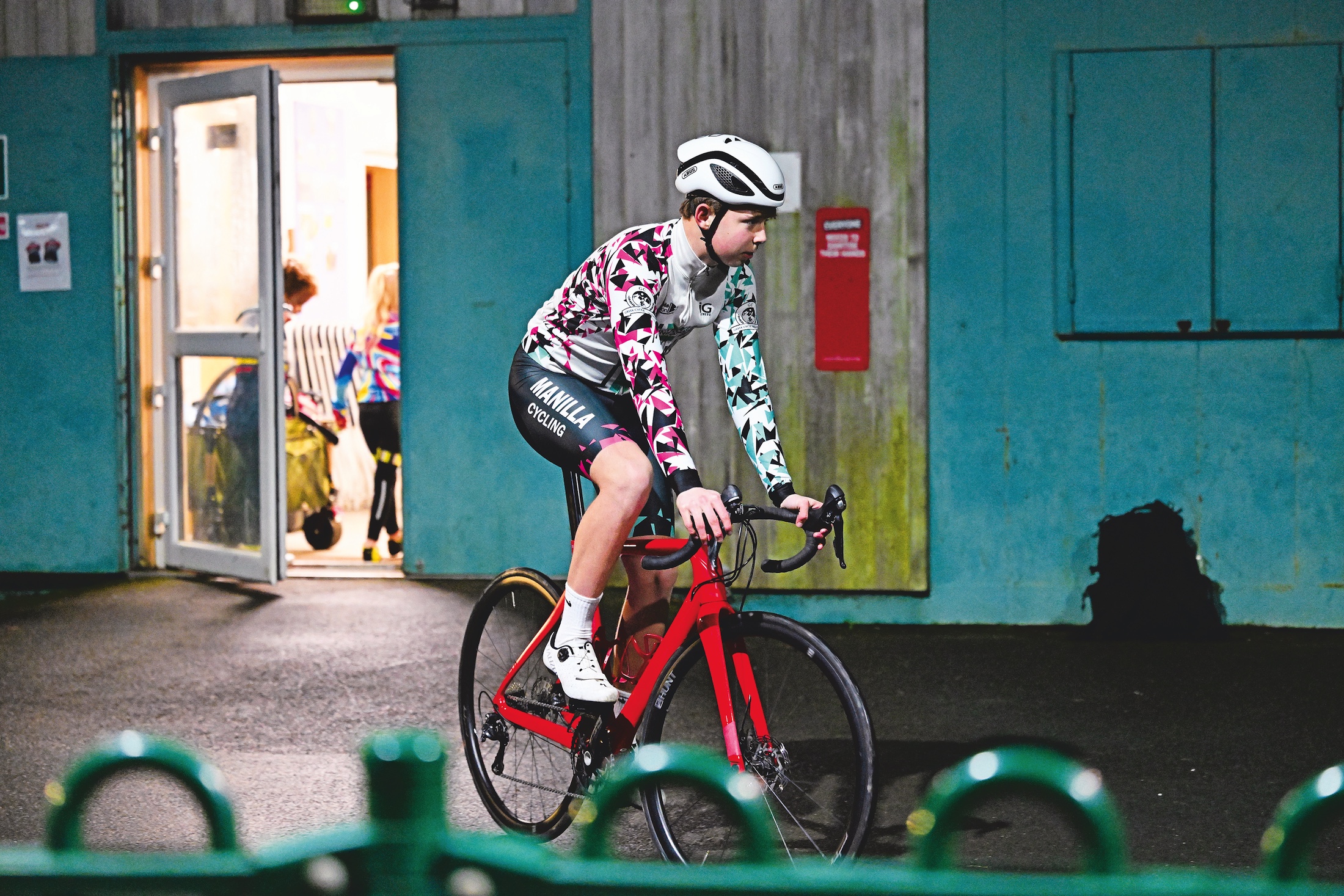
“One thing I’ve got a bit of funding to do at the Middlesbrough Velodrome is to make Monday night track training completely free and inclusive to all, and we’ve got three girls from Asian families who attended the holiday programme and loved it.”
(Image credit: Andy Jones)
“But how the hell do we get them into proper competition when the equipment and travel are so expensive? I want to change things but one person in the North East can’t change it all. If British Cycling is serious about making it a fully inclusive sport, they’ve got to turn the pyramid upside down, as at the moment it’s top-heavy and set up for people who have money. It’s not focused on the kids who have nothing or very little.”
(Image credit: Getty Images)
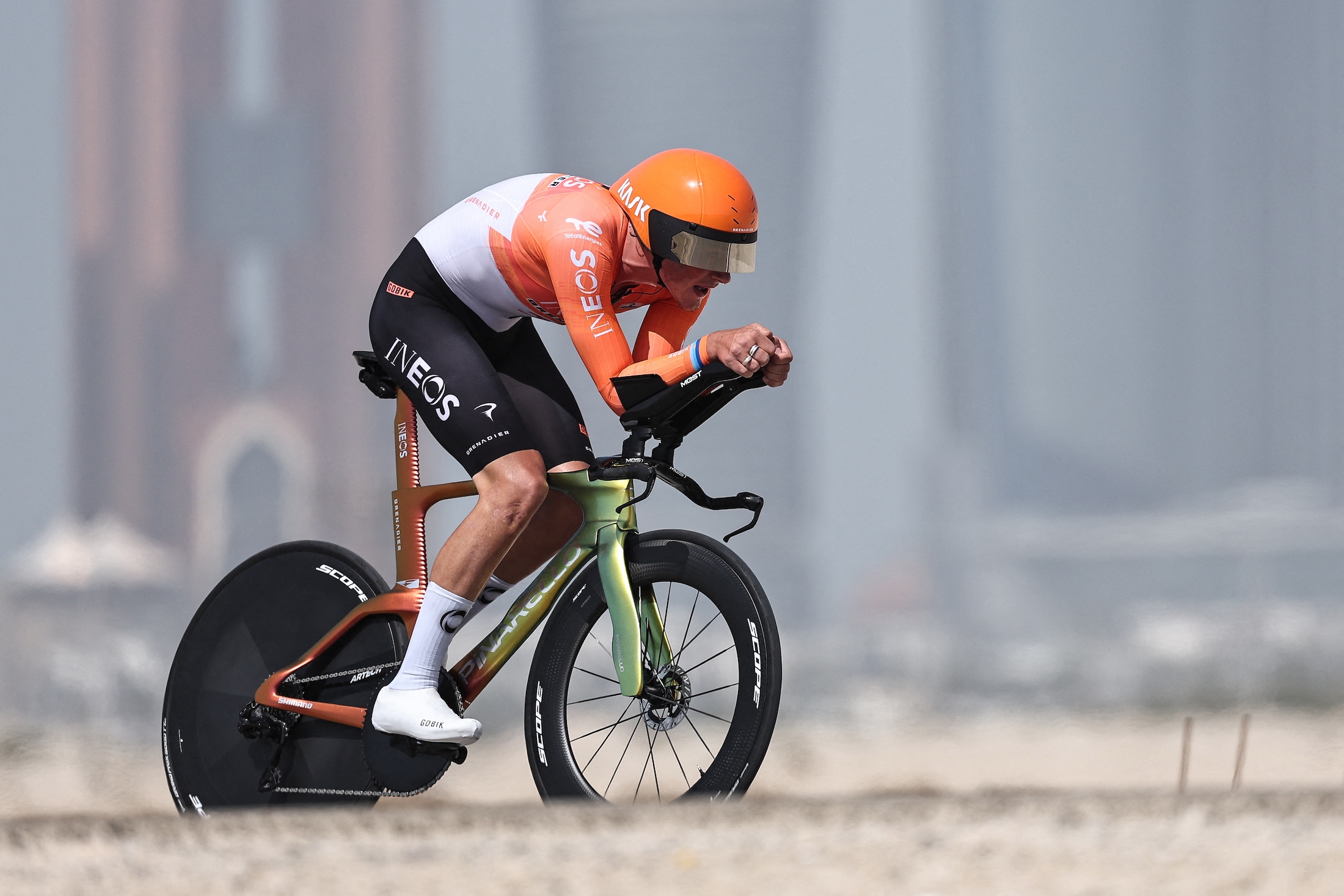
Michael and Dawn Tarling’s 21-year-old son Josh is well known to CW readers as Ineos-Grenadiers TT specialist and Giro d’Italia stage winner. Josh’s younger brother Finlay, 19, is also a big cycling talent, and rides for NSN’s development team. “When both of our boys were racing, the biggest expense for us was travel. Living on the west coast of Wales meant that twice a week we were making five-hour round trips to the Newport Velodrome, and we’d often be away the whole weekend.
“We remortgaged our house to pay off the credit cards”
Michael Tarling
We’re lucky because I’m a cyclist myself, and I have a very tolerant wife, and we viewed it all as quality family time. But if we weren’t a cycling family, I’m not sure how it’d have all worked out. We started our own club, the West Wales Cycle Racing Team, and we ended up with 40 kids. We built a community of car- and bike-sharing, and as a club we bought a nine-seater minibus to take as many kids as possible to events.
Both Josh and Fin rode bikes we got off eBay and Facebook Marketplace, and both were kitted out in hand-me-downs and second-hand equipment. I don’t think enough families know what to look for, and we get at least one parent contacting us each week asking for advice.
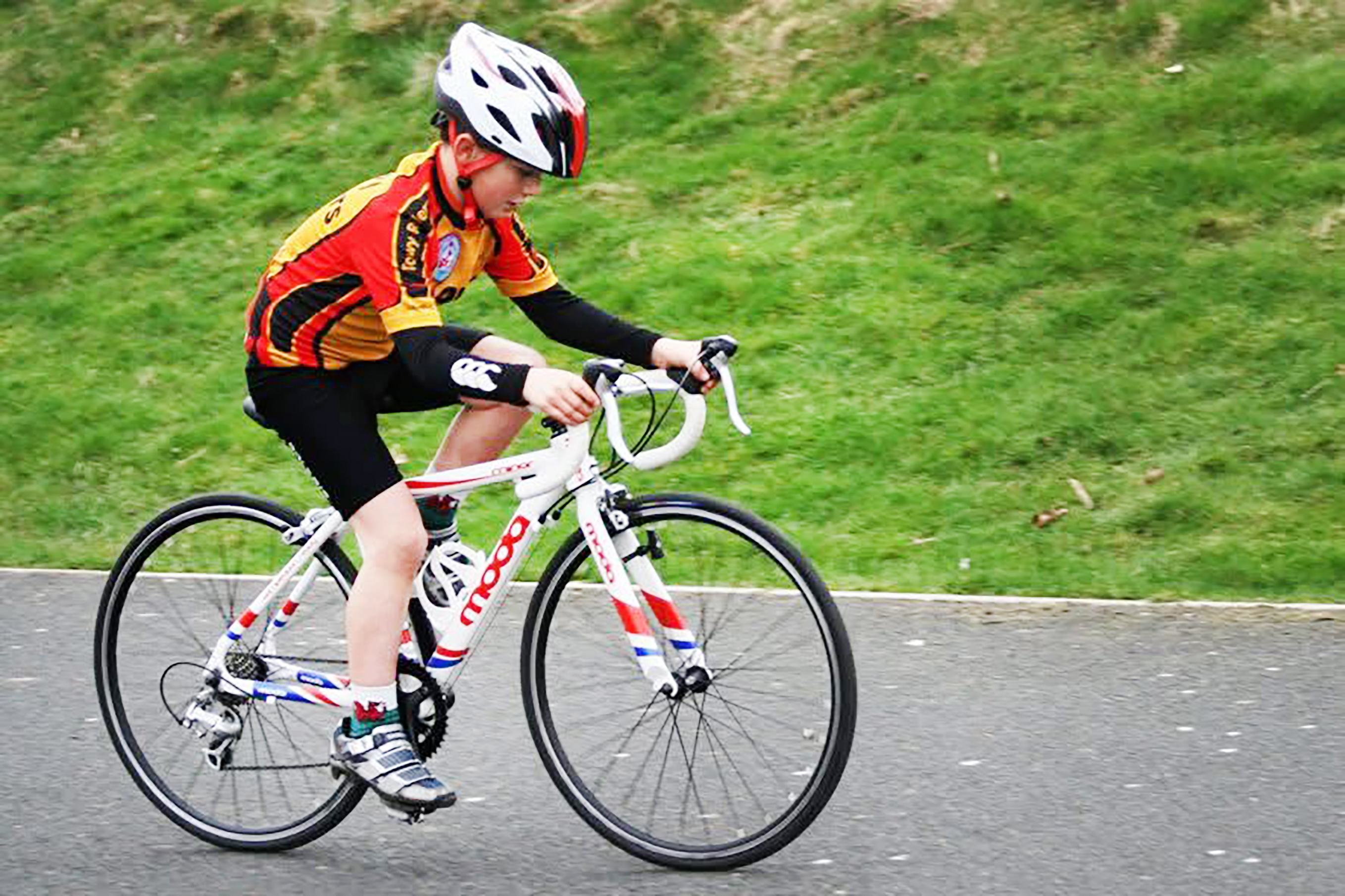
(Image credit: Michael Tarling)
We always give kit away, and always sell equipment at a discounted price to make sure that someone else can ride it. At the recent Welsh Cyclo-cross Championships we spotted four bikes that our boys had once ridden. Josh and Fin were doing well and loving it and we could see the potential they had. When they turned juniors, the priority was getting them racing abroad to be seen, but to do that we had to remortgage our house.
We were paying everything on our credit cards and remortgaged the house to pay off the credit cards. It was a conscious decision – we wanted to do it for all of us. When I look back at five years of trips in the campervan in Belgium, France and the Netherlands, it was financially tough, but I only think about the memories we made along the way.”
Lindsey and Mark Carter: “Until we counted it up, we didn’t know how much we’d spent”
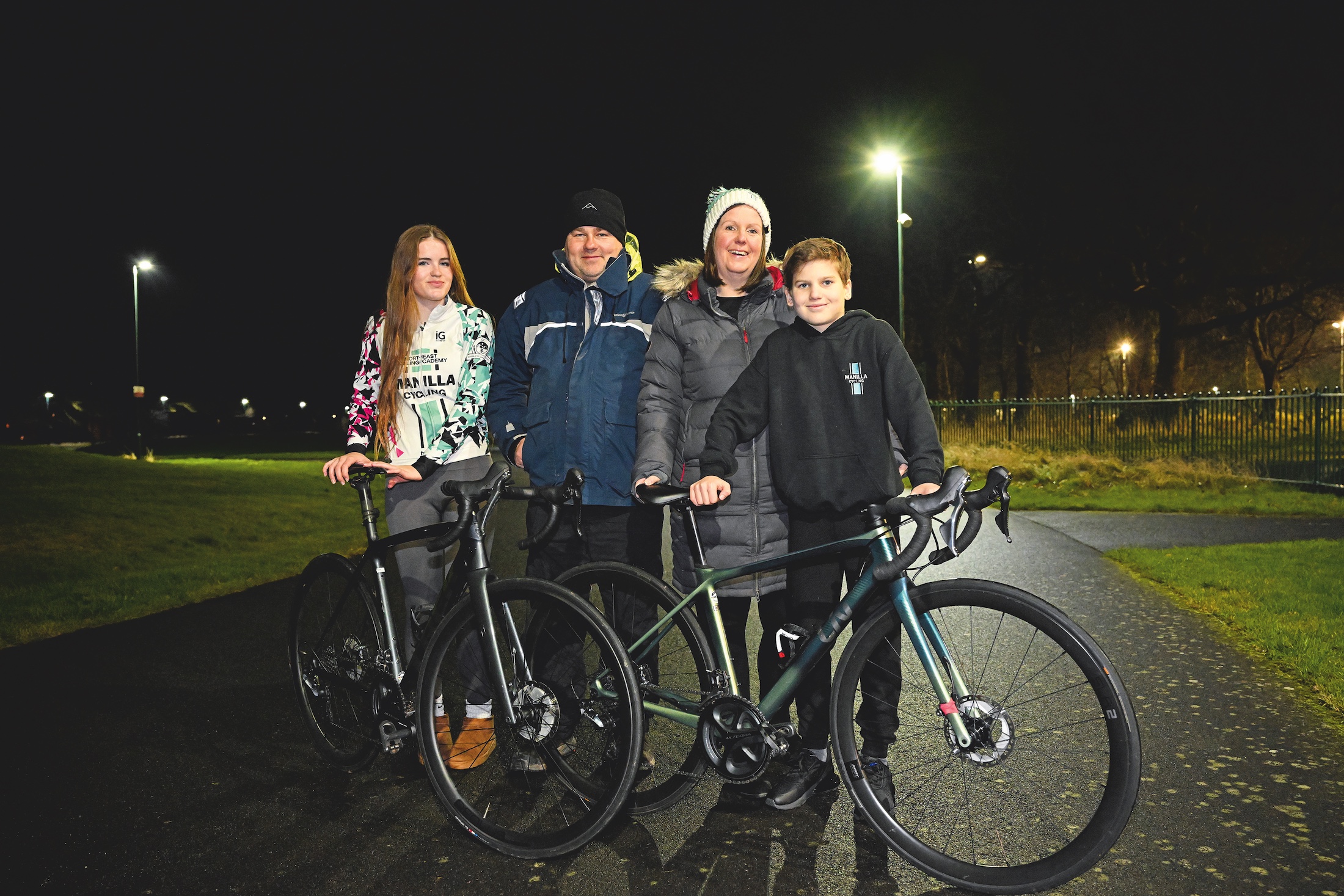
The Carter family travel the length and breadth of the country so their kids can race
(Image credit: Andy Jones)
Can anything be done?
We asked our interviewees for suggestions on how the cost of bike racing for youngsters could be made more affordable.
Michael Tarling: “This might sound controversial given that Josh was a junior time trial world champion, but I’d do away with TT bikes until they reach seniors. A time triallist is a good time triallist, regardless of equipment. Most importantly, there needs to be changes to scheduling: the Isle of Man Youth Tour is held over an April or early May weekend when the ferries are really expensive – can this not be moved to a cheaper time of year? And the National Youth and Junior Track Championships take place in August – that means five nights in a hotel in London during the summer holidays. You could consolidate that into a long weekend outside of the holidays; it doesn’t need to be a Monday to Friday event .”
Mark Carter: “In my opinion, kids don’t need to be wearing club kit. It’s expensive and prohibitive for so many. Let them ride around in whatever kit – it’s only the bib number that the race judges are looking for. If they want to ride around in their favourite EF or Visma jersey, let them .”
Adam Brooks: “We can do track cycling quite cheaply – it really doesn’t have to be that expensive, and the bikes aren’t too dear. Plus, it’s safer than road cycling. The problem is British Cycling package it together with road cycling for their pathway. Does it have to be organised that way? Why couldn’t British Cycling have a pathway solely for track riders?”
Based in Ingleby Barwick in the North East, Lindsey and Mark Carter are parents to 14-year-old Annabelle and 11-year-old Theo, who both ride road, cyclo-cross and track. According to their calculations, they spent more than £40,000 in 2025 supporting their kids’ cycling ambitions. Lindsey: “We know we do a lot with the kids because this is our life, but wow, until we counted it all up, we didn’t know how much we had spent. And the scary thing is we’re very careful with what we spend: all the bikes are second-hand, and Mark does the maintenance.”
“We prefer to get up early and drive three hours to save money rather than stay in a hotel; but if we do stay overnight, I book way in advance so it’s cheaper – I’ve just booked a load of Premier Inns for 2026 at £35 a night. We very rarely eat out. We’ll go to Tesco and spend £25 for a picky tea, or Mark will even cook on the gas cooker, in the car park.”
“What we spend is significantly lower than what others do. To date we’ve mostly been lucky that Annabelle and Theo have both raced in the same place, but if Annabelle gets selected for British Cycling’s pathway, that’s going to split us up as a family – one parent will go with one kid and the other with the other.
That will add additional costs. Annabelle will potentially have to drop something, probably cyclo-cross, as we just can’t afford to do everything, either from a financial or time viewpoint. Something is going to have to give. We’re absolutely not complaining: this is our life and what we choose to do. The time we spend with the kids is so valuable and we want them to be healthy and fit and have friends all over the country. But we’ve sacrificed summer holidays to pay for cycling .”
Mark: “This has been an eye-opener for me, but I don’t see how we can avoid the costs. As Lindsey says, we do things on the cheap. This year we spent £16,000 on a van because that’s an investment over three or four years and it became a necessity because we were damaging the car so much by loading and unloading three or four bikes all the time. The van’s more practical, but it is more costly to run.
For the same reason, I’m not convinced that having a campervan to kip in would reduce costs by much, if at all. I scour the second-hand market for bikes and parts, and Annabelle has been racing on an Italian Ciöcc rim-braked bike I picked up for £1,200 against girls on £6,000 bikes. She even won a few times last year on a bike that cost us £650. When we were in the Netherlands for the Assen Tour, we found a shop that was selling tons of items for €10. We bought 35 pieces of clothing, in various sizes, everything from bibshorts to leggings, and winter gear to waterproofs, for €350.”