
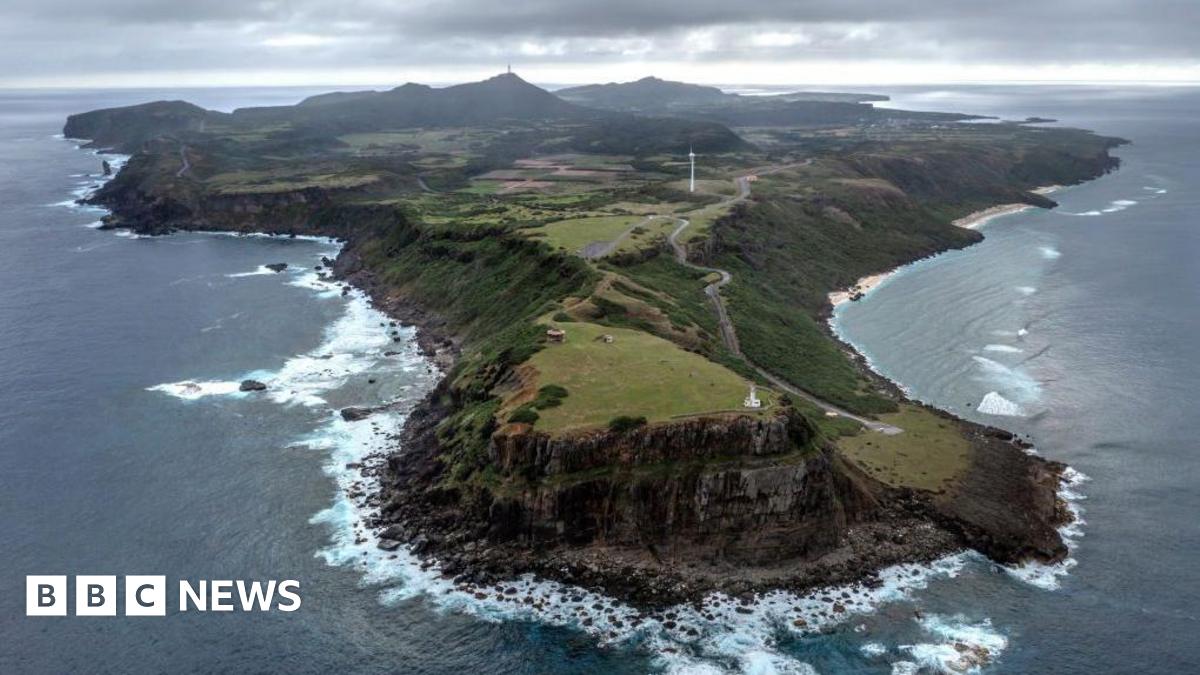
The worry has long been that any attack on Taiwan, which counts the US as an ally, could result in a direct military conflict between Washington and Beijing, then widen to include other US allies in the region such as Japan.
Takaichi’s remarks to parliament plunged ties with China to their lowest level in years and Beijing has been piling on the pressure in a wide range of ways – sending warships, throttling rare earth exports, curbing Chinese tourism, cancelling concerts and even reclaiming its pandas.
Japanese defence minister Shinjiro Koizumi announced the timeline for the missiles on Tuesday, a day after China imposed export curbs on 20 Japanese companies and entities, citing national security concerns.
Koizumi said the Yonaguni unit will be equipped with medium-range surface-to-air missiles able to intercept incoming aircraft and missiles.
With a range of about 50km and 360-degree capability, the Japanese-made missile system can track up to 100 targets simultaneously and engage up to 12 at once.
China has yet to react to Koizumi’s announcement. But when Koizumi visited Yonaguni in November, Beijing said Japan was moving to “create regional tension and provoke military confrontation”.
Within days, China flew drones near the island to express its anger, prompting Japan to scramble aircraft jets in response.
The latest developments come after Takaichi secured a landslide victory in parliamentary elections earlier this month. That victory gave Takaichi political space to double down on boosting Japan’s defence capabilities.
This makes the announcement on Yonaguni island more than just a military adjustment – it looks like the opening chapter for a more assertive Tokyo. And as Takaichi bolsters the country’s military and defence budget, such assertiveness seems unlikely to end here.
The Yonaguni announcement also shows where Japan sees its front line – and how far it is prepared to go to defend it.
Over the past decade, Japan has transformed sleepy Yonaguni into a military outpost, which currently handles coastal surveillance and is staffed by some 160 members of Japan’s self-defence force.
An electronic warfare unit capable of disrupting enemy communications and radar will be set up there in fiscal year 2026, which runs from April to March next year.
The timing for the deployment of the missile unit “may change depending on the progress of future facility improvements, but the current plan is for fiscal year 2030”, Koizumi said.