
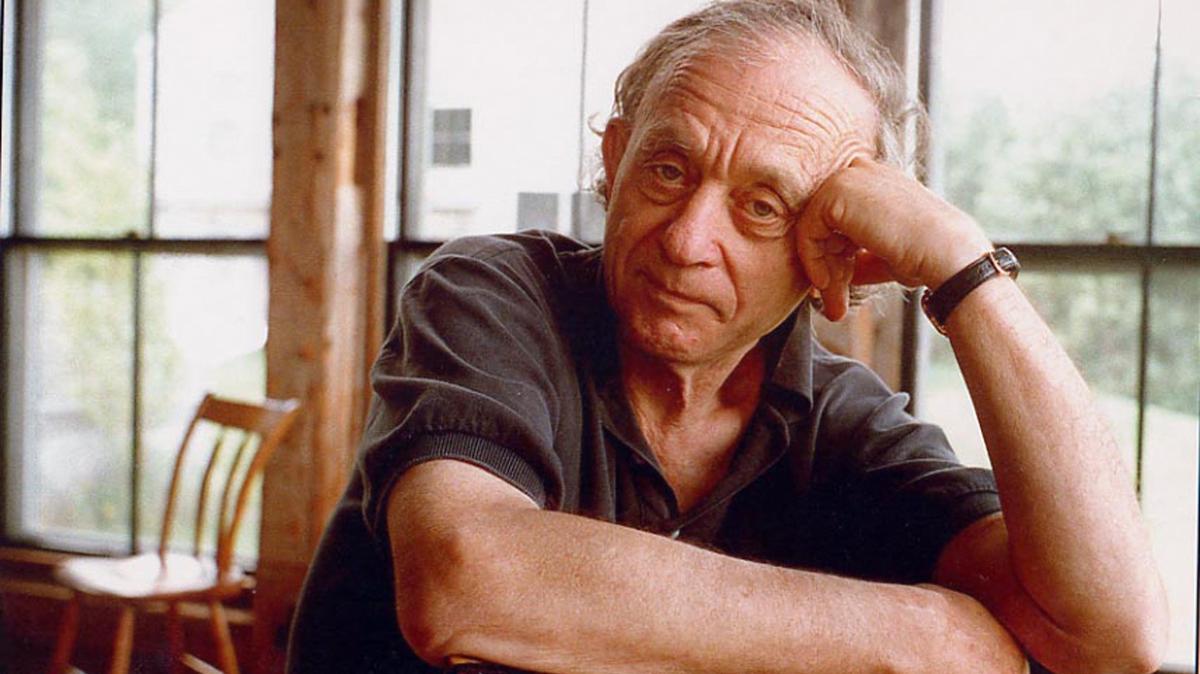
There was an admirably straightforward and unmediated quality to Frederick Wiseman’s documentary film-making. Refusing to intrude or editorialise, he eschewed background music and voiceovers as vulgar tools designed to manipulate the viewer’s response and there were no interviews with his subjects.
Instead, he simply set up his cameras to chronicle the routines of daily life as unobtrusively as possible, spending weeks and often months in situ until his subjects forgot they were being filmed.
“I was tired of seeing narrated documentaries telling me what to think. I thought it would be interesting to make a movie where you didn’t know in advance what the themes were going to be,” he explained. “I don’t use narration and I try to cut sequences in a way that is self-explanatory and not didactic.”
Yet the observational, non-interventionist style of his vérité documentaries packed a hugely powerful punch that held up a mirror to American society and its institutions including hospitals, high schools, military bases, welfare centres and police precincts. The picture was often not pretty but his films posed profound and existential questions about the American dream and its capacity at times to turn into something more nightmarish.
Some saw his films as mere agit-prop but he insisted his intention was never political and that he was not a campaigner but an observer. Nevertheless, by tackling troubling social and economic subjects, his films often provoked controversy and raised important questions that politicians and legislators could not ignore.
Over a career lasting more than half a century and starting with Titicut Follies (1967), Wiseman made documentaries at more or less the rate of one a year until his final film Menus-Plaisirs — Les Troisgros, which premiered at the Venice Film Festival in 2023.
“What’s kept me going is it’s fun and an adventure,” he said. “Constantly working keeps me off the streets — or at least on the streets that I like.”
Perhaps none generated more controversy than Titicut Follies. Taking its title from a talent show put on by the staff at Bridgewater State Hospital for the Criminally Insane, the film exposed appalling brutality at a Massachusetts correctional facility, including scenes of inmates being stripped naked, force feeding and vicious bullying.
Titicut Follies won prizes at German and Italian film festivals but was less well received in America, where it was banned until 1991. The film aired on PBS the next year and in 2022 was belatedly selected for preservation in the United States National Film Registry by the Library of Congress as being “culturally, historically, or aesthetically significant”.
By then the Bridgewater facility had been reformed and a number of similar institutions around the country had been investigated and closed over allegations of “cruel, inhuman, and barbarous treatment”.
The film became the template for Wiseman’s subsequent unflinching films that dealt with control, authority and sometimes abuse. Edited down from hundreds of hours of black and white footage, they became known as his “institutional” series. High School (1968) depicted a typical day at a school in Pennsylvania where pupils at the height of the Vietnam War were trained to “be a man and take orders” and led The New Yorker’s film critic Pauline Kael to describe Wiseman as “the most sophisticated intelligence to enter the documentary field in years”.
Law and Order (1969) was a dispassionate view of the friction between cops and crooks filmed from in the Kansas City police department. Hospital (1970) filmed overworked doctors and a waiting room of alcoholics and hippies strung out on drugs in Harlem and was so harrowing it could only be shown on TV after the watershed. Welfare (1975) showed the struggles of benefit claimants and those administering an unsympathetic system.
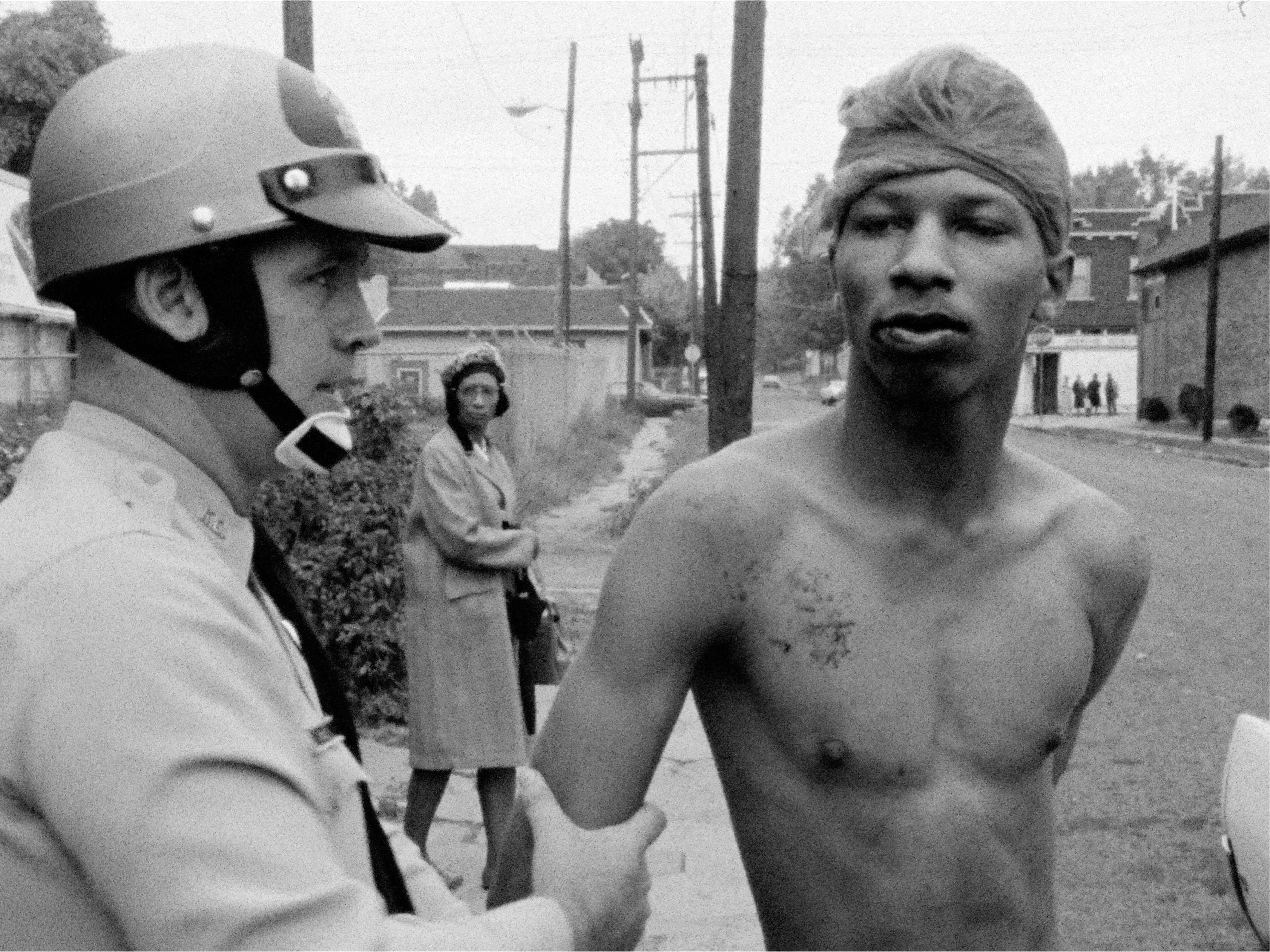
Law and Order, 1969
FREDERICK WISEMAN COLLECTION/ALAMY
Later notable films shot in colour included Public Housing (1997) and Domestic Violence (2001). Like most of his documentaries, the titles were self-explanatory and, once aired on American television by PBS, prompted widespread debate.
Taken together the films formed an unparalleled social history of late 20th-century America that earned him an honorary Academy Award at the 2016 Oscars ceremony.
“I’m trying to create dramatic structures out of ordinary experience so the cumulative effect will be a series of thematically interrelated films that record how people thought and lived and worked, how that behaviour is in part reflected in institutions and how institutions are microcosms for a larger society,” he said.
However, he was at pains to play down suggestions that his work had helped to bring about improvements in the institutions and systems he examined, let alone in the wider world.
“I don’t know what causes social change but I don’t think it is documentary film-making,” he said. “It’s one thing to start out with a pious wish that that would be the case, but ultimately it’s a naive and presumptuous view.”
He is survived by his sons, David and Eric, from his marriage to Zipporah Batshaw Wiseman, whom he met at Yale law school. They married in 1955 and she predeceased him in 2021 after a distinguished legal career.
Frederick Wiseman was born on New Year’s Day 1930 in Boston, the son of Gertrude (née Kotzen), a hospital administrator, and Jacob Wiseman, a lawyer who assisted Jewish émigrés fleeing from the Nazis to apply for American visas.
Although he admitted having “daydreamed my way through high school”, he won a place at Williams College and then Yale, where with a distinct lack of enthusiasm he followed in his father’s footsteps, “because I didn’t know what else to do”.
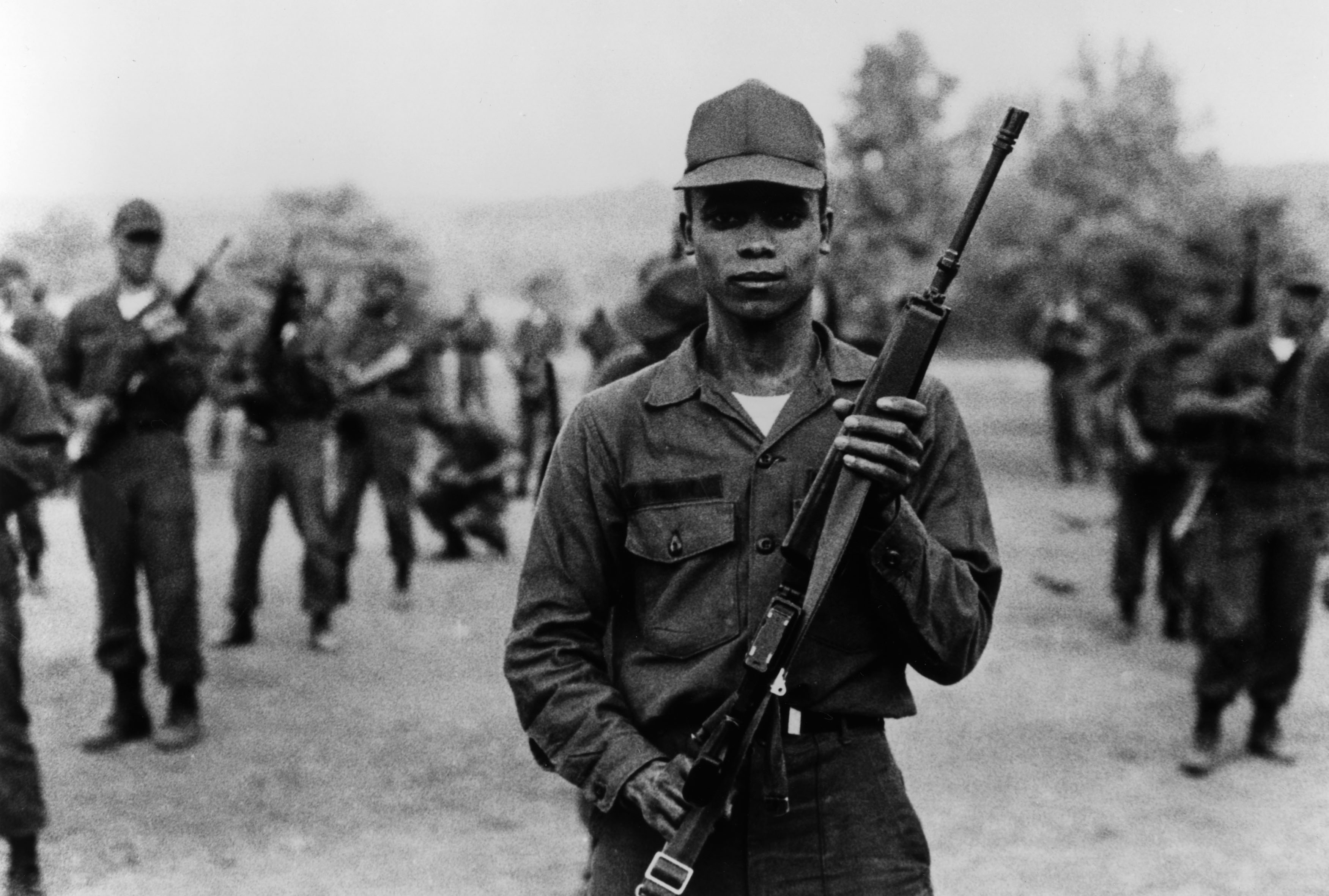
Basic Training, 1971
SHUTTERSTOCK EDITORIAL
In fact, there was another reason because he was desperate not to be drafted to fight in Korea. “Even law school seemed to be, to my keen analytical mind, a better alternative than going to war,” he wrote in an autobiographical essay to accompanied a retrospective of his films at New York’s Museum of Modern Art in 2010.
The ruse worked, because by the time he graduated in 1954 the war was over and, when he was drafted, he was given a typewriter rather than a gun and served as a clerk in the legal office of the US army base at Fort Benning, Georgia. On his discharge he moved to Paris and was admitted to the Sorbonne, where he furthered his studies of the law funded by the GI Bill.
Back in America he took up a teaching position at Boston University School of Law. As part of the course he was teaching, he took students on field trips to places “where defendants would end up if they were poorly represented or overzealously prosecuted”, which was how he got to see the horrors taking place at Bridgewater hospital.
His later films suggested a mellowing in his choice of subject matter as gritty views of the powerless struggling against a dehumanising system gave way to more wholesome and uplifting documentaries about hallowed cultural institutions. La Danse (2009) took him inside the Paris ballet and he followed with a stay in London to make National Gallery (2014).
Ex Libris (2017) found him poking about in the New York public library while his final film, Menus-Plaisirs — Les Troisgros, went behind the scenes at a renowned Michelin triple-starred restaurant.
“I think it is as important to document kindness, civility and generosity of spirit as it is to show cruelty, banality and indifference,” he said of this more celebratory body of work. “I want to show as many different aspects of human behaviour as I can.”
Frederick Wiseman, documentary film-maker, was born on January 1, 1930. He died on February 16, 2026, aged 96