
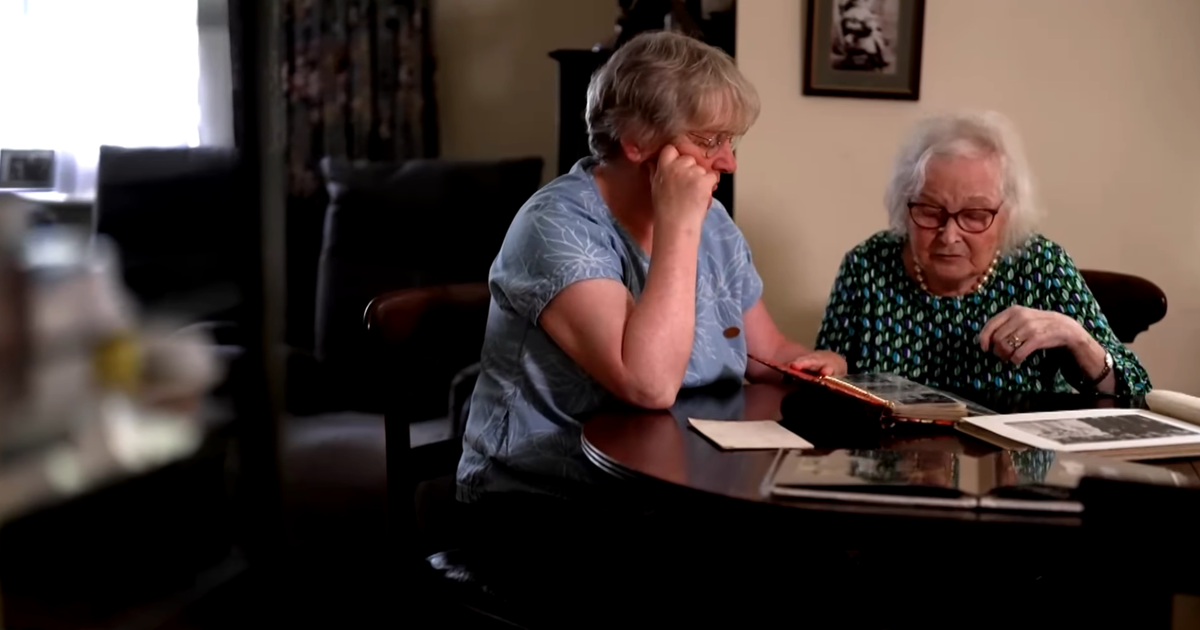
An elderly mum who took Thalidomide while pregnant is still hoping for a State Apology nearly two years after writing to then-Taoiseach Simon Harris.
Mary Clarken, who is 96 this year, said the letter, which was sent on July 24, 2024, was acknowledged by the Department of Taoiseach, but no reply was ever given.
At the time she wrote: “I am writing today as the mother of a Thalidomide Survivor to press once again for a state apology to my daughter and everybody affected by this drug.”
In the same letter, she later added: “Leaving Thalidomide on the market long after it should have been removed was a shameful and reprehensible act which brought unnecessary pain and suffering to many newborns and their families.
“We may bemoan the politics of yesteryear, the politics which exposed me, and many like me, to a drug which was removed from shelves worldwide well before it was removed here.
“But just because we bemoan the past does not excuse it. There is a precedent for moving on from the standards of the past. It can and should be done.
“Everybody knows that healing can only properly begin with an apology. Even sixty years of trauma can be eased by a heartfelt ‘We’re sorry.’
“To refuse one now is to extend the trauma, the hurt, the feeling of exclusion suffered by Thalidomide Survivors indefinitely.”
Her daughter Sharon, who was born with a deformed arm, is set to meet Taoiseach Micheal Martin and Tanaiste Simon Harris today at Government Buildings.
The Irish Thalidomide Association has long called on the State to provide a “truthful explanation” about the drug’s use in Ireland.
The group claims the Irish State in the ’60s “took the deliberate decision” not to alert pregnant women to the dangers of Thalidomide.
In a statement, they said: “For over 60 years, Irish Thalidomide survivors have waited for a truthful explanation of why the State did what they did to Thalidomide children.
“In years of research, we now know the misogynistic and deliberate decision taken by the Irish State not to credit Irish women in the 1960s with the ability to make the right choices for themselves and their families.
“The Irish State took the deliberate decision; don’t alert them of dangers, lest they get hysterical about what their innocent actions may lead to.
“Better indeed to allow them to live with a lifetime of unfounded guilt.”
The drug was widely prescribed to pregnant mums in the ’50s and ’60s as an anti-morning sickness drug.
But it later emerged that the drug led to birth defects and lifelong disabilities.
Most countries withdrew the drug from sale in 1961, but it was still sold in Ireland until 1964.
The Irish Mirror contacted the Department of Taoiseach for comment.
Want to see more of the stories you love from the Irish Mirror? Making us your preferred source on Google means you’ll get more of our exclusives, top stories and must-read content straight away. To add Irish Mirror as a preferred source, simply click here