

Robert Cochran’s defined benefit pension schemes will all start paying him an income when he reaches 60
In our Pension Diaries series, we speak to people of all ages in the UK to find out how much or how little they have saved for retirement and the realities of putting money aside for your future.
Today, we speak to Robert Cochran, 57, who lives in Edinburgh and is a workplace savings and innovations specialist at pensions provider Scottish Widows.
Robert, who is a father of three, reveals he may be a sensible pensions expert now, but even he has a few pension regrets.
What was your route into your career and what other jobs have you had?
I studied marketing and finance at Strathclyde University and did an economics degree as well. While I was at university, I worked as a waiter.
When I left university, it was in the middle of a recession and it was really difficult to get a job in finance. I ended up taking a graduate trainee role at McDonald’s and was working at the busiest McDonald’s store in Glasgow.
New FeatureIn ShortQuick Stories. Same trusted journalism.
Working at McDonald’s was a brilliant experience, but really hard work. I left there about 19 months later, as I managed to get a role with pension specialist NPI (Northern Provident Investments). Moving into financial services felt like a holiday compared to being at McDonald’s! You didn’t have to work weekends, you didn’t have to work six days in a row or until 2am.
I took the graduate role with NPI and moved to Manchester, where I moved in with my friend. I lived in Manchester for a year and a bit and then I was given a full-time role with NPI in Edinburgh. I moved here in 1994 and have been here ever since.
I spent five or six years as a broker consultant for NPI. Those were my raving years.
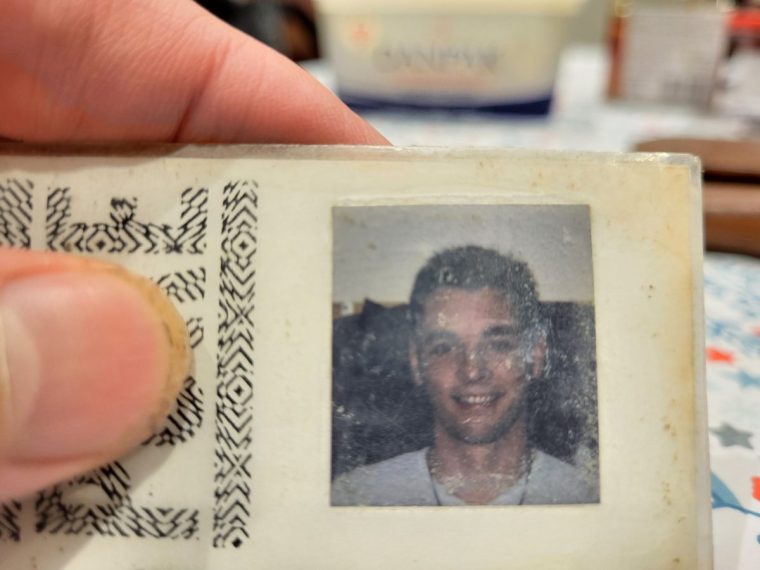 Robert (pictured in his younger years) says: ‘Working at McDonald’s was a brilliant experience, but really hard work’
Then I became more serious about work and moved to Scottish Amicable. I did really well there and was well paid. But then I wanted to do something more challenging.
I was then recruited by Scottish Widows to be a pension specialist and this year, I will have been there for 25 years.
When did you first start putting money into a pension?
While I was working as a waiter at Garfunkels as a student, I was contracted out of the State Earnings-Related Pension Scheme (SERPS) [a government top-up for pensions] as someone came round and got us all to do it.
There won’t be much money at all in there, as I was a waiter working part-time. I have never seen a penny of that money and haven’t been able to find it. I am curious to see if the pension dashboard can reconnect me with that. There might be £40 in there, there might be nothing.
When I worked at McDonald’s, I was enrolled into their occupational money purchase pension scheme. It is literally called a McPension! I was around 22 at the time and I got a decent employer contribution and I was contributing to it too.
In those days, if you had worked somewhere for less than two years, you could get a refund of your contributions – but not the employer contributions; they kept them.
 Robert has now been a pensions expert at Scottish Widows for 25 years
I just took my contributions as I was moving to Manchester and the money was spent going out. I had moved in with my friend and it was Manchester in the 90s, so it was wild.
We were out every single weekend and it was good fun. I probably got more than £1,000 back in my pension contributions, which to a 22-year-old in the 1990s felt like a lot of money.
When I joined NPI, I was enrolled into a final salary pension scheme. After moving to Scottish Amicable, I joined another final salary scheme.
I then joined Scottish Widows and was enrolled on the final salary scheme there a month before it shut. It was great at the start, but like a lot of schemes, they capped your salary.
So if you remained in the scheme, you didn’t have to pay anything into it, but you were accruing a final salary benefit on a salary which, a couple of years ago, was half of what my salary is now. So at that point, I stopped paying into that pension and moved to their defined contribution scheme.
How many pension pots do you have and what is their estimated value?
Having worked for three financial services firms, I have ended up with three defined benefit schemes (final salary). They are all paid up and will pay out to me when I am 60.
 Robert (pictured with his sons) studied marketing and finance at Strathclyde University and did an economics degree as well
I am now in a defined contribution scheme which I pay into and has generous employer contributions of over 20 per cent. I also have a SIPP (Self-Invested Personal Pension), which is made up of additional voluntary money I paid while part of the defined benefit schemes.
My combined defined benefit pots will pay me over £30,000 a year from the age of 60 and I already qualify for the full state pension. I have got around £100,000 across my defined contribution pot and my SIPP and I’m hoping to accrue another £300,000 in there by the time I retire.
What is your biggest pension regret?
I wish I had transferred the value of two of my defined benefit schemes a few years ago and invested the money into my SIPP or defined contribution pot.
This seems counterintuitive to what people are told about not transferring a final salary pension – but I absolutely should have transferred mine. Lots of my colleagues did that and they now have million-pound pension funds.
As an example, I worked at Scottish Amicable for just over a year and my transfer value for my defined benefit pension was over £150,000 when interest rates were really low.
The value of that pension is still the same to me as it will give me £5,000 a year in income when I’m 60. But the cash transfer value has gone up and down. If I had taken it out 10 years ago and invested it, it would be worth a lot of money by now.
But you can’t have regrets, you just have to get on with it.
What is your situation now and attitude to money?
I won’t be retiring when I am 60 as I have recently been through a divorce, which was quite expensive in terms of me having to take out a mortgage again.
My ex-wife kept the house, which had the mortgage paid up and she also kept a buy-to-let so she will have the income from that as part of the financial settlement. I kept my pensions – that’s how we chose to split it up.
When I am 60, my three defined benefit pensions will all start paying me an income – but I will still be working.
 Robert (pictured with his partner Michelle) says he was out every single weekend when he was younger
My plan will be to take that money at 60 rather than delaying it and then re-route the money through salary sacrifice – depending on whatever the rules are on salary sacrifice by then – as pension contributions either into my work scheme or my SIPP.
My attitude to money has been reasonably sensible. I paid off my mortgage early and put extra money into my pension through additional voluntary contributions – where you pay in more than the minimum required by your scheme.
What is your goal for retirement?
My partner Michelle is 12 years younger than me, so I will probably retire in my mid-60s. I enjoy my work and am really busy, going out and about doing things. I am in no rush to put my feet up.
I love Edinburgh, but when I retire, I will probably want to move just outside it on the coast as I love the beach and I love cycling.
I am a big believer in the 100-year life so I have a long way to go yet. I keep myself reasonably fit and anticipate having a whole new phase of life once I retire.
Would you like to be featured in Pension Diaries? E-mail: Aasma.day@theipaper.com