
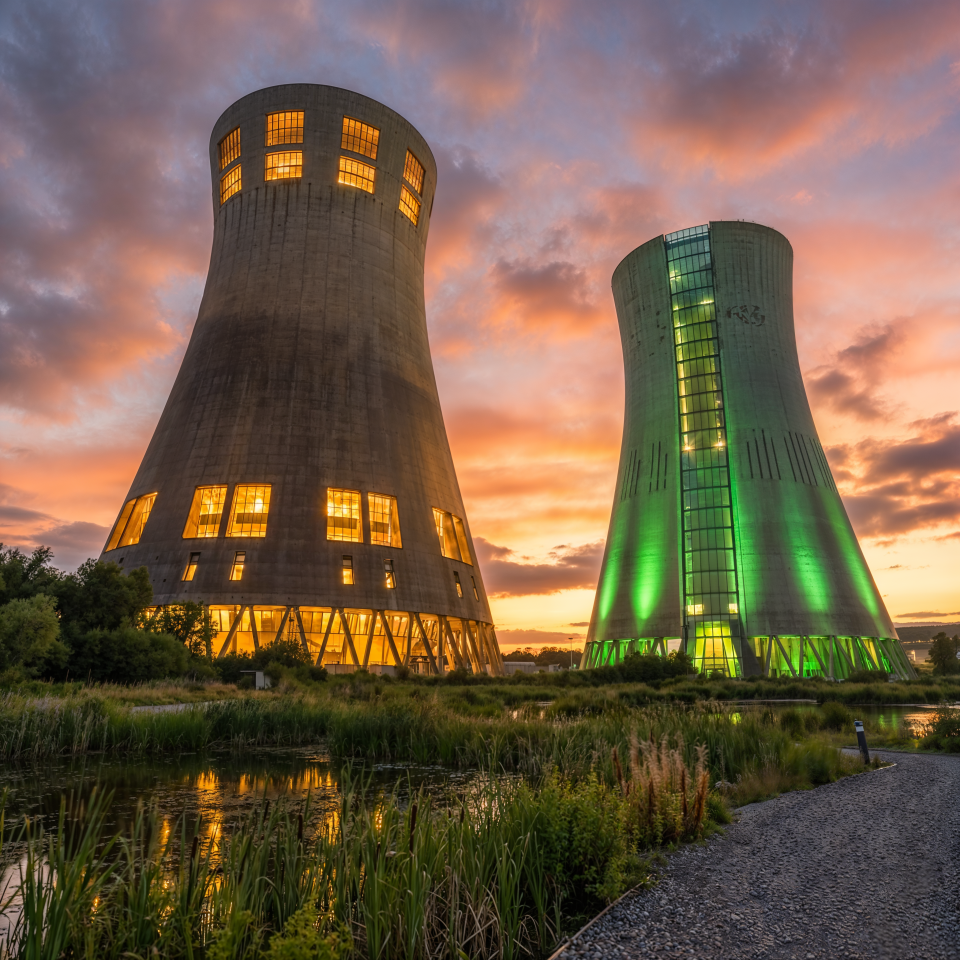
A Nottingham-based budding architect has taken design innovation to the next level, showcasing the potential for redevelopment at the iconic Ratcliffe-on-Soar Power Station using AI technology.
The recognisable landmark for those travelling in or out of Nottingham via Remembrance Way (A453) has been empty since September 2024, with its closure marking the end of the UK’s 142-year reliance on fossil fuels.
27-year-old Qasim Iqbal, an architectural assistant and award-winning AI designer at Nottingham-headquartered architecture practice CPMG, has developed a new design concept to suggest ways of extending the site’s lifespan and value.
Following recent news that Rushcliffe Borough Council is seeking views on changing its Local Development Order (LDO) to enable the creation of data centres, it looks like change may be on the horizon. Qasim’s designs develop other possibilities for the site, offering a futuristic visual glimpse into its potential and sparking conversations about the ways in which infrastructure can be regenerated.
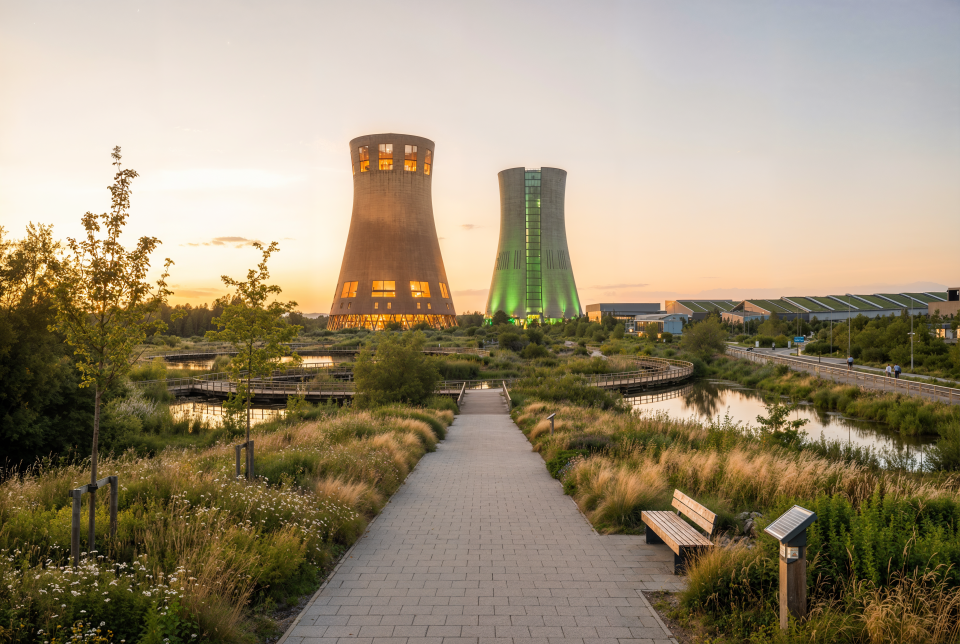 Qasim Iqbal
Qasim’s AI designs for the site amplify the potential that the existing cooling towers have as performance venues, using their unique acoustic qualities. This idea builds on recent activity at the power station, in which musicians have utilised the towers for musical performances for the first time.
Addressing the common flooding experienced on the site, Qasim’s designs showcase potential mitigation options, including a “sponge city” design that combines effective standing water management with cohesive landscaping design.
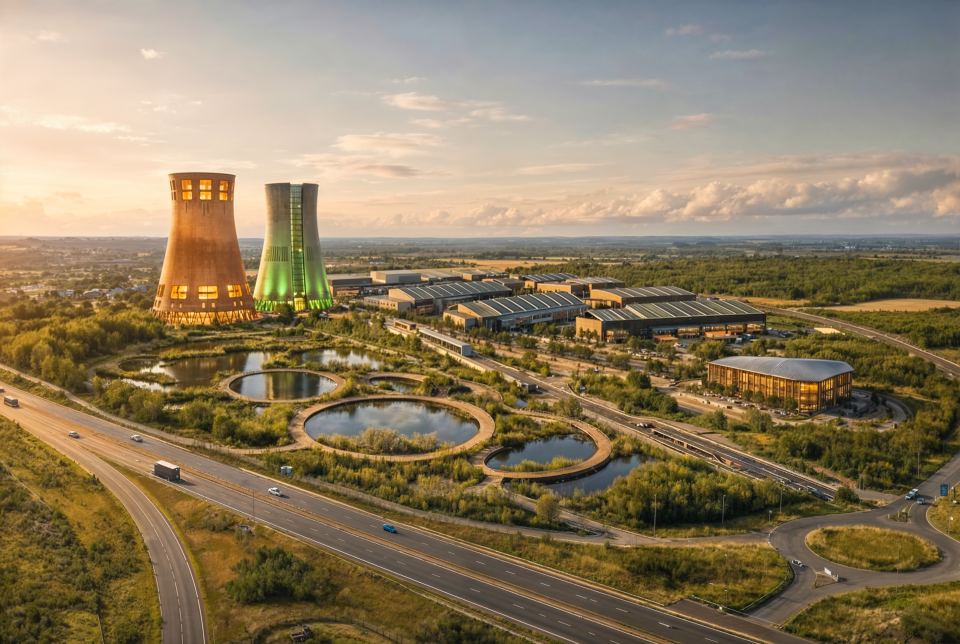 Qasim Iqbal
Speaking about his designs, Qasim said: “The Ratcliffe-on-Soar Power Station is an iconic piece of architecture in Nottinghamshire. Using AI, we’ve been able to gain incredible insight into what its future may really look like.
“From the site being used as an educational and performance space, through to hybrid uses to accommodate a cultural or science hub, there are many design avenues to explore to see its true potential. As the current consultation focuses on the introduction of new data centres, I’m keen to see how things progress and how close they may be to my AI designs if they are to become reality.
“Looking at the wider site, its potential can go even further through AI design, allowing us to open doors that may have been previously locked and to understand new realms of possibility, both for this site and for other brownfield sites like it across the UK.
“With the support of the team at CPMG, I’ve been able to focus on developing my own AI design skills while also driving company-wide growth by incorporating the best parts of AI into our everyday work, alongside those all-important BIM and traditional design techniques.”
In 2025, Qasim was recognised by the International AI Design Awards for his expert design skills using AI technology. This included a second-place award and a special recognition award for two of his architectural designs.
Richard Flisher, Managing Director at CPMG, said: “Innovation plays an important role in architecture and is something we’re continually exploring at CPMG. With AI opening up new possibilities every day, it’s exciting to see how emerging technologies can support the design process. Seeing how Qasim has used AI to develop ideas into engaging design concepts highlights the talent of the next generation and the fresh perspectives shaping the future of our sector.”
CPMG has a history of working on the site, having been involved in the design of the adjacent East Midlands Parkway railway station.