
Britain will have to fight a high-tech war against a big adversary in as little as three years — but the nation isn’t ready for it and neither is our military, with much of its hardware stuck decades in the past.
It’s the starkest warning yet from a serving senior figure about the rising threat the country now faces. And this one comes from a government minister who usually tells us everything’s fine.
“When it comes to deterring Russia, we have three to five years before we have to fight a significant confrontation with a major state, a geographically constrained conflict in some shape or form,” Al Carns says. “And the reality is, whether we like it or not our military in a lot of cases hasn’t changed from the Eighties and Nineties. We’ve got to move faster, and on everything.”
As his bluntness reveals, Carns is not your usual minister. This time two years ago he was still a colonel in the Royal Marines, having spent much of his 24 years in the military in the Special Boat Service (SBS), with an array of gallantry medals to prove it.
He’s now the minister of state for the armed forces, a meteoric rise for a Labour MP first elected 20 months ago. The 45-year-old Scot, who grew up on a council estate, is also being talked up by his fellow 2024 Commons intake as Labour’s next prime minister.
If that’s not his own ambition too, he nonetheless refused to deny it six times when I interviewed him this week. For now, though, the former special forces operator is on a different mission.
The Ukraine war, which entered its fifth year this week, changed everything for Carns, including his career. And it happened on the spur of one specific moment. Carns had no political ambitions until, having spent some time in Kyiv, he was summoned to the Ministry of Defence’s Whitehall HQ to brief the chiefs on the lightning pace of battlefield change he’d witnessed. He was two days away from being promoted to brigadier and a sure bet to make general after that.
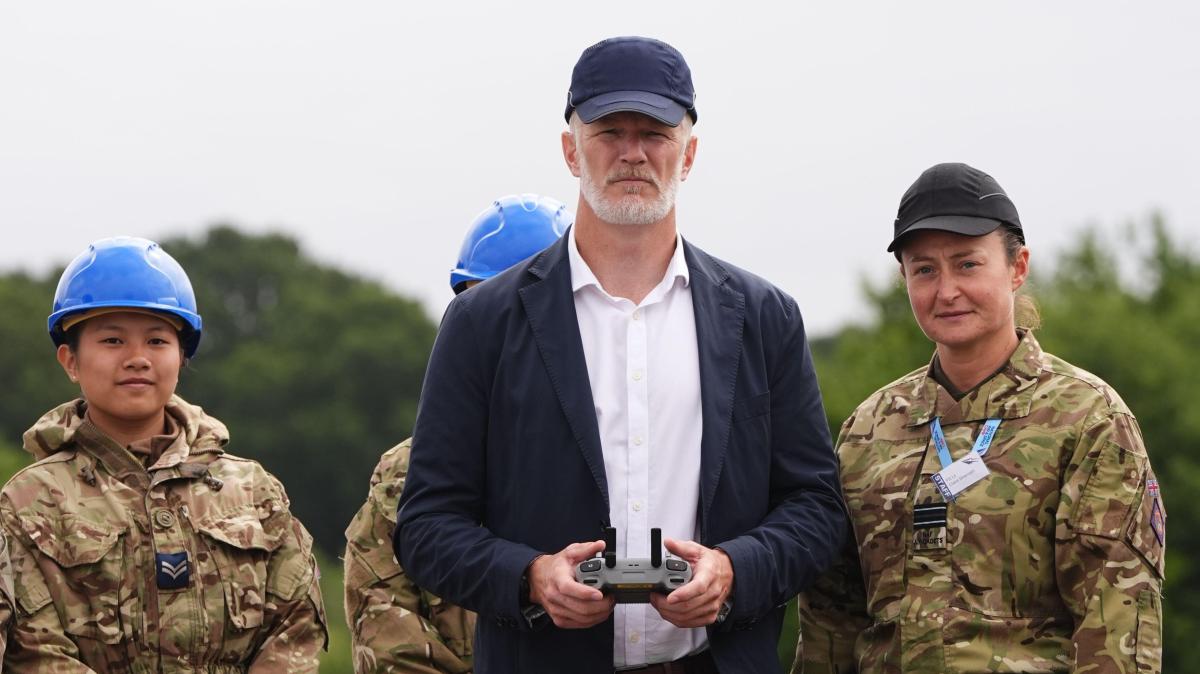
Al Carns: “I’m pushing really hard to move as fast as possible on drones”
“I walked out of the room and I don’t think everybody got it,” Carns recalls. “The world of warfare is changing to such an extreme but I didn’t think the system was going to move as fast as I wanted to.
“So at that very moment, within four steps out of that office, I said, ‘I’ve got to leave and make this change or we’re going to lose lives.’ I wanted to change the country to get it ready so I stepped aside and went into politics.”
• Make millions of drones to prepare for war with Russia, Nato told
Drone warfare is the biggest of Carns’s transformation obsessions. Such is the pace of its advance, it is unrecognisable now even from the first two years of Russia’s invasion. He cites two startling facts: a single drone now has the same lethality rate as 22 artillery rounds, and 87 per cent of all casualties on Ukraine’s front line are caused by drones. Carns defines the scale of the revolution with a farming analogy.
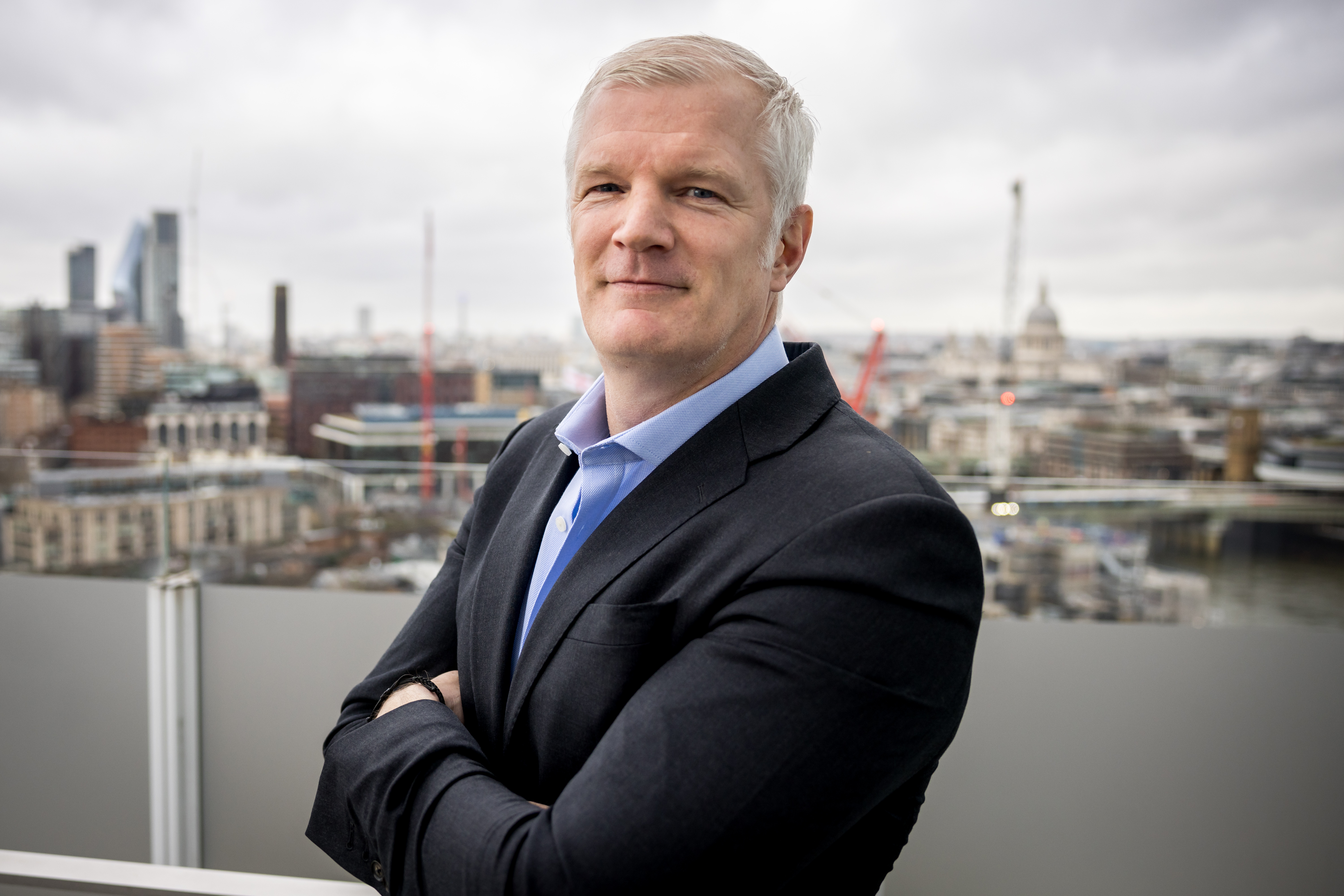
“We have three to five years before we have to fight a significant confrontation with a major state”
JACK TAYLOR FOR THE TIMES
“It’s like a farmer using a scythe, and then he sees a combine harvester,” he says. “It’s that type of moment we’re at. You’ve got to see it to believe it.
“The army and the Marines are training a sniper to shoot one round 800 metres, from the point of aim to the point of impact. I could train my son in two weeks to kill you from 45 kilometres away with a fibre optic drone. So have we got the balance right?
“I’m pushing really hard to move as fast as possible on drones and autonomous systems, and can they be overlaid with AI, with the AI revolution taking hold in the military space?”
Putting it in layman’s terms, he states: “Whoever integrates drones, autonomy and AI into the way we fight will win the next conflict.”
• Degree in drones launched to bolster UK defence skills
While he has a natural politician’s grin, Carns makes no attempt to pretend he has an expansive political hinterland and is happy to admit he never stuck posters of Labour leaders on his walls as a teenager. He does, though, have a backstory that would make other Labour greasy-pole climbers wince with envy. Carns grew up on a troubled council estate in Aberdeen. He is the middle child of five — there are two older sisters and two younger brothers — who were brought up by their single mother after his father, an oil rig dive technician, left when he was eight.
“People in my neighbourhood really had only three choices,” Carns recalls. “You roughneck on the rigs, you join the military or go slightly awry.”
Carns made his choice aged 11. A four-tonne military truck pulled up next to him at a junction and the “bootneck” (Royal Marine) driving it with his commando flash on his shoulder gave him a big thumbs up. “I gave him a thumbs up back and from then onwards I just wanted to be one of those guys,” he says.
Carns signed up aged 19 to be an officer but was rejected because he is colour blind (he confuses red and green) so joined as a marine, the corps’ equivalent of a private. He was swiftly talent spotted and sent for officer training three years later. Deployments to Northern Ireland, Kosovo and Iraq followed, as well as repeated tours to Afghanistan.
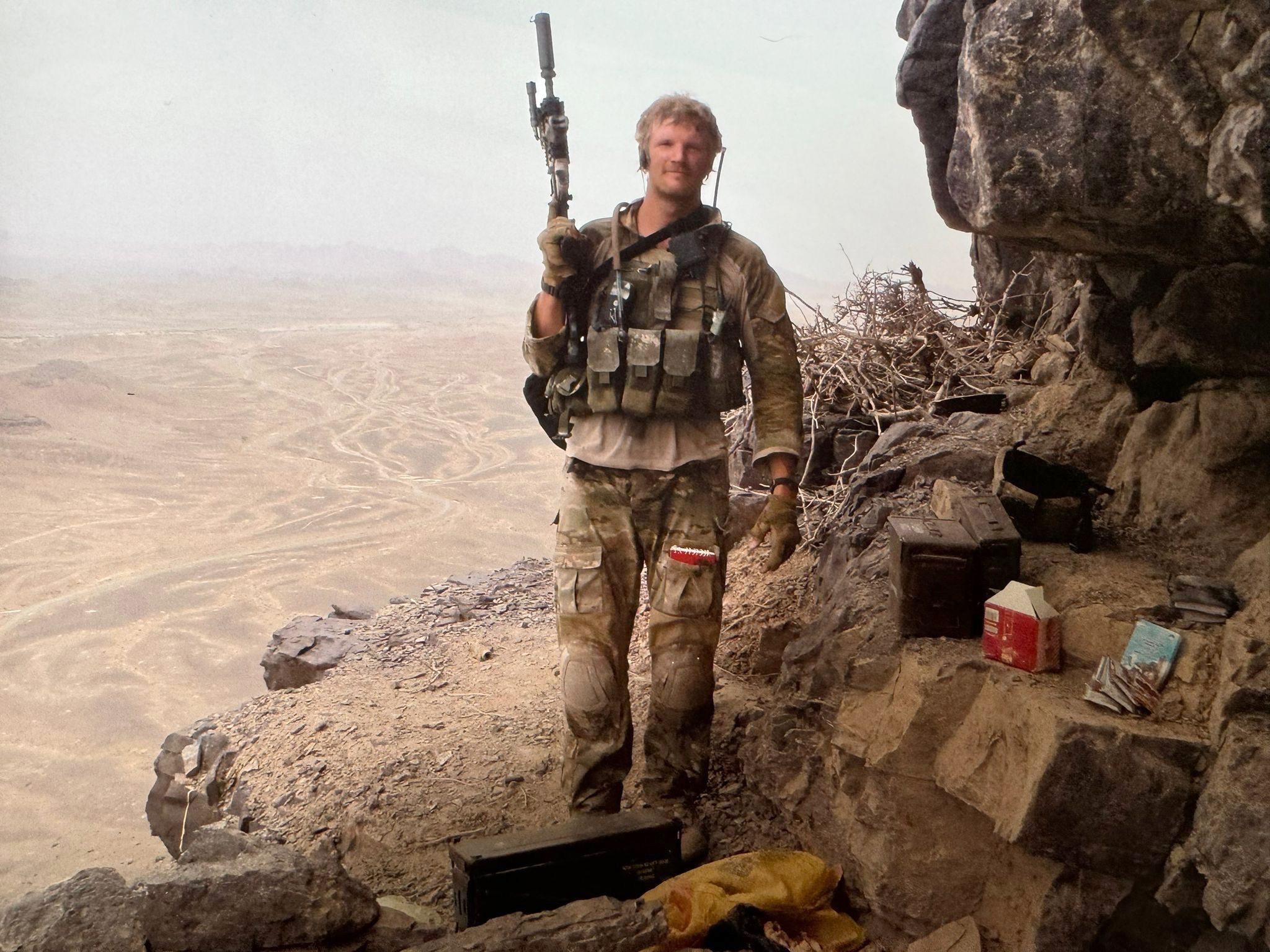
In Afghanistan in 2010
AL CARNS
Photos that have surfaced of Carns on later operations reveal him with a bushy beard, irregular uniform and carrying an M4 carbine — none of it the clobber of regular forces. He rose through the ranks of the SBS, the SAS’s naval sister special forces unit, to eventually become its commanding officer. In line with standing MoD policy, he doesn’t confirm that and momentarily goes coy when asked.
“I never talk about my service with any specialist elements,” he says. “What I would say is it’s been an absolute privilege throughout my whole career to work with the very best in the military. Every night of every week of every month of every year, they are out there in the dark, protecting the freedoms we enjoy, and I salute them for doing what they’re doing, and long may it continue.”
During his service Carns was awarded a rare Distinguished Service Order, a Military Cross for bravery, an OBE and a mention in dispatches. He remains vague about his specific Military Cross action. Carns describes it as “a team event a long way away from our normal operating area” on a mission to “go after some of the most ruthless and effective enemy I think I probably faced. But we won and they didn’t.”
• Greatest threat to Britain comes from High North, minister warns
Others familiar with the action reveal that an operator to Carns’s left was killed, that the one to his right was shot in the arm and that bullets passed through his own webbing and back sack. He admits: “I’ve had some close calls. We lost some good people in that fight and lots of Afghans as well.”
Carns is still a reservist and carried out a week of Arctic training in Norway this month. Now he’s on the other side of the political fence, he names as another key priority for him helping the men and women with whom he served now that they’re becoming veterans.
Having to push through the Labour government’s highly controversial Troubles bill — which will restart legacy investigations into long-retired Northern Ireland veterans — has won him a torrent of abuse and accusations of betrayal. Carns insists he will continue to “fight tooth and nail” to enshrine stronger legal protections in the bill against vexatious pursuits and that he’s “negotiating that with individuals in government” at the moment.
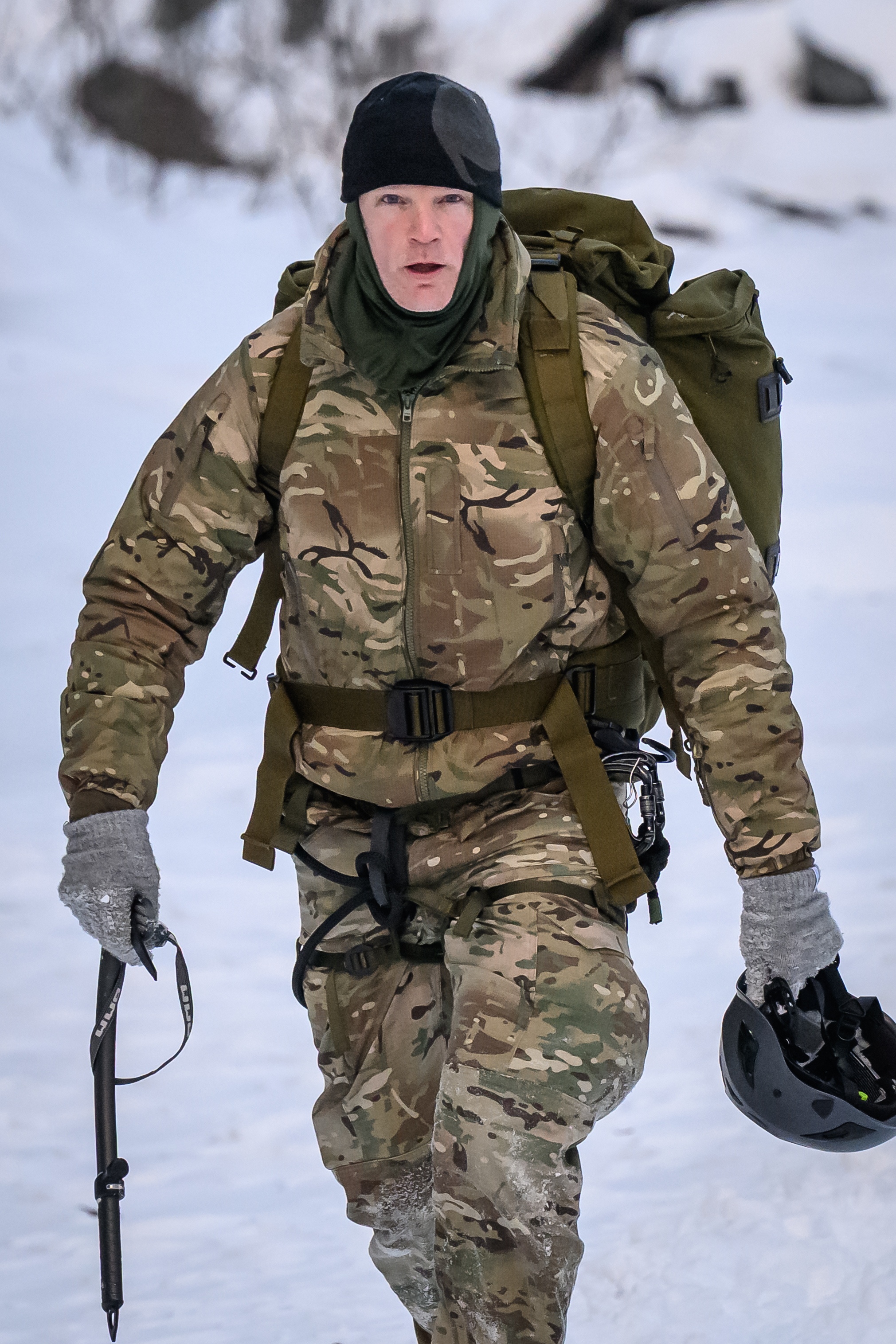
On his reserve training alongside British Commando Forces in February in Norway this month
LEON NEAL/GETTY IMAGES
While his political backstory isn’t long, Carns insists he still has a strong political philosophy. “I’m a big believer in a hand up, not a handout,” he says.
Carns, the divorced father of a 22-year-old daughter, and sons aged 10 and 14, whom he took skiing over half-term last week, explains: “I’m a perfect example of where the state has helped someone go from running around in tracksuit bottoms causing trouble to being a useful citizen.”
Isn’t that more of a Tory mantra, though?
“Well, I’m not too sure,” he says. “Look at my constituency, Birmingham Selly Oak, which is a fantastic place, but I’ve got some areas that have been completely left behind. Young men like me growing up with no opportunity. It’s a rubbish analogy but I always say, if a flower is wilting it’s not the flower’s fault. It’s the water, it’s the food, it’s the sunlight. It’s the environment that allows it to grow and flourish.”
Yet he also carefully refuses to place himself on the wide Labour spectrum. Are his personal politics closer to Jeremy Corbyn or Wes Streeting? “I don’t think it’s that easy. I follow the policies that will impact the most. Some of those sit centre-left, some of those swing back in again.”
He names his favourite Labour prime minister as Clement Attlee, who fought valiantly in war, was badly wounded then went into politics “and changed the world”.
For all his deft parries, Carns struggles to hide his clear frustration at the pace of change in government. Of the long-delayed defence investment plan — which has to pay for the raft of overhauls in last year’s defence review and which the military chiefs are crying out for now — he says he’d like to see it “come out as fast as possible”.
But he insists he came into politics with “eyes wide open”, having served three defence secretaries, Michael Fallon, Gavin Williamson and Penny Mordaunt, as a military aide. “I know the system and how slow it can be,” he says. Yet he is careful never to contradict his boss, Keir Starmer (“a very, very good man doing the best he can in a very complex situation”).
Carns says he is keen to see the rise in defence spending that the PM promised accelerated so the UK hits 3 per cent of GDP by 2029 instead of 2.5 per cent, and insists Starmer wants that too — even though the PM has never publicly said that and No 10 guides journalists away from a report of it.
And of the top job itself? Is it a greatness that his colleagues are trying to thrust upon him or one he also aspires to? Carns again parries. “Is there a prime ministerial race coming up? Absolutely not. I am quite happy doing my job, getting my head down and doing the very best I can to try and deliver for defence and the nation.”
• As leadership muttering grows, Labour’s dark horse canters
Despite being pushed six times and asked the question in six different ways, Carns refuses every opportunity to rule himself out of a leadership bid one day. It’s a story he seems happy to keep very much alive. Yet surely a Labour leadership candidate who wants to spend much more on defence stands a very slim chance of winning the votes of a predominantly left-wing party membership? Here Carns does deviate from his defensive lines, uncrosses his arms and leans forward.
“I think you’re hitting on a critical point here,” he says. “We’ve got to communicate to the population of this country why defence spending matters, why all-round national resilience matters and why our industrial base matters. It’s what sits behind our frontline forces that will decide whether we can sustain early losses and win in the long term.
“Because it’s no longer about wars of choice, Afghanistans or Iraq. This is about wars that will protect and shape the freedoms that we enjoy, and we may not have a choice whether we’re involved.”
Listen to the full interview with Al Carns on the Times podcast The General & the Journalist with Patrick Sanders and Tom Newton Dunn