
RIP Jord
15:33, 25 Feb 2026Updated 05:42, 26 Feb 2026
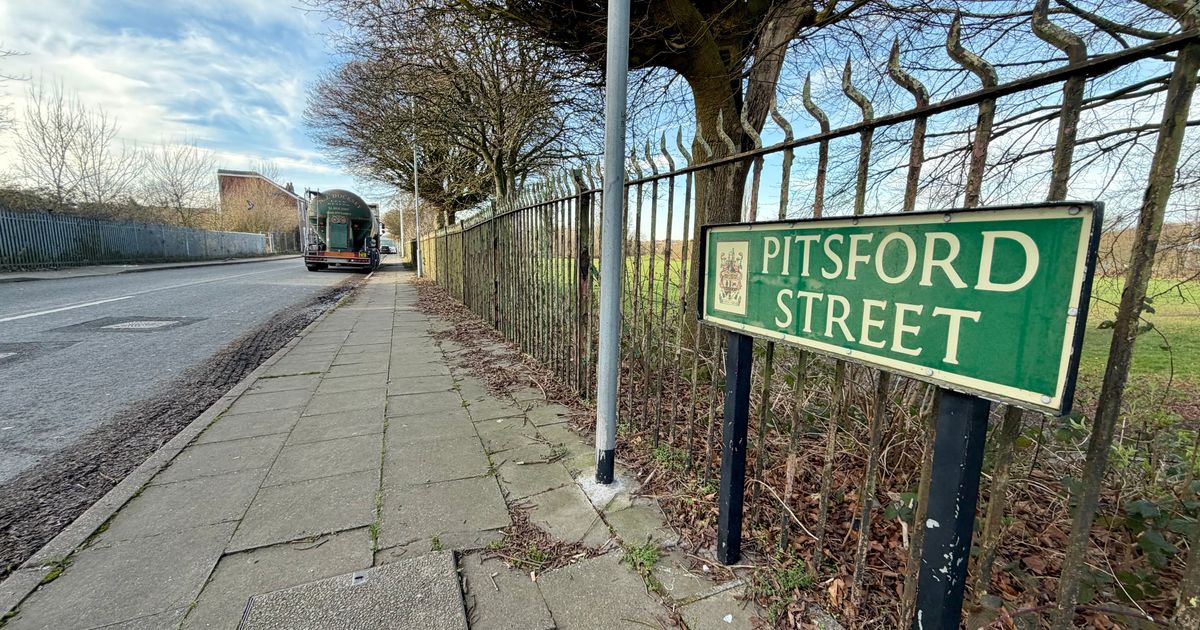
Jordon Copestake was found dead after taking an overdose on Pitsford Street, Longton(Image: Pete Stonier / Stoke Sentinel)
The NHS launched a healthcare review after the death of a Stoke-on-Trent man. Jordon ‘Jord’ Copestake was found non-responsive in his grey Audi A4 in Pitsford Street, Longton, on December 28, 2024.
The 32-year-old had struggled with depression, anxiety and post-traumatic stress disorder (PTSD) for many years, and had reportedly suffered with suicidal thoughts since he was 10. Jordon had been prescribed paroxetine and pregabalin, anti-anxiety and anti-depressant medications, before his death.
But Jordon’s family believe he should not have been given access to a high amount of medication. Questions were also raised over whether mental health teams responded appropriately after Jordon shared plans to end his life.
His father shared a statement with an inquest into Jordon’s death.
It read: “We feel our son was poorly treated and he was brainwashed. We accept he made a few wrong decisions, which we were not made aware of by the healthcare workers, or those who called themselves his friends. We would like to know why he was prescribed so many tablets with many side effects. In our opinion, surely you shouldn’t be driving on all those different tablets. He was left to his own devices. Healthcare workers had no idea what was happening. We feel let down.”
Jordon was first referred to the Sutherland Centre in August 2020 after it was reported he had been having thoughts of self-harm. He was next seen in March 2023 after he reportedly attempted an overdose. He was later diagnosed with emotionally unstable personality disorder and PTSD in June 2024.
Consultant Psychiatrist Dr Uzma Saeed oversaw Jordon’s care.
She told the inquest: “He did appear to be struggling with ongoing suicidal thoughts while struggling to deal with his emotions. These were identified as long-term symptoms. However, they were indicated to be escalatory behaviours.
“His symptoms included emotional dysregulation, intrusive thoughts, PTSD-like symptoms in the form of flashbacks, along with hypervigilance. This made him socially anxious and slightly paranoid; he felt people were talking about him, which is very common in an anxious person. There were also hallucinations where he could hear voices internally and externally. These did not appear to be of psychotic origin.”
Jordon was given a long-term mirtazapine and two-week diazepam prescription in March 2023 after suffering a ‘mental health crisis’. Diazepam is an addictive anxiety drug intended for short-term use.
However, Jordon discontinued mirtazapine but continued taking ‘street diazepam’ after his prescription had ended. He was referred back to the Sutherland Centre in February 2024 after staff at the Stoke-on-Trent Community Alcohol & Drug Service (CDAS) caught on to his diazepam use.
Dr Saeed continued: “CDAS were concerned about the way he was presenting, which they believed was related to his diazepam use. At that time, it did not appear that he was consuming alcohol. He had reported hearing voices and experiencing intrusive thoughts. He was believed to be taking ‘street diazepam’ at the time.
“He said he was using street diazepam to drown out the voices. These medications typically help in the short term because they basically sedate the user so that they block a lot of things out, meaning the user only experiences physical stimuli.”
During a follow-up appointment at the Sutherland Centre in September 2024, Jordon reported he was no longer taking diazepam. He did not request new prescriptions despite continued mental health struggles.
In November 2024, Jordon requested to be placed onto fresh medication. He was prescribed pregabalin and paroxetine.
Jordon had also began seeking help through private therapy sessions in June 2024. He enlisted a counsellor – and she raised the alarm after he shared worrying plans.
She told the inquest: “In November, Jord told me about his suicide plan. He told me he had made the plans a year ago and how it was going to happen in terms of overdose. He told me it would be done in his car. He felt he’d been working on his issues that he couldn’t do it anymore. He said that if he wasn’t better by that date he would take action.”
Jordon’s counsellor breached patient confidentiality to inform staff at the Sutherland Centre that he intended to take his own life. But Jordon was not admitted into psychiatric care.
Dr Saeed explained: “We had many reactions to this news, which was a tricky subject to tackle. These patients typically struggle with dealing with stress and emotions, so they would be asking for help and looking for someone to rescue them. If someone does rescue them instead of helping them and enabling them to deal with their emotions themselves, they repeatedly ask for that rescue and do not improve.
“We, as a team, felt it was important to get him ready for our structured boundary approach and to empower him to deal with the stress himself. Otherwise, if every time he expresses these thoughts and someone rescues, frequent contact and a reliance on hospitalisation could begin. It was agreed that the plan should continue.
“For someone to be admitted to hospital for a medical attack assessment, they need to show evidence of an increased risk but they should also be showing signs of lacking insight and capacity. It was felt that Jord had full capacity and understanding of his treatment plan. I don’t think we could have come up with a way to commit him under the Mental Health Act. If he was not showing any signs of compliance then we would have a different situation.
“A patient can be admitted with the crisis team for up to 72 hours. At the end of the process they are returned to their original environment. This means that nothing essentially changes. Hospitalisation does not guarantee safety. We know of many cases where patients leave hospitalisation and still go out and harm themselves.”
Sutherland Centre staff checked Jordon’s welfare and he did not follow through on his planned suicide date of December 22. However, he did miss appointments on December 18 and December 23.
Jordon did attend another private therapy session on December 24. He reportedly expressed feelings of a low mood without active suicidal ideation.
The counsellor later alerted Staffordshire Police on December 26 after Jordon failed to respond to messages ahead of their next planned session.
The counsellor added: “I felt something wasn’t right. I emailed him to say I was really worried about him and that if he didn’t respond within a certain timeframe I would contact the police. Obviously I didn’t hear back so I called the police. I didn’t hear anything for a few days until I rang the police back. They wouldn’t give me any information as I wasn’t a relation, but I could deduce that my suspicions were correct.
“I feel like I did what I could have done to support him. He needed a lot more support. He needed more than what I alone could give him. I know he had a friend who he was in on-and-off contact with. But in his words he was quite alone.”
PC Michelle Morley was assigned to perform a check on a high-risk missing person at 1.20am on December 28.
She said: “We visited his address and spoke to his father to ascertain further details about him. We were provided with a recent photo of him and left to perform searches at potential addresses and locations where he may be. He was reported to have a grey Audi A4. We paid extra vigilance to parked vehicles. From my local knowledge of the area, I knew of a park located nearby to his home address.
“I drove my marked vehicle to Pitsford Street. I initially looked inside from within my car but I could not see anyone. I parked my vehicle and walked over to the Audi to perform further checks. I looked through the front passenger door window shining my torch, where I saw a white male sitting in a slouched position.
“I started banging on the window trying to gain a response. I was confident this was the individual we were looking for. We were about to force entry, when our nearby colleague said he was heading our way with a tool that breaks glass. He arrived and smashed the window so we could open the door. We pulled him out and started CPR at 1.48am. Paramedics arrived around five minutes later. They pronounced Jord was dead at 2.38am.”
Dr Terry Jones confirmed Jordon died as a result of a drug overdose.
Craig Stone, patient organisational safety consultant for North Staffordshire Combined Healthcare NHS Trust, conducted a review into Jordon’s care. He found staff had acted appropriately.
Mr Stone reported: “He was on the most appropriate pathway. His symptoms had been fairly identified. He was on an assessment pathway and was identified for a treatment pathway but he never reached the threshold before these unfortunate events.”
Coroner Lindsey Tonks ruled Jordon’s death as a suicide. She did not issue a prevention of future deaths report.
Mrs Tonks concluded: “These are medications he would have been prescribed before. He was aware of the effects and the correct dosages. I am satisfied that when he took that much medication in his locked car, it’s more likely than not that he intended to end his own life. I extend my deepest condolences to Jordon’s family and friends.”
Need help?
The Samaritans : 116 123. Website: www.samaritans.org . Email: jo@samaritans.org
Offer a 24-hour confidential helpline. You can also contact them by text or email.
NHS 111 Service : 111. Website: www.nhs.uk .
Call the NHS 111 service if you urgently require medical help or advice. The service is availabe 24-hours-a-day, 365-days-a-year. Calls are free from landlines and mobile phones.
Mental Health Access Team : 0300 123 0907
The single point of contact and access for all North Staffordshire Combined Healthcare NHS Trust services. The Access Team provides 24/7 cover for all mental health and learning disability services across Stoke-on-Trent and North Staffordshire.
Mind Infoline : 0300 123 3393. Website: www.mind.org.uk . Email: info@mind.org.uk. Text: 86463
Information on a range of mental health problems and support. Lines are open 9am to 6pm, Monday to Friday (except for bank holidays).
HOPELineUK : 0800 068 41 41
A specialist telephone service staffed by trained professionals at PAPYRUS who give non-judgemental support, practical advice and information to children, teenagers, young adults aged up to 35 and anyone concerned about a young person. Opening hours are 10am to 10pm, Mondays to Fridays, 2pm to 5pm, weekends and bank holidays.
NSPCC Childline : 0800 1111. Website: www.childline.org.uk
Children’s charity offering support and carrying out research into mental illness.
SANE : 0845 767 8000. Website: www.sane.org.uk . Email: sanemail@sane.org.uk
Out-of-hours mental health helpline offering specialist emotional support and information to anyone affected by mental illness, including family, friends and carers. Open every day from 6pm to 11pm.
Staffordshire Mental Health Helpline : 0808 800 2234. Email: staffordshire.helpline@brighter-futures.org.uk. Text: 07860 022821
Emotional support for people concerned about their mental health or someone they know.