
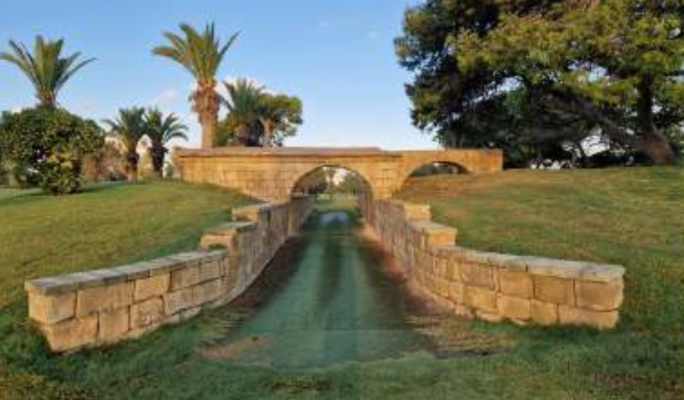
A planning application has been submitted by the Royal Malta Golf Club for the restoration of a limestone ruin located on the sixth hole of the golf course.
The ruin at the Marsa Sports Club grounds has long functioned as a heritage feature and a strategic element of play.
The surviving structure predates the course established in the early 20th century by the club, which was founded in 1888. It may originate from the late medieval period, when small rural or domestic buildings were present across the Marsa and Qormi area.
The remains consist mainly of an arched stone opening with adjoining masonry fragments. The golf course also included the chapel of St Joseph located near the 10th hole, which may also have late medieval origins, providing additional historical context to the area.
The structure is locally known as the ‘Maid’s Bedroom’, a traditional golfing nickname with no documented historical origin.
Such names are common in golf culture, where distinctive obstacles or landmarks are often given humorous or imaginative titles to help identify holes. The name may simply reflect the ruin’s small enclosed appearance, which visually resembles a tiny chamber or alcove.
From a sporting perspective, the ruin functions as a distinctive architectural hazard on the 6th hole. Its presence affects shot selection, height, and trajectory, transforming what might otherwise be a straightforward par‑3 into a technically challenging feature.
The proposed works aim to stabilise and conserve the masonry through careful cleaning, consolidation, and protective treatment. The project will preserve both the ruin’s historical significance—including its possible late medieval origins—and its continuing role within the course, ensuring that heritage and recreational use coexist within this unique sporting landscape.