
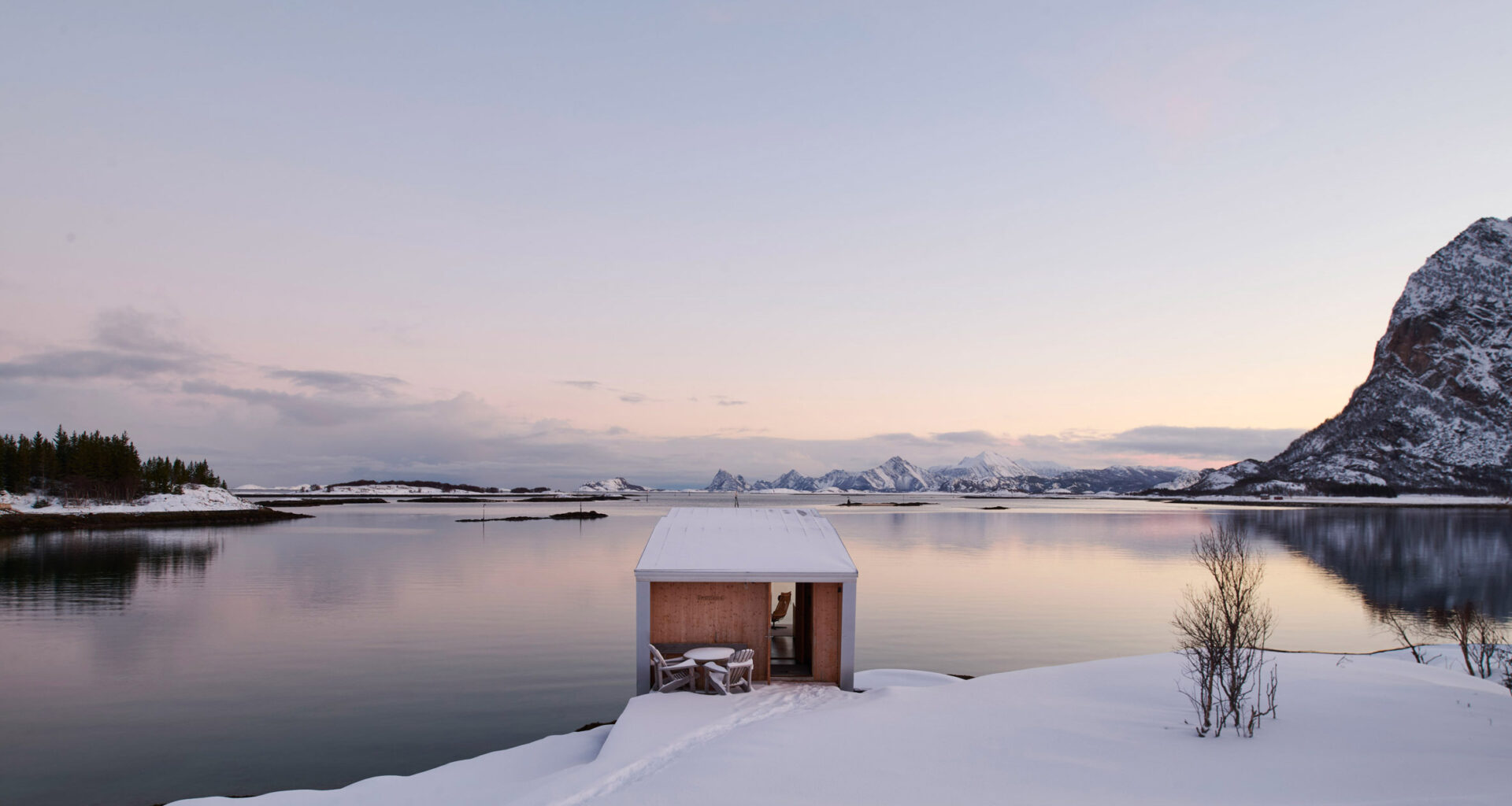
In his latest book, The Iconic Nordic House, author Dominic Bradbury explores Nordic architecture from the past 125 years, including buildings by architects Finn Juhl and Alvar Aalto. Here, he picks ten favourites.
The book, co-authored with photographer Richard Powers, follows Bradbury’s publication New Nordic Houses, which looked at contemporary architecture.
In contrast, The Iconic Nordic House delves into the architects and designers who shaped what Nordic architecture is today.
“Going back into architectural history, it’s clear that Scandinavian architects and designers have collectively punched above their weight for many decades,” he told Dezeen.
“There is still, today, an engaging and endearing warmth, character and originality to Nordic design that helps to encourage the ongoing interest in the region’s architecture, especially when it comes to house and home.”
Read on for Bradbury’s pick of ten projects from The Iconic Nordic House:
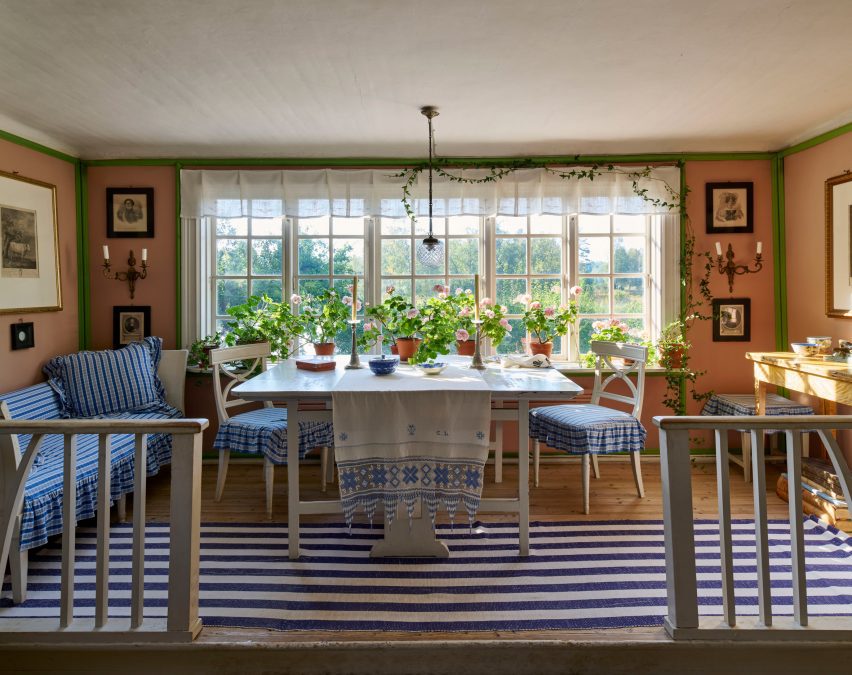
Carl and Karin Larsson, Lilla Hyttnås, Sundborn, Sweden, 1899 to 1912
“With its original fusion of art, interiors, architecture and gardens, Carl and Karin Larsson’s Lilla Hyttnås is a mesmerising retreat upon the green edges of the small Swedish town of Sundborn.
“Over time, the Larssons transformed a modest country cottage into an inspirational home, combining traditional ingredients with modern elements such as Carl Larsson’s bespoke painting studio.
“The Larssons treated the family home, shared with their many children, as a canvas for their work. It is a house full of pattern, colour and imagery, including family portraits by Carl painted on doors and panels, along with textiles throughout by Karin, as well as their furniture and lighting.”
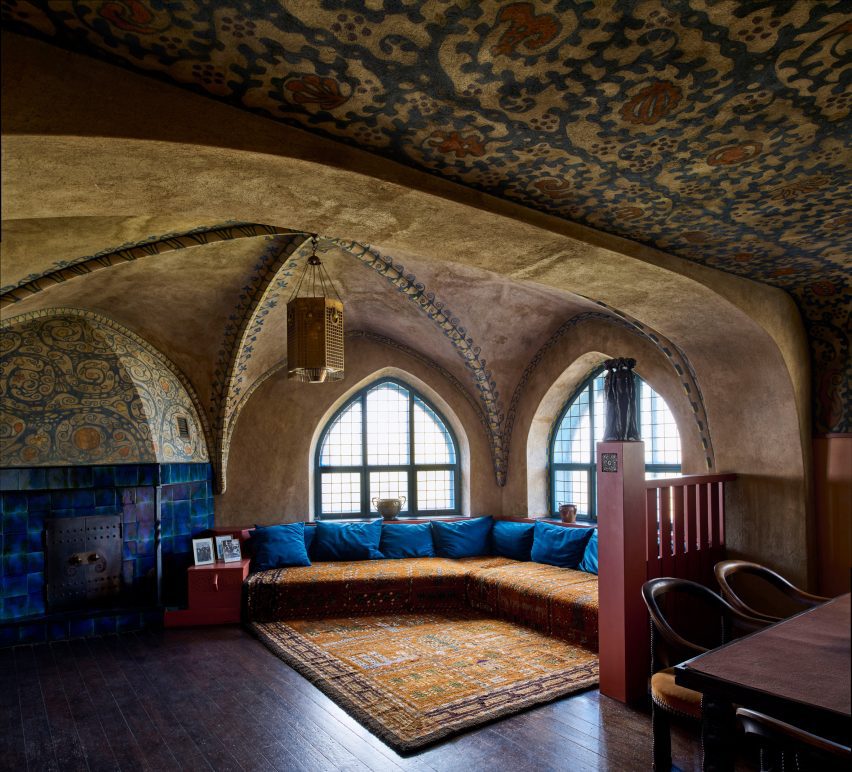
Eliel Saarinen, Hvitträsk, Kirkkonummi, Finland, 1903
“This ambitiously scaled family home successfully combines vernacular references, arts and crafts elements and the Finnish National Romantic style in one cohesive vision, serving as home to Eliel Saarinen and his wife Loja, a textile designer who contributed to the evolution of the interiors.
“Hvitträsk began as a joint project, shared with Saarinen’s partners Herman Gesellius and Armas Lindgren. The three colleagues initially designed and developed Hvitträsk together, but within just a few years, the Lindgrens had moved back to the city while Saarinen parted from his first wife and married Loja, who was Gesellius’ sister.
“Hvitträsk became the Saarinens’ family home, while it also hosts a spacious architectural studio, with views of the lake itself. It was the childhood home of designer Pipsan Saarinen and architect Eero Saarinen, who initially began working with his father after the family settled in the United States, eventually becoming one of the great masters of the mid-century modern movement.”
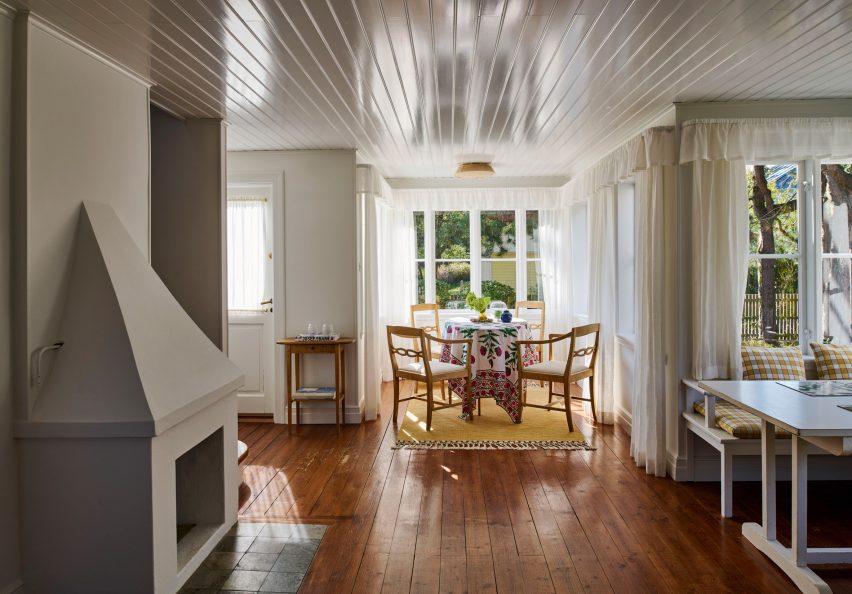
Josef Frank, Villa Carlsten, Falsterbo, Sweden, 1927
“Over time, the Austrian-born architect Josef Frank became one of the key proponents of Nordic-inspired design. Frank’s wife was Swedish, and from the 1920s onwards, he began spending an increasing amount of time living and working in Scandinavia.
“During the late 1920s and early 1930s, Frank designed a handful of new homes in Falsterbo, combining modernist touches with coastal cabin references. One of the most delightful of these is Villa Carlsten, a modestly scaled escape set within a generously sized garden in the town itself.
“Today, the carefully restored home is decorated with many pieces of furniture designed by Frank himself, along with the vibrantly patterned textiles that he created during the 1940s and 1950s for the famous Swedish design house Svensk Tenn.”
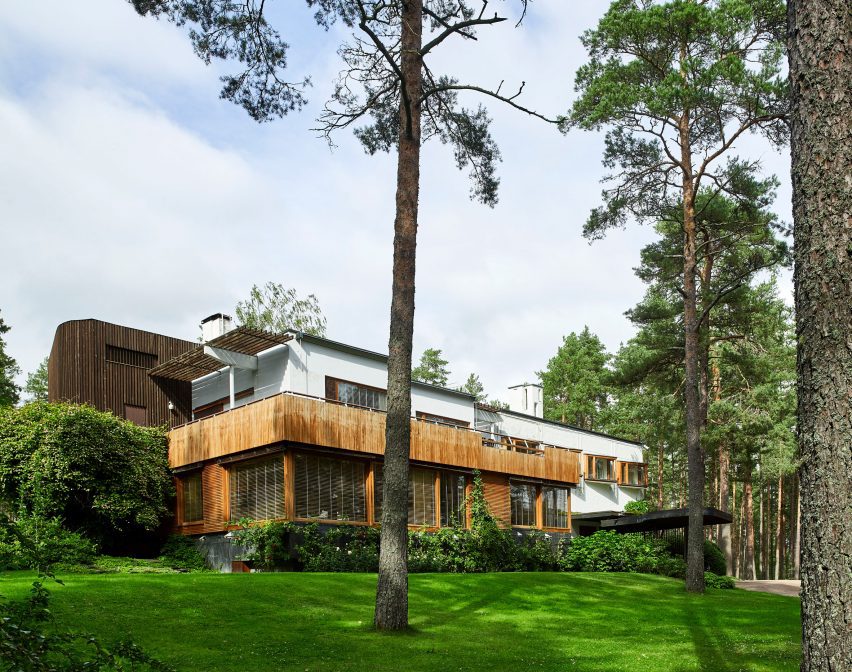
Alvar Aalto, Villa Mairea, Noormarkku, Finland, 1939
“Alvar Aalto famously turned his attention to almost every aspect of his houses and buildings, as seen at Villa Mairea in the rural region of Noormarkku.
“Here, Aalto was asked to design a new family home for his colleagues Maire and Harry Gullichsen. Characteristically, Aalto involved himself in every aspect of Villa Mairea – a modernist exemplar that sits within a clearing in the surrounding forest.
“His remit included the gardens, the two-storey home, the interiors, lighting, furniture and almost every detail of the house. With an organic character inspired by the natural beauty of the surroundings, Villa Mairea is now an essential reference point in the development of warm Nordic modernism.”
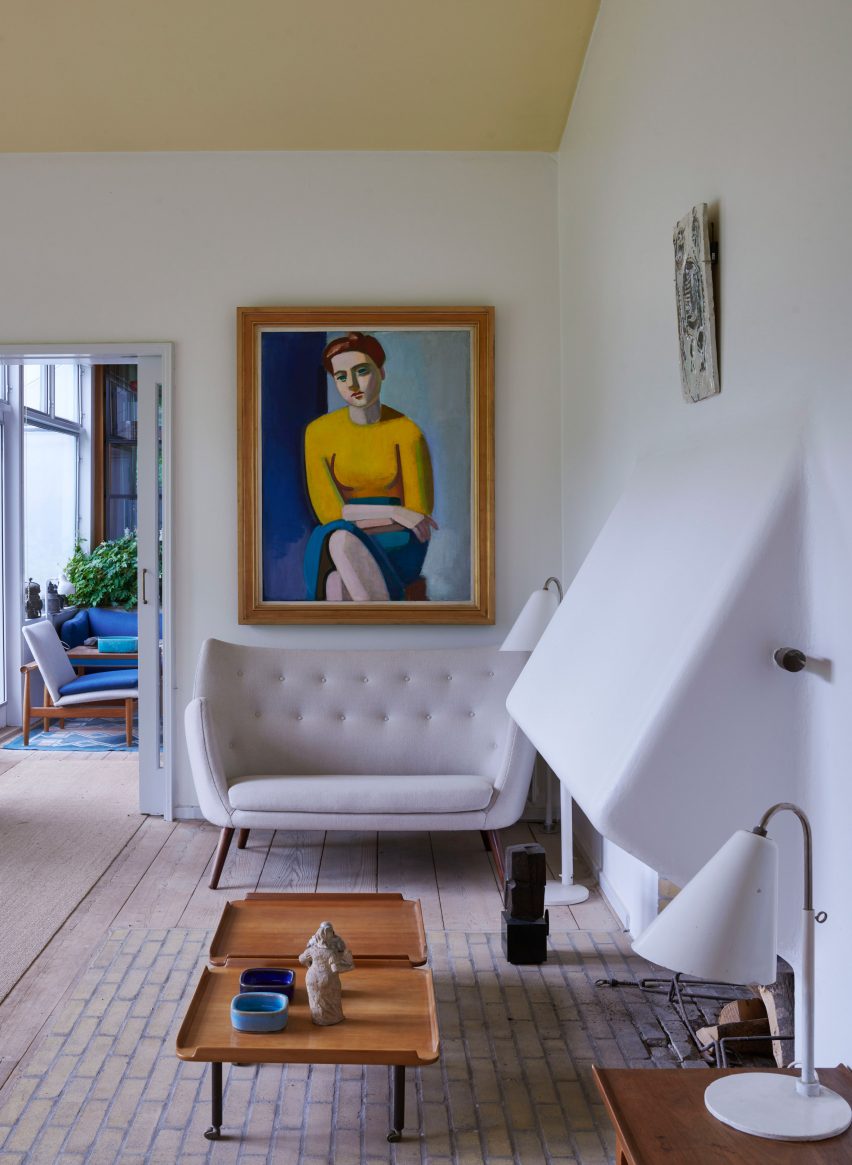
Finn Juhl, Finn Juhl House, Ordrup, Denmark 1942
“Like his Finnish contemporary Alvar Aalto, the pioneering Danish designer Finn Juhl was a talented multi-disciplinarian who trained and initially worked as an architect, yet became much better known as a furniture designer.
“Finn Juhl’s own self-designed home in Ordrup offers a master class in the Danish style. The L-shaped building is mostly arranged over one storey with an easy flow from one space to the next, while Juhl established constant connectivity with the surroundings throughout.
“Although Juhl had an office alongside the main entrance, the glory of the house is the spacious ‘great room’, with space enough here for a lounge by the fireplace, a library in one corner and a dining area in another.
“During the winter months, however, Juhl would retreat into the spacious master bedroom at the other end of the house, where there was a work table placed near the fire and everything he needed to continue working within a more intimate and warmer setting.”
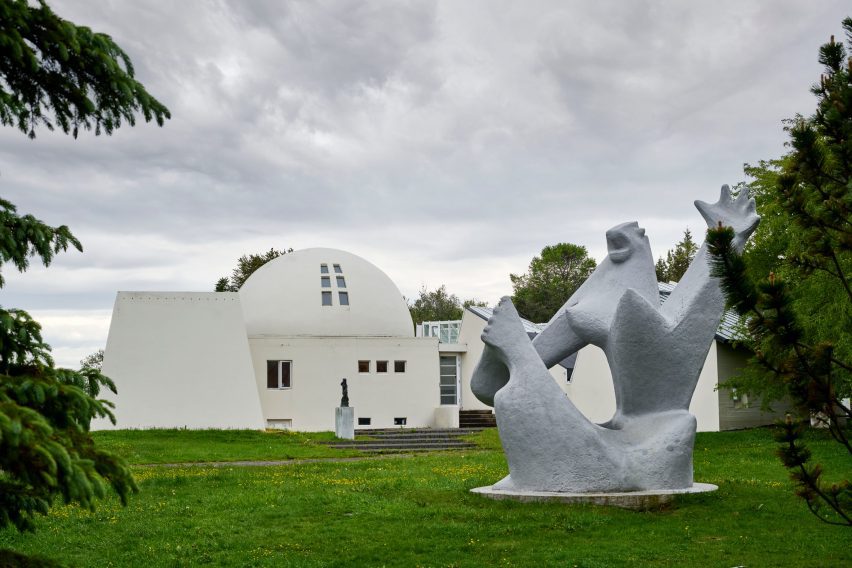
Ásmundur Sveinsson and Einar Sveinsson, Ásmundarsafn, Reykjavik, Iceland 1959
“Travelling together with my co-author, photographer Richard Powers, our extensive trips for The Iconic Nordic House encompassed the mainland Nordic nations as well as the Faroe Islands and Iceland, with some extraordinary houses to be found here.
“One of the most dramatic of these projects was Ásmundarsafn in Reykjavik, designed by and for the artist Ásmundur Sveinsson. Celebrated for his monumental pieces fusing modernist influences and Nordic mythology, Sveinsson found himself outgrowing his studios a number of times over.
“With a passion for architecture and design, he designed Ásmundarsafn as a bespoke base both for daily living and making art. The project was completed in two parts, with Sveinsson designing a distinctive fortress-like house to begin with, topped by a domed roofline. Later, assisted by architect Einmar Sveinsson, he added a larger studio to the rear.”
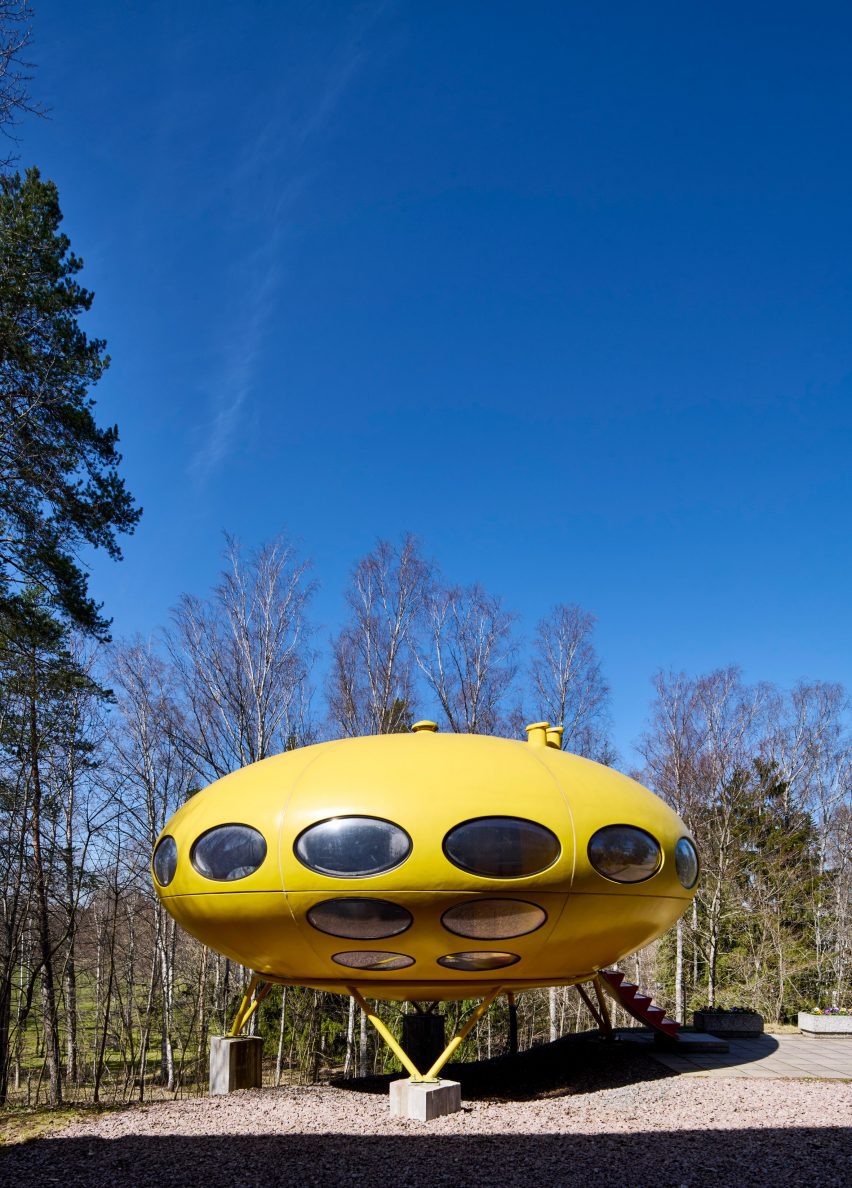
Matti Suuronen, Futuro House, Weegee Exhibition Centre, Espoo, Finland 1968
“Matti Suuronnen’s Futuro House was one of the most famous and optimistic of all prototypical, Space Age concept homes.
“The project was a collaboration between Finnish architect Matti Suuronen and manufacturers Polykem. The idea was to create a flexible multi-purpose dwelling that could be delivered on lorry or by helicopter to remote locations.
“Suuronen designed his sci-fi saucer with a series of interconnecting reinforced plastic segments that could be bolted together to make the domed house, which was anchored to the site on supporting legs fixed to a ring beam base. Although widely publicised, the production of Suuronen’s ingenious design was halted by the oil crisis of the early 1970s and subsequent recession.
“The survivors are now much sought after, with Espoo’s version in pristine condition and still speaking of the innovative, experimental spirit within 20th-century Scandinavian architecture and design.”
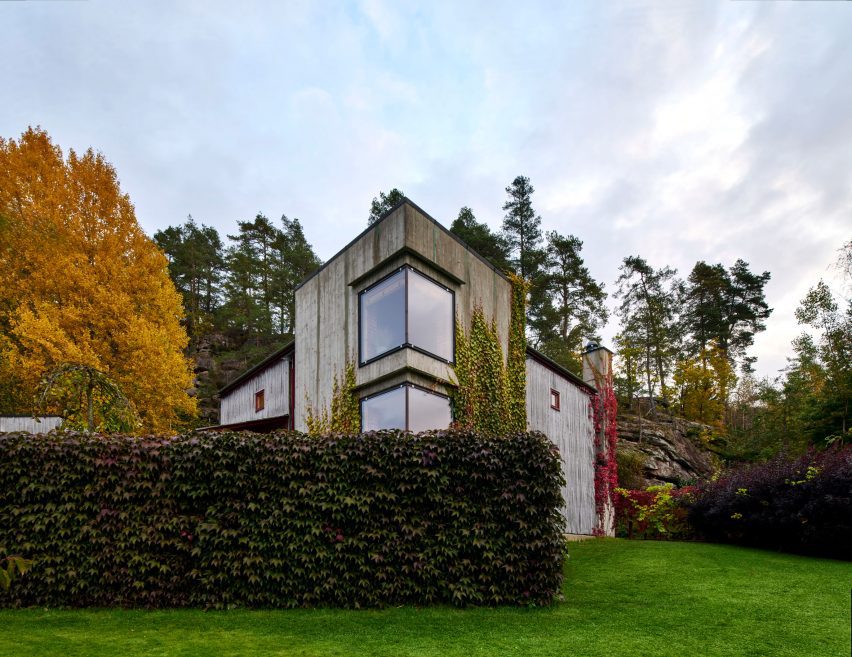
Sverre Fehn, Villa Holme, Holmsbu, Norway, 1998
“The highly influential body of work developed by architect Sverre Fehn speaks of the close relationship between buildings and landscape.
“Villa Holme, upon the edge of the small coastal village of Holmsbu, is a case in point. A commission from the later years of the architect’s career, the house was designed for graphic designer Ingolf Holme during the 1970s, but construction and completion were repeatedly delayed until the 1990s.
“The timber-framed house plays with geometry, as well as the context, subverting a square form by placing it upon a diagonal footprint.
“One half of the house is devoted to a double-height studio for Holme, with the rest of the residence arranged over two storeys. Now coated with Virginia creepers, the house feels very much of its place, as one would expect from Sverre Fehn.”
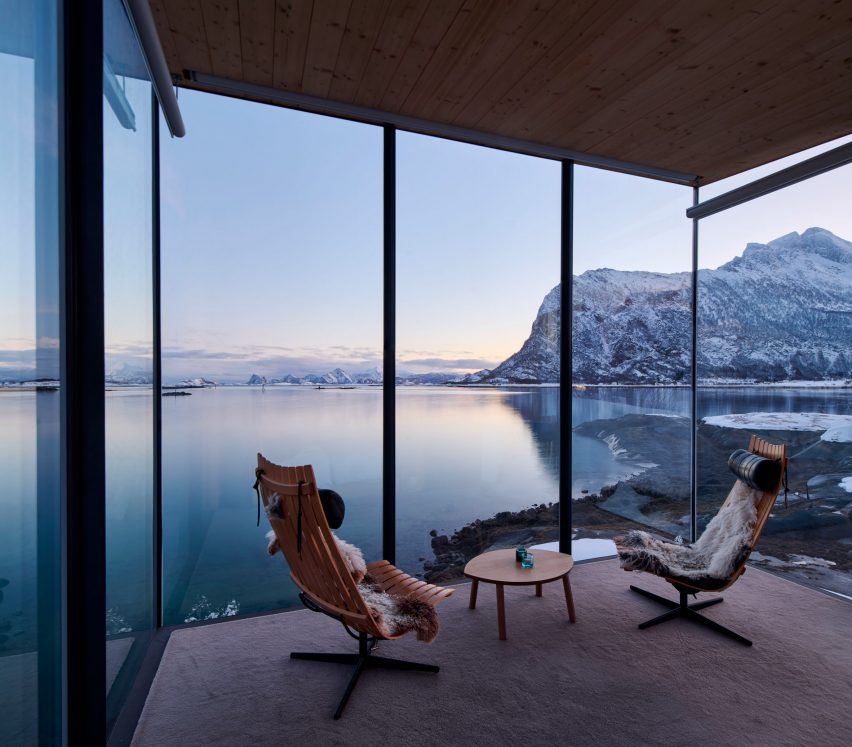
Snorre Stinessen, Manshausen Sea Cabins, Manshausen Island, Norway 2015
“The cover star of The Iconic Nordic House sits within an extraordinary coastal setting in northern Norway.
“Here, Stinessen was commissioned by explorer Børge Ousland to create an unforgettable Arctic resort that also fully respects the precious landscapes and ecologies of this part of Norway. Their agreed approach was to divide the accommodation at Manshausen into a series of modestly scaled, individual cabins with the resort’s restaurant hosted by a converted, communal building, while other shared temptations include a bespoke sauna, essential for such Scandinavian retreats.
“The cabins are sensitively sited on the old, existing docksides and are carefully positioned for both privacy and cultivating a sense of intimate connectivity with the natural surroundings.”
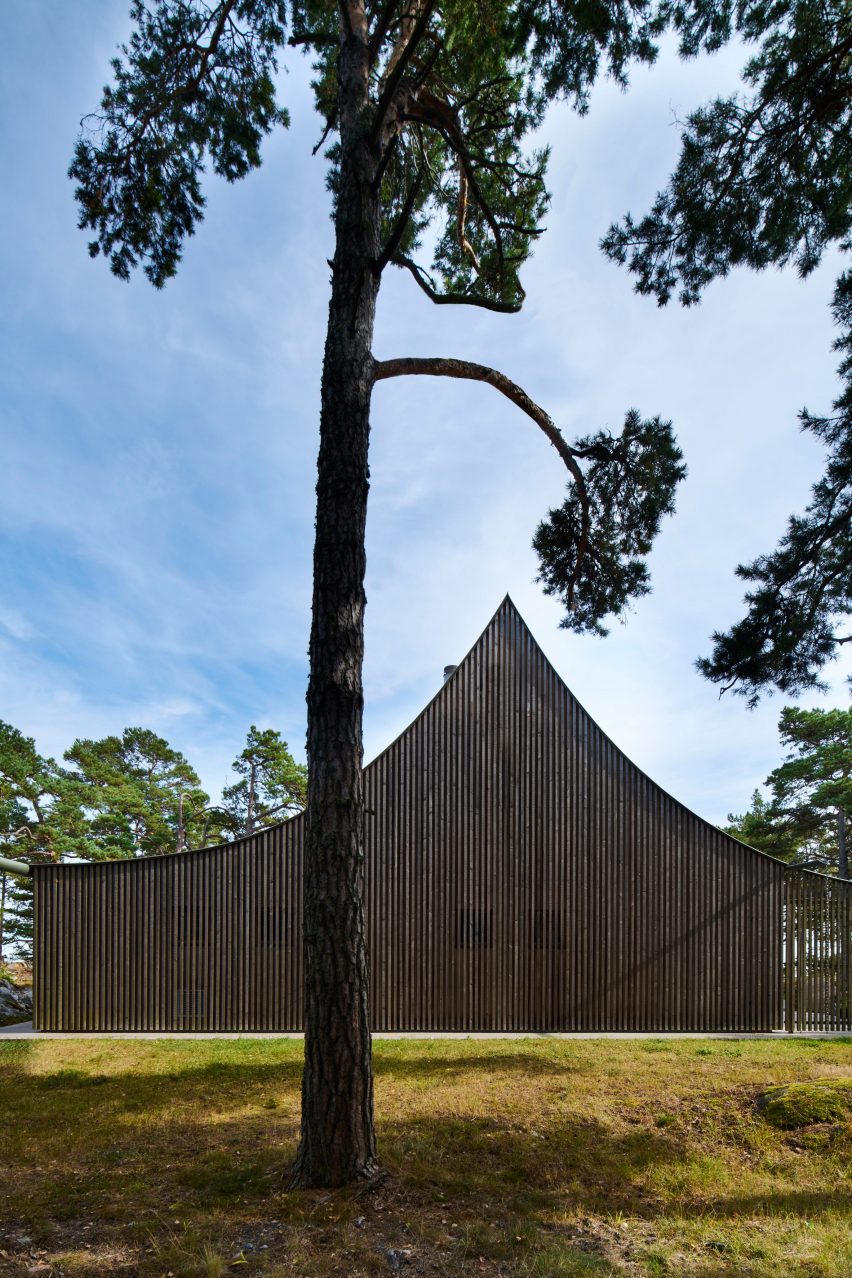
Tham & Videgård, Krokholmen House, Stockholm archipelago, Sweden, 2015 to 2022
“The Stockholm Archipelago holds many delights, both natural and created.
“Situated on the outer edges of the Archipelago, the Krokholmen House neatly encapsulates many of the key themes threaded all the way through The Iconic Nordic House. The house is highly contextual and sits upon its site with the lightest of touches, yet this is also an elegantly crafted building, which makes the most of natural materials. The key ingredient is the sculptural, tent-like roof over the main living spaces, which face the open water.
“A few years later, Tham & Videgård’s clients called them again, asking for a second cabin nearby, holding guest accommodation, an integrated porch – which serves as a semi-sheltered, fresh air living room – and, of course, a sauna. These two structures have a different character, yet they work closely in combination with one another.”
The photography is by Richard Powers.