
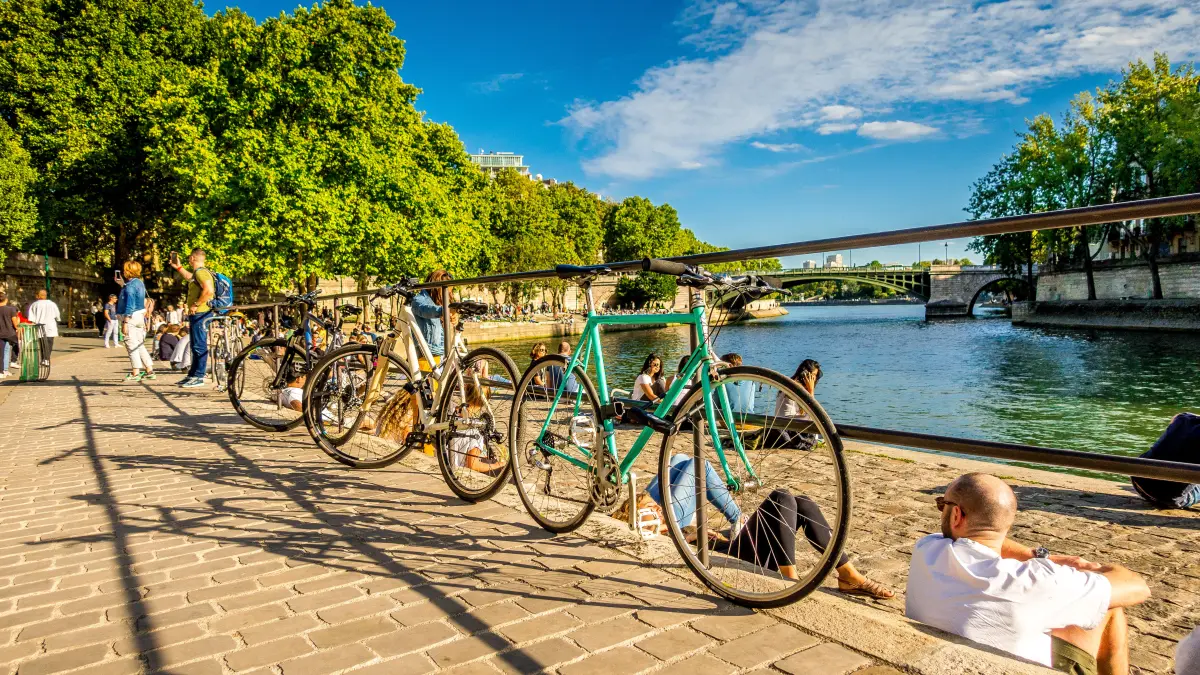
An unmarked, unremarkable triangle of flagstone pavement in southwest London was where my journey to Paris began last May. Joggers and dog walkers milled past as, astride my borrowed e-bike, I made final adjustments to my panniers, phone holder and jeans. (Yes, jeans, I identify as a casual leisure cyclist, so no Lycra for me.) Ahead of me was a narrow path shrouded by yew but flecked with sunlight, behind me the thundering traffic of the A307.
From the perspective of a newcomer, long-distance bicycle touring has two problems. There is the exercise element, which is less exciting to leisure riders than it is to sporting cyclists — I see a bike ride as a journey rather than a competition. The second is traffic, which spoils so many routes, engendering a nagging sense of peril that I prefer to avoid while on holiday. Long-distance cycling should be inclusive, inexpensive and accessible.
Travel newsletter
Your weekly round-up of the best travel inspiration, guides, hotel reviews and advice from our experts.
Sign up with one click
It was with this in mind that I rattled off through Richmond’s Buccleuch Gardens and onto the Thames Path, to experience two innovations that come close to solving these issues.
First, I was riding an e-bike, a category of vehicle that has improved so much over the past few years that it is now genuinely useful on long rides. And second, my route was to be almost all traffic-free, thanks to a raft of recent enhancements to cycle paths and bridleways between London and the coast.
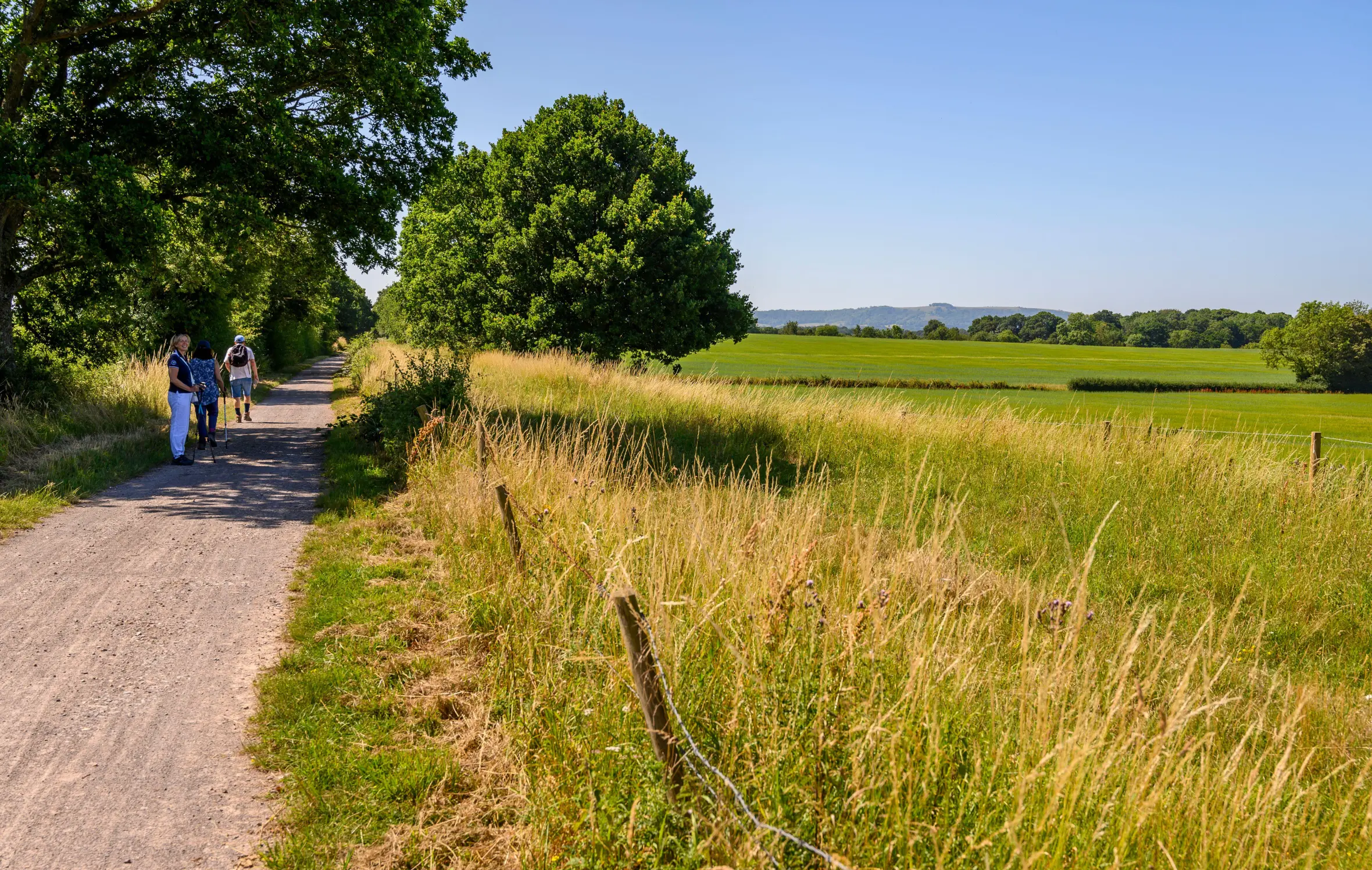 The Downs Link is a 37-mile path that runs from Guildford to Shoreham-by-SeaAlamy
I came up with my own, unnamed route, stitching together several official, signposted trails: the Thames Path, the Wey Navigation towpath, then the newly improved Downs Link. From there I would tackle the South Downs Way to reach Newhaven, where a ferry would take me to the start of France’s Avenue Verte low-traffic cycleway from Dieppe to Paris.
Strictly speaking, the Avenue Verte exists in Britain too. Launched in 2012, the full, signposted 300-mile route links Notre-Dame to the London Eye. But unlike the French side, which is a low-traffic trundle through pretty Normandy, the English bit includes some un-pretty industrial estates and horrid junctions along with woodland bridleways.
So I decided instead to take an unofficial route, almost entirely devoid of busy roads, through rural Surrey and West Sussex, which I nicknamed the Avenue Brune.
What you need to know
Who will love it? Easygoing cyclists looking for a gentle adventure rather than a personal best
Where is it? Our writer took a meandering route from London to Paris using the Downs Link and Avenue Verte
Insider tip Pack waterproof panniers and plenty of snacks!
Our Richmond departure
Starting out west along the Thames from Richmond was immediately delightful. Glimpses of Twickenham and Hampton Wick were visible through the trees that drape themselves over the water’s edge. I fleetingly left the river’s side at Kingston, but quickly rejoined it, crossing the bridge and then back at Hampton, passing the rowing clubs at Molesey, where banks teem with activity. The Thames is a far livelier place here than in the city, where smelly barges and noisy clippers dominate the grey-brown waves; here, people enjoy the water and riding slowly by on a bicycle I could hear their splashing, laughter and the occasional bark from a coach or cox.
My first significant key change came at Weybridge, where I joined the River Wey Navigation, built in the mid-1600s and an early contributor to England’s manufacturing prosperity. I thought of the men who spent their lives hauling coal and textiles along these routes, as I struggled to push my electric bicycle over a footbridge because my MacBook was weighing down one of the panniers. The lock and its picturesque cottage near the start of this waterway are a reminder of the route’s industrial history, and were a pleasant place for a break.
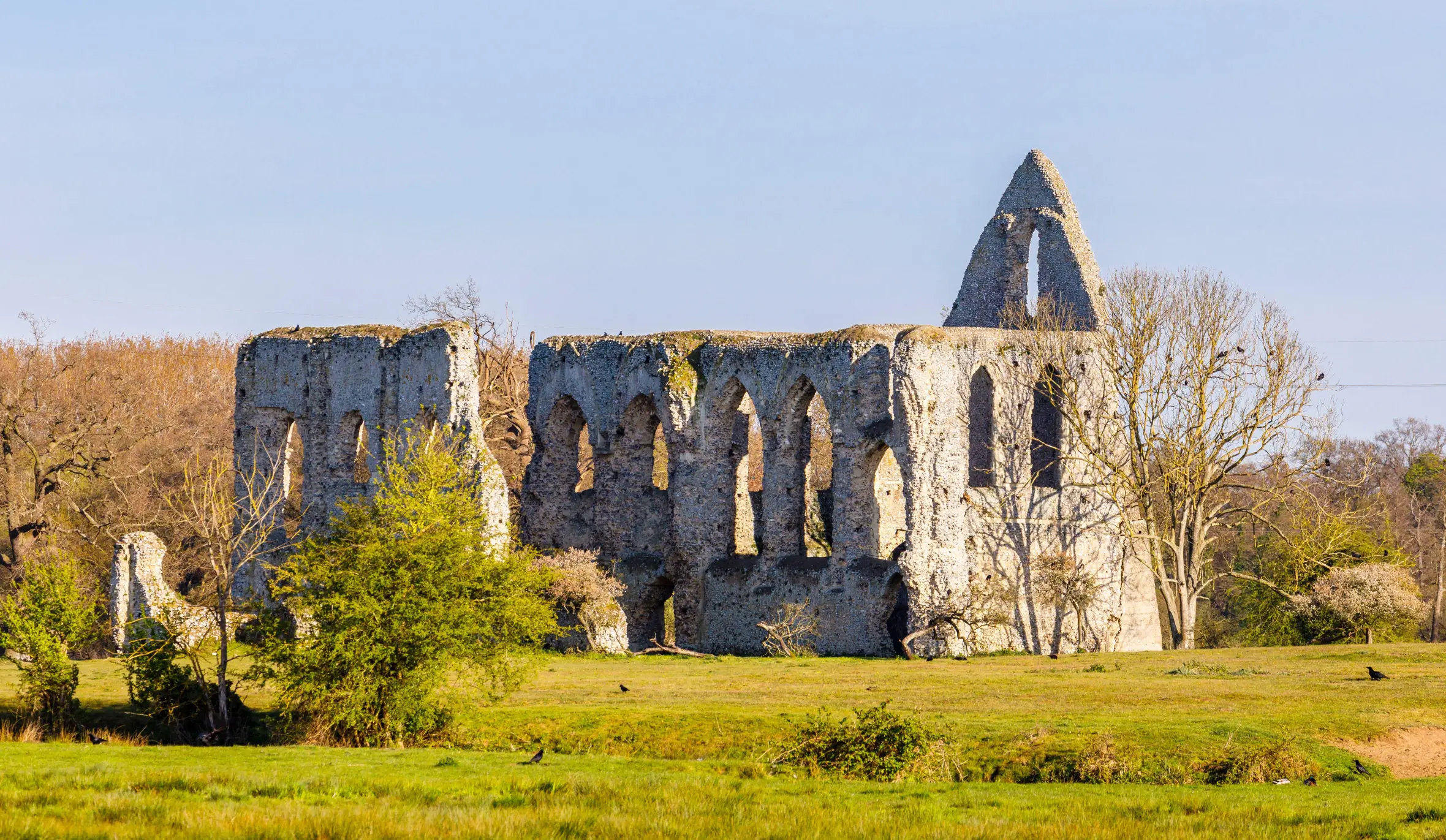 The sight of the Newark Priory ruins kept Ed motivated on his journeyAlamy
From there, the way became steadily bumpier and less kempt, with fresh leaves and blossom on the flint-strewn path. For miles, my knees brushed along the ballooning clumps of cow parsley that tumble out of England’s hedges for the first few months of summer. Jagged rocks, dank bridges and flies the size of raisins conspired to detract from my boys-own adventure as I pedalled and pushed my bike through the increasingly rugged Surrey countryside, but sights like the ruined Newark Priory at sunset and a surprise haul of “dragon’s teeth” tank defences in Guildford’s woodlands distracted me from any mild discomfort.
Along the Downs Link to West Sussex
I spent the night in Guildford, deciding on that warm evening among its buzzy bars and restaurants that it must be among the most unfairly maligned towns of the home counties.
From here the Downs Link now runs for about 37 almost-unbroken miles, occupying the disused track beds of old railway lines, all the way — thanks to new improvements by Sustrans, which runs the National Cycle Network — to Shoreham-by-Sea in West Sussex.
It took me through the remnants of the county’s industrial past, through towering tree tunnels, damp cuttings and sun-drenched farmland. Old stations and halts, and even an old railway carriage, dotted its length. I skirted Cranleigh, Horsham and Henfield, where I bought an iced coffee from the Cabin at Berretts Farm, glad to see there were enough walkers, cyclists and riders on the route to support the odd café. It was flat and there were no cars for many hours of leisurely cycling, all the way to Steyning.
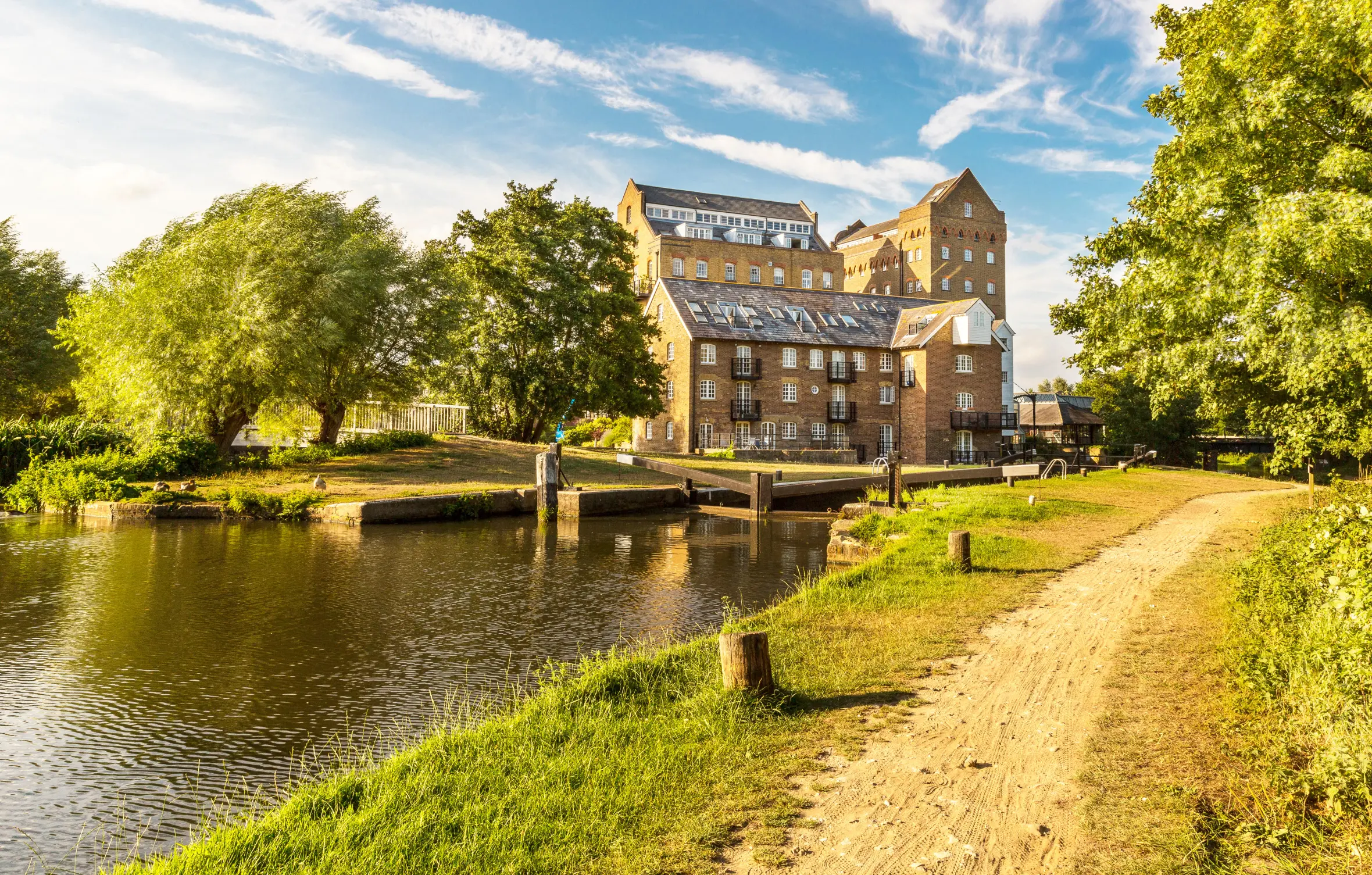 Ed’s route took him along the River Wey NavigationAlamy
A short, quiet stretch of unavoidable road took me to the next batch of cycle paths, before I embarked on the categorically off-road leg, following the South Downs Way right over the hilltops. This is really a mountain bike path rather than a cycleway, so is not part of the National Cycle Network. It was upon these steep, chalky hills that the bicycle I’d borrowed — a British-built Volt Connect hybrid e-bike — enabled me to complete sections I would have struggled with on my own.
Still, even with the motor I had to get off and push several times, particularly where the path had been eroded by centuries of wanderers, human and bovine. But the views from the South Downs Way must be some of the most fabulous in England. For ten miles I rode the ridge, a hazy eternity of greenery to my left, and a first few views of the sea to my right.
Lewes and its pavements were a relief after mile upon mile of rutted bridleway, then Newhaven, and by extension, France, was a pleasingly short, flat ride away, via only a handful of awkward detours and the five-hour ferry.
Taking the ferry from Newhaven to Dieppe
It is possible to ride from London to Paris in 24 hours, using the overnight ferry. Not only does this sound deeply unpleasant (I was told by one veteran that the freezing 4am disembarkation is a dispiriting start to the French leg) but it is also antithetical to the purpose of leisure cycling, which is about stopping often and riding slowly enough to enjoy the surroundings. I took five days, riding from Monday to Friday, with a weekend in Paris at the end.
The Avenue Verte begins near Dieppe’s ferry port, though mine started from the big Decathlon on the outskirts, where I stopped to buy waterproof covers for my panniers and a handful of other cycle accessories that I probably should have thought of beforehand.
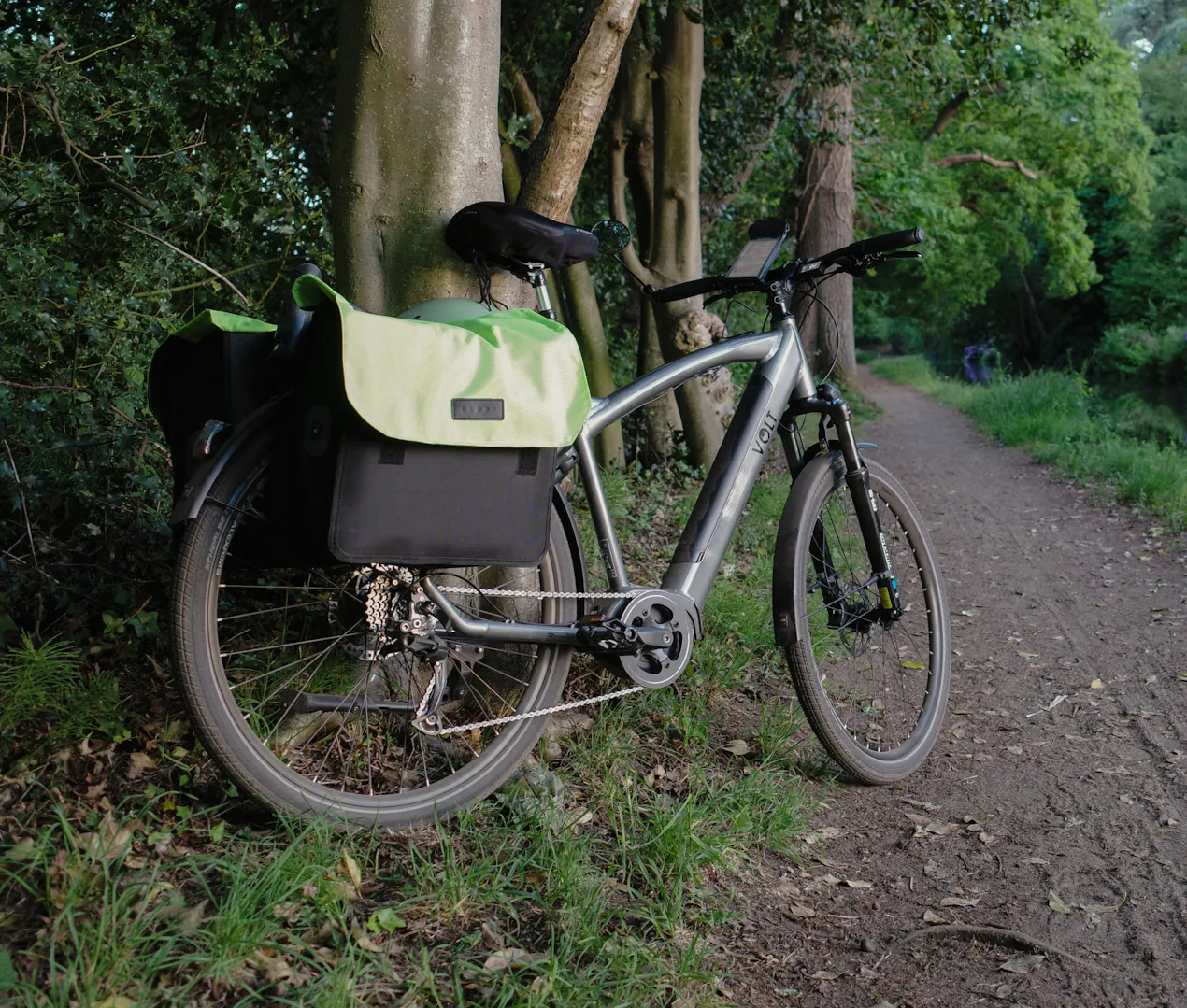 Ed’s bike made it through the journey in one piece
The wide, meticulously maintained Avenue Verte path was far more impressive than the English version, carving through what felt like empty farmland compared with Britain’s densely populated southeast. It too follows an old railway line, but unusually, a surprising amount of trackside apparatus remains: rusting signals, obscure signs and stationless platforms topped with neat hedges where passengers would once have stood.
The route is spectacularly well marked with consistent icons and clear signposts. Adverts tell cycle tourists of nearby attractions, accommodation and cafés; others count down to upcoming villages in kilometres. In addition, an app called cycle.travel was a helpful sidekick for navigation.
I didn’t leave Dieppe until the afternoon and while few of the nearby villages had much to offer, the relative hubs of Gournay-en-Bray, Neufchâtel-en-Bray and Forges-les-Eaux, within a four-hour ride, offered a choice of lodging and food.
The leisurely route through Normandy to Paris
Like a true leisure rider, I plumped for the first (I had cycled 70km that day), staying in a single room in Hotel de Normandie, whose material reality was less grandiose than its name suggested but whose kindly receptionist led me to a secure outbuilding to stow and charge my bicycle (channelhotels.com).
Forges-les-Eaux was the end of the traffic-free section of the Avenue Verte, where it peters out and sets you free, onto empty lanes and quiet, open B-roads. I enjoyed these sections immensely, bounding from village to village on wide, warm asphalt.
Some climbs were challenging, but I always charged myself at the same time as the bike, enjoying a beef tartare or some sort of assiette while topping up the battery under the table at a restaurant, where staff were sympathetic when I hobbled in and drank all of their Orangina. Even remote settlements had charging stations, mostly domestic sockets that I could plug my bike into.
It took me two days to cover the really rural part of the journey through the unspoilt Vexin region and frankly I felt I was riding too fast, especially in the evenings when I would have been better off in a bistro or a rolltop bath. A keen cyclist can make it from Dieppe to Paris in a day, but an indifferent one could easily spend a week exploring
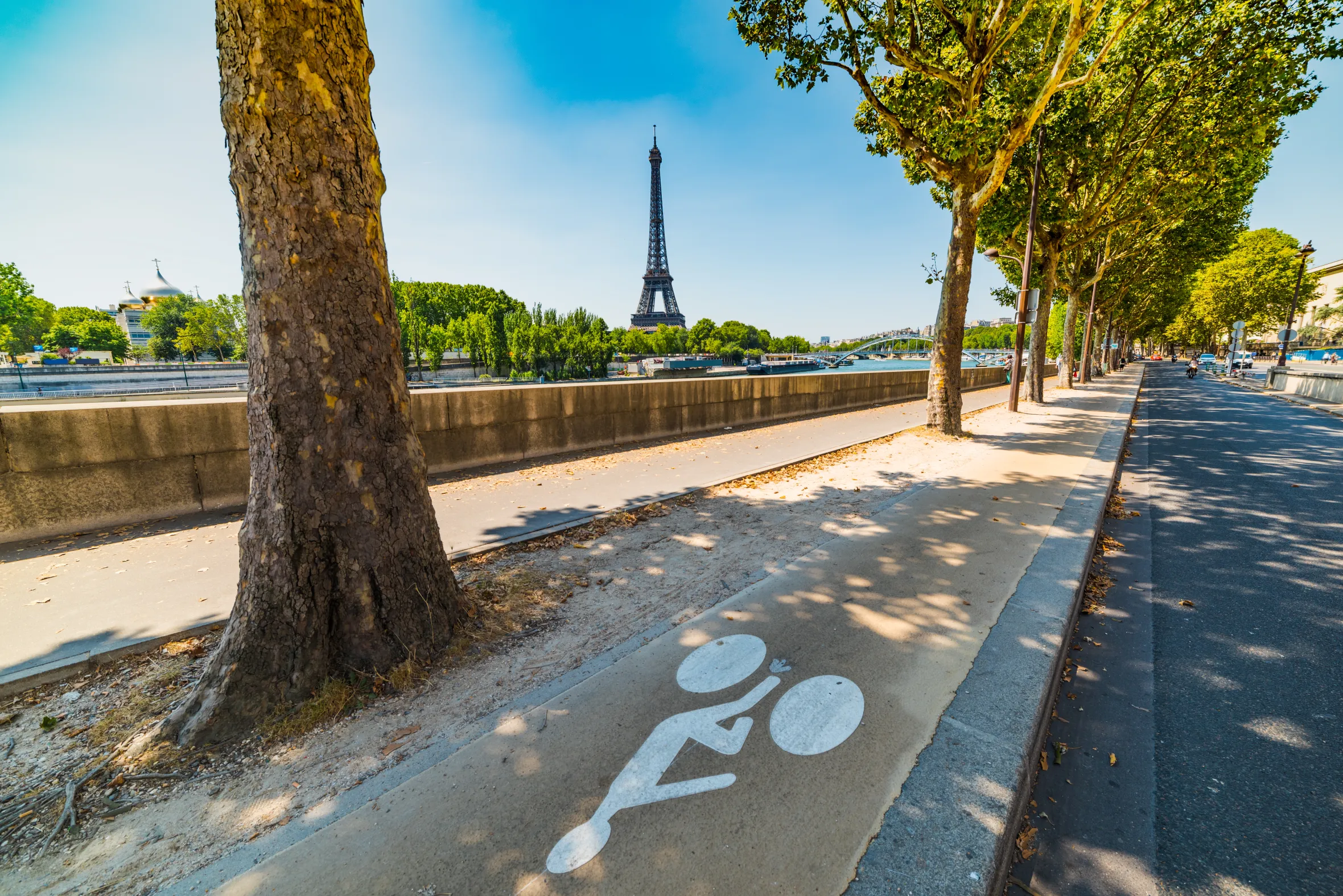 It took Ed five days to reach ParisGetty images
It was with some sadness that I saw a hill and realised Paris was on the other side of it. I’d been focusing on the journey for so many days that I hadn’t prepared myself for its inevitable end. At Cergy the bike path joined a fast road and I got glimpses of the city here and there, like the chatter of a crowd behind a swinging door. There were some predictable bum notes on the way into Paris, including some desolate scrubland. The trusty Avenue Verte signs that had guided me through sunny barley fields and chocolate-box villages became diesel-stained and occasionally vandalised as I wove through the suburbs.
The route took me to the Oise river and then along the Seine before crossing into the Forest of Saint-Germain-en-Laye and its network of bike paths, some of which lead to the grand suburb of Maisons-Laffitte, which sits in one of the outer meanders. This seemed as good a finish line as any, about as far into Paris as you can travel without experiencing its notorious traffic.
The Avenue Verte continues on its way to Notre-Dame along the Seine for many miles of unremarkable gravel path, hitting dual carriageways and industrial parks before the final hurrah down Canal St-Martin, through République and then into the heaving centre.
But finishing in a green spot by the river in the city’s verdant western reaches felt analogous with my Richmond startpoint. I preferred to stop while the going was good.
Cycling from London to Paris was not easy. Yet it wasn’t prohibitively difficult either, even for this casual cyclist. I used the same cheap panniers I take to M&S and covered half the journey wearing jeans. I heartily enjoyed every inch of this electrically assisted, spoon-fed adventure, a double-sided greatest hits album of French and English scenery.
Ed Wiseman travelled independently
Have you cycled from London to Paris – or would you? Let us know in the comments