
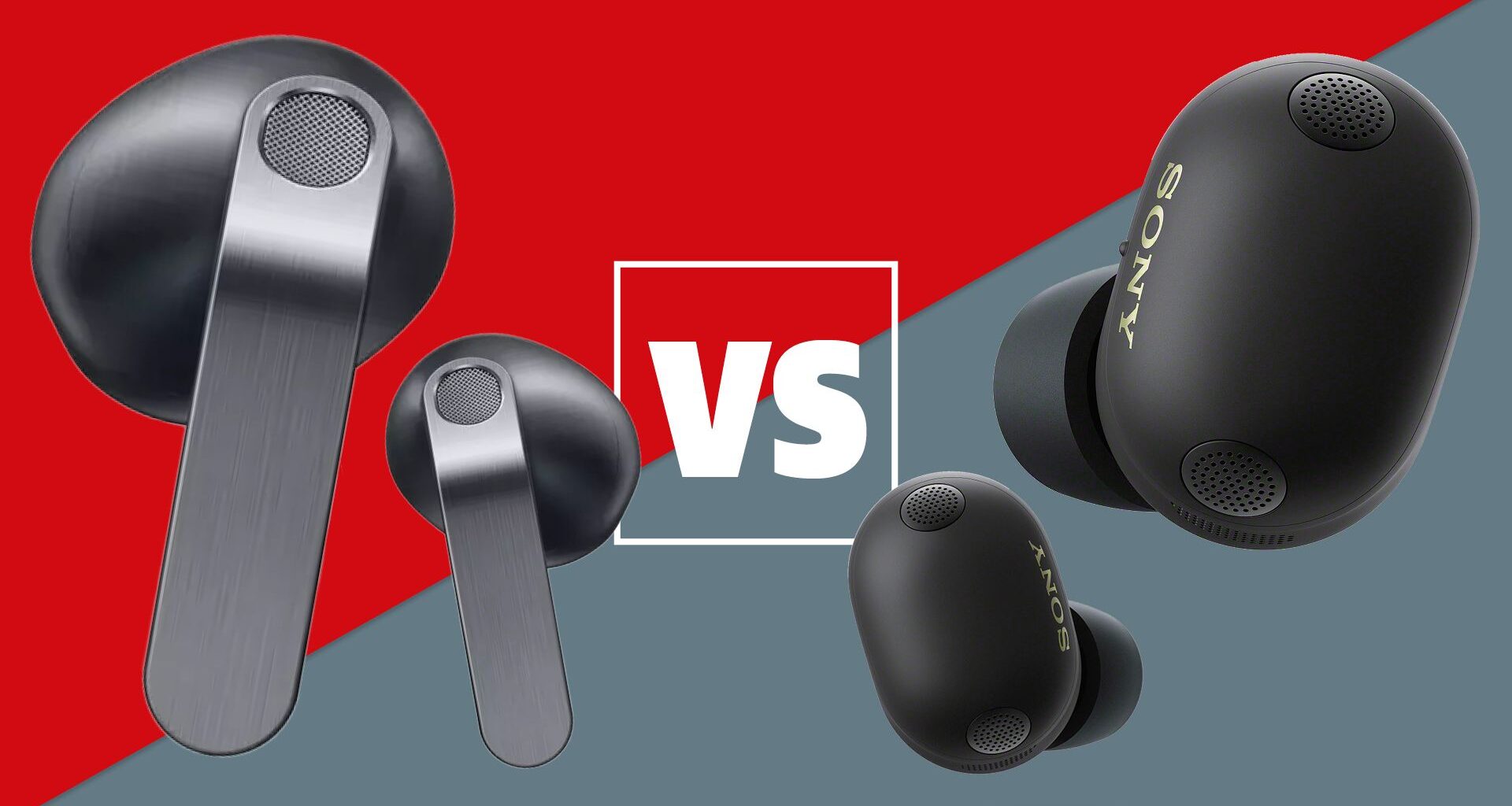
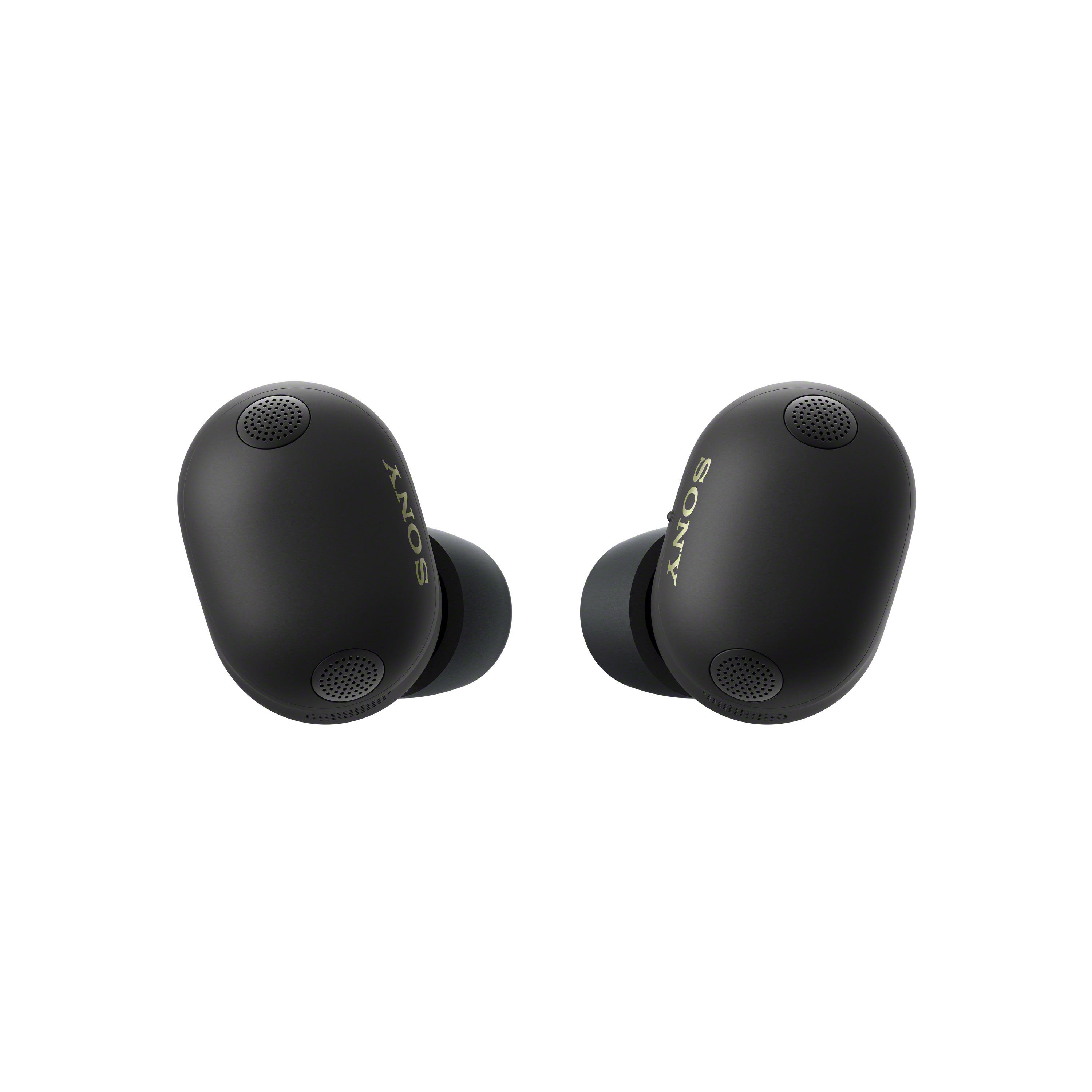
Bluetooth version: 5.3 (SBC, AAC, LDAC)
Battery life: 8 hours (buds), 24 hours (total)
Noise cancelling? Yes
Weight: 6.2g (per earbud)
Finishes: x 2 (black, platinum silver)
Sony’s flagship earbuds are its best yet, boasting a new design, a more natural sound and beefed-up ANC. While the tips and fit could be improved, they’re the buds to which most rivals currently aspire.
ProsClass-leading soundGreater dynamic abilities than the 4 Pro Better noise cancelling, tooFantastic call qualityConsEartip options are limitedNot as comfortable or secure as the Samsung budsBulkier case
Samsung Galaxy Buds 4 Pro
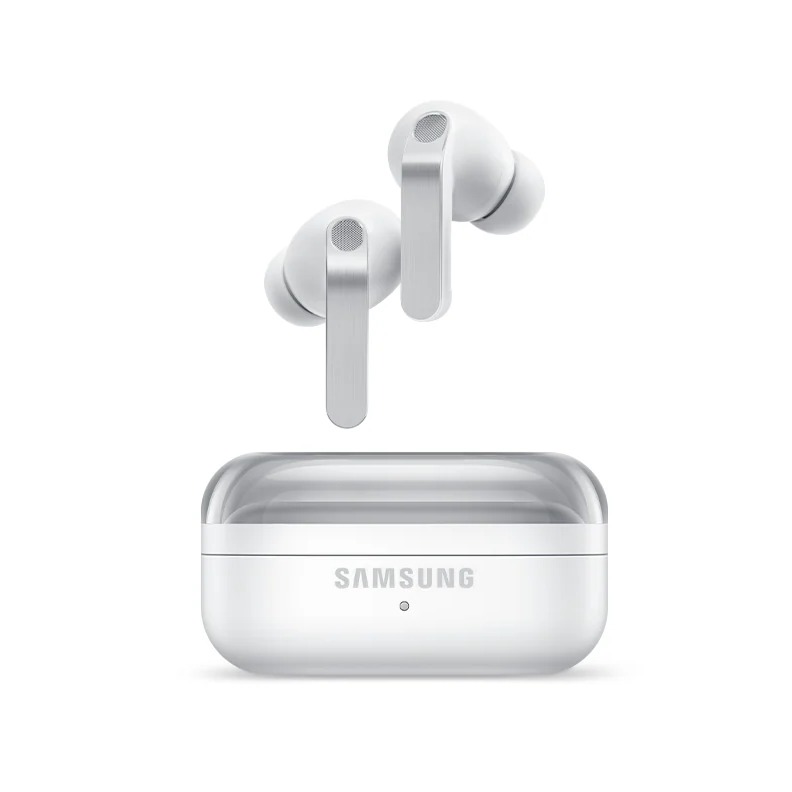
Bluetooth: 6.0 (SBC, AAC, Samsung SSC UHQ)
Battery life: 6 hours (buds), 26 hours (total)
Noise cancelling? Yes
Weight: 5.9g (per earbud)
Finishes: x 3 (black, white, pink)
The Galaxy Buds 4 Pro are the best wireless earbuds that Samsung has made yet. They sound detailed and clear, with an admirable feature set and a comfortable, appealing build.
ProsClear, refined soundExcellent detail levels Strong feature setConsANC isn’t up to the Sonys’ levelNot as musically engaging as the WF-1000XM6 Only three eartip sizes
Samsung is up for the challenge. The Korean brand showcased a real determination to compete in the premium wireless space with the previous Galaxy Buds 3 Pro, and now hopes to go one further with its fourth-gen follow-up, the just-released Samsung Galaxy Buds Pro 4. This is the most almighty of challenges for the flagship buds, but if they can trouble the class leaders, we’ll know that Samsung has truly arrived on the premium wireless scene.
You may like
Samsung Galaxy Buds 4 Pro vs WF-1000XM6: price
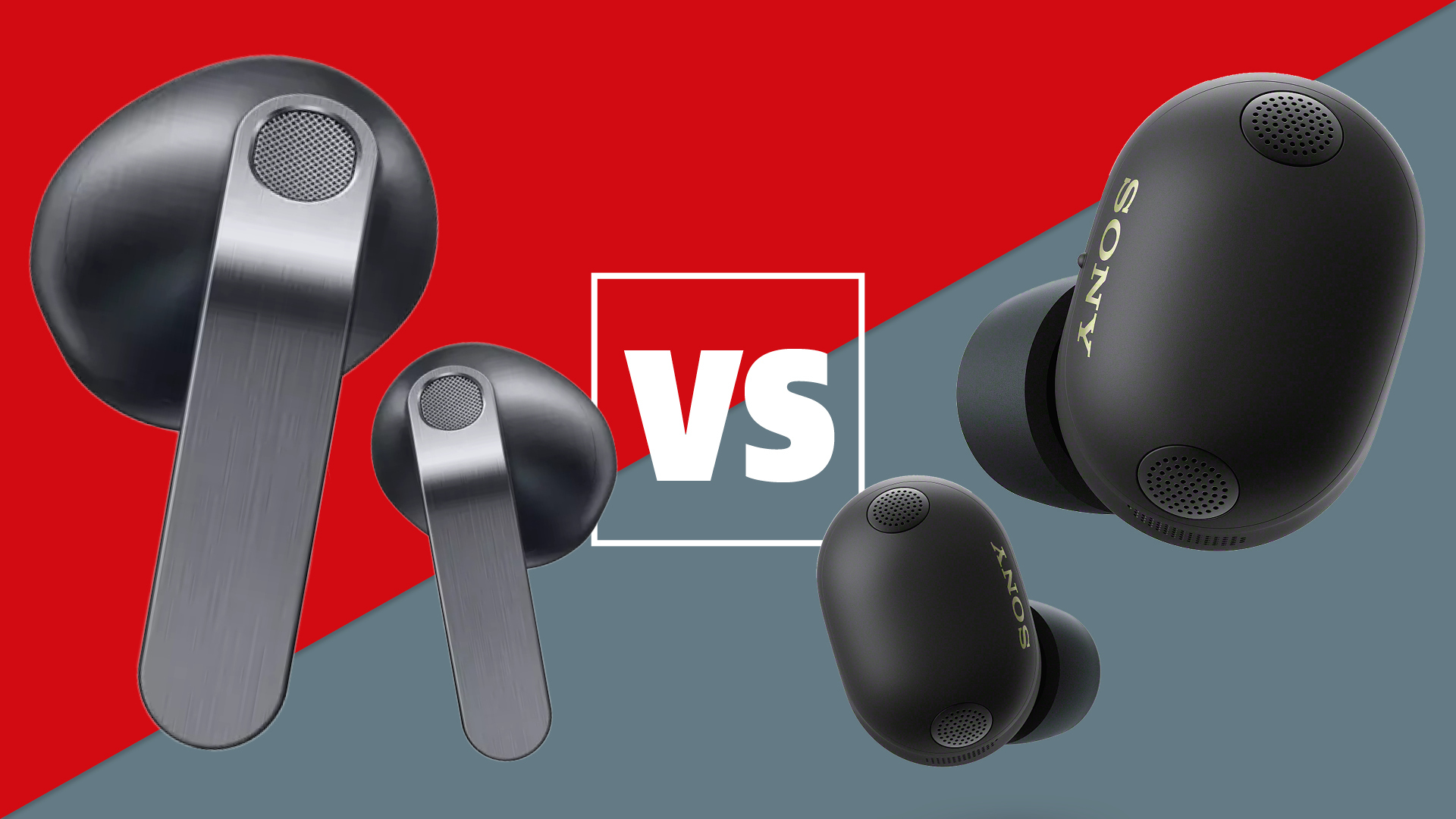
Both premium options, but one is definitively cheaper than the other… (Image credit: What Hi-Fi?)
The Sony WF-1000XM6 cost £250 / $330 / AU$500 at launch, making them a little cheaper for UK buyers compared with the older WF-1000XM5 (£259 at launch) but more expensive if you happen to live in the US ($299) or Australia (AU$419).
They’re not, however, cheaper than their Samsung rivals. The Galaxy Buds 4 Pro are very much a premium pair of earbuds, but their £219 / $249 / AU$399 tag sees them significantly undercut Sony’s flagships. The fourth-gen model didn’t see a price hike over their third-gen antecedents, either, which is a nice touch from Samsung.
** Winner: Samsung Galaxy Buds 4 Pro **
Today’s best Sony WF-1000XM6 and Samsung Galaxy Buds 4 Pro deals

 Samsung Galaxy Buds 4 Pro vs WF-1000XM6: design and comfort

(Image credit: What Hi-Fi?)
Samsung’s fourth-gen flagship buds are a little different from those which preceded them.
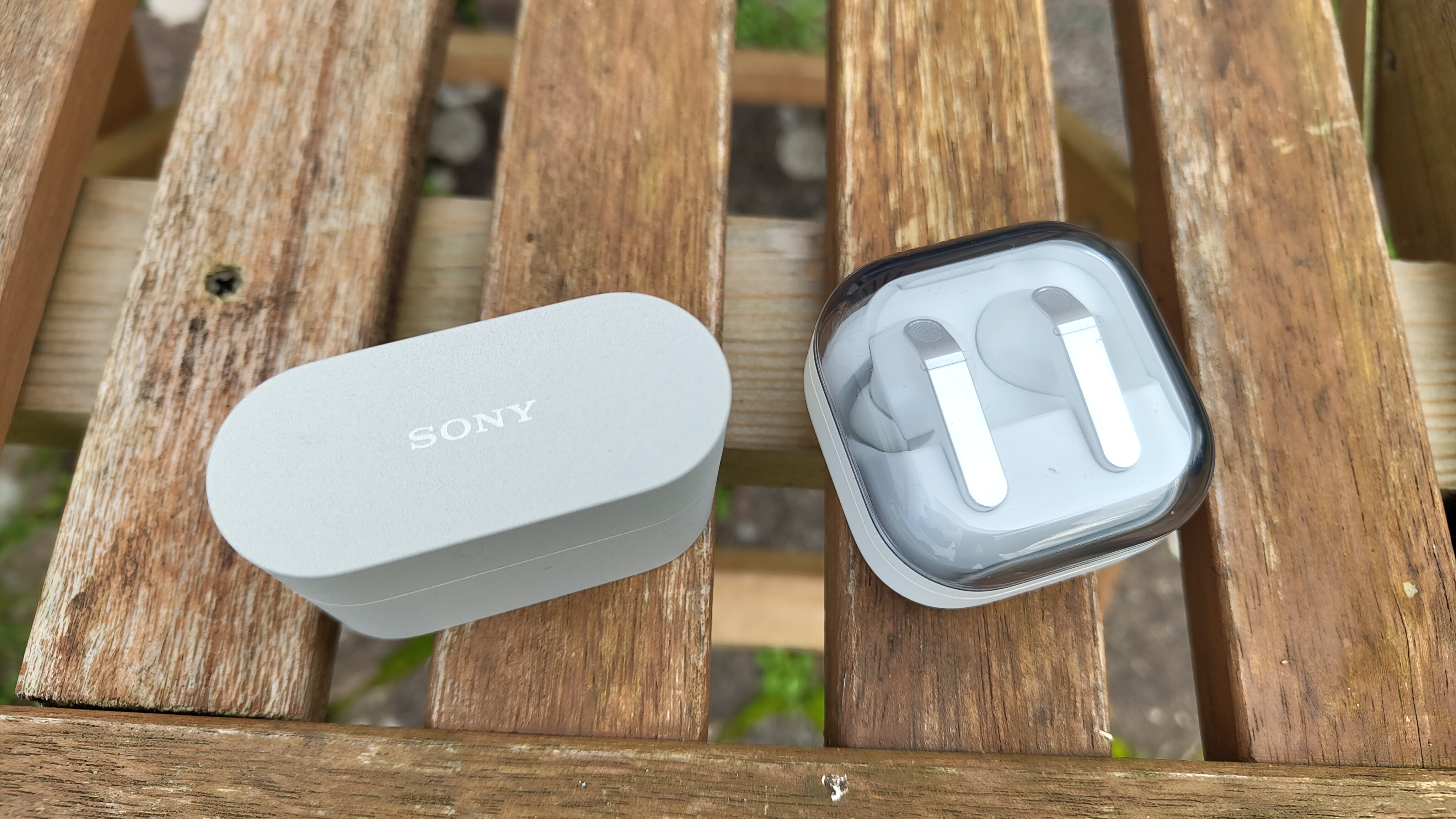
The classic stem and bud design with a removable silicone ear tip returns, but it’s much harder to accuse the Buds 4 Pro of looking like a pair of Apple rip-offs this time around. The vertically placed ‘Blade Lights’ of the third-gen model have also gone, replaced by a sleek metallic stem covering which just gives the fourth-gen iteration a more premium aesthetic.
The Galaxy Buds 4 Pro have had their IP rating boosted from IP53 to IP57, granting protection against dust ingress and immersion in water up to a metre deep for around 30 minutes. That’s a more robust certification than the Sonys, which can only muster an IPX4 rating for general protection against splashes of water rather than full immersion.
Fit-wise, we generally find the Samsung earbuds comfortable and easy to get along with. The removable eartips are angled in slightly to allow for a more secure seal, with the stems helping to add a counterweight and keep everything locked into place. Samsung offers an ear-fit test via the companion Wearable app, confirming whether you’ve obtained an adequate seal with a quick scan of your ears.
You may like
Sadly, we feel let down that you only get three sizes of tip from which to choose, as the provision of small, medium and large options just seems so miserly for a pair of flagship wireless earbuds. We’d also note that some of our wearers struggled to keep the Samsung buds in place during more strenuous activities, so they may be less suited to running or sporting endeavours than more active-focused alternatives.
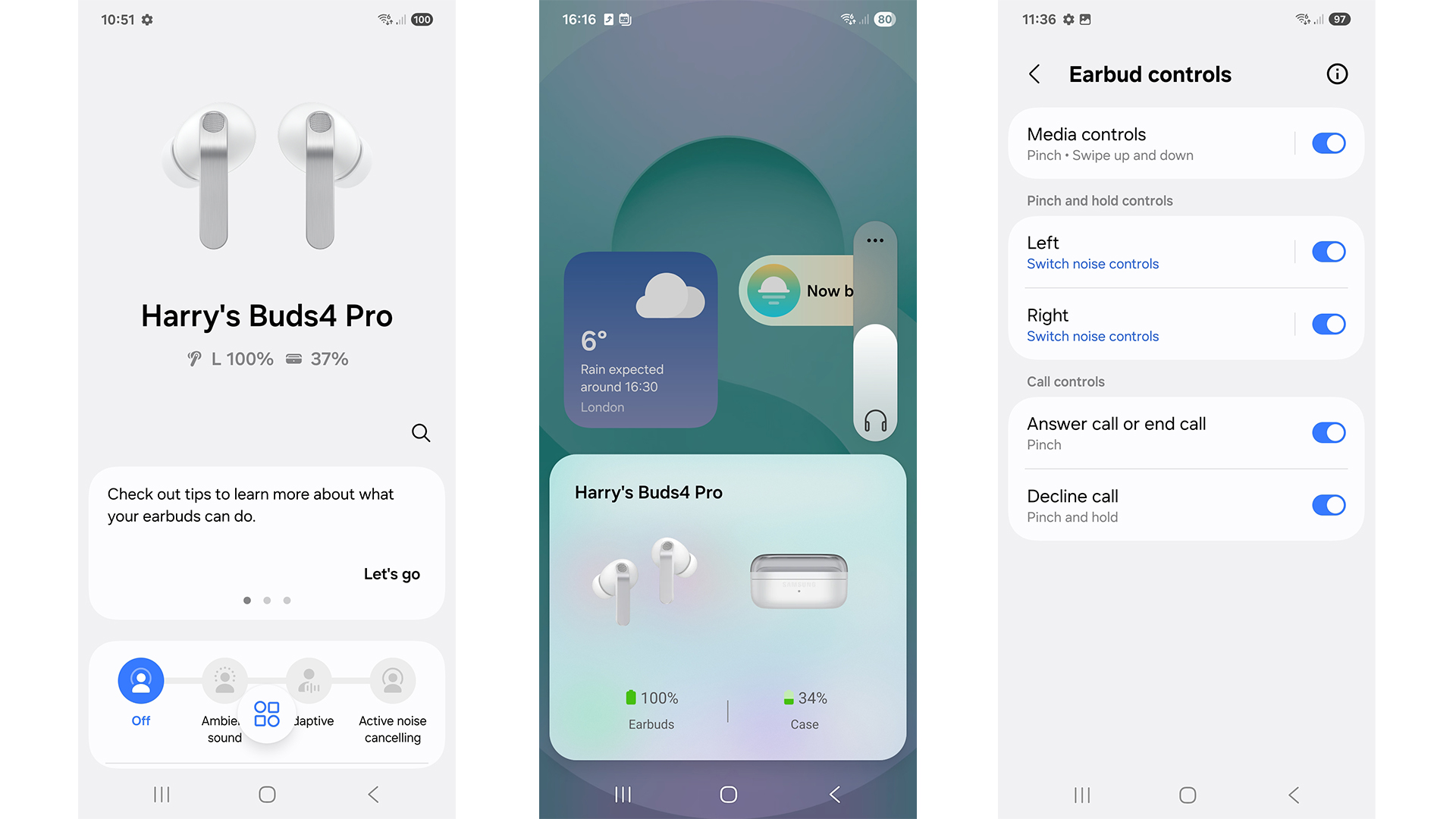
Touch controls on the Samsung Galaxy Buds 4 Pro are employed by a predominantly pinch-and-hold system, whereby you give the stems a squeeze to control operations such as playing and pausing tracks or switching noise cancelling modes, or swipe up or down on the exterior of the stem to increase or decrease your music’s volume.
(Image credit: What Hi-Fi?)
Sony’s WF-1000XM6 rivals are a similarly bold departure from what came before, and the design is certainly distinct from the more traditional bud and stem design of the Galaxy Buds 4 Pro.
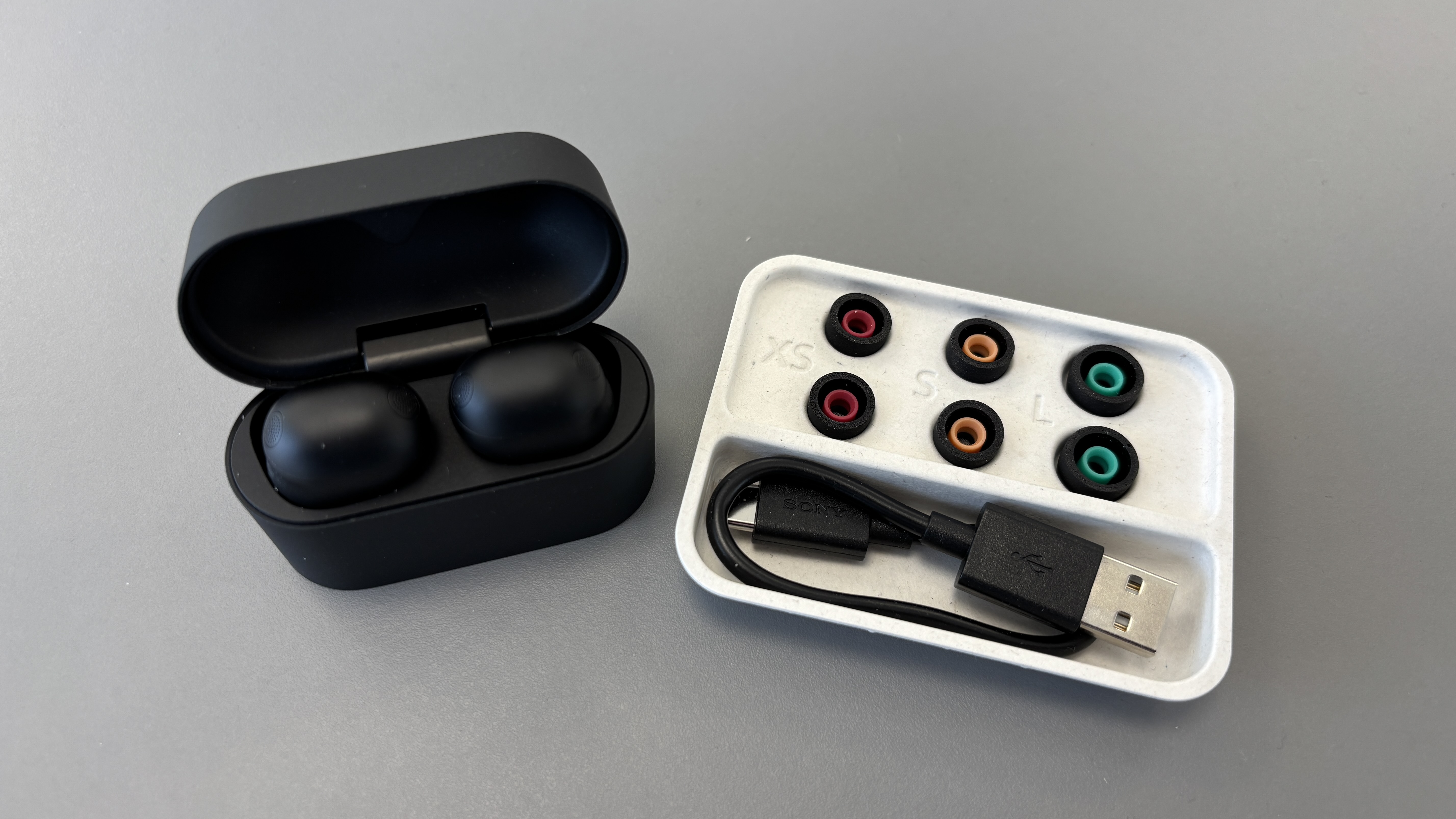
Open that rather chunky monolith of a charging case and you’ll see that Sony has altered both the look and the feel of the earbuds when compared to the outgoing model, sporting a more rectangular, boxy aesthetic.
Aside from improving noise cancelling and call quality (more on that later), the XM6s’ configuration is designed improve in-ear comfort, yet as we found during our testing, that might depend on who is using them.
That firm eartip material has returned for the sixth-gen iteration, and while it will suit some ears just fine, we still have multiple team members who simply cannot get to grips with how Sony’s latest buds fit inside their ears.
Sony does offer a handy air pressure fit test in the Sound Connect app, as well as four eartip sizes (extra small, medium and large) over the three offered by Samsung. Still, an extra large option wouldn’t have gone amiss for those users with larger ears, especially given how tricky the fit of the premium buds can be for some wearers.
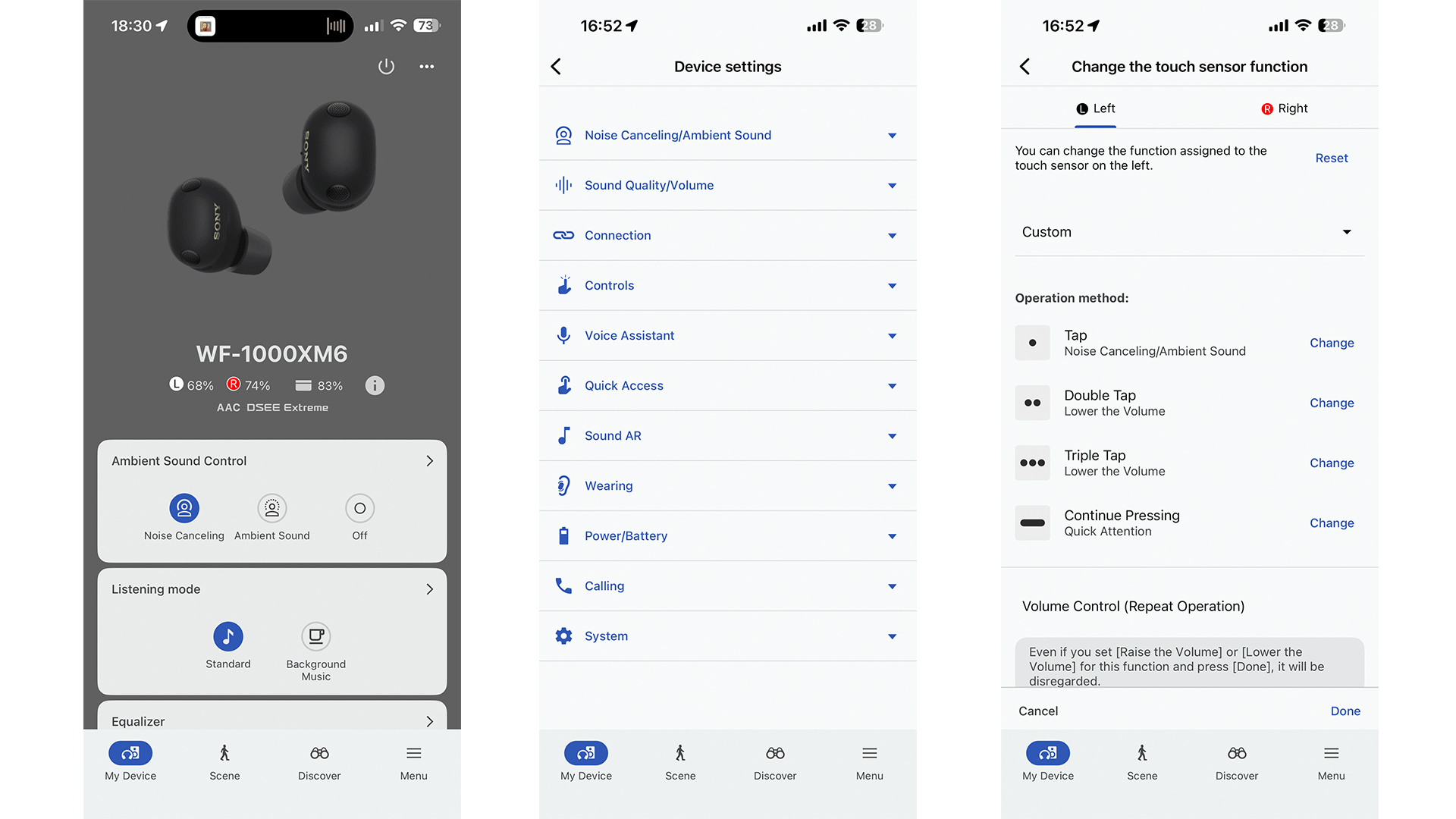
Touch controls are on board for the XM6, and we’re pleased to report that we find them responsive and well-integrated during our tests. As is the case with the Buds 4 Pro, you can customise their configuration via their respective companion apps.
Decent, if not perfect, performances on both sides. We imagine that most users will find the Buds 4 Pro to be easier to get along with fit-wise, and they are more robust in terms of their IP rating, but they do lose a point for their meagre array of tip sizes.
** Winner: Samsung Galaxy Buds 4 Pro**
Samsung Galaxy Buds 4 Pro vs WF-1000XM6: features
(Image credit: What Hi-Fi?)
We’re in properly premium territory here, with each competing brand going all out on the features front, as befits two pairs of flagship wireless earbuds.
The Samsung Wearable app is the platform you’ll need in order to get the most out of your flagship Samsung buds. As you’d find with a pair of AirPods when connected to an iPhone, the Galaxy Buds 4 Pro are integrated within your Samsung device’s native operating system, so you can access many of their features without having to delve into the app at all. Naturally, you won’t be surprised to learn that Apple iOS users get no app support at all.
For Sony users, you’ll be operating your WF-1000XM6 via the Sound Connect app (available for both iOS and Android), a platform which plenty of settings when it comes to the number of customisation options and device metrics it provides – including a the handy speak-to-chat mode, which lowers music volume when it recognises you are speaking to someone.
The Samsung buds provide support for the brand’s ‘360 spatial audio’ with head tracking, both of which require a Samsung device in order to work and can be toggled on or off via the accompanying app.
The tech works admirably, and unquestionably provides a more spacious and open experience than when listening in standard mode. Head tracking is also effective, even if it does suffer from the usual gripe of having a very slight delay whenever the sound moves from one earbud to the other.
For the XM6, support for Sony’s 360 Reality Audio is on the menu, aiming for a similar effect of granting a more immersive, three-dimensional soundfield. You will require a scan of your ears, as well as a compatible streaming service with these tracks (which are different from Dolby Atmos recorded tracks), such as Amazon Music Unlimited, to make use of the tech.
(Image credit: Sony)
How about battery life? Samsung’s wireless flag-bearers grant seven hours from the buds and a total of 30 with the case when ANC is turned off. Switch noise cancelling on, and those numbers will drop to roughly six hours from the buds and a total of 26 hours with the case. By comparison, battery life for the WF-1000XM6 comes in at eight hours from the buds and a total of 24 hours with the case, with ANC on.
The Galaxy Buds Pro 4s’ big trump card comes via their compatibility with Samsung’s exclusive proprietary SSC UHQ hi-res codec, granting transmission of up to 24-bit/96kHz music files over Bluetooth via newer Galaxy devices.
We used a Galaxy S25 smartphone to get the most out of our test buds’ sonic capabilities, though we’re assured that the S24 and S23, as well as the newer generations of the Z Flip/Fold phones also offer compatibility with SSC UHQ.
Bluetooth support for the Sony WF-1000XM6 comes courtesy of standard SBC and AAC alongside Sony’s own LDAC codec for hi-res transmission up to 32-bit/96kHz, and you’ll also need a compatible source device in order to access it. Most Sony Xperia phones, such as the Xperia 1 VI and Xperia 1 VII, do offer LDAC support.
It’s a a close run thing on the general features front, with both pairs tending to match each other blow for blow when digging into their admirably large bags of tricks.
** Winner: Draw **
Samsung Galaxy Buds 4 Pro vs WF-1000XM6: noise cancelling and voice calls

(Image credit: What Hi-Fi?)
The Galaxy Buds 4 Pro are admirable in their handling of both noise cancelling and voice calls.
Speech comes across as clear and reasonably expressive thanks to the buds’ trio of microphones and a voice pick-up unit, while background noises are capably softened to lessen their intrusiveness during phone calls.
You get full noise-cancelling, transparent pass through and an Adaptive mode when it comes to the Buds 4 Pro’s ANC flavours. Standard full ANC is effective enough, capable of subduing traffic noises and the general hubbub of a busy street when using the buds outdoors.
Samsung’s Adaptive mode monitors your environment and automatically switches to the more transparent ambient mode when it detects sounds such as human speech or the screech of nearby sirens. In our tests, it’s impressive how effectively the setting clicks into gear whenever we engage in a conversation to test our buds’ reflexes.
A very fine effort on both fronts from Samsung, but it isn’t enough to win this particular shootout. We switch over to the slightly costlier Sony WF-1000XM6 when taking a phone call and they set the gold standard for clarity, isolation and the naturalness of vocal reproduction from both callers.
(Image credit: What Hi-Fi?)
The addition of the new QN3e processor and a quad array of microphones in each earbud works to tremendous effect, isolating you from outside noise while putting speech to the forefront of any conversation. The Sonys also throw their Adaptive NC Optimiser into the mix, which automatically adapts the ANC algorithm to your fit and for the environment you’re listening in.
The resultant noise cancelling performance is exceptional. In full ANC mode, Sonys are superb at how naturally and subtly they isolate us from all kinds of exterior sounds, presenting us with a clean, rumble-free background through which our music can more easily shine when outdoors, on our commute or even on a plane.
Even when you sink to the noisy recesses of London’s underground network, the XM6 are able to dim down the low-end and midrange noise so they are much less intrusive.
A good effort from Samsung, but Sony is the clear winner here on both counts.
** Winner: Sony WF-1000XM6 **
Samsung Galaxy Buds 4 Pro vs WF-1000XM6: sound quality

(Image credit: What Hi-Fi?)
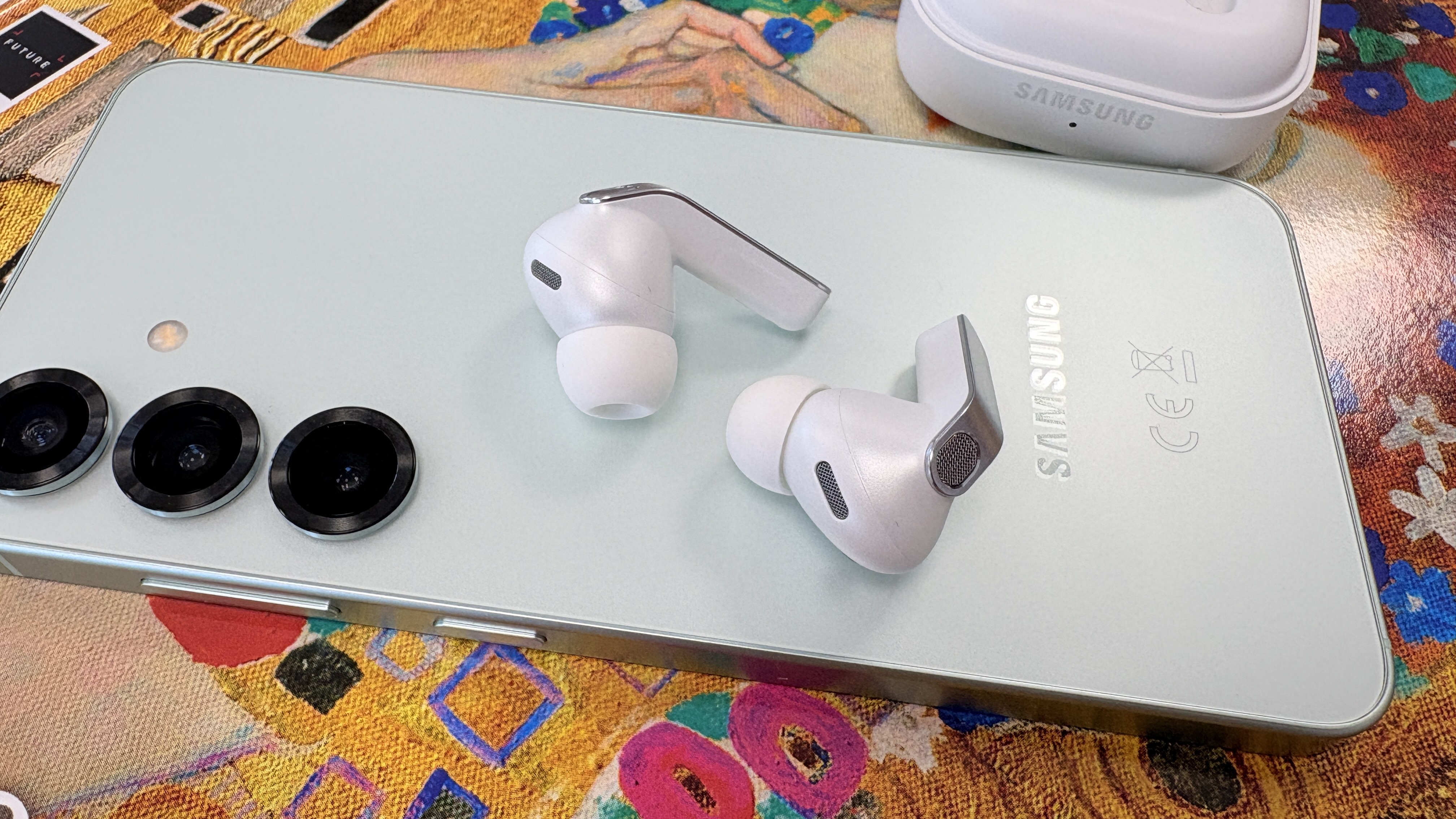
The Galaxy Buds 4 Pro are, to our ears, the best wireless earbuds Samsung has ever made. They’re clear, well-organised and snappy performers, with an enthusiasm and sonic precision that we find hard to resist.
They boast a similar flavour to their third-gen predecessors, albeit with greater detail and clarity elevating their performance to new heights. As we said in our review, the Buds 4 Pros’ “outstanding levels of textural insight and clarity make a recording of Mozart’s Rondo Alla Turca sound appropriately regal, before bringing out the lean, retro feeling of Elvis Costello’s Veronica with aplomb”.
That crisp, agile approach means the Buds 4 Pro are natural entertainers, and with the right genres, they’re capable of putting on a real show. We find that rock, hip-hop and dance numbers tend to fare particularly well, as evidenced by a powerful, crunchy rendition of Slipknot’s headbanging Before I Forget and a sharp, lively reproduction of Justice’s funky Phantom Pt. II.
If you really want to get the best out of the Galaxy buds, it is worth having an up-to-date Samsung Galaxy device in order to take advantage of the brand’s own hi-res SSC UHQ codec.
When paired with the Samsung Galaxy S25 smartphone and with that high quality codec switched on, the Buds 4 Pro take things to the next level, with overall clarity and detail levels increasing considerably when compared to playing via an iPhone or the standard Bluetooth codec on a Sony Xperia 1 VI smartphone.
(Image credit: What Hi-Fi?)
Good as the Galaxy buds are, the Sony WF-1000XM6 remain the benchmark-setters. Pitched in an even battle, the XM6 are a clear improvement over their rivals, as well as pretty much any other earbuds you’ll find at this level.
These are, by our measure, the best Sony buds yet. The WF-1000XM6 are as detailed and insightful as we’d expect, yet they also ooze a natural warmth and rich tonality which gives them immense appeal. If you found their predecessors just a touch analytical or dispassionate, that relative defect has been admirably rectified with the compellingly entertaining XM6.
Perhaps what we admire most about the WF-1000XM6 is their expressiveness and outstanding dynamic handling. The Sonys just sound so natural and believable as they tease out dynamic strands and fluctuations with remarkable insight and agility, giving music a three-dimensional, engrossing appeal that has us entranced no matter the tunes we play.
This is where the XM6 really distance themselves from their Samsung contemporaries, and while the Galaxy Buds 4 Pro are admirably spacious and clear, the Sony’s hugely expressive, authentic delivery makes them a considerably more involving option. For getting you to feel the heart and soul of your music, it’s the Sony buds every time.
The WF-1000XM6 are excellent across the frequency range, too. As we said in our review, they deliver “crisp highs all the way down to tightly controlled and textured lows”, and have “a grasp of bass notes and deliver layers of texture which the old model can’t quite replicate. The Sonys exhibit all the bass power and weight you could ask for, but it’s the way the notes are controlled and defined which really sets them apart from their rivals”.
Yes, the Galaxy Buds 4 Pros’ performance when making use of their specific Samsung SSC UHQ codec does narrow the gap somewhat, but it’s not enough to mask their relative limitations when put head-to-head with the best that Sony has to offer.
For sound performance, the WF-1000XM6 are in a class of their own.
** Winner: Sony WF-1000XM6 **
Samsung Galaxy Buds 4 Pro vs WF-1000XM6: verdict

(Image credit: What Hi-Fi?)
Samsung’s Galaxy Buds 4 Pro are the best wireless earbuds we’ve heard from the brand. The fourth-generation in-ears are easily the strongest indication yet that Samsung has what it takes to compete in one of audio’s toughest arenas.
Their crisp, precise and detailed sound will make rivals sit up and take notice, although it’s worth noting that they sound (and perform) their best when paired with the latest Samsung Galaxy devices and using the proprietary hi-res codec.
Those improvements aren’t, however, enough to topple one of the most dominant names in wireless audio. In terms of pure sound quality, Sony continues to lead the pack, with its WF-1000XM6 once again raising the bar so high that it’ll take something truly remarkable for anyone to surpass them. And you don’t need to have a specific device or codec to hear them at their best, either.
For their outstanding sonic talents, backed by some exceptional all-round credentials, the XM6 remain the buds to beat.
** Overall winner: Sony WF-1000XM6 **
MORE:
Sony WF-1000XM6 vs Bose QuietComfort Ultra Earbuds (2nd Gen): which should you buy?
See our pick of the best wireless earbuds for all budgets
The ultimate music tracks to test your hi-fi system
Today’s best Sony WF-1000XM6 and Samsung Galaxy Buds 4 Pro deals