
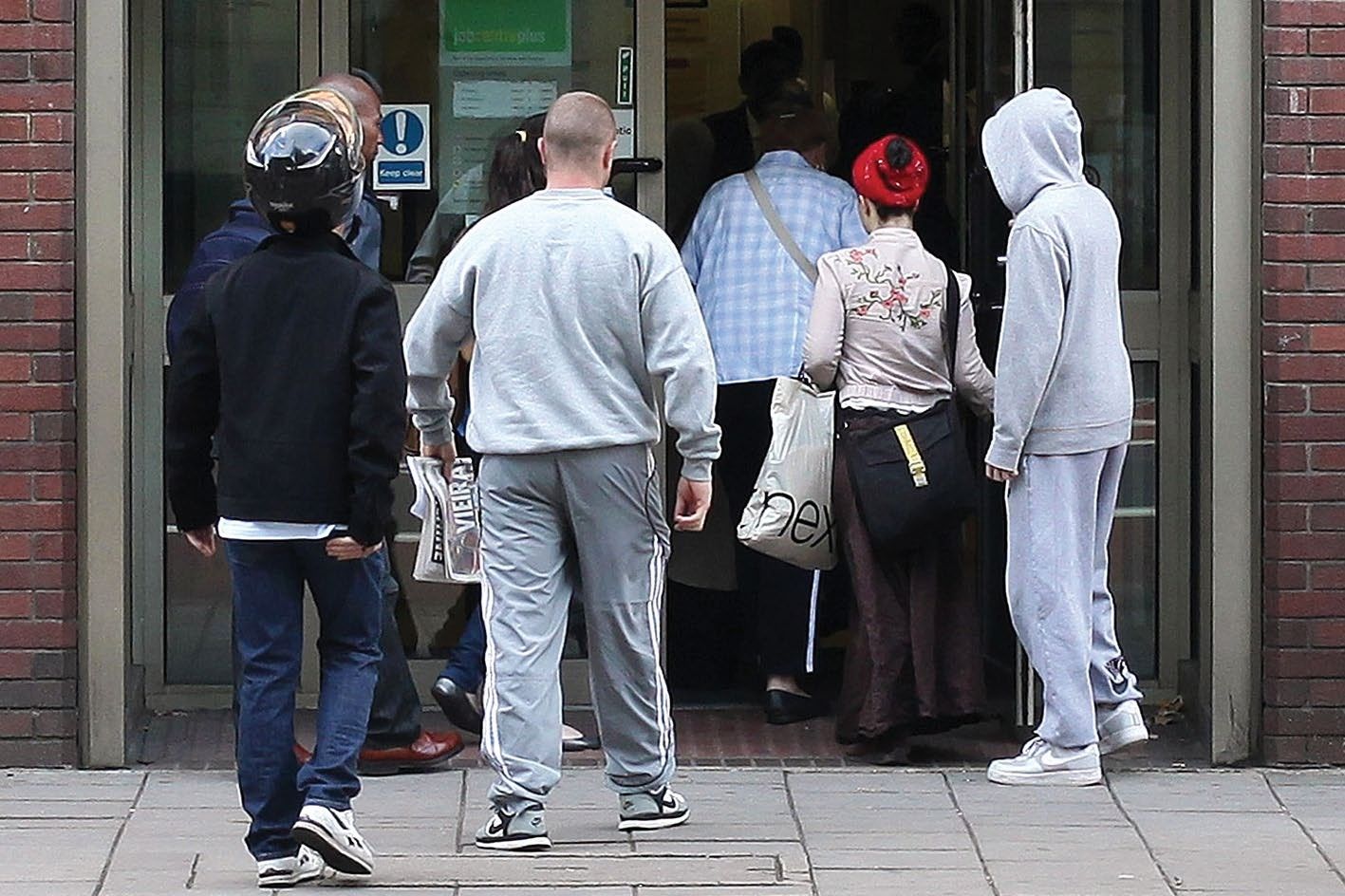
How bad are the youth unemployment figures?
Youth unemployment figures make grim reading. Government data released earlier this month shows that the UK unemployment rate rose to 5.2% in January – the highest rate for five years.
That’s higher than the Covid peak of 15.3% in late 2020 and the highest level for more than a decade. And for the youngest workers –16-and 17-year-olds who have left education – the rate is a shocking 34.2%.
Try 6 free issues of MoneyWeek today
Get unparalleled financial insight, analysis and expert opinion you can profit from.
Start your trial
Sign up to Money Morning
Don’t miss the latest investment and personal finances news, market analysis, plus money-saving tips with our free twice-daily newsletter
Don’t miss the latest investment and personal finances news, market analysis, plus money-saving tips with our free twice-daily newsletter
Whatever measure you look at, there’s clear evidence that younger workers are bearing the brunt of the UK’s increasingly soft jobs market.
For example, the number of payrolled employees in the UK fell by 134,000 in the year to January. But for younger employees (on this metric meaning younger than 34), the decrease was 174,000; for older workers there was a net increase.
How does this compare globally?
It’s bad. For the whole of this century, it’s been easier for young workers to find employment in the UK than in mainland Europe, hence the millions of young Europeans who made Britain their home.
But now, for the first time that situation has reversed. According to the OECD think tank, the UK’s youth unemployment rate now stands at 15.3% – higher than the EU’s level of 15% and more than twice that of Germany.
Yet for workers overall, the jobless rate remains higher in the EU than here, at more than 6%. It’s only for younger workers that Britons are worse off.
What’s gone wrong?
A mix of macro-economic factors, made worse by recent policy decisions by the Labour government.
Youth unemployment has been a persistent and cyclical part of the UK labour market over many decades.
Structural shifts in the post-war period, deindustrialisation in the 1980s and the global financial crisis – all saw youth unemployment rise, and it has consistently been higher than overall employment.
Recent years have seen a long period of low or no growth and lacklustre productivity, combined with an inflationary spike and cost pressures on businesses.
All of that tends to reduce hiring and young workers are often the first affected.
However, there’s no doubt that Labour has made things worse. And that’s not merely the judgement of Labour’s opponents: it’s the publicly expressed view of Huw Pill, the Bank of England’s chief economist.
What does the Bank of England’s chief economist say?
Huw Pill told a parliamentary committee this week that last year’s increase in employers’ national-insurance contributions, plus the drive to level up the youth rates of the minimum wage towards the main adult rate, “have had a particular effect on young people” aged between 16 and 21.
This cohort of young people were already launching their careers at a difficult time in the aftermath of the pandemic, he says, and in the face of deeper structural changes such as the adoption of AI that policymakers might find “difficult to manage”.
What about the minimum wage?
The minimum wage has surged by 75% – in real terms, not merely nominal – since it was introduced by New Labour in 1999.
Initially, the rates were £3.60 per hour for the over-22s and £3 per hour for 18-to 21-year-olds.
With inflation, those rates today would be £7 and £5.80. In fact, the minimum wage is now £12.21 per hour for the over-21s (rising to £12.71 in April); £10 per hour for 18-to 20-year-olds (rising to £10.85); and £7.55 for 16-to 17-year-olds (rising to £8).
The policy was widely accepted as a success and adopted by the Conservatives, who had opposed it at the time as a jobs-destroyer.
And indeed, since its introduction there has been little sign that it was hurting employment; in 2022 the headline joblessness rate hit its lowest since the 1970s, at 3.6%.
So what happened?
The Conservatives became so confident about the policy that in government they set a goal of raising the main minimum wage (rechristened the “living wage”) to two-thirds of median earnings, making it one of the highest relative to earnings in Europe.
They also phased out lower rates for workers aged 23-24 in 2021 and for 21-to 22-year-olds in 2024.
Yet it’s now clear that the inexorable rise of the minimum wage has reached a tipping point, with businesses loudly telling policymakers that it is stopping them from hiring young workers.
Nor is it solely minimum-wage workers who are struggling: it’s graduates, too.
The soft economy, combined with the promise of AI’s workplace abilities, has led to a graduate “jobpocalypse” in which companies have slashed or paused recruitment programmes, entry-level jobs are disappearing and graduate-level unemployment is at an all-time high.
Why is this issue so important?
Because people’s early interactions with the labour market play a critical role in shaping their long-term futures.
Researchers have consistently found that NEETs – people not in education, employment or training – are “at risk of life-long socio-economic scarring, remaining at significantly elevated risk for worklessness and health problems for decades”, says John Burn-Murdoch in the Financial Times.
In the UK, this group of young people who are increasingly disengaged from not only the economy, but also the rest of society, has doubled in just over a decade from 4.5%-9% of those aged 20-24.
Alan Milburn, the Blair-era cabinet minister, is now conducting an inquiry into the issue.
“We’re seeing something dramatic changing in the labour markets,” says Milburn.
Some 45% of 24-year-olds who are not in education, employment or training have never had a job.
“If you haven’t had a job by 24, that entails a long-term scarring effect and you’re probably then stuck in a lifetime on benefits.”
Britain is “facing the existential risk of a lost generation” – with all the economic and fiscal damage, and social and political turbulence, that will entail.
This article was first published in MoneyWeek’s magazine. Enjoy exclusive early access to news, opinion and analysis from our team of financial experts with a MoneyWeek subscription.
Explore More