
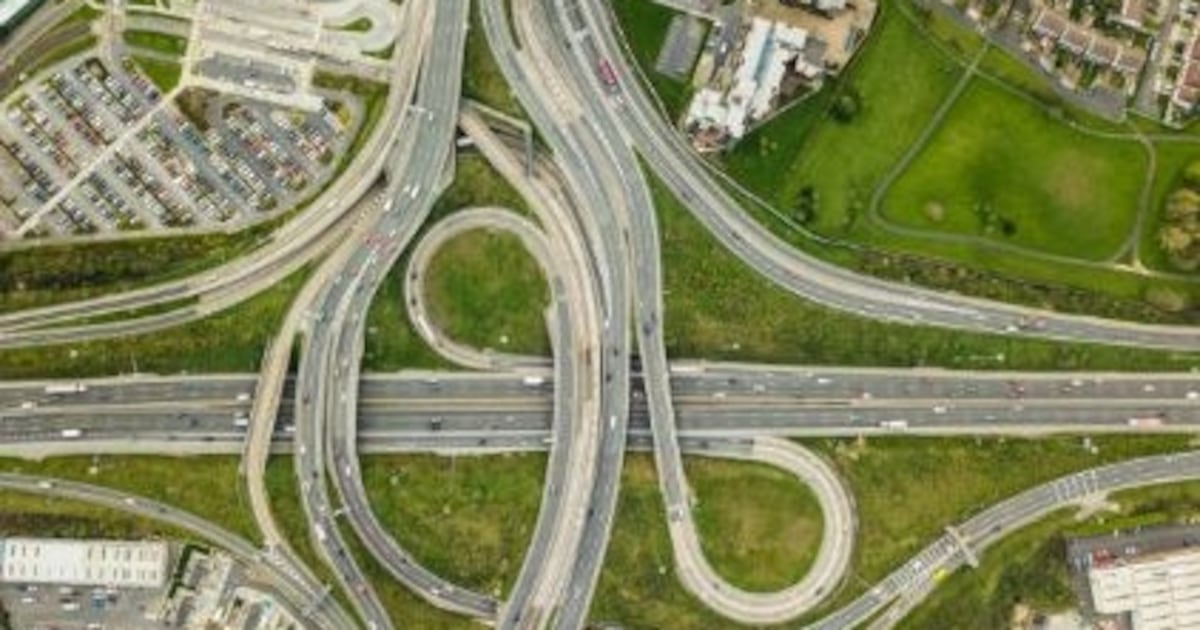
The State’s roads network is a €31 billion asset carrying more than 3.5 million vehicles every day, so when things go wrong on it, the cost in terms of time, tempers and money is inevitably large.
Now transport officials are sounding the alarm on just how badly things could go wrong if the network is not reinforced to cope with climate change.
Just half of the Republic’s 5,300km of motorways, national routes and secondary roads – regional and local roads are assessed separately – are designed to modern standards, according to analysis from Transport Infrastructure Ireland (TII), the State agency that manages the roads network.
That leaves many vulnerable to the increasing levels of damage that might come from extreme rainfall, storms, heatwaves and intense cold.
Even modern infrastructure faces unforeseen hardships and will need retrofitting, TII’s Climate Adaptation Implementation Plan states.
Against a backdrop of reduced investment in recent years, the task of maintaining the network to withstand extreme conditions has become more challenging.
“Current funding levels are approximately 50 per cent of 2008 values,” the report states.
“This decline significantly impacts TII’s ability to adequately provide for baseline road maintenance, which is a critical enabler of climate adaptation and resilience.”
The risks and where they are most likely to occur require greater investigation to find the most accurate projections, the report states.
However, some expected impacts are already identified. Just over 300km of national roads – one in every 18km – is exposed to future flooding under the current outlook for climate change. That’s six times more than has flooded to date.
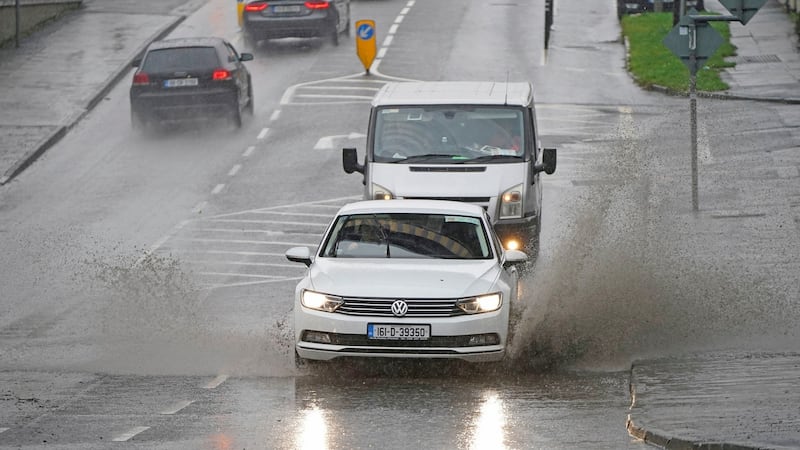 Flooding in Carlow in December. Photograph: Niall Carson/PA
Along those 300km, structures at risk include 688 bridges, 128 culverts, eight underpasses and four gantries.
While the M7 on the Dublin-Kildare border flooded in 2020 and 2024, and the M4 near Maynooth in 2017, newer roads such as these motorways generally withstand severe weather.
The M50 ring-road around Dublin has also coped ably, having had no major flooding. Notably, it remained open during the five days of heavy snowfall accompanying Storm Emma in 2018.
But the report states that it too is at risk as the impacts of climate change worsen.
[ Why are flood defences taking so long to build? Don’t blame the pearl musselOpens in new window ]
“It is unlikely that TII’s current maintenance measures will be sufficient to address rainfall and flood impacts under future climate,” it says of the route.
Some of the newest stretches of national road may also need attention.
At almost a kilometre long spanning the river Barrow estuary, the Rose Fitzgerald Kennedy Bridge on the N25 connecting Wexford and Kilkenny has won awards but it has had to close to traffic several times since opening in 2020 because of high winds.
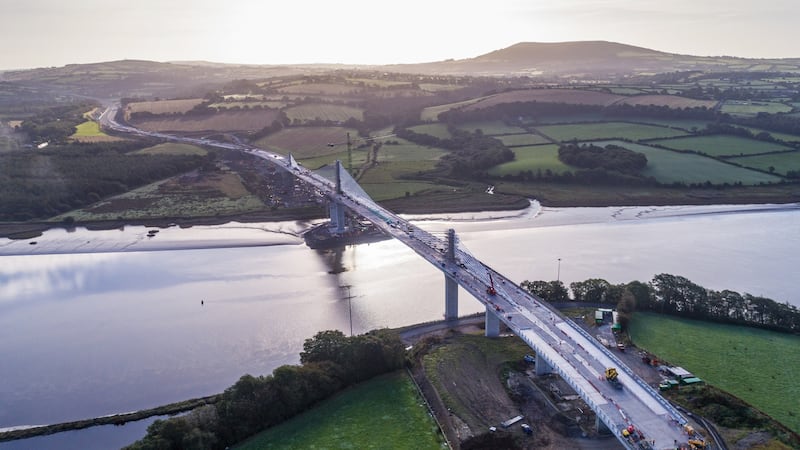 The Rose Fitzgerald Kennedy Bridge over the river Barrow
That bridge and two others – the M8 Blackwater Viaduct near Fermoy and the N25 Thomas Francis Meagher Bridge connecting Waterford and Kilkenny – need assessing to see “whether there is a case for retrofitting wind shielding on these structures”.
The M50 West Link and the M1 Mary McAleese Boyne Valley Bridge are already wind-shielded but as high, long-span exposed bridges, they are considered susceptible in harsher future conditions.
TII’s most widespread concern is the 50 per cent of “legacy” roads that are “not designed to modern standards, either in terms of alignment, pavement construction or drainage provision”.
That leaves them prone to blockage and damage from various flooding sources, from sudden intense downpours to gradual groundwater rise from prolonged persistent rain.
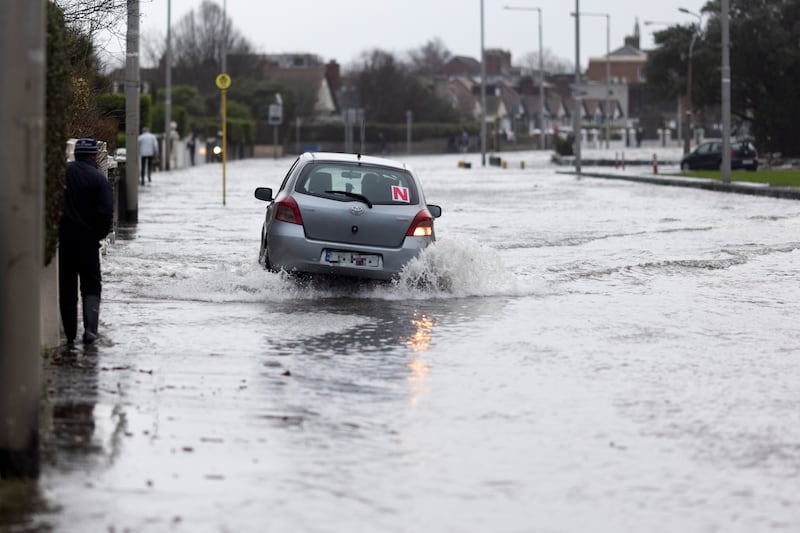 Flooding in Clontarf Road in Dublin earlier this month. Photograph: Chris Maddaloni
Of particular concern are “lifeline roads” such as the N56 in Donegal, the N59 in Galway and Mayo and the N71 and N86 in Kerry that serve rural areas with no alternative routes.
“Ireland’s lifeline roads are in regions with the most rainfall and largest projected increases, making them more vulnerable to disruption from flooding, bridge or culvert washouts, and landslips,” the report states.
Historical design parameters may no longer be appropriate in the face of the kind of extreme weather events that we are increasingly witnessing
— Transport Infrastructure Ireland
Also highlighted are various spots along the N5, N63, N67 and M18 in Clare, Galway and Roscommon which are low-lying and prone to groundwater flooding.
Coastal flooding is not a big concern as little of the national road network is close to the sea but some stretches are.
Most exposed is the N69 between Tarbert and Foynes which lies in the middle of a key route along the Shannon estuary connecting Tralee and Limerick city and is at risk from both sea level rise and storm surge.
Rising sea levels, storm surges and rainfall-related flooding are flagged as concerns for the Dublin Port, the Jack Lynch tunnel in Cork and the Limerick tunnel under the river Shannon.
[ ‘I was furious’: How flood defences are dividing ClontarfOpens in new window ]
“All three tunnels were designed to ensure that the tunnel bores would be protected from inundation under well-established design flood thresholds,” the report states.
“However, historical design parameters may no longer be appropriate in the face of the kind of extreme weather events that we are increasingly witnessing.”
How climate change affects the geology under and around roads will also determine how they perform in extreme weather.
Across Longford, Offaly and Westmeath, numerous secondary roads lie over bogs which swell in heavy rain, shrink in drought and create an unstable foundation requiring continuous maintenance.
“It is anticipated that the challenges of maintaining bog ramparts and their pavements in a safe and operable condition will increase significantly over time,” the report states.
Rockfalls, landslides and embankment collapses are also expected to occur more frequently.
The N70 Ring of Kerry and the N71 at Molls Gap in Co Kerry and at Caha Pass on the Cork-Kerry border have already suffered such “geotechnical failure”.
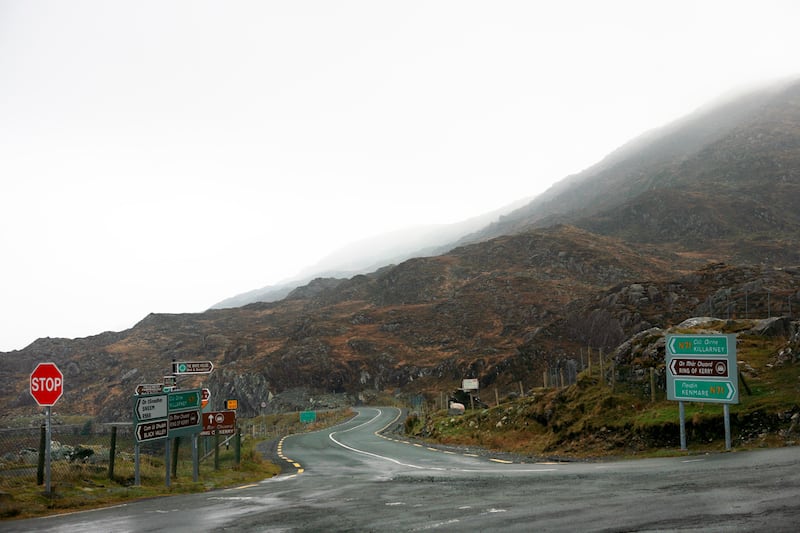 Molls Gap, Co Kerry. Photograph: iStock
After one incident on the N70 near Gleensk, Co Kerry, in 2024, 40m of retaining wall had to be installed at a cost of €1.7 million.
That remedial work offers a small taste of the huge expense that could be involved in patching up and reinforcing roads on a wide scale as climate change worsens.
Although the timelines for the forecasted impacts are not precise, TII is clear money needs to be spent on preparations immediately.
The agency intends to buy temporary bridge kits – the kind used in wars and disasters – so that roads do not end up being closed for long periods when bridges are washed away.
Snow-blowers and additional high-powered pumps are also be bought and stored at strategic locations.
A fresh assessment of the network’s drainage system, which has more than 69,000 features including channels, manholes, filter drains, outfalls and attenuation areas, is also to be carried out.
Short-term spending between now and 2030 on upgrading and strengthening drainage, culverts, bog ramparts, bridges and embankments will cost between €82 million and €265 million, on top of the €77 million annually TII says is needed for normal maintenance.
[ Engineers seek restoration of public transport spending priorityOpens in new window ]
Sean O’Neill, communications director with TII, stressed the importance of the network and the necessity to keep it functioning well.
“The asset value of the national roads network is approximately €31 billion,” he said.
“It is an investment that was made by the State to allow people, goods and services to safely traverse the island of Ireland and the network has given the State a multibillion-euro return on that investment annually through all the economic activity it enables.”
The Department of Transport said it had received the report and welcomed it.
“The department is acutely aware of the need to safeguard transport infrastructure, including the national road network, from the impacts of severe weather events resulting from the climate emergency,” a spokesperson said.
“Almost €800 million was allocated for national roads this year.”
While most of that will be spent on new road projects, the figure “includes funding to protect and renew the existing national road network, which will better enable it to withstand severe weather events”.