
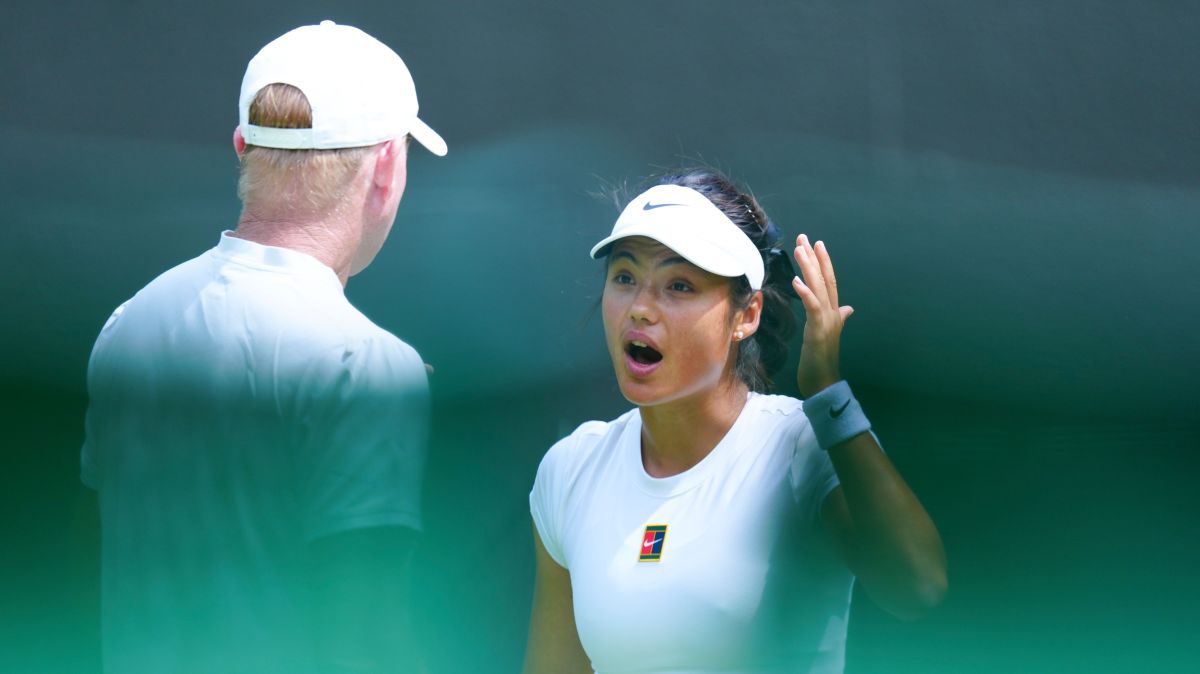
Fairytales evolve over the decades. Did you think that after Little Red Riding Hood was eaten the wolf happily fell asleep on a full stomach, or were you told that a woodsman came and split open the animal’s stomach, thereby saving the granddaughter?
Emma Raducanu’s fairytale is evolving too, albeit in a very curious fashion. We simply cannot find a new version that is palatable. As it stands, an intelligent and elegant 18-year-old becomes the first qualifier to win a grand-slam title, having earned new, adoring fans a few months previously at Wimbledon, where she was awarded, as a promising Brit, a wild card.
In true Brothers Grimm style, great riches were bestowed. Indeed, they keep on coming, five years after that almost astonishing glut of deals that included Vodafone, British Airways and Tiffany. Last week she was unveiled as the poster girl for Uniqlo, the Japanese clothing brand, in a deal worth an estimated £2.6million.
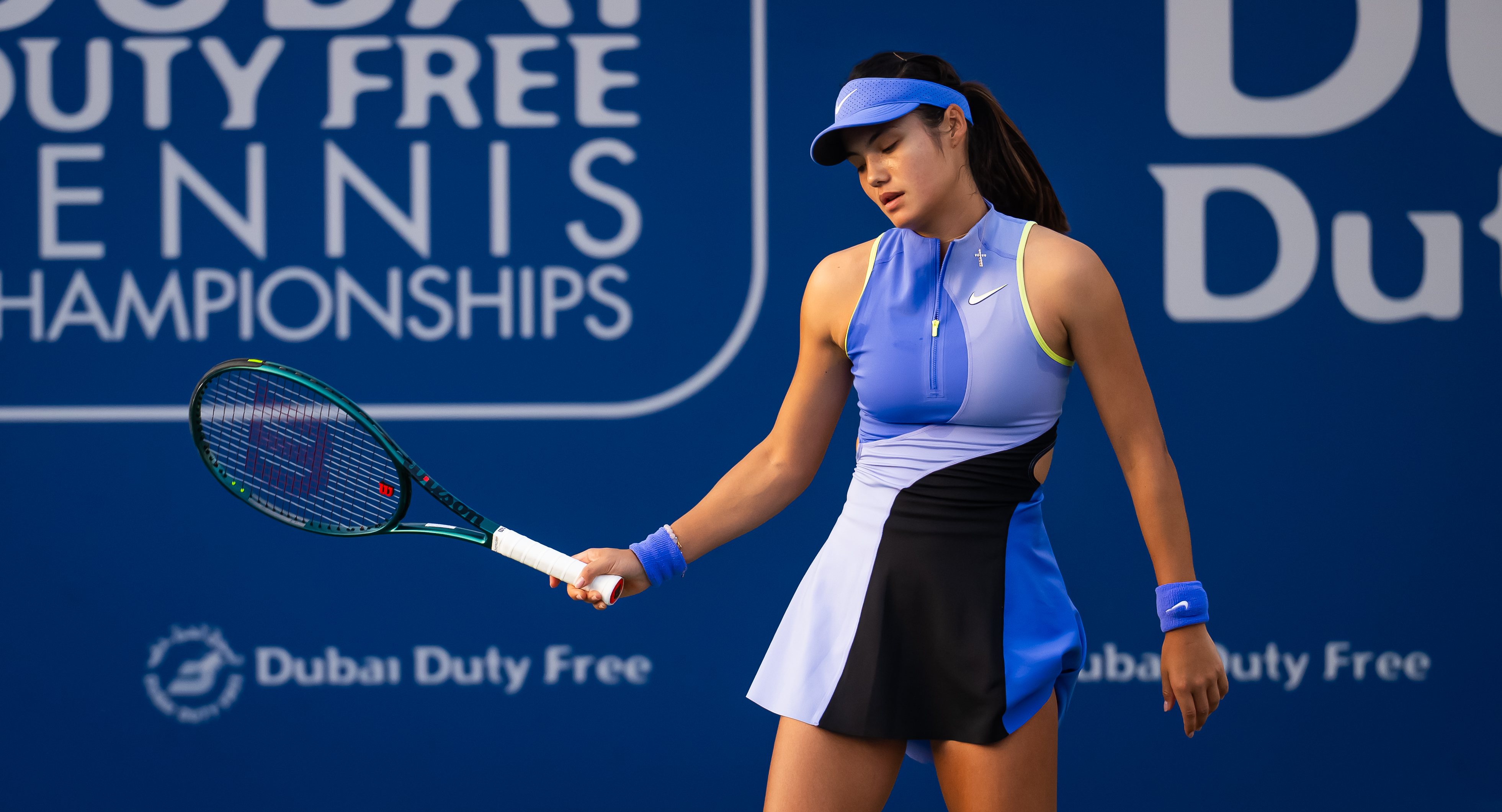
Raducanu’s fortunes continue to ebb and flow as she searches for the right coaching set-up
ROBERT PRANGE/GETTY
If you tracked only her sponsorship rather than her titles you would assume Raducanu must be consistently ranked among the top five players in the world rather than her present status as the 25th. Which is a sort of fairytale in itself. A capitalist heaven. There is no breathtaking sporting moment that cannot be monetised.
For those who feel Raducanu is unfairly criticised for not building on that US Open victory, you can be sure she would be under far less pressure if she was endorsed by just one racket manufacturer and a chocolatier. It is impossible to maintain a naturally gifted girl-next-door kind of persona when you continue to rake in the big dosh from famous companies keen to use your face and figure.
The central issue for Raducanu is that she played her very best tennis as a nobody with a relatively inexperienced coach and made the quick decision in the aftermath of New York to split with Andrew Richardson. It raised some eyebrows at the time. Why mess with a partnership that had been so magical? But the reasoning was that she needed a coach with a higher profile and more knowledge of the circuit that she had, to a degree, avoided.
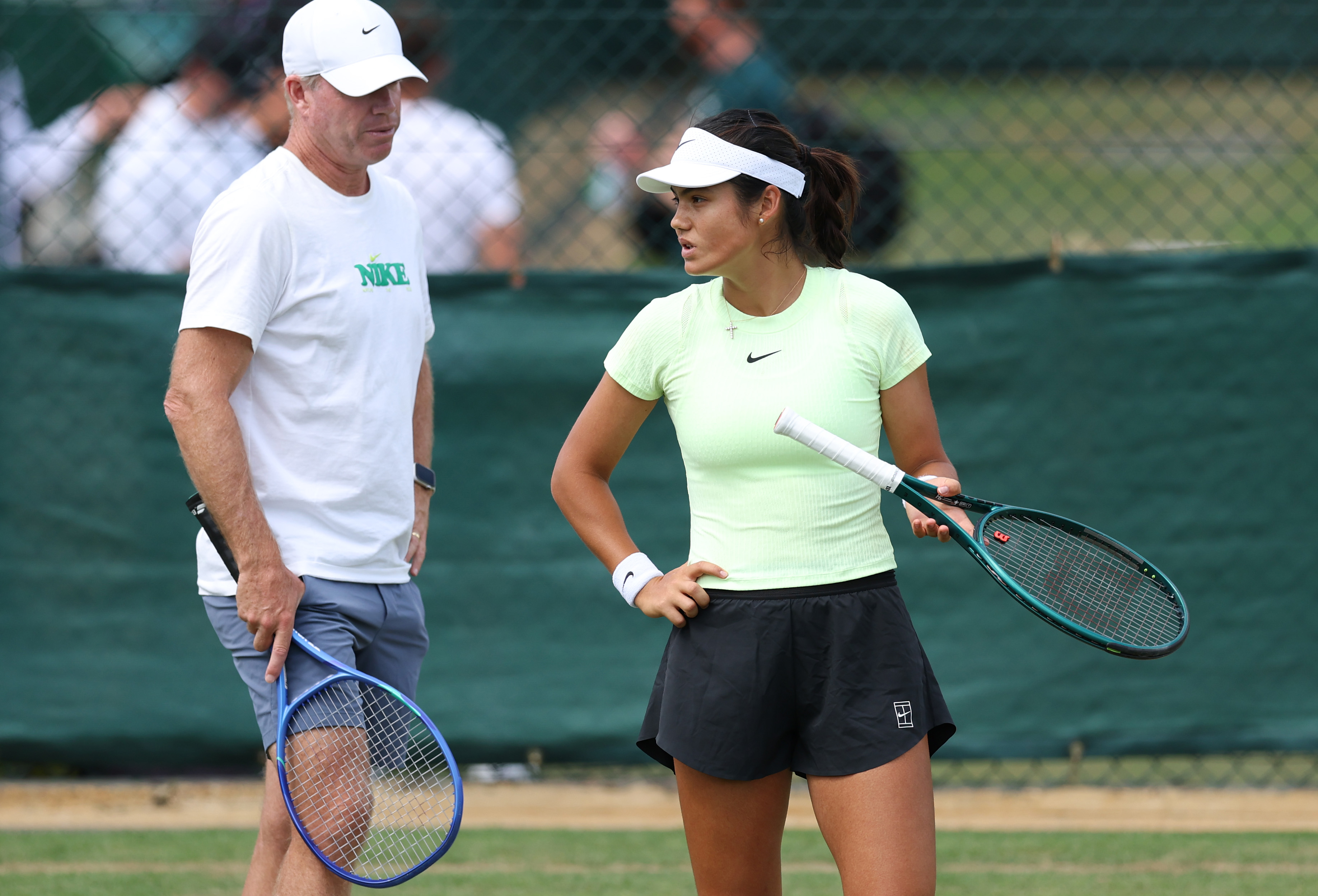
Raducanu has brought back Petchey, who has said he can only work around his commitments as an analyst on the Tennis Channel
CLIVE BRUNSKILL/GETTY
Any subsequent coach was bound to see things in Raducanu that needed changing and updating, and as soon as someone tries to tweak your game or your fitness you are bound to dip in and out of form, and in and out of happiness. She has had eight different permanent coaches since appearing at the All England Club five years ago. It increasingly feels as if she is looking for the foot of the rainbow, only for it to vanish as she rounds the corner.
And now, having just announced she was not looking for a new coach, having split from Francisco Roig, Rafa Nadal’s former coach, in January after a five-month partnership, she has performed a U-turn to reunite with Mark Petchey.
Petchey preceded Roig but had operated with the proviso that he had broadcast commitments that could clash with his support. Significantly, Petchey is unlikely to be the sort of coach who tries to redefine Raducanu but one who builds on what is already in place, especially as he worked with her at the National Tennis Centre in the year leading up to her grand-slam triumph.
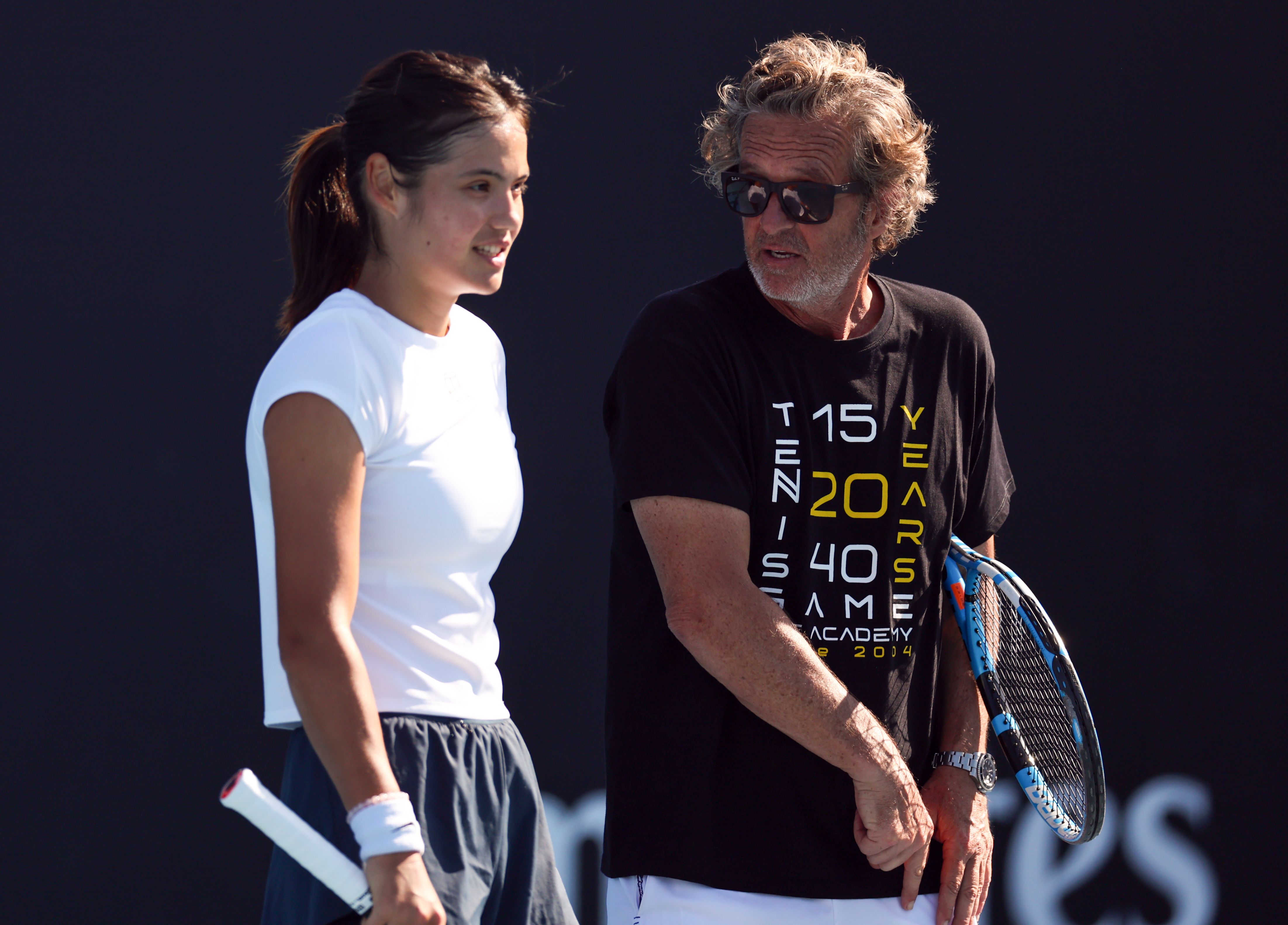
When Raducanu split with Roig, right, she said she wanted to return to the more aggressive style of play with which she won the US Open
ELLA LING/SHUTTERSTOCK EDITORIAL
Perhaps Raducanu was perturbed by how her declaration of independence was received. Few believe a player can go it alone. Perhaps it would be nice if they could, but the big names have a backroom staff that provide physical, tactical and mental support. They are juggernauts and it would be like Raducanu was facing Arsenal or Bayern Munich without a goalkeeper or anyone in midfield.
Raducanu must like having a coach who cannot work with her full-time or she would not have returned to Petchey and in preferring this relaxed training life she is surely trying to replicate how she felt before she became a household name. She is a player in search of a time machine rather than a mentor.
But there is no way at all she can return to the status of fairytale. The essence of her road to glory was the sheer shock of it. She was in a bubble, immune to pressure. Her few mistakes were fondly perused and her cleverness gushed over.
Most of us dream, aged about ten or so, that we will take a critical wicket in the Ashes or become prime minister or reach No1 in the album charts while knowing it probably won’t happen. Raducanu was our Rapunzel, our Cinderella, and we are very grateful for it, but now she needs to close that chapter and knuckle down with not just a part-time coach but a full-time team of experts.