
Your support helps us to tell the story
From reproductive rights to climate change to Big Tech, The Independent is on the ground when the story is developing. Whether it’s investigating the financials of Elon Musk’s pro-Trump PAC or producing our latest documentary, ‘The A Word’, which shines a light on the American women fighting for reproductive rights, we know how important it is to parse out the facts from the messaging.
At such a critical moment in US history, we need reporters on the ground. Your donation allows us to keep sending journalists to speak to both sides of the story.
The Independent is trusted by Americans across the entire political spectrum. And unlike many other quality news outlets, we choose not to lock Americans out of our reporting and analysis with paywalls. We believe quality journalism should be available to everyone, paid for by those who can afford it.
Your support makes all the difference.Read more
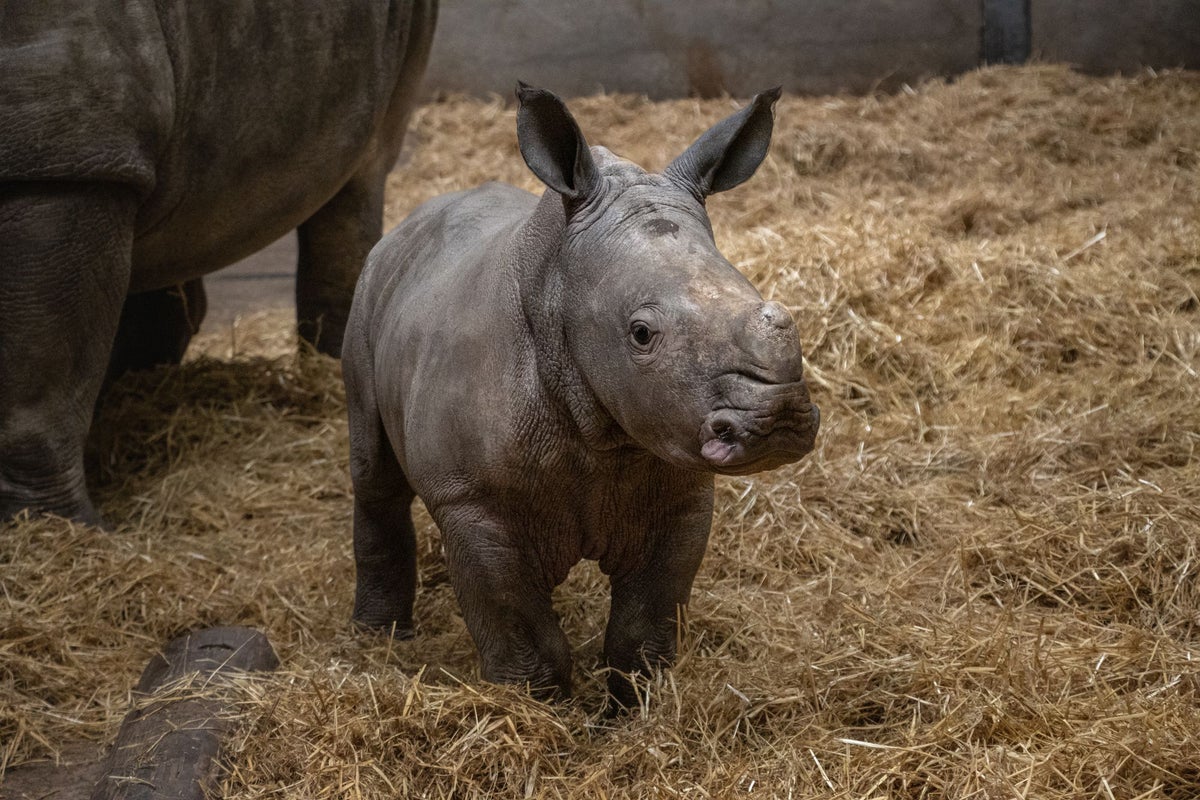
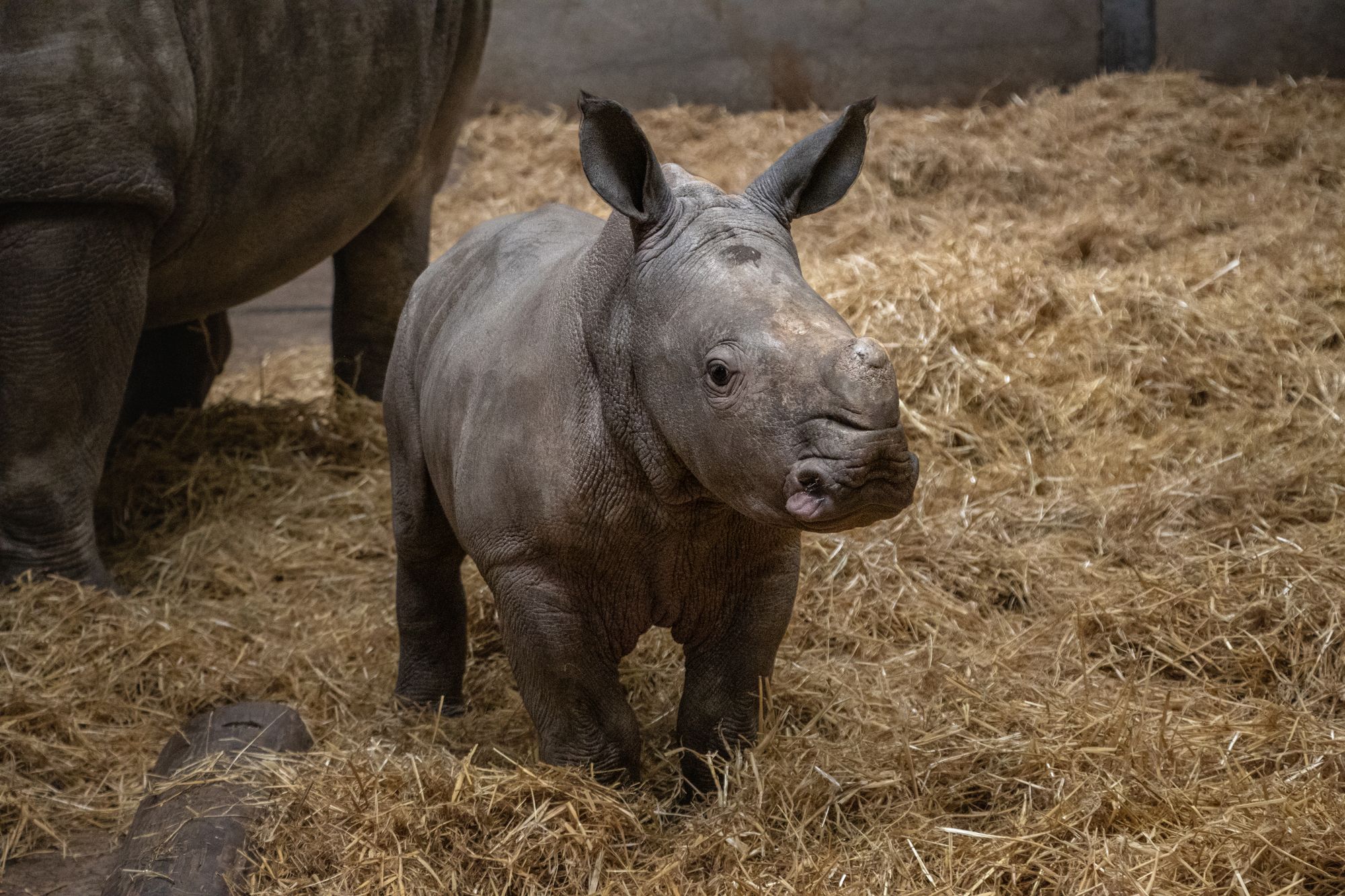
A British wildlife park is celebrating a significant conservation success following the birth of a male southern white rhino calf, a species classified as ‘near threatened’.
The new arrival at Knowsley Safari in Merseyside represents a valuable contribution to international efforts to protect the future of the animals.
The southern white rhino’s cousin, the northern white rhino, is now functionally extinct, with only two females remaining globally.
The calf has been named Stanley, in honour of the historic family name of the Earl and Countess of Derby, owners of the Knowsley Estate, where Knowsley Safari is situated.
He is the fourth southern white rhino born at the safari park in just four years.
Stanley joins a 10-strong rhino crash, one of the largest in the UK, which includes three-month-old Kamari; female rhino Bindi, born in February 2024; and Amara, also female and born in October 2022.
open image in gallery
Stanley, a male southern white rhino calf born at Knowsley Safari, Merseyside (Jam Press/Knowsley Safari)
Lindsay Banks, ungulates team manager at Knowsley Safari, said: “We’re thrilled to welcome Stanley to our crash.
“He’s bonding really well with mum, Meru, and will gradually be introduced to the rest of the crash in the coming weeks, when guests will be able to see him on the Safari Drive.
“Naming our latest addition after the Stanley family is a fitting tribute to the remarkable heritage of Knowsley Estate and its long-standing commitment to wildlife.
“Being able to care for Stanley and his mum is an incredibly special experience.
“We’ve watched Meru’s progress through pregnancy, so seeing her confidently nurture a healthy, curious calf is a real privilege.
“Every rhino birth is significant for the species, but when you’ve been hands-on with their day‑to‑day care, it feels especially meaningful.
“Stanley’s already showing a strong personality, and we’re excited to watch him grow and eventually join the rest of the crash here at Knowsley.”

open image in gallery
Stanley with his mum, Meru (Jam Press/Knowsley Safari)
Lord Derby of Knowsley Estate said: “It is a tremendous honour to welcome the birth of this remarkable young rhino to Knowsley.
“To see such an important and near-threatened species thriving here is a testament to the dedication and expertise of the Safari’s animal team.
“Having Stanley carry my family name is a deeply touching gesture, and I hope his arrival helps shine a light on the vital work being done to protect rhinos around the world.
“This birth is not only a moment of great pride for Knowsley Estate, but a symbol of hope for the future of southern white whino.”

open image in gallery
Stanley is being hailed as a ‘symbol of hope’ (Jam Press/Knowsley Safari)
The southern white rhino was nearly extinct near the end of the 19th century.
Numbers increased rapidly from 1992 to 2010, due to intensive protection and translocation efforts.
Poaching rates peaked in 2014 and as of December 2017, there were an estimated 18,064 southern white rhino in the wild, with populations being assessed as Near Threatened since 2002.
White rhino trophy hunting was legalised and regulated in 1968, and after initial miscalculations is now generally seen to have assisted in the species’ recovery by providing incentives for landowners to boost rhino populations.
A Knowsley Safari spokesperson added: “These successful births are testament to Knowsley Safari’s specialist team of ungulate keepers and their commitment to exceptional animal husbandry, as well as the vast 550-acre habitat where the rhino thrive.”