
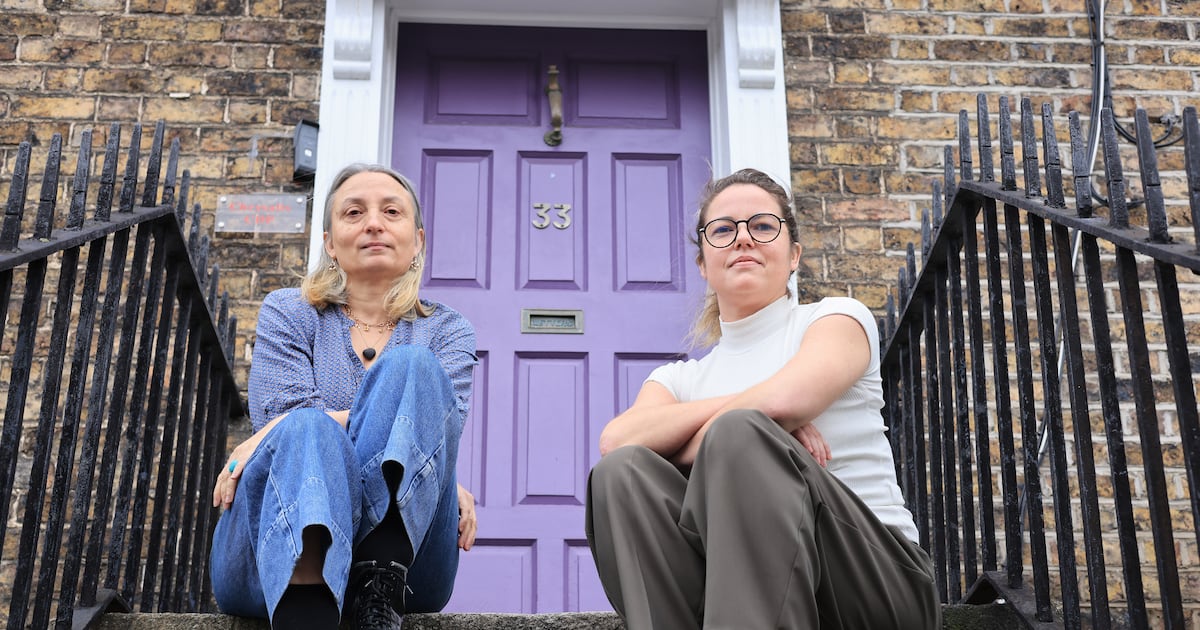
When Passerose Mantoy first started working in addiction services in Dublin in 2000, the city was at the back end of the heroin epidemic which had gripped it throughout the 1990s. Many people were still taking heroin, but she says “the focus was very much on opiate use, alcohol use and cannabis”.
Mantoy has now been working with Chrysalis Community Drug Project, an organisation that supports people impacted by addiction, for a quarter of a century. Originally from France, she started as a frontline worker and is now its chief executive.
Chrysalis is based in Dublin city with centres in Dublin 1 and Dublin 7. The organisation, which is funded by the HSE and the North Inner City Drug and Alcohol Task Force, offers a range of services including individual counselling, group sessions and detox programmes.
A lot has changed in the last 26 years and Mantoy says supporting people with addiction is much more complex nowadays.
“It’s very, very rare that a service user would present and only name one substance. It’s normally four, five, six,” Mantoy says.
In 2025, more than 650 people sought help from Chrysalis. Cocaine – both crack and powder – was, by far, the main “problem substance” listed by service users. The second most common issue was the use of benzodiazepines (medications with a sedative effect which are often prescribed for anxiety or insomnia), followed by alcohol.
Sarah McGillivary, Chrysalis’s operations manager, says “drug trends have massively changed” in recent years. New service users fill in a form outlining which substances they are taking. Many people also present with behavioural addictions such as gambling, gaming, porn or sex.
“A long time ago, you would have just had heroin and methadone,” McGillivary says, adding that multiple boxes are usually now ticked.
“Methadone, heroin, crack cocaine, amphetamines, gambling, eating disorders, sex addictions, porn addictions, all that type of stuff.”
[ Alcohol: How it impacts the body while you’re drinking and over timeOpens in new window ]
Some service users also present with an addiction to prescription medication, often in tandem with other substance use.
Most people who sought help from Chrysalis last year were aged between 25 and 50, with most 30 and older. More than 130 people aged 50 to 65 engaged with the service.
McGillivary says many older people started to self-medicate during the Covid-19 pandemic – often starting with over-the-counter tablets before moving on to prescription medication and then illegal substances.
“Some people were only firstly engaging in drug use in their 50s and 60s,” she says.
Many people were out of work and didn’t have their usual support network during the pandemic. People who, from the outside, appeared “successful in life, in terms of careers, families”, were really struggling.
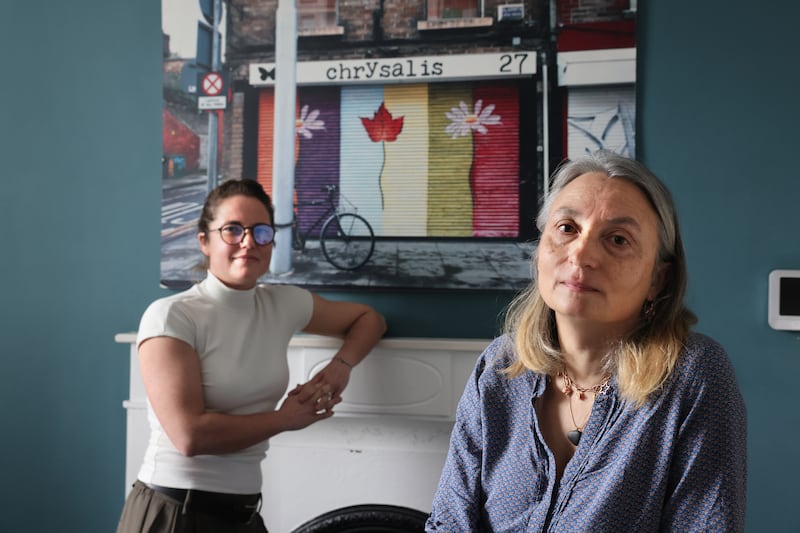 Sarah McGillivary and Passerose Mantoy in front of a photograph of Chrysalis by Derek Speirs in their Stoneybatter office. Photograph: Dara Mac Dónaill
There is no one type of person who can become addicted to a substance or activity, she says.
“Addiction doesn’t discriminate based on postcodes. It’s really that simple. We can hide it better because we hide behind money … But when that stuff got stripped away, people became vulnerable.”
In the years since the pandemic, the centre has seen an increase in “professional” people seeking help for cocaine, gambling and porn addictions.
“They’ve gone down that path, and it’s progressed,” McGillivary says. “Generally that’s how addiction works … we’ll hold it for a period of time, and then it’s like, ‘I need to increase or I need to get something else.’”
Some people who were using cocaine or other street drugs at weekends started “pharmacy shopping” – where they would go from one pharmacy to another to buy pain medication – to deal with the withdrawal symptoms midweek.
“You’ve been on cocaine from Friday to Sunday, withdrawing until Friday to do it again. When you’re withdrawing, you need downers. So, now we’ve got two issues,” McGillivary explains.
While overconsumption of alcohol has long been seen as widely acceptable in Ireland, cocaine use is now also “very socially acceptable”, McGillivary says, to the point that many people who use it recreationally don’t realise they have an issue.
Women are partly wary of disclosing addiction, disclosing that they are struggling, because, potentially, would that mean that their kids are taken into care?
— Passerose Mantoy
Dual diagnosis – where a person is dealing with addiction and a mental health issue – is also very common.
Chrysalis focuses on helping people who are impacted by addiction. When people need help with behavioural addictions or mental health issues, the organisation refers them to more appropriate services. It’s common for service users to engage with more than one organisation at the same time, depending on their needs.
More than twice as many men sought help from Chrysalis last year – around 450, compared with just over 200 women.
Women in addiction, and mothers in particular, are “massively stigmatised”, McGillivary says.
So much so that in scenarios where both parents are dealing with addiction, the father typically seeks help first, or instead of, the mother.
Mantoy says more is often expected of mothers and, if they seek help, many “fear their child will be taken away”.
[ Rampant cocaine use by normally decent people in Ireland is Trump-level hypocrisyOpens in new window ]
“Women are partly wary of disclosing addiction, disclosing that they are struggling, because, potentially, would that mean that their kids are taken into care?”
Obviously, the welfare of children is prioritised, but in many cases they do not need to be taken into care. Or, if they do, it is temporary.
“There is more of a focus on keeping family together now, or reunification if a temporary separation is needed,” Mantoy says.
Michael, who did not wish to share his real name, was addicted to multiple substances for more than 30 years. A couple of years ago, he was told he was facing liver failure and had only a few months to live if he didn’t make serious changes.
Now in his mid-40s, the Dublin man had been using a variety of drugs since he was a child. As a result, he had developed hepatitis and cirrhosis – inflammation and scarring of the liver, respectively.
“I would have been in addiction for over 30 years, every sort of drug – cannabis, tablets, crack cocaine, drink, alcohol, from a very young age.”
He left school at the age of 12 and, not long afterwards, started to dabble in drugs. During the 1990s rave scenehe experimented with ecstasy and acid, before moving on to heroin.
“Within a matter of 12 months [of smoking heroin], I was injecting,” he says, noting he was only 15 or 16 at the time.
“My whole life depended on [drugs] – morning, noon and night. I couldn’t go without them.
“I always thought I wouldn’t see my 21st birthday because I was on it from a very young age. I would have used drugs every single day.”
[ Finding healing spaces: ‘Going on this retreat was a turning point for me’Opens in new window ]
Michael ended up in trouble with the law and spent time in prison.
His health scare was a wake-up call. Around the same time, his son ended up in prison for drug-related offences.
Michael says he wanted to be a better example for his children and, in late 2024, finally sought help. He engaged with Chrysalis, where he started regular counselling sessions, and the centre helped him link up with other rehabilitation programmes in the city.
He initially stopped taking street drugs but has also now been off methadone, an opioid used to treat heroin withdrawal symptoms, for a few months.
Doctors will have to monitor his liver for the rest of his life, he says, but his health is much better. “My health is everything to me because it’s something I’ve never had from a young age.”
His daughter recently moved in with him and he takes great pride in being able to be there for her and her siblings. “I have her back now.”
Services like Chrysalis are vital in helping people get back on track, he says. “You can’t do it on your own. I wouldn’t be able to do it on my own. It’s very, very hard, but it’s well worth it.”