
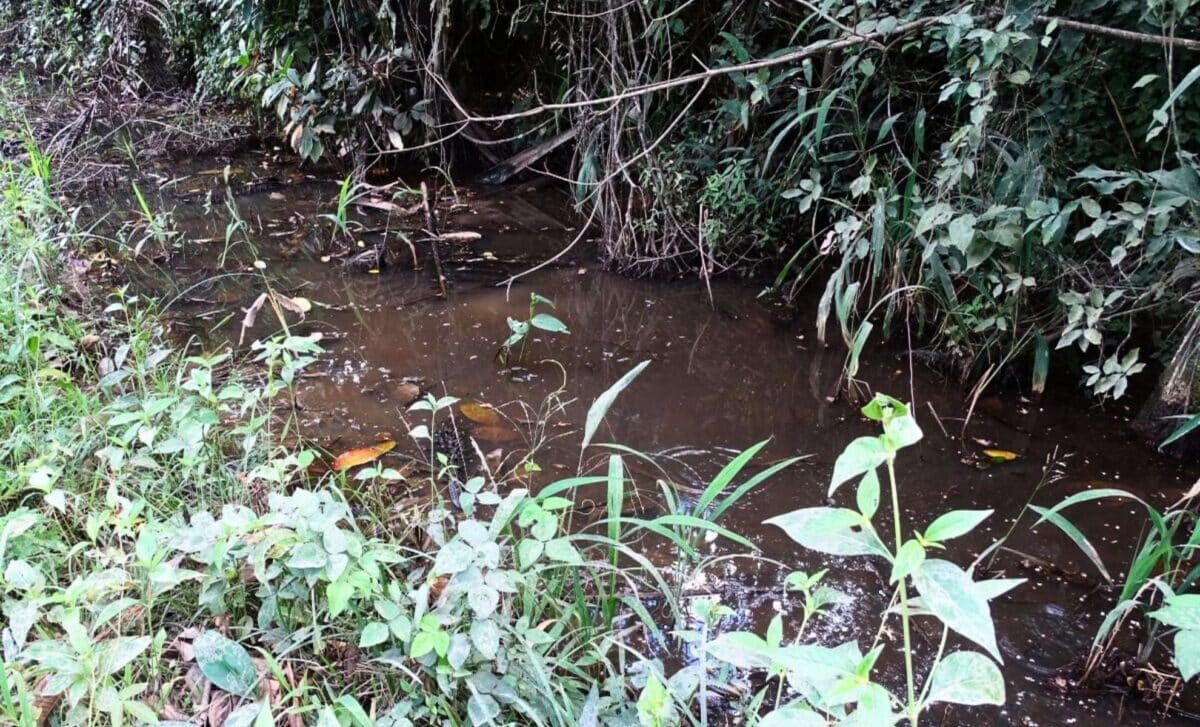
The pond is small, temporary, and easy to miss. It sits inside a patch of forest in eastern Bolivia, surrounded on all sides by land cleared for crops and cattle. For years, no one thought to look there for anything unusual.
But when two researchers from the Museo de Historia Natural Noel Kempff Mercado waded into that water during a recent field expedition, they found something they had spent more than 20 years searching for. Swimming among the submerged vegetation was a small, slightly orange fish that scientists had feared was gone forever.
The fish is Moema claudiae, a species of seasonal killifish known only from a single location that was destroyed and converted to farmland two decades ago. Despite repeated surveys across the region since then, no one had seen one alive. The International Union for Conservation of Nature had classified it as Critically Endangered, and many assumed the species had quietly vanished while no one was watching.
A Second Chance in a Remnant Forest Fragment
Heinz Arno Drawert and Thomas Otto Litz, the two researchers who made the discovery, published their findings November 14, 2025, in the open access journal Nature Conservation. The paper confirms that Moema claudiae is not extinct. It survives in exactly one place: a small, seasonal pond inside a fragment of forest that somehow escaped the agricultural expansion that erased its original habitat.
The pond sits at a transition zone between the Amazon forest and the savannas of the Llanos de Moxos, a region known for seasonal wetlands that appear and disappear with the rains. These temporary waters are the natural home of seasonal killifish, which have evolved to lay drought resistant eggs that wait buried in the mud for the next wet season to arrive.
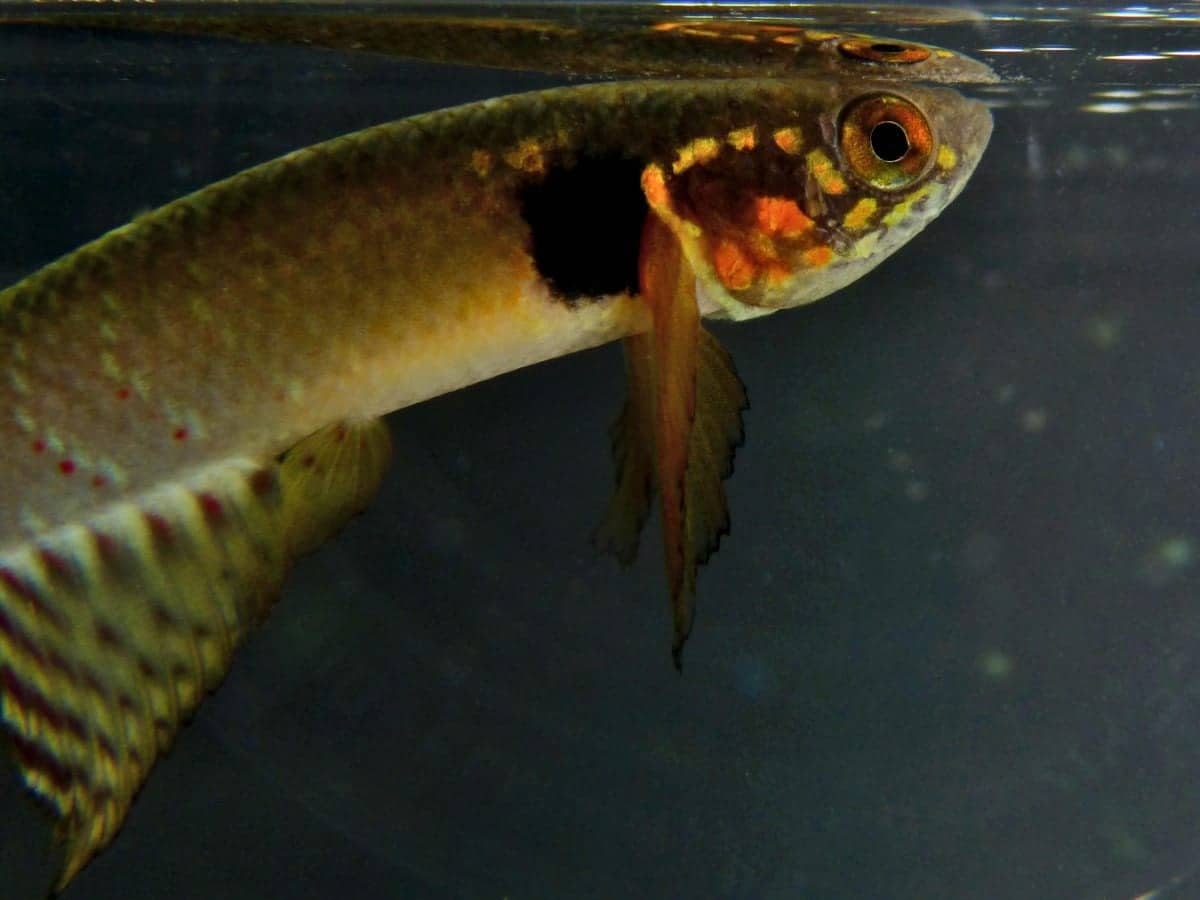 A close-up shot of Moema Claudiae. Credit: Heinz Arno Drawert and Thomas Otto Litz
When Drawert and Litz collected specimens from the pond, they did more than confirm the species still exists. They captured the first live photographs of Moema claudiae ever taken. They documented its behavior, its coloration in life, and details of its natural history that had never been recorded because no one had seen a living example since the species was first described. SciTechDaily reported that researchers were stunned to find the fish alive after so many years.
A Global Hotspot Hiding in Plain Sight
The pond held another surprise. When the researchers surveyed the full range of fish living there, they found not just Moema claudiae, but six additional species of seasonal killifish in the same small body of water. That makes this single pond the most genetically diverse site for these fish ever recorded anywhere in the world.
The diversity reflects the unique character of the region. The transition zone between forest and savanna creates a mosaic of habitats, and seasonal killifish have diversified to fill them. Each species has adapted to slightly different conditions, different water chemistry, different timing of the rains, different predators. The result is a concentration of biodiversity that scientists are only beginning to understand.
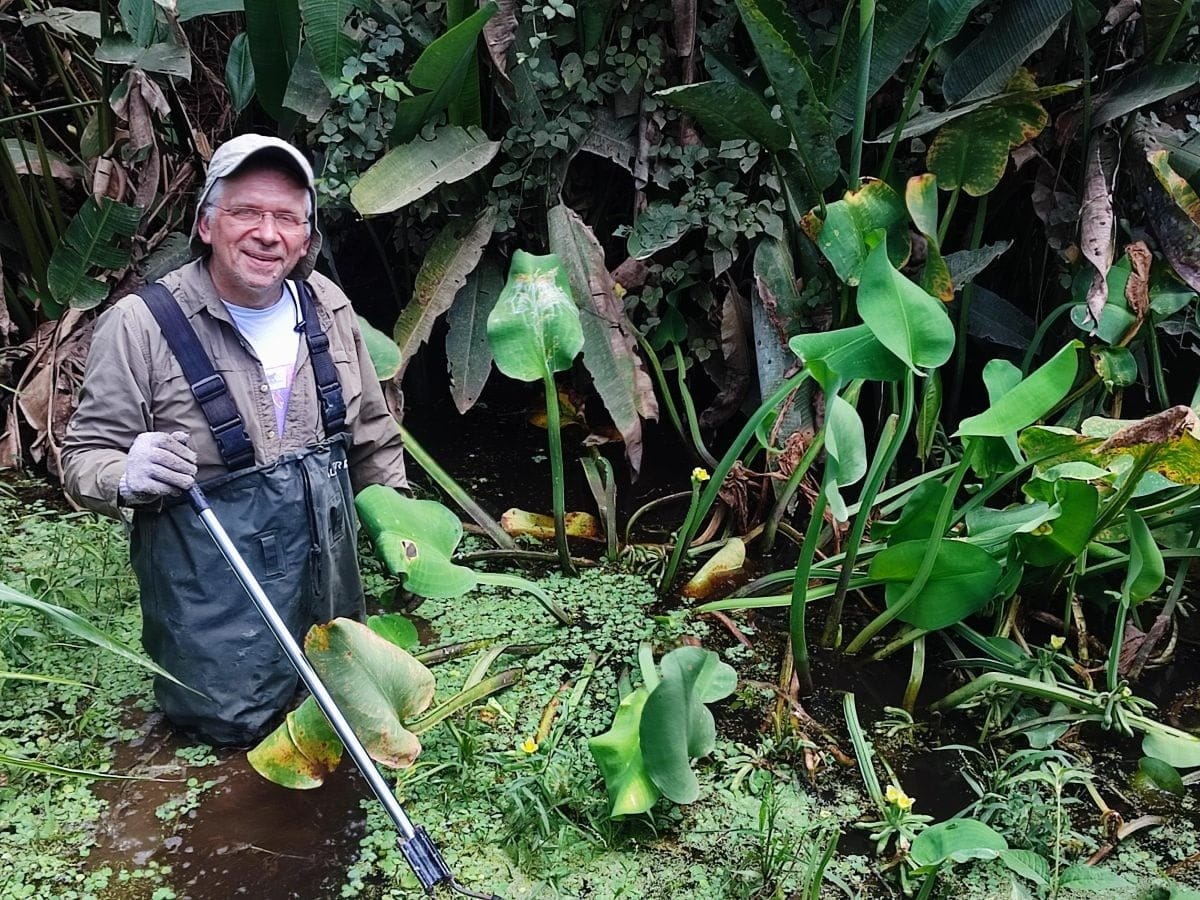 Thomas Otto Litz. Credit: Heinz Arno Drawert and Thomas Otto Litz
Thomas Litz, one of the co-authors, said the rediscovery carries personal significance as well. The species was named by researcher Wilson Costa after his wife, Claudia. Litz said in a statement: “For me, it is something special to have rediscovered Moema claudiae. This has shown that we now have the opportunity to preserve this species in the wild. I am all the more pleased because Prof. Wilson Costa named this species after his wife Claudia, and I would like to take this opportunity to thank him especially for decades of collaboration and support.”
Deforestation Pressures and an Uncertain Future
The rediscovery comes at a moment when the surrounding landscape is changing rapidly. Over the last 25 years, Bolivia has lost nearly 10 million hectares of forest, including large areas of wetland habitat. Deforestation has accelerated in recent years as the agricultural frontier expands to meet demand for farmland and pasture.
The pond where Moema claudiae survives is an accidental refuge. It remains because that particular patch of forest was left standing, for now. But it is surrounded by cleared land, and the pressures that destroyed the original habitat have not stopped at the edge of the trees.
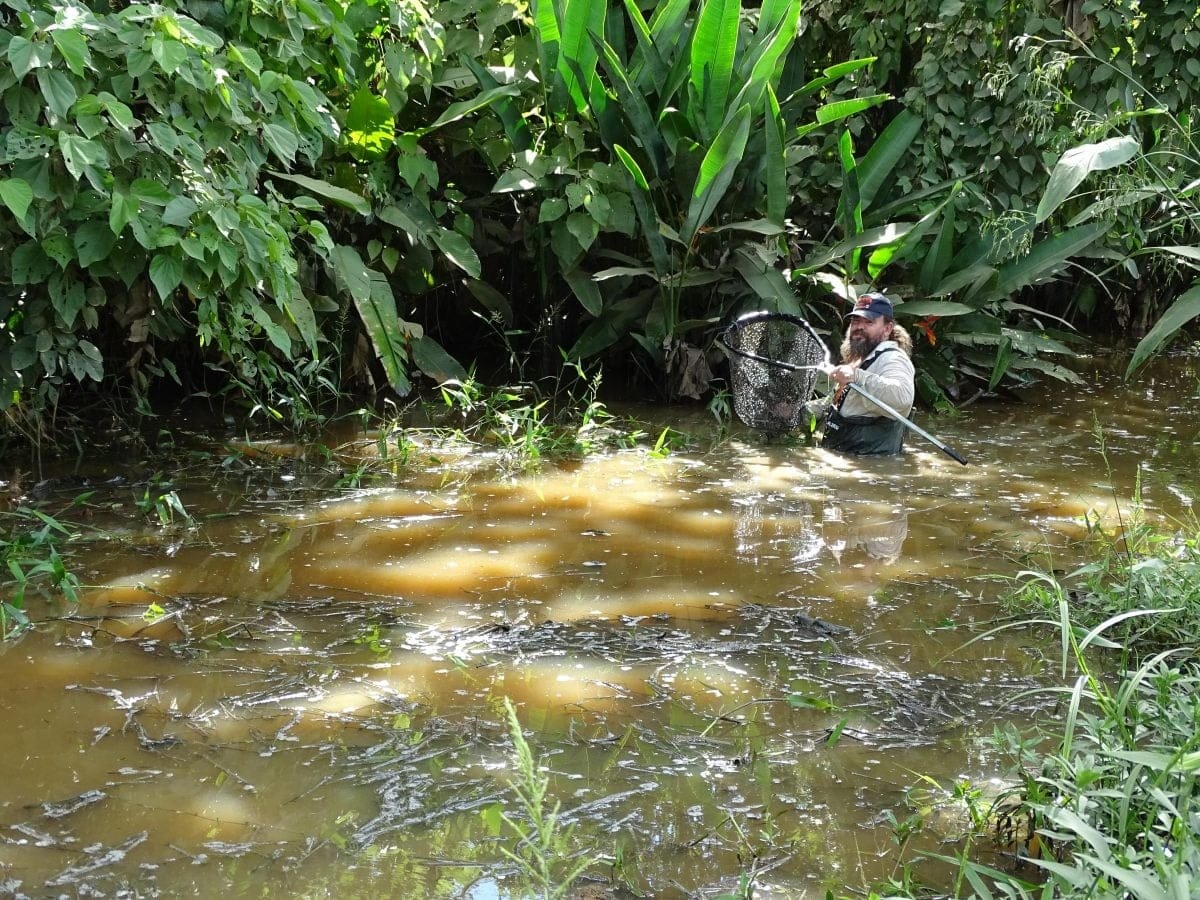 Heinz Arno Drawert. Credit: Heinz Arno Drawert and Thomas Otto Litz
Heinz Arno Drawert, the other co-author, said: “Without rapid and effective action to curb the irrational expansion of the agricultural frontier in Bolivia’s lowlands, we risk losing some of the world’s most important terrestrial and aquatic ecosystems, and with them the irreplaceable goods and services they provide. We cannot hope to achieve true social and economic wellbeing unless we also maintain the functionality of the ecosystems that sustain it.”
The researchers are now focused on protecting the single known site where Moema claudiae survives. It is the only location on Earth where a wild population of this species is known to exist.