
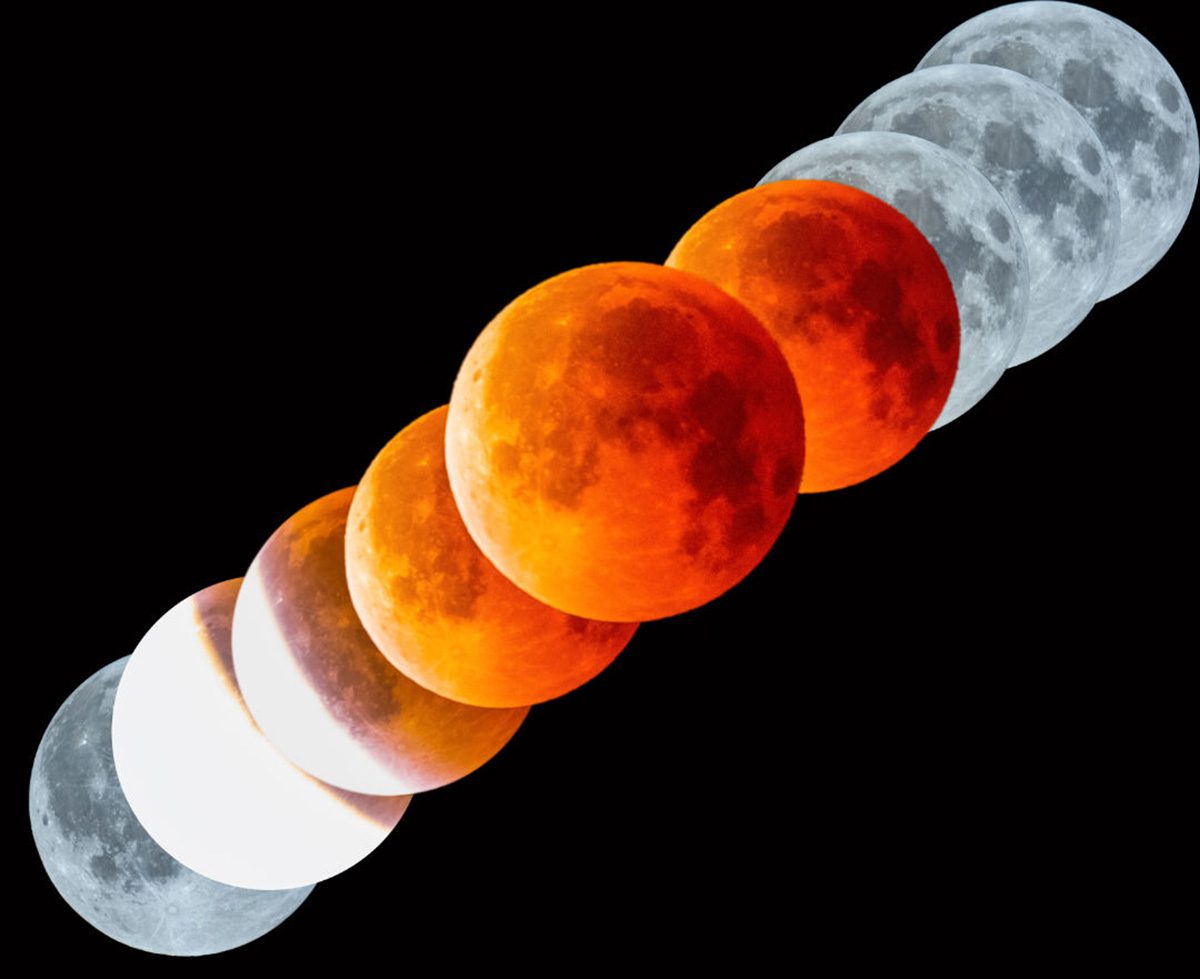
There’s a blood Moon lunar eclipse visible on March 3, 2026. During this event, Earth will pass between the Moon and the Sun, causing Earth’s shadow to be cast on the lunar surface.
What little sunlight does reach the Moon will travel through Earth’s atmosphere first, being bent and refracted as it does so and casting a red, rusty hue on the Moon.
This is why it’s known as a ‘blood Moon’ lunar eclipse.
The lunar eclipse isn’t visible in Europe or Africa, and is best seen in the western regions of North America, as well as eastern parts of Asia and Australia.
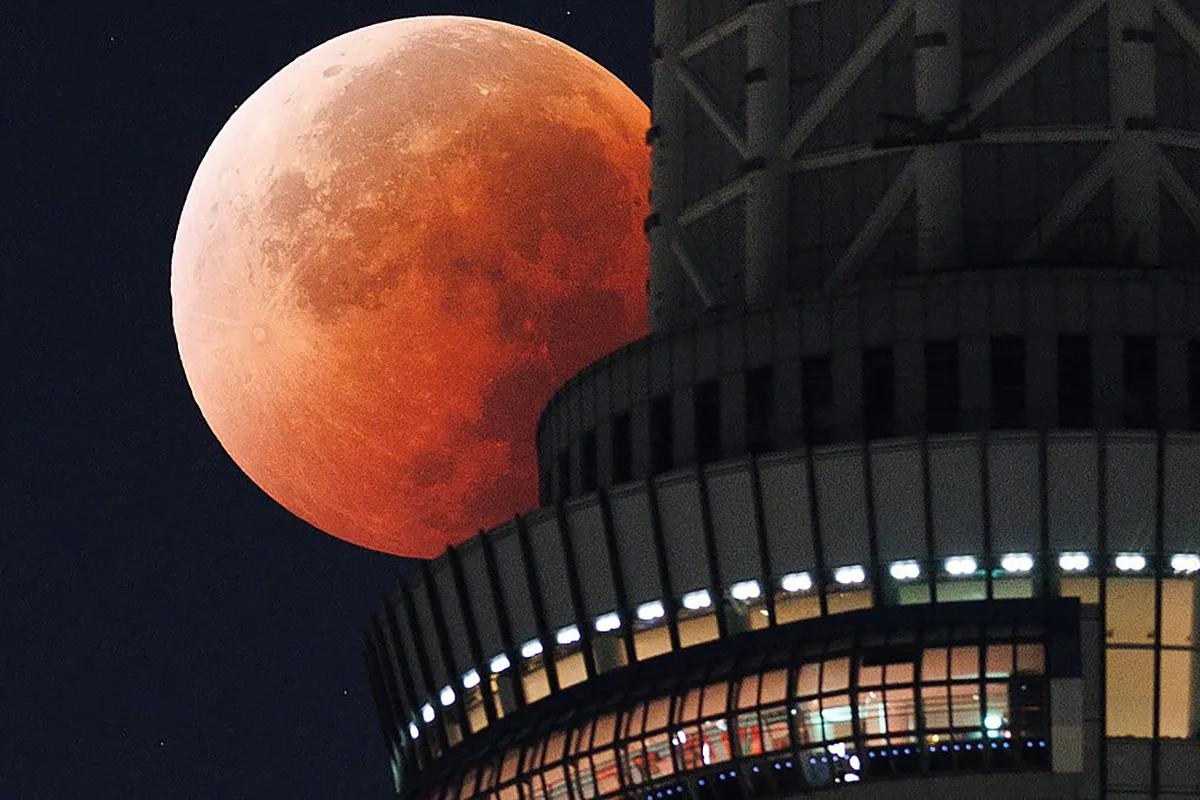 Photo by STR/JIJI Press/AFP via Getty Images
Key location viewing tips
Generally speaking, if you’re observing in the western part of the world, you’ll see the lunar eclipse between midnight on March 2 and dawn on March 3.
If you’re observing in the eastern part of the world, you’ll see the lunar eclipse in the evening of March 3.
From some regions, the Moon may already be eclipsed as it rises above the horizon, or it may sink below the horizon half-way through the spectacle!
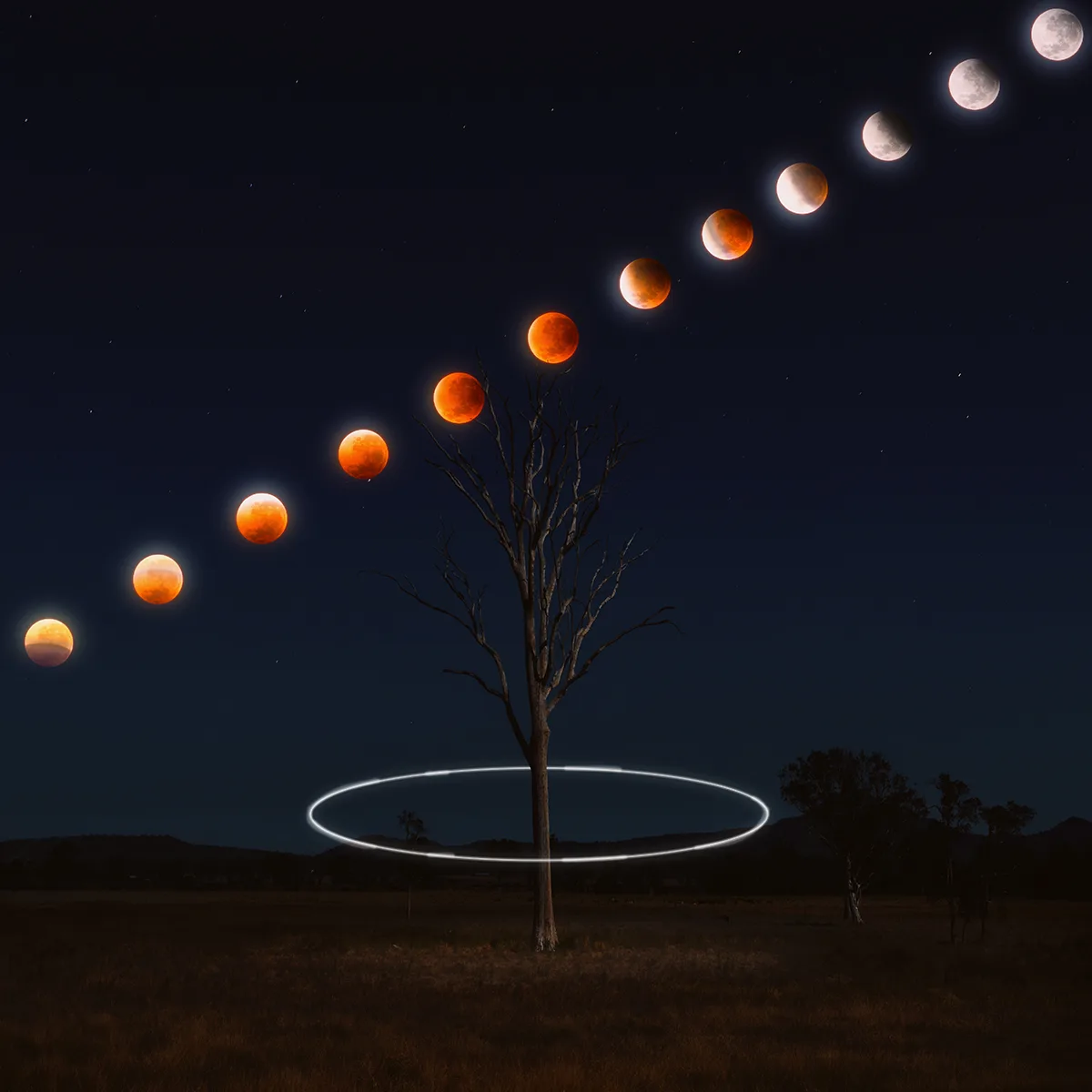 The Moon may already be eclipsed as it rises, depending on where you’re viewing from. This image shows the stages of the September 8, 2025 lunar eclipse from Brisbane, Australia. Credit: Taran Sohal
That means timing is key, as what you’ll see will depend on where you are in the world.
And if the Moon is rising or setting while it’s eclipsed from your location, you’ll need to get yourself a flat, clear horizon to catch as much of the blood Moon as you can.
Here are the key dates and timings for the lunar eclipse on March 3, 2026, for the key cities that will get to see it.
We’ve included cities in the USA and Canada, as well as the best cities in East Asia, Australia and New Zealand.
Totality is the moment when the Moon begins to turn red, then there’s ‘peak’ blood Moon, and totality ends when the red hue drains from the lunar surface.
Wherever you’re observing from, plan to begin watching from 30 minutes to an hour beforehand, to give time to locate the position from which the Moon will rise, and make any last-minute location adjustments!
Western cities that will see a morning eclipse
City
Totality begins
Peak blood Moon
Totality ends
Los Angeles
03:04 PST
03:33 PST
04:03 PST
Mexico City
05:04 CST
05:33 CST
06:03 CST
Chicago
05:04 CST
05:33 CST
06:03 CST
Lima
06:04 PET
06:10 PET
–:–
Detroit
06:04 EST
06:33 EST
07:03 EST
Toronto
06:04 EST
06:33 EST
07:03 EST
Washington DC
06:04 EST
06:33 EST
07:03 EST
New York
06:04 EST
06:33 EST
–:–
Montreal
06:04 EST
06:33 EST
–:–
Eastern cities that will see an evening eclipse
City
Totality begins
Peak blood Moon
Totality ends
New Delhi
–:–
17:32 IST
–:–
Bangkok
18:04 ICT
18:33 ICT
19:03 ICT
Beijing
19:04 CST
19:33 CST
20:03 CST
Perth
19:04 AWST
19:33 AWST
20:03 AWST
Tokyo
20:04 JST
20:33 JST
21:03 JST
Brisbane
21:04 AEST
21:33 AEST
22:03 AEST
Adelaide
21:34 ACDT
22:03 ACDT
22:33 ACDT
Sydney
22:04 AEDT
22:33 AEDT
23:03 AEDT
Melbourne
22:04 AEDT
22:33 AEDT
23:03 AEDT
Auckland
00:04 NZDT
00:33 NZDT
01:03 NZDT
If you manage to observe or photograph the lunar eclipse of March 3, 2026 from your location, get in touch and let us know what you thought, or send us your images, by emailing contactus@skyatnightmagazine.com