
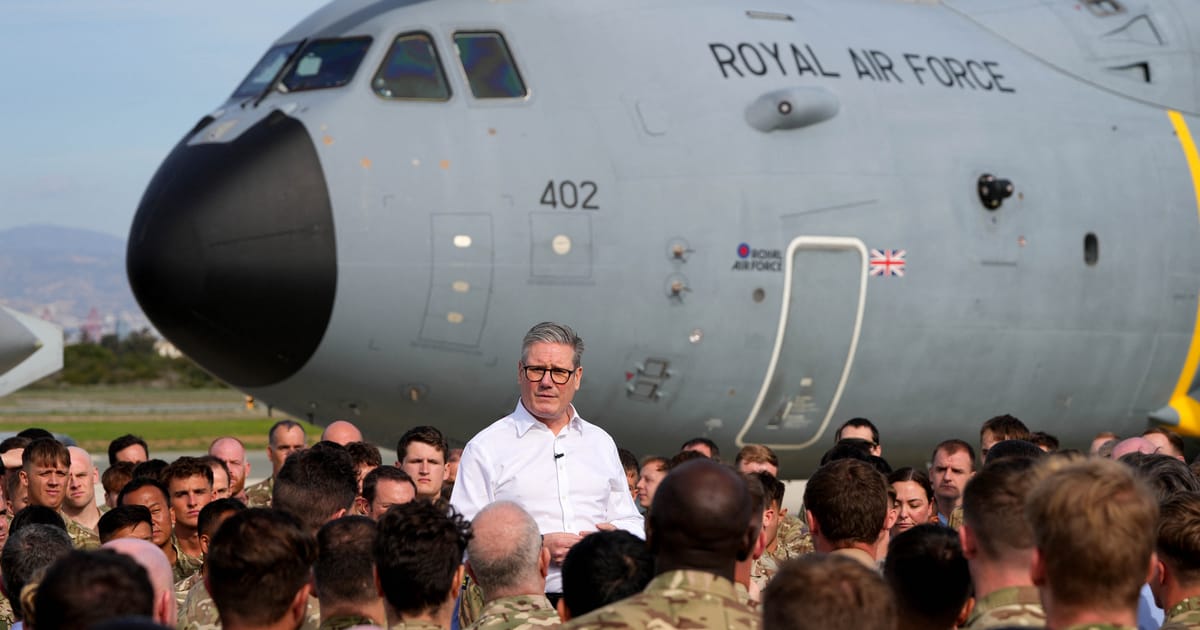
Starmer has embraced the idea of closer defense ties with Europe since taking office, and signed a new mutual defense pact with Germany – as well as refreshing the Lancaster House agreement with France. He has also promised to work more closely with the EU on defense financing.
Calvin Bailey, a Labour MP on the Commons defence committee, said: “The clear shift in US focus to the Middle East and the Indo-Pacific, evidenced again by current events, shows again how important it is to galvanize our defense relationships with European partners.”
Starmer’s early response to the Iran strikes saw him reach for that forum, as the E3 issued a joint statement.
The situation Britain faces is similar to that of France, which has naval bases in the Gulf. Ben Judah, a former adviser to Starmer’s government on foreign policy, said the U.K. ought to consider working with France to “establish an independent defensive mission” that is not under American command.
London has so far resisted calls by allies to adopt a posture that is more explicitly independent of the U.S. And it’s not clear that working more closely with European partners would be any easier.
While Greece deployed warships and fighter jets to Cyprus, Cyprus’s government openly expressed dissatisfaction with the U.K., effectively accusing Britain of dragging it into the crisis.
Arnold argued it was “particularly painful” for the U.K. to face the prospect of further conflict in the region, as “it just sucks capacity out domestically and internationally, exactly when the Europeans want all of the focus to be on Ukraine and Europe.”
Labour’s Bailey warned: “Continuing to arm Ukraine’s defense and maintaining deterrence against Russia requires both a faster pace of defense spending [by the U.K.] and strategic restraint [by the U. S.] that we are not seeing right now.”