
Holidaymakers heading to Spain are being urged to stay alert and ‘take extra precautions’ after a rise in cases of a more infectious mpox strain.
As of 18 February 2026, Spanish health authorities confirmed 84 cases of mpox, formerly known as monkeypox, with 36 identified as the highly transmissible MPXV clade Ib strain.
Out of the total reported cases, a large number involve men who have sex with men (MSM), according to Travel Health Pro.
On 17 February, it wrote: ‘A total of 82 cases of mpox clade Ib have been reported in Spain. 62 of these cases have been reported in men who have sex with men (MSM). Take extra precautions.’
The Ib strain is thought to spread more easily than the clade II variant responsible for the global outbreak in 2022.
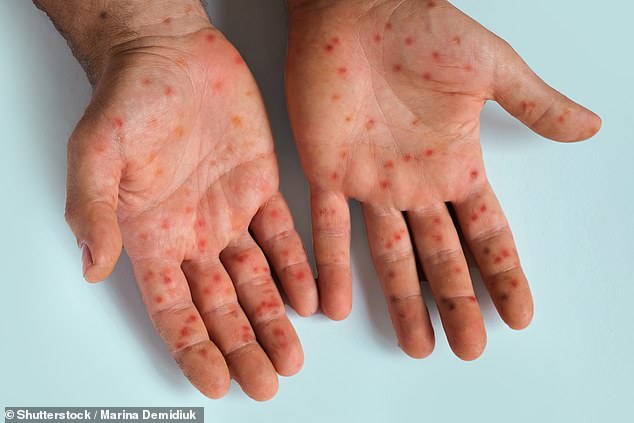
Travellers in Spain are being cautioned to ‘take extra precaution’ after a rise in cases of a more infectious mpox strain – characterised by fever and muscle aches and followed by a rash and painful sores (pictured)
Mpox passes through close physical contact with infected skin, blisters or scabs.
Symptoms can appear between five and 21 days after exposure and often start with fever, headaches, exhaustion, muscle aches and swollen glands, followed by a rash and painful sores (ulcers) or fluid filled blisters.
According to the World Health Organization, young children, pregnant women and people with weakened immune systems are more vulnerable to severe illness.
Several African countries have been dealing with clade Ib outbreaks, and imported cases have been recorded elsewhere in Belgium, Canada, France, Germany, Sweden, and the United States.
Although Spain has the highest number of cases in the EU/EEA, a total of 255 cases have been reported across 10 countries so far, as detailed in a report released by the European Centre for Disease Prevention and Control (ECDC).
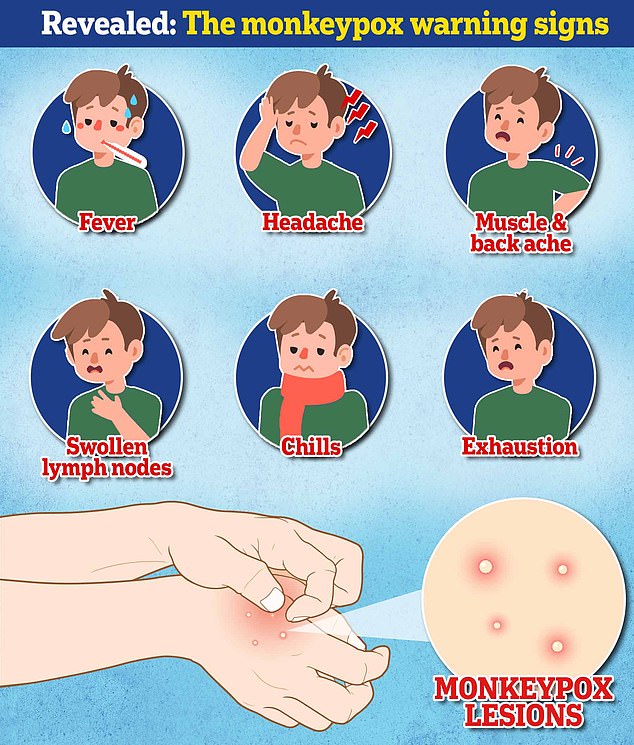
In the UK, the UK Health Security Agency (UKHSA) confirmed the first clade Ib case on 30 October 2024.
By 31 January 2026, 25 cases had been identified, most linked to travel to affected areas.
The NHS advises anyone with symptoms – particularly after visiting central or eastern Africa – to call 111.
While mpox remains rare, vaccination, good hygiene and avoiding close contact with anyone who may be infected can help limit the spread.
Travellers are also advised to steer clear of going near wild or stray animals while abroad, talk to sexual partners about their sexual health and any symptoms they have, and avoid sharing bedding and towels with people who may have mpox.
Things you can do to avoid getting and passing on mpox
According to NHS guidance:
DO
Get vaccinated if you’re offered the mpox vaccine
Wash your hands with soap and water regularly or use an alcohol-based hand sanitiser
Look out for any possible symptoms of mpox for 3 weeks after returning from an area with mpox
Talk to sexual partners about their sexual health and any symptoms they may have
Be aware of the symptoms of mpox if you’re sexually active, especially if you have new sexual partners
Take a break from sex and intimate contact if you have symptoms of mpox until you’re seen by a doctor and are told you cannot pass it on
DON’T
Do not share bedding or towels with people who may have mpox
Do not have close contact (within 1 metre) with people who may have mpox
Do not go near wild or stray animals, including animals that appear unwell or are dead, while travelling in central or east Africa
Do not eat or touch meat from wild animals while travelling in central or east Africa
Share or comment on this article:
Travel warning issued as cases of Mpox rise in Spain