


Cancer patients should meditate in the morning and at night, scientists suggest.
(Pressmaster via Getty Images)
More than 420,000 people are diagnosed with cancer each year in the UK – that’s one new case roughly every 75 seconds.
And while catching the signs early and prompt treatment are the most effective ways to stop cancer from spreading, lowering our stress levels with healthy lifestyle habits may play a bigger role than we think.
Recently, researchers from Midwestern University in Arizona presented evidence from early trials that suggested that meditation – a practice that involves clearing your mind and bringing your awareness to the here and now – might lower the risk of the disease spreading in cancer patients.
The scientists believe they have found an emerging link between high levels of the stress hormone cortisol and cancer, suggesting that levels are more likely to remain consistently high in those diagnosed with the disease, rather than naturally rising and falling throughout the day.
Discussing the findings at a meeting of the American Association for the Advancement of Science in Phoenix, lead researcher Dr Kimberly Bussey said that chronically high levels of cortisol may make cancer cells “more resistant” and “motile” to treatment – meaning they can move independently and spread more easily.
“Our data suggests that cortisol might be important in the spread of cancer within the body,” she said.
“[It is] consistent with the literature that suggests that psychosocial stress, particularly if it is chronic, is a contributing factor to both the development of cancer and the response to cancer therapy.”
Why meditation might help cancer patients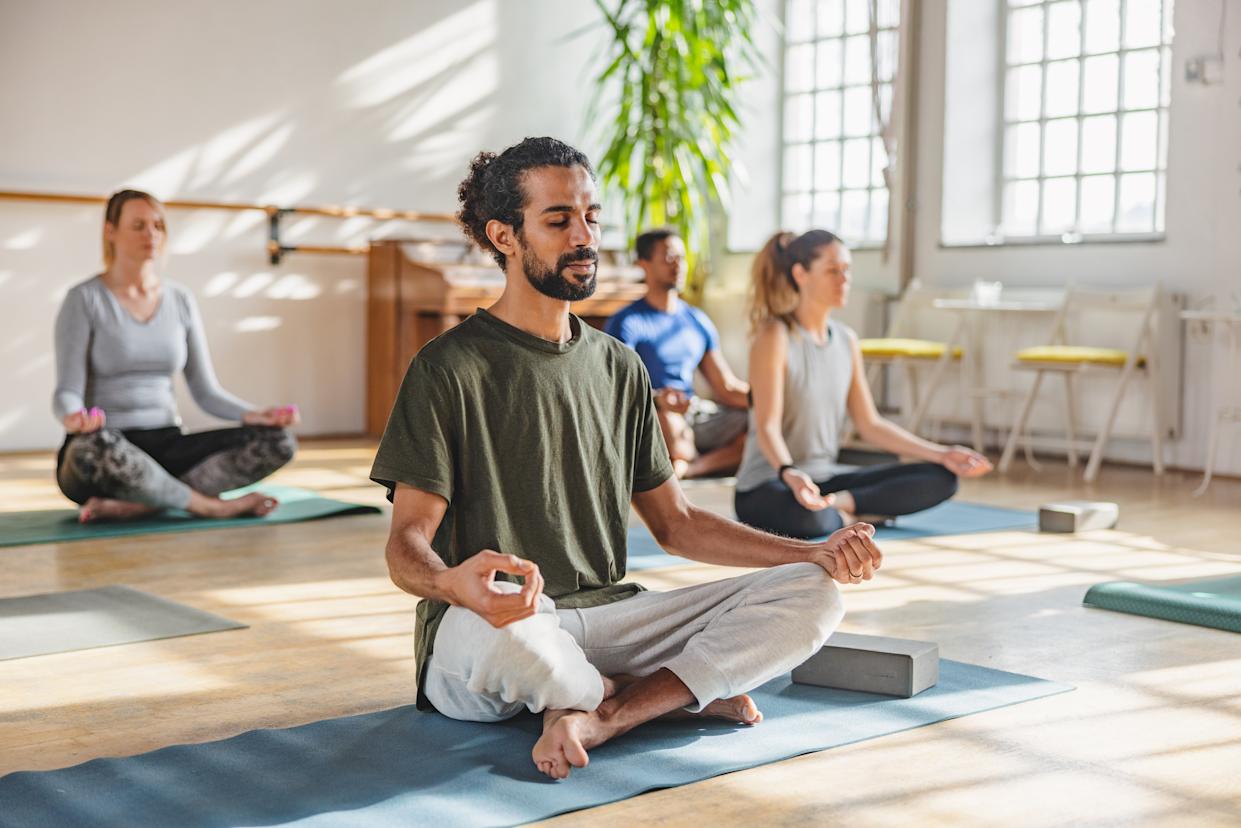
Meditation has been around for over 5,000 years, but scientists are only just discovering its full potential range of benefits.
(AzmanJaka via Getty Images)
Alongside presenting the emerging evidence that high levels of cortisol may help cancer move around the body, Bussey went on to suggest that using techniques to de-stress, such as meditation, could form an important part of a cancer patient’s daily routine – particularly in the morning and at night.
“Patients should, as much as they can, do things that experts advise all of us to do to manage stress: exercise, get outside in nature, engage in mindfulness practices like journaling, meditation or deep breathing, eat a healthy diet, give back to others, get enough sleep,” she said.
“As for time of day, I think there are arguments to be made for starting and ending the day with practices that reduce stress and promote quality sleep,” she continued.
“In the morning, those practices can support a resilient mental state that helps us manage daily stress better. At night, those same types of practices can help us relax and facilitate getting quality sleep.”
While the findings have the potential to change the way we approach cancer treatment and patient care in the future, the scientists concluded that, for now, more evidence was needed to draw any certain conclusions.
What are the other benefits of meditation?
For thousands of years, meditation has been an effective tool in training the mind to be present. In recent times, it’s become backed by science, too.
“Research shows that when we intentionally sit with the mind, the brain rewires itself to improve emotional regulation, problem-solving, resilience and focus – a process called neuroplasticity,” says Dora Kamau, mindfulness and meditation teacher at Headspace.
“Personally, we might not be able to tell exactly what’s happening to our brains, neuron by neuron,” she adds. “But we can certainly feel the impact meditation benefits have on our life. Over time, we’ll sleep more soundly, stress less about the small stuff, become more resilient through the big stuff, act more compassionately, and live happier and healthier.”
How can I make daily meditation easier?
We all know that enjoying moments of calm and stillness is good for us, but learning to control our intrusive thoughts is easier said than done.
Kamau says its completely normal to get frustrated at first, as it takes time and patience to learn how to work with our mind, not against it.
“During meditation, we’re fundamentally shifting the way we relate to our thoughts and feelings for the better,” says Kamau.
It should get easier with time. “With each session, we build awareness, increase our kindness towards ourselves and others and connect with the present moment,” the teacher notes. “And with slow, steady practice, all that starts to filter through to the rest of our life.”
Kamau’s tips for building a daily meditation routine1. Start with just one minute
Whether you’re a total beginner or not, you don’t need hours of free time to reap the benefits of meditation. “A one-minute breathing exercise can go a long way,” says Kamau. “Next, you can try a 3 to 5 minute guided meditation. From there, you can try 10 to 15.
“Finding a comfortable, achievable length will help meditation feel more like treating yourself than a chore.”
YouTube and subscription-based apps like Headspace and Calm are handy places to find short meditations that can guide you through the process.
2. Swap early morning scrolling for meditating
The less you think about meditating, the less opportunity you give your mind to talk yourself out of it. “So, just meditate when the urge strikes, whether you need a break from work or to soothe the mind before bed,” says Kamau.
“If you need a little more structure, consider doing it first thing in the morning, when most people tend to be more motivated and before the distractions of the day kick in. Regularity will not only help you establish a meditation routine but also set the stage for a mindful day.”
3. Pair it with your morning coffee
Habit research suggests that adding meditation to an existing routine makes it easier for us to stick with it.
“You might meditate every time you get out of the shower, brush our teeth, or make your morning coffee,” suggests Kamau. “Or, you could block it off on the calendar, like you would a fitness class. These actions serve as a little reminder to get us going and create space for ourselves, even if you’re really busy.”
4. Don’t worry if you miss a day
Arguably, the best thing about meditation is that you can do it anytime, anywhere. “If it’s hard to meditate at the ‘same time, same place’, it’s OK because it’s not mandatory,” stresses Kamau. “Every day is different.”
And if you miss a few days? “You can always come back to a short meditation,” she reassures. “Being flexible allows us to build discipline without all of the pressure.”