

Would you pay for a supplement that promised to make your wrinkles fade and your lacklustre perimenopausal complexion bloom back to life? One that celebrities and influencers forever sang the praises of on your social media feed, whose enticing claims were supported by much trumpeted clinical trials?
Well, I was sold. Despairing at the lines that appeared with increasing regularity, I signed up for a rolling £120 three-month collagen subscription from the leading manufacturer Ingenious in September 2022, aged 44.
While Amanda Holden, 55, an ambassador for Revive Collagen, has said collagen made her look “more glowy” and the broadcaster Susannah Constantine, 63, who takes Ancient + Brave’s supplement, described herself as “less dry and crepey”, it was the science that swung it for me.
Ingenious’s randomised, double-blinded independent clinical trial found 77 per cent of women taking it experienced a reduction in fine lines and wrinkles. Impressive, right? Or “gold-standard”, as the company puts it.
But was it the conclusive proof I hoped for? Ingenious’s 2019 trial has yet to be published in a peer- review journal, but last week the largest review on collagen supplements to date, examining data from 113 trials involving nearly 8,000 people, cast doubt on the widely made claim that collagen supplements can reduce wrinkles.
While supplements were found to improve skin elasticity, or firmness, and bone and muscular health, there was no statistically significant improvement to skin roughness, a measure of visible wrinkles. In other words, researchers at Anglia Ruskin University said, there were some “credible” benefits for skin, but supplements are not “an anti-wrinkle ‘quick fix’”. They also stressed many of the review’s studies themselves had “limitations”.
Having meticulously swallowed my three Ingenious tablets on an empty stomach every evening as instructed, I wasn’t surprised. Every morning I would look in the mirror, hoping my crow’s feet might have faded overnight. They hadn’t.
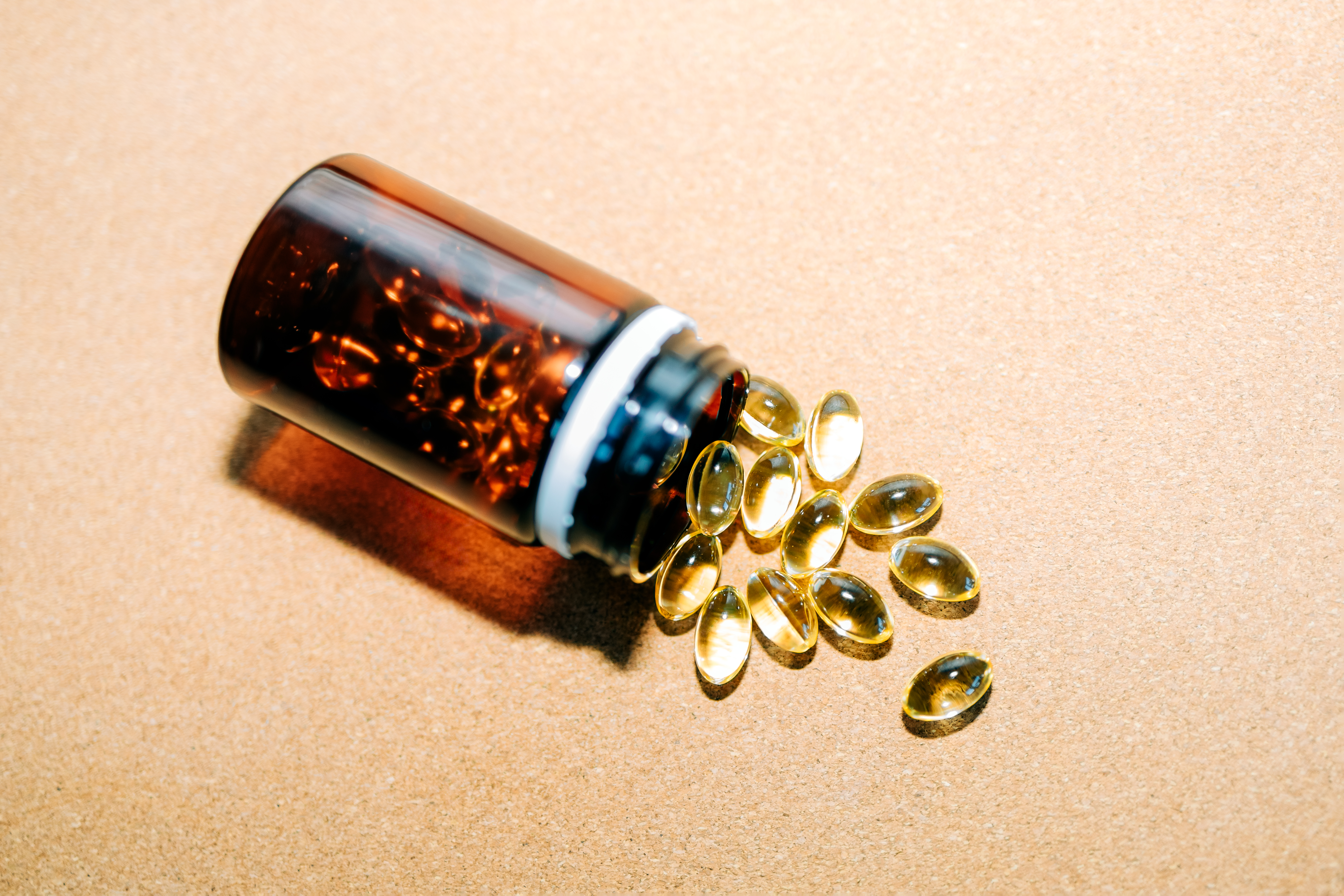
The global supplement industry is worth about £150 billion a year
GETTY IMAGES
The longer I took collagen, the more invested I felt, fearful of giving up on the cusp of a new complexion. It was 15 months before I finally quit, £600 out of pocket. I noticed no difference to my skin (or my joints, energy levels or sleep — all of which collagen has been credited with improving) and felt like a mug.
The global supplement industry is worth about £150 billion a year, with midlife women among its core customers. Last year YouGov research found collagen to be the UK’s most popular supplement, taken by 15 per cent of women.
Yet most purported collagen supplement benefits are “unsubstantiated, built on the fear of ageing”, says Ilaria Bellantuono, professor in musculoskeletal ageing at the University of Sheffield, who is “not surprised” the review found no reduction in wrinkles. Even the findings of improved elasticity should be taken with “a pinch of salt”, she adds, because “most of the studies are low quality”.
• Read more beauty product reviews and advice from our experts
Collagen is a protein in our joints, muscles and skin that declines as we age and more steeply in midlife women. It’s too large a molecule to be absorbed when eaten as food, so we break it down and absorb it as chains of amino acids that form peptides, from which our cells produce collagen.
Although we know the peptides supplements can reach our bloodstream, and Ingenious claims its formula stops its supplement being broken down by stomach acid so it reaches the small intestine intact, Bellantuono says “there’s no evidence” taking a supplement will boost collagen levels better than eating the amino acids as protein-rich food such as chicken (although she concedes vegans are more likely to need support.)
Not only that, but nobody knows how many of the peptides we ingest travel to our skin –— “nobody’s actually looked,” Bellantuono says. “We don’t know if they reach the tissues and whether this increases collagen production.”
Nor do we know if collagen depletion is down to collagen getting degraded faster, or if, with age, the body loses its ability to build it in the first place, and “if this is the case”, Bellantuono says, “whether you get your amino acids as a supplement or in food, the problem remains the same — your body is much slower at building collagen.”
• Why peptides can supercharge your skincare — plus the best to buy
Ingenious described its 2019 12-week trial, with 116 women aged 30 to 60, which found an average wrinkle reduction of 26.5 per cent, as “massive” (albeit small compared with, say, the latest phase 3 trial for the weight loss pill orforglipron, with 1,698 participants). Results were assessed using facial imaging and a suction device to assess how quickly skin reverts to its original shape.
Last year Ancient + Brave, the collagen company that has Davina McCall as an ambassador (McCall has said collagen left her skin “firmer”), released its own double-blinded, placebo-controlled 12-week trial of 90 women aged 35 to 55, which found all participants had an improvement in fine lines after six weeks. Their results were assessed with “visual grading” and questionnaires. It is not thought to have been published in a peer-reviewed journal, and is not part of last week’s review.
“You need to do stringent large-scale clinical trials to see if a supplement is helpful,” Bellantuono says. “For many of these products there isn’t one. Most companies have done their own trial that is not independent. Most of them don’t have a proper control group or the data is not published. They claim a lot, but it’s difficult to know if it’s solid data.”
Collagen is a “fairly innocuous” molecule, she says, but the supplement industry is poorly regulated, and if you buy from a company online “you don’t know whether there is anything else on top that may be toxic. It’s a Wild West.” And one that targets women like me, under ever-increasing pressure to discover the elixir of youth.