
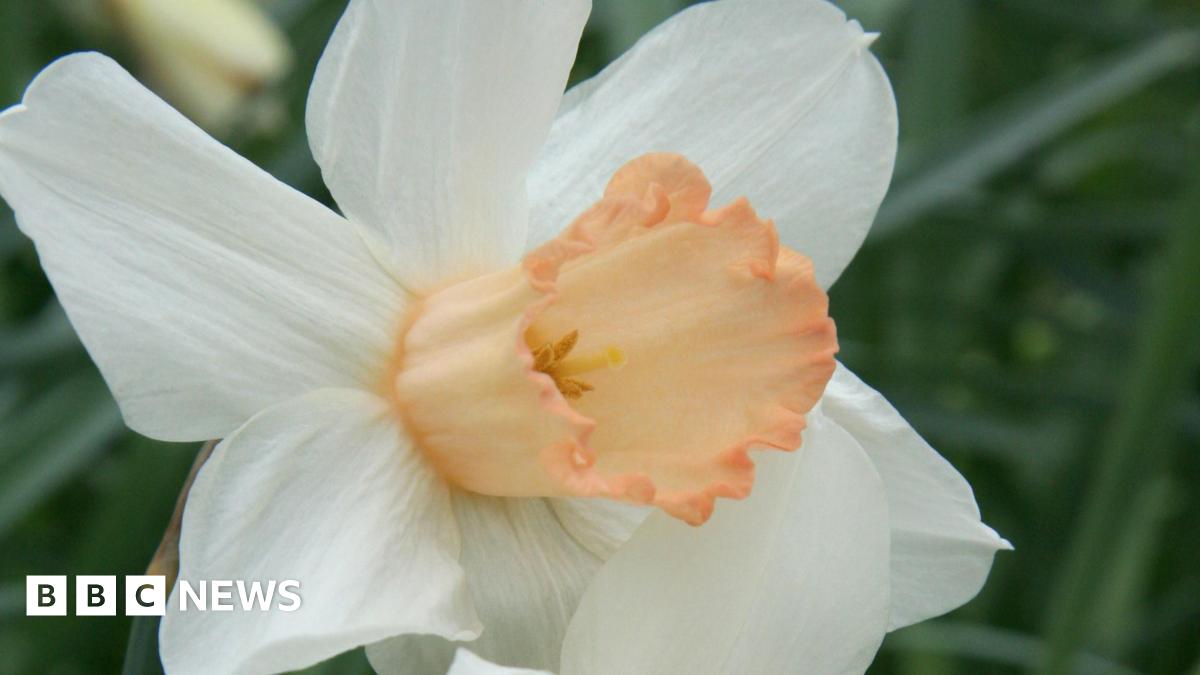
“Yellow daffodils are far and away the most popular, not unsurprising, for their welcome burst of colour,” said Dr Kalman Konyves, the RHS’s principal plant scientist.
“But it is interesting to note that the more adaptable pinks have proven less popular than we might have assumed, and green and red varieties negligible, highlighting the importance in maintaining cultivated diversity in gardens.”
The public will be able to report suspected pink daffodils to the RHS by sending in photographs, which will be sent to expert botanists to examine.
Speaking to BBC Radio Wales, RHS chief horticulturist Guy Barter said they would then ask the participants to send in a bulb so they could grow them at the John MacLeod Field Research Facility at Wisley, Surrey.
Experts across the country would then be able to “examine and give us a definitive answer” if those discovered by the public are Narcissus ‘Mrs R.O Backhouse’.
‘Mrs R.O Backhouse’ was named after plant breeder and horticulturist Sarah Backhouse, who created the first true pink daffodil.
The variety became the most well-known and widely grown pink daffodil for over 90 years.
The garden charity hopes the now rare salmon-pink flower will be able to be bred and returned to wider cultivation before it disappears entirely.
The RHS, in partnership with the conservation charity Plant Heritage, are also looking for two other rare daffodils – the white double flowered ‘Mrs William Copeland’ and orange and yellow double flower ‘Sussex Bonfire’.