
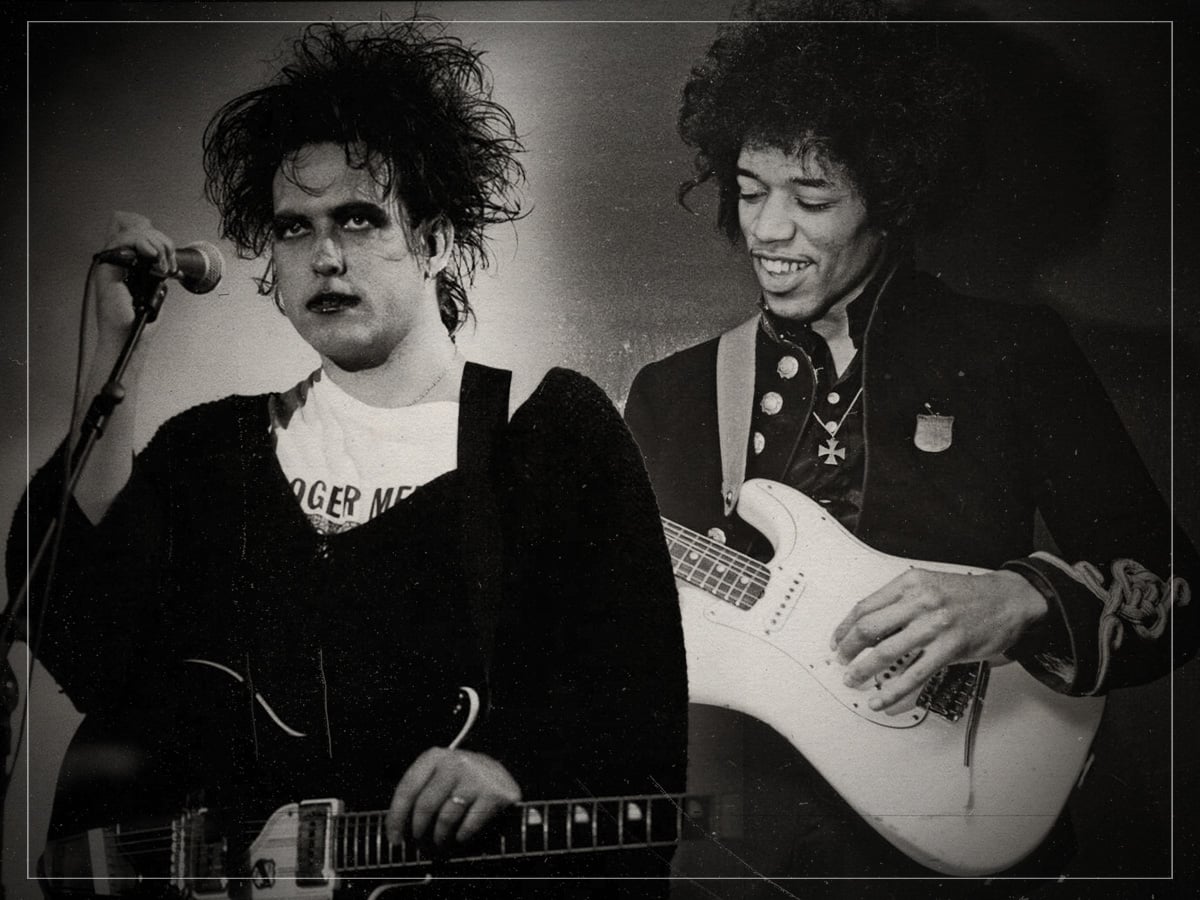
(Credits: Far Out / Alamy)
Wed 4 March 2026 20:15, UK
The Cure might be one of the most legendary bands in the history of music, but the reason they earned their crown in the first place was their complete balance in their artistic expression.
Even today, with releases like Songs of a Lost World, you can tell that Robert Smith writes for both himself and his listeners, an approach that makes his stories and worlds feel tight and nuanced and only for those who truly understand what it’s all about. While writing, he’s often wondering how it’s going to land and hopes that those who receive it on the other end will actually enjoy what they’re listening to.
As he explained following the release of Lost World, “It’s a strange thing – it’s always a weird moment when suddenly people start listening to what you’ve been doing. Because you can’t help but [think], why bother unless you want people to like it? It’s a faux artistry when you think I’m just doing it for myself, you’re really not.”
This is a point of contention in today’s musical landscape, especially when it comes to mainstream spaces. Audiences nowadays are no doubt more privy to those who make music solely to gain sales and charting positions, and those who make it to express themselves, with some arguing that the only real art comes from those who are completely selfish and create music solely for themselves.
However, when it comes to Smith, it’s almost impossible to separate the two, with even the most innovative visionaries standing in the studio from time to time and wondering what people are going to think once they’ve been exposed to it. Perhaps this is one of the biggest reasons for The Cure’s success – that there’s always an anchor to cultural impact and relevance, no matter how personal and intimate Smith’s lyricisms are.
This ability to transform personal musings into melancholic art came from a variety of sources in the beginning, swirling in a concoction of everything that Smith was listening to growing up and in the band’s early days, when The Cure were shaping up to be one of the most exciting, gothic-leaning rock bands in the arena.
One hero that Smith credits with shaping some of his more familiar sonic facets is Nick Drake, specifically his 1969 album Five Leaves Left, which he first heard when he was ten years old. Over time, his endearment grew deeper, proving the opposite sense of gratification as explosive players like Jimi Hendrix because Drake was more “quiet and withdrawn” with a heartfelt writing style that informed much of Smith’s own lyrical approach.
Another thing that drew Smith to his artistry was that “he wasn’t worried about what people thought of him” – a quality he admired despite his later qualms with artistic pandering – and didn’t care so much about being famous.
“I think also that because he had an untimely death like Jimi Hendrix, he was never able to compromise his early work,” he said. “It’s a morbid romanticism, but there is something attractive about it.”
Mainly, it was Drake’s overwhelming simplicity that stunned Smith to the point that it became a lesson in complexity instead. When he first heard ‘Time Has Told Me’, for instance, there was a self-assuredness that floored him, because it was so direct and yet “incredibly difficult, impossible to replicate”: all signs of a true master storyteller.