
9. Craig Casey (Ireland)
Craig Casey’s high-tempo style is usually an asset, but this championship has felt rushed and slightly erratic.
With Jamison Gibson-Park setting such high standards for Ireland, the contrast has been noticeable. Casey’s kicking and game management have both come under scrutiny at times.
The intent and energy are always there, but the control expected from an international scrum-half has been missing.
10. George Ford (England)
After a steady showing against Wales, George Ford endured difficult afternoons against Scotland and Ireland.
He was largely anonymous at Murrayfield before struggling badly in the following game, where he twice missed touch and was audibly jeered by the crowd whenever he kicked — a clear sign of how far below his usual standards he had fallen.
England’s attack also struggled to build pressure, with several decisions failing to generate momentum.
11. Henry Arundell (England)
The raw pace and athleticism are obvious, but Henry Arundell has struggled to deliver consistently during this championship.
He had difficult outings against both Scotland and Ireland, particularly under the high ball — a major concern given England’s tactical approach. Several promising attacking opportunities also came to nothing.
His two yellow cards at Murrayfield proved hugely costly as England lost control of the contest.
12. Joe Hawkins (Wales)
Joe Hawkins has endured a difficult tournament in a Welsh side that has struggled to generate attacking momentum.
Without consistent front-foot ball, the centre has often been forced into defensive situations rather than creating opportunities. Opposition teams have also targeted Wales’ midfield defence.
The result has been a challenging campaign for the young playmaker.
Join the RUCK’s WhatsApp community here and get the latest news sent straight to your messages.
13. Ollie Lawrence (England)
Ollie Lawrence’s powerful carrying is usually a key weapon for England, but his influence has been surprisingly limited so far.
Opposition defences have managed to shut down his direct running, preventing him from generating the momentum England often rely on from midfield.
Without those explosive carries, England’s attack has frequently looked blunt.
14. Duhan van der Merwe (Scotland)
Back in the side and involved early, but Duhan van der Merwe has spent long stretches on the fringes of matches.
There was one trademark surge around the 50-minute mark when space opened up, but otherwise the Scottish winger was largely starved of quality ball.
For a player known for explosive moments, the overall impact has been surprisingly limited.
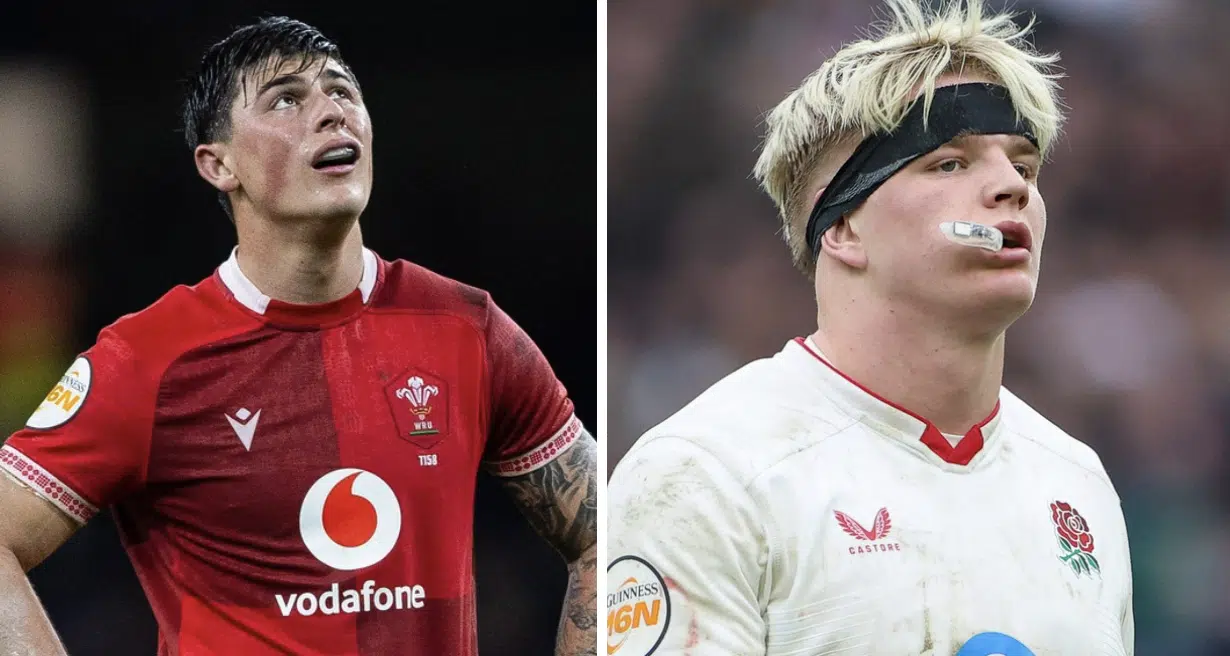
15. Louis Rees-Zammit (Wales)
Louis Rees-Zammit remains one of the most dangerous finishers in European rugby, but defensively this tournament has again been problematic.
Last year he missed more tackles than any other player in the championship (12), and that defensive vulnerability has continued to surface during this campaign. Opposition teams have targeted the edges of Wales’ defence and exposed weaknesses.
While his attacking threat remains obvious whenever space appears, the defensive lapses have made it a frustrating Six Nations so far for the Welsh star.
EDITORS PICKS:
LIVE TRANSFER BLOG:
Like this:
Like Loading…