
Asked about the energy minister’s warnings, Jorge Leon, analyst at Rystad Energy, told the BBC the situation poses a “real risk to the global economy”.
“I think we’re on the edge of trying to understand if this is a very short energy crisis with limited implications, or if we’re at the beginning of a massive economic and energy crisis,” he said.
“If this lasts for more than two weeks, then the likelihood of seeing very significant implications for the energy system and the global macroeconomic outlook are much higher.”
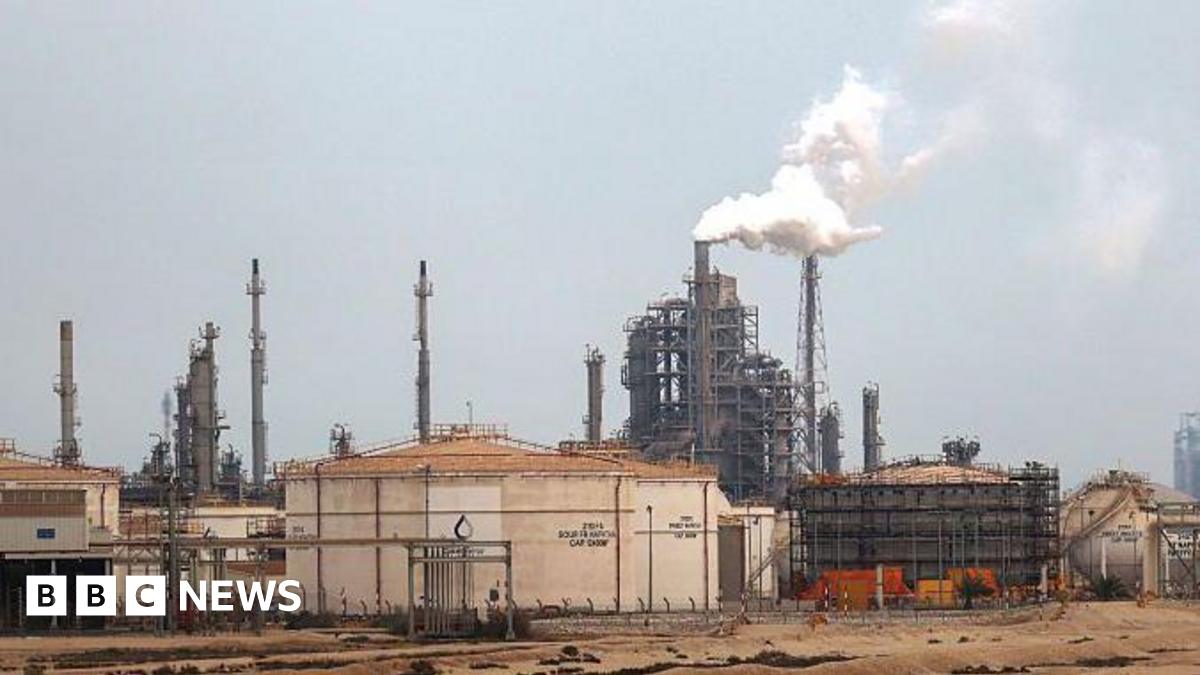
Qatar is a major producer and exporter of oil and liquefied natural gas (LNG).
This week QatarEnergy said it had stopped production of LNG following “military attacks” on its facilities.
It declared “force majeure” – a clause freeing it from liability for failure to supply due to events outside its control – and Kaabi said he believed all other energy exporters would have to follow suit in the next few days if the war continues.
Kaabi, who is also chief executive of QatarEnergy, said even if the war stopped now, it would take “weeks to months” to resume normal output.
About a fifth of the world’s oil supply is usually shipped through the Strait of Hormuz each day. But traffic through the narrow passage has all but halted since the US-Israel war with Iran began last weekend.
Blocking the strait could make goods and services more expensive globally, and hit some of the world’s biggest economies, including China, India and Japan, which are among the top importers of crude oil passing through the waterway.
The UAE and Saudi Arabia both have pipelines enabling them to transport oil without using the strait.
But analysts have warned that the longer there are threats to ships passing through the strait, the higher the price of oil – and the shipping of it – will be.
Rystad Energy’s Leon said if countries in the Gulf cannot export oil they will need to store it, and, when this storage runs out, stop production. They have between days and a few weeks of reaching that point, depending on how much storage they have.
Oil prices exceeding $100 a barrel is a “realistic scenario”, but the important thing is how long they stay at that level, he said.
Governments across the world at that point would likely release their oil reserves, as happened after the full-scale invasion of Ukraine by Russia.
Lindsay James, investment strategist at Quilter, said a prolonged halt to all oil and gas production in the Gulf was an “extreme scenario”.
Market moves suggest investors expect disruption to traffic through the Strait of Hormuz will be resolved quickly, she said, but added that the risk grows every day that the conflict will be more prolonged than first thought.
“For households, the pressure will be felt primarily in energy prices, rather than a broad inflation shock,” she said.
“UK food inflation, for example, is unlikely to be significantly affected because much of the food imported into the UK does not rely on Gulf shipping routes.
“The bigger economic risk comes from persistently higher energy costs, which can weigh heavily on growth.”