
 © Schran Image
Share
Or
https://www.archdaily.com/1039369/archiving-the-technosphere-how-museum-architecture-mediates-human-made-systems
Far from the perception of the exhibition space as a sterile and untouchable, almost sacred place, the contemporary technology museum has emerged as a performative participant in the systems it seeks to document. The architecture of these institutions has become increasingly fluid and bold, often mirroring the velocity and complexity of the systems it houses. They operate as mediators between the human, the ecological, and the technological realms, transforming from encyclopedic warehouses into active educational engines. By spatializing complex scientific data through immersive rooms, these structures make the technological networks of our world accessible, engaging, and tangible.
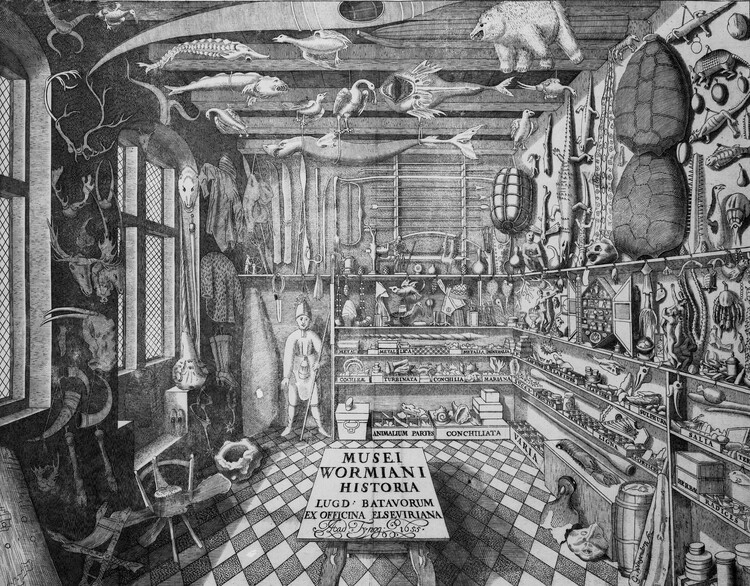 “Musei Wormiani Historia”, the frontispiece from the Museum Wormianum depicting Ole Worm’s cabinet of curiosities. Image Courtesy of Wikipedia
The origins of technology museums are intertwined with two distinct precursors: the Cabinet of Curiosities and the World Fair. While the Cabinets of Curiosities – emerging in the mid-16th century – were private rooms housing eclectic collections of natural wonders and artworks, the World Fairs represented a pivot toward the industrial. Events like London’s Great Exhibition of 1851, held within the iron-and-glass skeleton of the Crystal Palace, served as spectacular “display windows” for the latest technological inventions and national achievements. However, these fairs were inherently ephemeral; their massive pavilions were often dismantled shortly after the events ended.
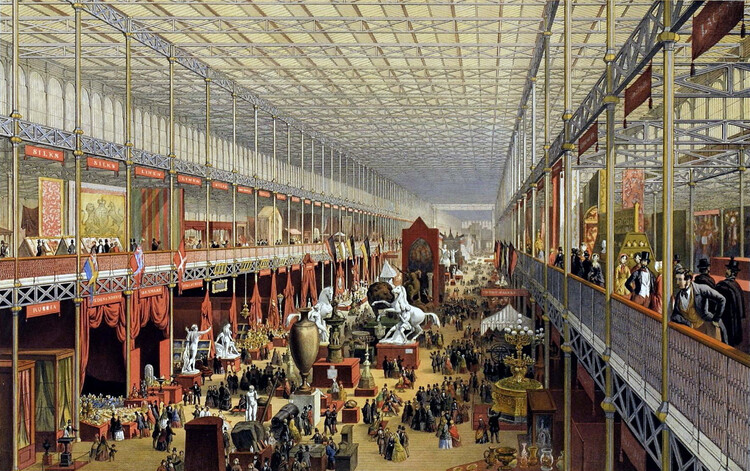 McNeven, J., The Foreign Department, viewed towards the transept, coloured lithograph, 1851, Ackermann (printer), V&A. The interior of the Crystal Palace in London during the Great Exhibition of 1851.. Image Courtesy of Wikipedia
In the closing decades of the 19th century, more permanent institutions dedicated to the preservation and display of scientific and technological artifacts began to emerge. A seminal example is the Sydney Technological Museum (1893) – now known as the Powerhouse Museum – whose architecture was a direct descendant of the earlier international exhibition halls. Its interior design, characterized by expansive windows and compartmentalized display bays, was engineered to present a vast, encyclopedic collection through a structured pedagogical lens. As these institutions multiplied globally, they evolved into archives of human invention; they were no longer just buildings, but primary pedagogical tools designed to categorize the material progress of a rapidly industrializing world.
Related Article Forum, Depot, Maze: Toward a Plural Ecology of Museums
Today, technology museums have evolved into “mega-structures” defined by bold, fluid geometries that do more than merely showcase innovation – they embody it. These buildings integrate technological systems into their very DNA, merging external form with internal programmatic content.
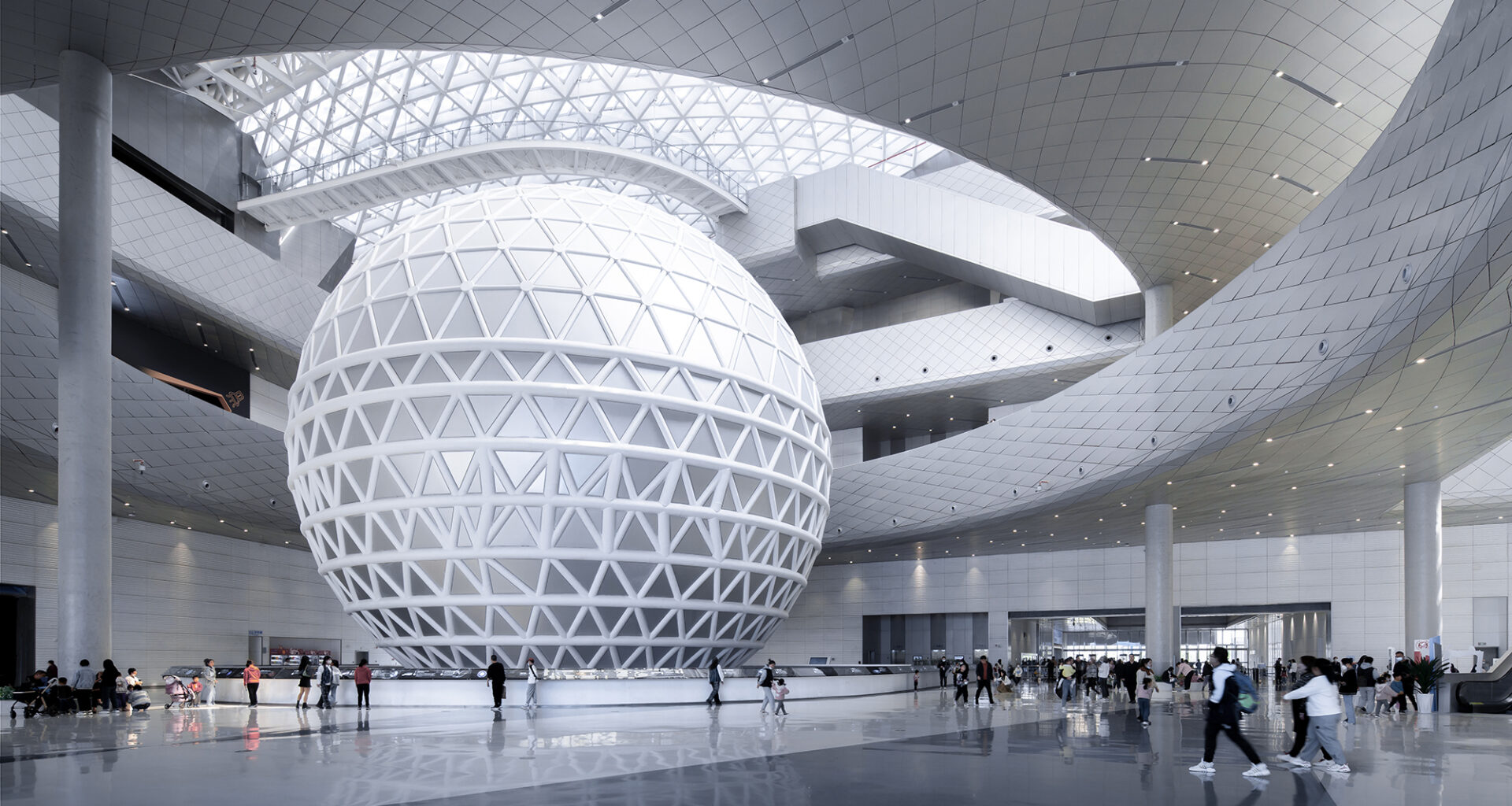
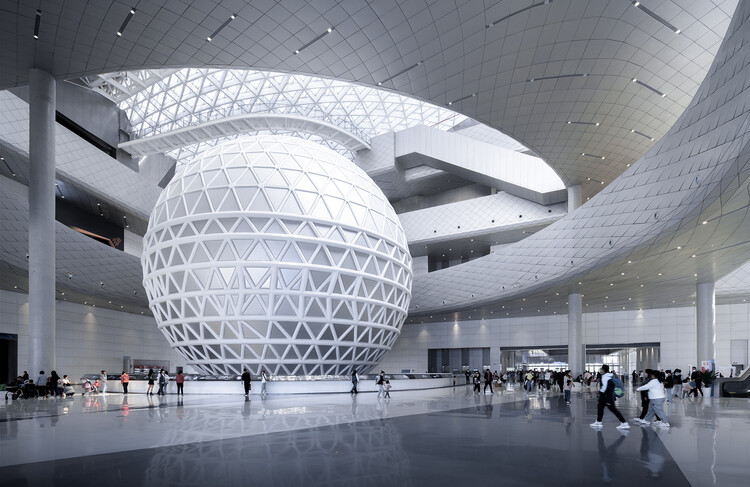
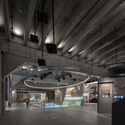
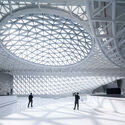
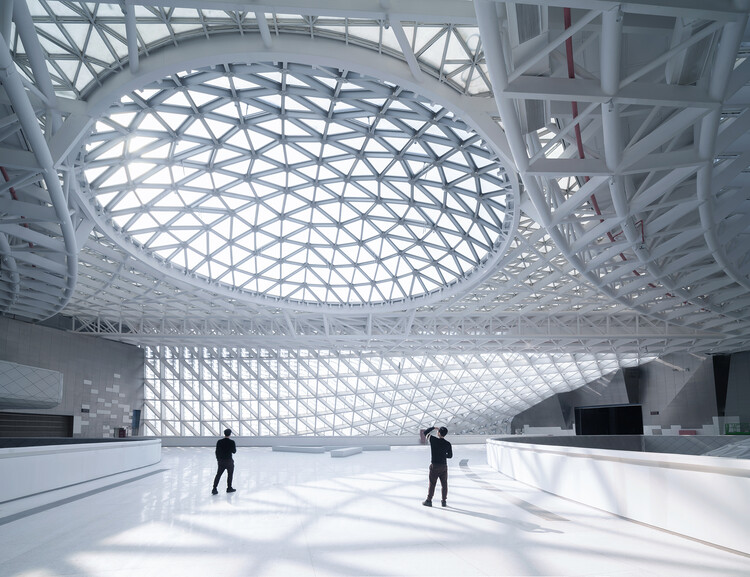
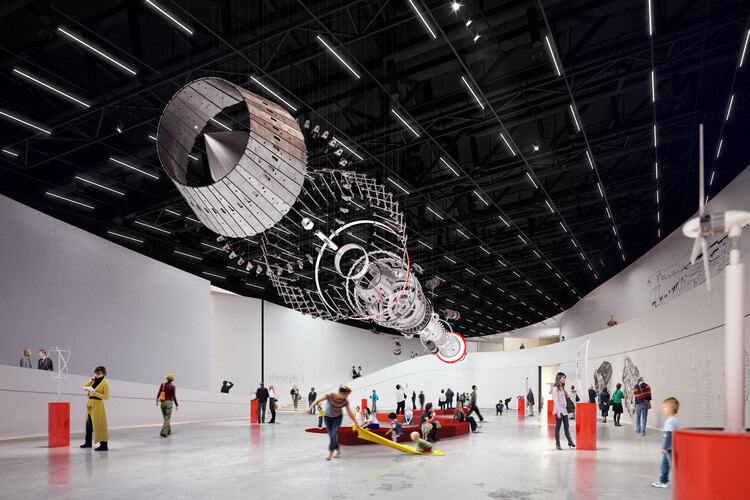
The New Science and Technology Museum of Henan Province, by TJAD Atelier L+, for example, was conceived as a prototype of “environmental intelligent construction”: its sinuous exterior, composed of thousands of pieces that form a fluid, porous skin, takes advantage of wind flows to achieve efficient environmental control with less material and energy consumption. This dynamism carries into the interior, where the program is developed around an atrium. Here, triple-story, large-span steel-truss skybridges and interwoven platforms create an orbital-like circulation system, centering the visitor’s experience around a focal spherical cinema.
 © Schran Image
As the architects describe it, the project is guided by the principle of “form follows flow.” The architecture utilizes parametric simulations and wind tunnel testing to refine the building’s envelope. This large-scale three-dimensional shaping – complemented by a thermal chimney and adjustable aluminum panels – allows the atrium to facilitate natural airflow, turning the building’s “breathing” into a rhythmic architectural expression.
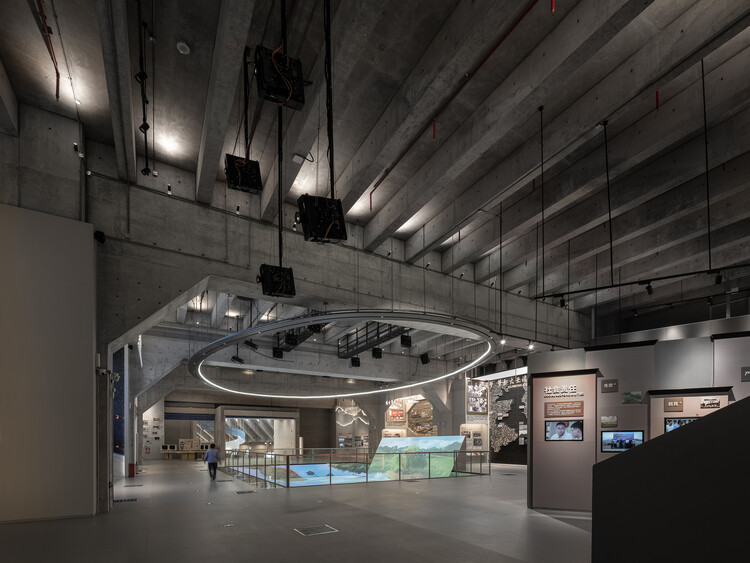
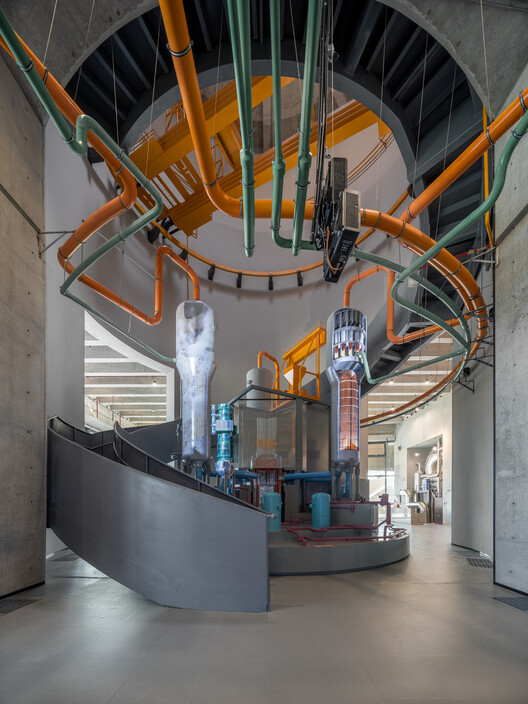
While the previous example organizes its program around a vertical void, the Daya Bay Nuclear Power Science and Technology Museum, by E+UV and Huayi Design, adopts a linear, sinuous logic dictated by its rugged topography. The museum occupies a scar in the land – a cavity left by the quarrying required to build the adjacent Daya Bay Nuclear Power Plant. The architects associate the building’s structure with the shape of a dragon, winding through a program that includes a sunken courtyard, a sea-viewing platform, and specialized halls for reactor and turbine models. Within the main exhibition space, dense, keel-like ribbed beams facilitate a dramatic, column-free hall, offering visitors a fluid and uninterrupted perspective of the technical exhibits, while the structure’s oversized concrete frame emphasizes a raw, industrial aesthetic.
 © Chao Zhang
 © Chao Zhang
This formal expression, however, is only one side of many contemporary technology museums. The internal space of these institutions is also defined by how they curate the content. While some institutions remain anchored by permanent archives that construct a linear history of progress, others have become spaces of constant flux, hosting temporary, thematic exhibitions that allow the museum to remain alive and constantly renewing itself, often incorporating a multidisciplinary approach.
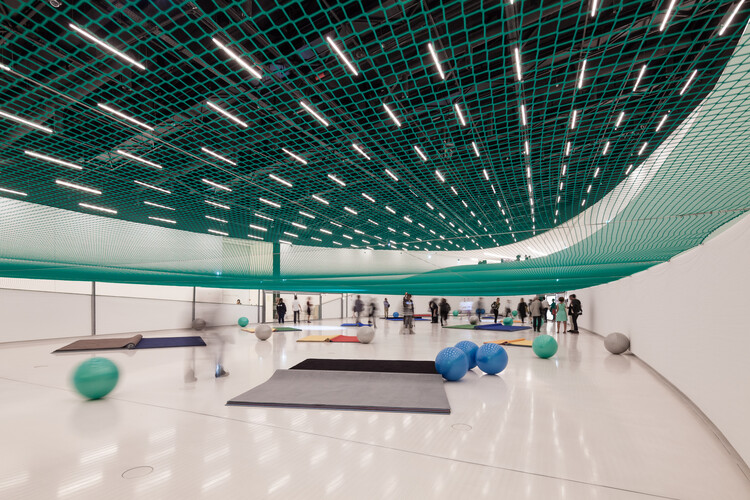
The Museum of Art, Architecture and Technology (MAAT) in Lisbon serves as a primary example of this multifaceted mediation. The site operates as a physical dialogue between two distinct eras and programmatic logics: a repurposed 1908 power station and a contemporary, undulating volume designed by AL_A that emerges as a discreet wave on the banks of the Tagus River. While the former building hosts a permanent science and electricity exhibition, the new gallery presents temporary exhibitions that explore the convergence of contemporary art, architecture, and technology. These spaces are intentionally designed as extensions of the public realm, featuring flowing, interconnected zones that prioritize experience and interaction over mere observation.
 © Francisco Nogueira
 Courtesy of AL_A
The technology museum of the 21st century functions as a vital mediator between the human, ecological, and technological spheres. By embracing fluid and innovative design strategies, the architecture becomes an intrinsic component of the museum’s conceptual mission. It operates as a node within a network – a space where the “work” on display is rarely a singular, tangible object, but rather a fragment of a larger system that engages the visitor, the institution, and the built environment in a continuous dialogue.
These institutions also serve as essential educational hubs that render complex scientific information accessible to the public. They translate the abstract networks of the Technosphere into legible, engaging spatial narratives. This architectural approach ensures that the built environment functions as both a mediator and an active participant in fostering collective innovation and planetary resilience.
This article is part of the ArchDaily Topic: The Technosphere: Architecture at the Intersection of Technology, Ecology, and Planetary Systems. Every month we explore a topic in-depth through articles, interviews, news, and architecture projects. We invite you to learn more about our ArchDaily Topics. And, as always, at ArchDaily we welcome the contributions of our readers; if you want to submit an article or project, contact us.