
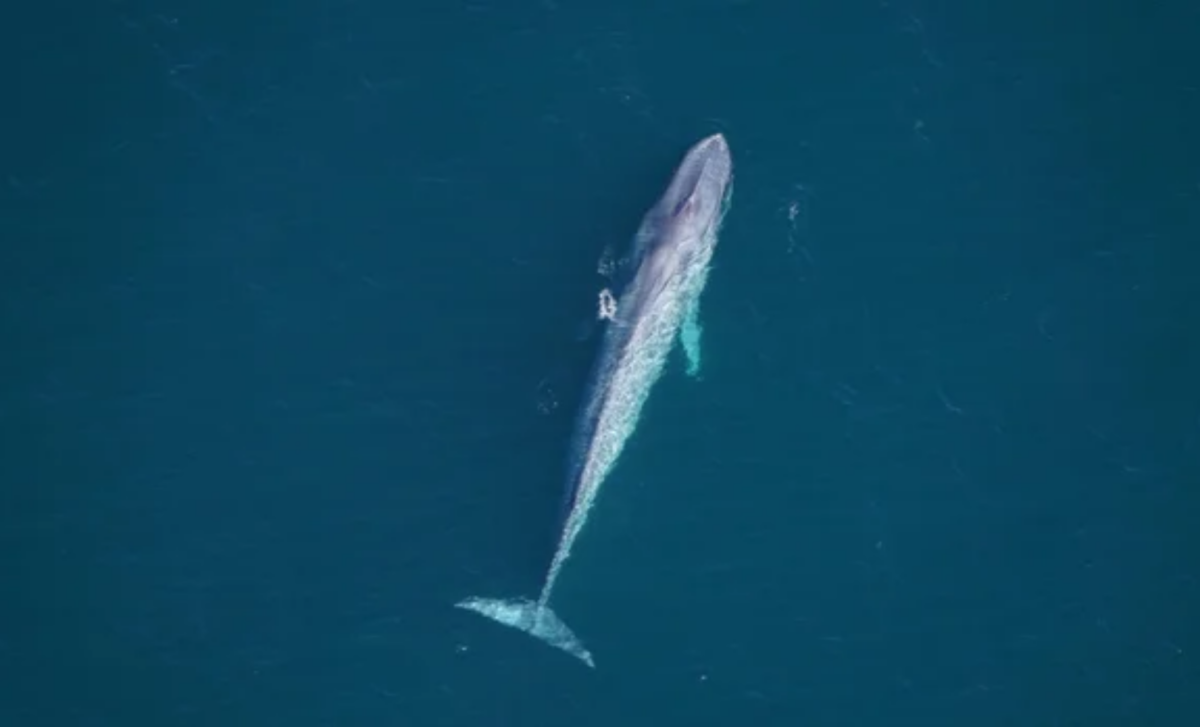
Blue whales, the largest creatures to ever roam the Earth, have been seen near the Massachusetts coast in an event that scientists are calling “unusual.” These endangered marine giants are typically found in colder, nutrient-rich waters, far to the north near Canada. However, recent sightings reported by the New England Aquarium suggest that these majestic whales have ventured much further south, stirring curiosity and concern among marine researchers.
A Rare Phenomenon: Blue Whales Spotted in Unlikely Waters
In an aerial survey conducted by the New England Aquarium, scientists spotted two blue whales just 15 miles south of Martha’s Vineyard, a region not typically known for blue whale activity, as highlighted by CBS News. Even more surprising, the day before, a different blue whale was seen 170 miles away near Lydonia Canyon, southeast of Nantucket. The research team had never recorded blue whales in these southern waters before, making these sightings highly significant. Katherine McKenna, an aquarium scientist who participated in both survey flights, remarked,
“Seeing blue whales outside of their Canadian feeding grounds is rare in the Atlantic. Finding them in two different areas of the ocean just 24 hours apart was a first for us.”
This sighting marks an extraordinary moment for researchers, as it suggests that blue whales may be adapting their migratory patterns in response to changing environmental conditions. While these sightings are intriguing, they are also raising alarms about the health of the whales and their habitats, particularly in light of the environmental shifts driven by climate change.
Climate Change: The Potential Driver Behind Blue Whale Migration
Scientists are beginning to look at the possibility that climate change is affecting where blue whales can be found. The species primarily feeds on krill, a small shrimp-like creature, which typically thrives in cold waters. However, changing ocean temperatures and currents are likely to be affecting the distribution of krill, forcing blue whales to alter their migration and feeding habits. Orla O’Brien, another aquarium scientist involved in the survey, explained,
“I think it’s likely that climate change plays a role in the distribution of these animals meaning where we see them or where they are going.”
This change could have far-reaching consequences for marine life, as blue whales and other species rely on stable ecosystems to survive.
The whales’ sudden presence in southern New England could indicate a search for more favorable feeding grounds. O’Brien further speculated,
“It kind of makes us think that relatively speaking to other places around, that this might be an area where blue whales are finding food right now would be my best guess.”
With krill potentially migrating into warmer waters, blue whales may be following the food supply to sustain their massive size, which requires vast amounts of food to survive.
Southern New England: A New Feeding Ground?
The discovery that blue whales may be finding food in southern New England is both fascinating and concerning. This region, traditionally not a primary feeding area for blue whales, may be offering more favorable conditions as ocean temperatures rise and currents shift. Researchers are eager to determine whether these sightings represent a temporary anomaly or a sign of a more permanent shift in whale migration patterns. These observations could be indicative of broader ecological changes taking place in the Atlantic Ocean, as marine species adapt to new environmental realities.
As scientists continue to monitor the situation, the possibility that southern New England could become a regular feeding ground for blue whales is not out of the question. However, this raises concerns about how these changes might affect other species and the overall health of the ecosystem. The long-term impact on the blue whale population, as well as the marine food web, remains uncertain but demands close attention from both scientists and policymakers.
The Role of Conservation in Protecting Blue Whales
With blue whales classified as endangered, their numbers have dwindled to only an estimated 400 to 600 individuals in the western North Atlantic. The rarity of these majestic animals highlights the importance of conservation efforts aimed at protecting their habitats and ensuring their survival. The New England Aquarium, alongside other environmental organizations, has been actively involved in researching and advocating for marine conservation policies that can help protect blue whales from the many threats they face, including habitat destruction, commercial fishing, and the effects of climate change.
However, recent changes in U.S. policy have raised concerns about the future of marine conservation. The Trump administration rolled back several Obama-era protections on commercial fishing, which some researchers believe could negatively affect blue whales and other endangered species. In particular, removing restrictions on fishing could increase the risks posed by overfishing, further threatening the already fragile ecosystems that blue whales depend on.