

The other day I was playing snooker with my son, who’s 15. We’ve got a small table in our front room and I missed a shot. I was tired and said something self-critical like, “I can’t believe you missed that!” It was pretty neutral compared with the kind of thing I used to tell myself. As a child and younger man, I made winning my identity. My son said, “Dad, don’t talk to yourself like that. It’s OK. We all miss sometimes.”
That attitude made me very happy. I would say becoming a parent has been the biggest motivator for me to sort myself out and to work on my happiness. As a doctor, writer and podcaster, I’ve been talking to patients and the public for years about how much our lifestyle affects our wellbeing. I used to think that all you needed to do was give people the right advice and they’d get healthier — but the knowledge isn’t enough for most people. You need happiness to apply it, and the same goes for parents: you can know all the “right” things to do for you and your children — but happiness needs to be at the foundation.
Here are ten ways to flex your happiness muscle.
Take a daily holiday
Research shows that happy people are healthier. In one experiment, a group of people were taken into a lab and exposed to the common cold virus. The people who were happier were three times less likely to become ill compared with those who were unhappy.
But what is happiness? It’s quite a vague idea. Am I going to be happy when my boss is nice to me, when all my emails are answered, when the weather is good? One thing I recommend is taking a daily holiday. You know that feeling when you fly and get a 30,000ft bird’s-eye view of your life and wonder what you were worrying about? For me, that’s writing in my journal before anyone else is up — but it could be five minutes having a cup of coffee in silence, or a ten-minute walk around the block. I’m a better parent when I’ve had that time to myself.
In my journal, I answer three questions: what one thing do I deeply appreciate about my life; what is the most important thing I have to do today; and what quality do I want to showcase to the world today? Yesterday the most important thing was making sure that my laptop was shut when the kids (I also have a 13-year-old daughter) got home so that I could really listen. It forces you to be more intentional about your life and not just repeat the day before.
 What will your three deathbed regrets be? Act on them now
It sounds gloomy but can be hugely positive. Write down the three things you will wish you had done. Then ask, what are three weekly happiness habits that could leave me with fewer regrets? I’ve got mine stuck to the fridge. One, five meals a week with my wife and children when I’m not distracted by work. Two, have I had time to play my guitar or go for a long walk in nature? Three, have I released an episode of my podcast?
Even if I don’t get through my to-do lists, if I do those three things each week I know I will be happy when I die. It’s a very simple exercise, but thousands of people have told me it changed their lives.
Show your children that love is not dependent on outward success
My father worked very hard to become a consultant at Manchester Royal Infirmary, but he was not happy. Like a lot of immigrants (he travelled to Britain from India in 1962), he and my mother traded in the raw ingredients of happiness for those of success. I grew up thinking that getting a great job mattered above all else, and that I was only loved if I came top of the class. I’m not blaming my parents: in the 1960s and 1970s, they experienced a lot of discrimination and felt their children would avoid this if they were straight-A students and became doctors, lawyers or engineers.
But I think you can inspire your children to work hard, get good grades within their capability and learn new sports without it being conditional. If I really think my kids can work harder, I’ll say, “You know I love you, irrespective of whether you get an E or an A. But I want you to reach your full potential, because when you’re an adult you won’t have me telling you what to do.”
Keep screens out of bedrooms
I’ve been heavily involved with the campaign to raise awareness of the dangers of excess screen time, and support the ban of social media for under-16s. I personally think it should be for under-18s, but under-16s would be a great start.
As a parent of teenagers, I fully understand the challenges. The rule in our house is no tech at any mealtime, barring a medical emergency. The children are not allowed screens in their bedrooms — and parents should try to avoid them too. We know that a lot of the problems kids fall into happen late at night when they are tired and their willpower is gone, just like adults. That’s when people will contact them or when they end up seeing pornography. That last hour before bed is key.
Define the end of your working day — and get a landline
I identify three ingredients to happiness — contentment, alignment and control — and control is arguably the most important. The boundaries between your work and home life have been eroded by technology because you can always get another email, send one more WhatsApp.
One thing I’ve done is keep my landline, which allows me to turn my smartphone off. Only six people have that number, so if it rings it’s important.
Introduce a weekly meal plan and buy back time
Modern life is full of time-consuming choices, from which TV show to watch to a takeaway that everyone can agree on: you save a lot of time by eliminating those choices. A meal plan is a simple way of reducing the stress of having to decide what to cook every day. You have a road map for Monday to Sunday, or even for a fortnight, and it just repeats. A regular supermarket delivery can cut down on multiple food shops. Every time you have to make a decision, you’re using up your limited time and cognitive reserves, which means you are less available for your children — and less happy.
Be present
As well as the landline and my 7pm work curfew, I step outside if I have a work call. The No 1 thing I’ve learnt as a parent is that your children will do what they see you do, not what you tell them to. You can’t tell them their screen time’s up while you’re scrolling.
In my book I talk about research that shows we smile 30 per cent less when our phones are around — even if they’re just on the table. The most important thing about being a parent is being present.
Half an hour of really intentional time is better than a whole day distracted by the phone. It’s hard to say it, but a lot of children are growing up with the idea that their parents find what’s on the phone more interesting than being with their child.
Apologise when you get it wrong
Apologising to your children when you make a mistake is one of the most powerful things you can do, instead of just feeling bad about snapping or losing your temper. It’s really good for your child to know that even Mum and Dad make mistakes: if our parents are perfect, that’s quite a high bar to live up to. I think I’m pretty good at sitting down and saying, “Hey, listen, I’m really sorry about the way I spoke to you before. I’d just rushed in from work. I was a bit worried about your grandma’s health, and I wish I hadn’t spoken to you like that. I’ll try not to next time.” It brings you closer.
Another tip when there’s conflict is asking children what they think, instead of it being a lecture. Do they agree or do they see it differently?
Take a beat before reacting to ‘bad behaviour’
All my work is about trying to get to the root cause of a problem. Are my children playing up, or do they feel I haven’t been present? Is there something else going on here? School can be hyper-stimulating and children have often spent all day trying to behave in front of teachers, friends or classmates they don’t like, perhaps. So in some ways it’s good if they play up at home, because it’s their safe space. Sometimes it’s actually the reason, because they know they can: “I’m safe here with my parents and at school I had to hold it all in.”
Ask yourself two questions every day: what went well and what can I do differently?
These questions are powerful because, in a very compassionate and non-judgmental way, they help you keep improving. Let’s say you had a bad day: you had a deadline and you got home late and frazzled. It’s easy to think that the whole day was a write-off. But you could also say that, “Despite finishing work late, I still summoned up the energy to cook myself a meal and not order a takeaway. That was a win.” It’s good to notice things like that.
And then, what can I do differently tomorrow? You might think, “Today was tougher than it needed to be because I stayed up until midnight watching Netflix, and I’ve had sugar and caffeine all day to get me through. Tonight, I’ll go to bed earlier.” The modern world is tough and stressful, so I love these little things that help you reflect.
As told to Melissa Denes
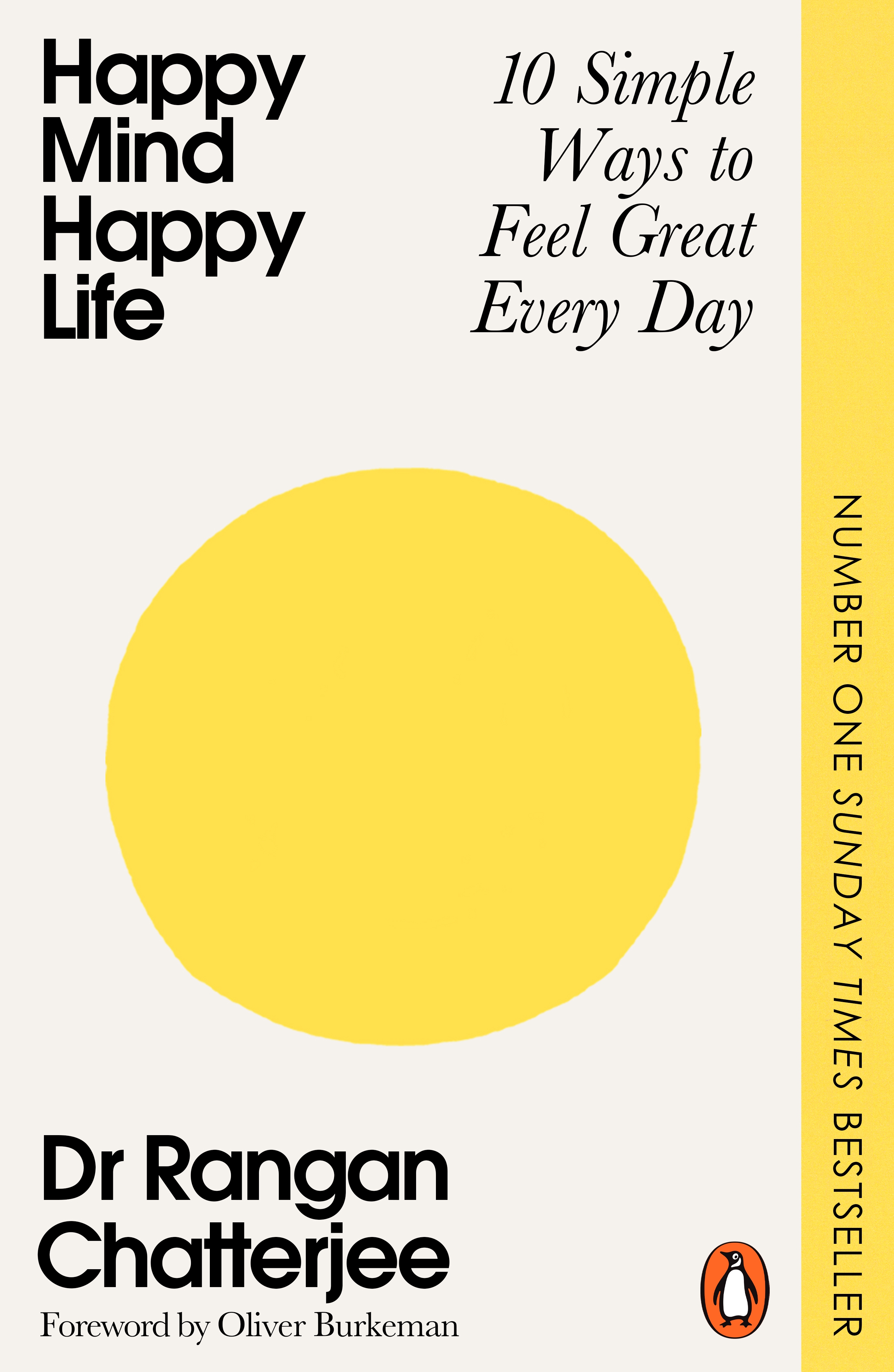
Happy Mind, Happy Life by Dr Rangan Chatterjee (Penguin £18.99). To order a copy go to timesbookshop.co.uk. Free UK standard P&P on orders over £25. Special discount available for Times+ members