
Campaigners are sounding the alarm over the environmental impact of salad bags that are marketed as ‘nature friendly’
A company that supplies salad to Waitrose and Ocado has been accused of polluting a Hampshire chalk stream with pesticides via a “temporary backdoor license” from the Environment Agency (EA).
One of Europe’s largest salad producers, Vitacress Salads Limited (Vitacress), grows watercress and operates a salad washing plant on the banks of the Bourne Rivulet, a tributary to the River Test in Hampshire.
Vitacress’s “Steve’s Leaves” salad bags, which are stocked by Ocado and Waitrose, are marketed as “nature-friendly” and “washed in spring water”, but environmental campaigners are raising the alarm about the impact of this process on the Bourne Rivulet.
New FeatureIn ShortQuick Stories. Same trusted journalism.
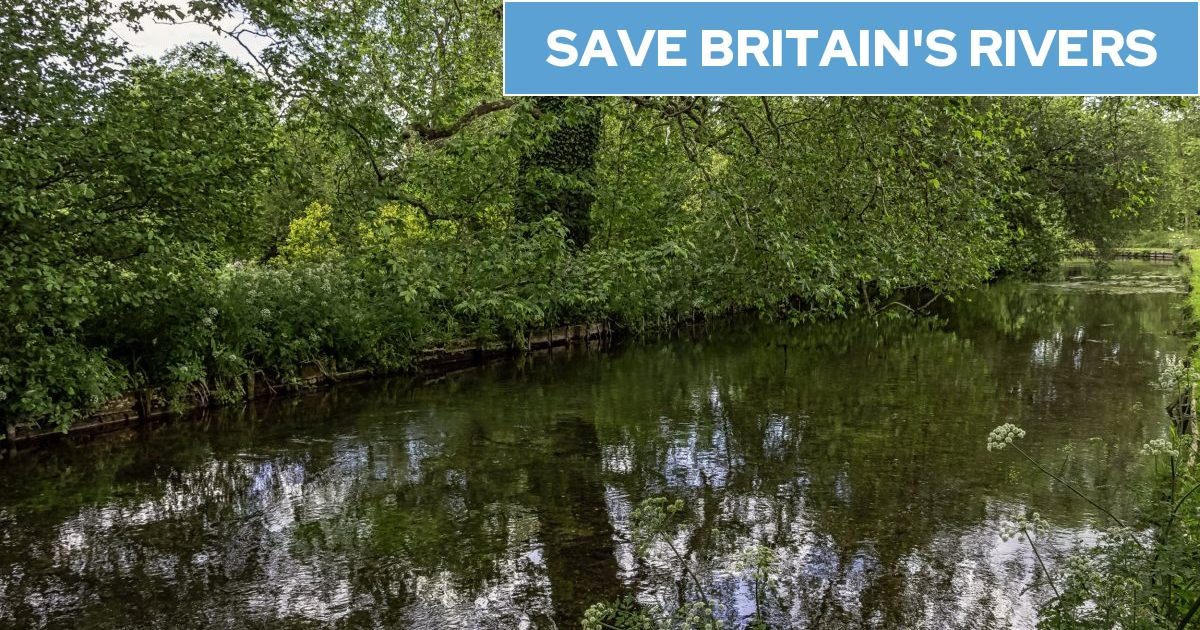
The Bourne Rivulet is one of England’s precious chalk streams, a rare type of river fed by underground aquifers that provide naturally filtered, mineral rich water.
The campaign group Wildfish has raised concerns over the impact Vitacress’s operations are having on the chalk stream as previous testing has shown dangerous levels of pesticides in the waterway.
Pesticides impact aquatic ecosystems by reducing oxygen levels, killing insects and reducing the availability of food for other aquatic species.
The River Test is famous for brown trout and Atlantic salmon, but the populations are in decline due to pressures on the river, including pollution and climate change.
In 2024, the River Test and River Itchen recorded its lowest returning salmon numbers for the past 35 years, with just 396 salmon recorded in the Test.
Vitacress has two permits from the EA that allow it to discharge wastewater from its facilities into the Bourne Rivulet, but these were granted over 30 years ago and do not take into consideration modern regulations around pesticide monitoring.
The multinational applied to update and consolidate its permits in early 2024, which triggered an investigation by the EA into the firm’s operations and pesticide use.
If granted, the permit will validate Vitacress’s existing operations and set out the parameters under which the firm is allowed to discharge pesticides into the river.
Wildfish has threatened legal action if a new permit is approved, arguing that Vitacress’s operations are causing “unacceptable harm to a highly sensitive chalk stream ecosystem”.
However, the EA is yet to make a decision on the new permit more than two years after the application was first submitted.
“During this lengthy investigation, Vitacress has effectively been given a temporary backdoor license to continue its operations and dump pesticide-ridden water back into the river without recourse,” said Dr Janina Gray, head of science and policy at Wildfish.
“This is not good enough – it’s time for the EA to finally step in and protect the river before it’s too late.”
Vitacress has previously trialled an ozone treatment plant which could remove traces of pesticides from the water before it is released back into the Bourne Rivulet, but a permanent solution has not been developed.
Wildfish argues that all salad washing and discharge activities should be halted until Vitacress has a fully approved water treatment system in place.
The EA previously investigated Vitacress in 2020 as part of a wider look into whether salad producers and vegetable producers were discharging dangerous levels of chemicals into rivers at 50 sites across England.
Chemical pollution is an issue impacting all of England’s waterways; not a single river is classified as being in “good” chemical health by regulators.
Pesticide run-off from farms is a major source of chemical pollution, as well as sewage effluent, which contains a variety of chemicals from products that we wash down our drain.
The EA has previously been criticised for the amount of time it takes to review and update the environmental permits that companies hold that allow them to discharge waste into waterways.
The i Paper previously revealed that hundreds of permits that allow water companies to dump sewage into Britain’s rivers have not been updated by government officials for decades with some remaining unchanged since the 50s.
A spokesperson for EA said: “All permits have clear and proportionate conditions to robustly protect the environment, and if conditions are breached, we won’t hesitate to take action.
Your next read

“We have not yet finalised our decision on these complex permit variation applications but will ensure the protection of the environment is at the centre of our decision making.”
A spokesperson for Waitrose said: “We expect our suppliers to operate with care for the environment and we are in touch with Vitacress to understand more about this.”
Vitacress did not respond to request for comment. In a recent post on its website, the firm said it conducted “rigorous” testing and was “fully compliant regarding pesticide usage on our farms and our suppliers’ farms in line with EU and UK pesticides regulations and our customers policies”.