
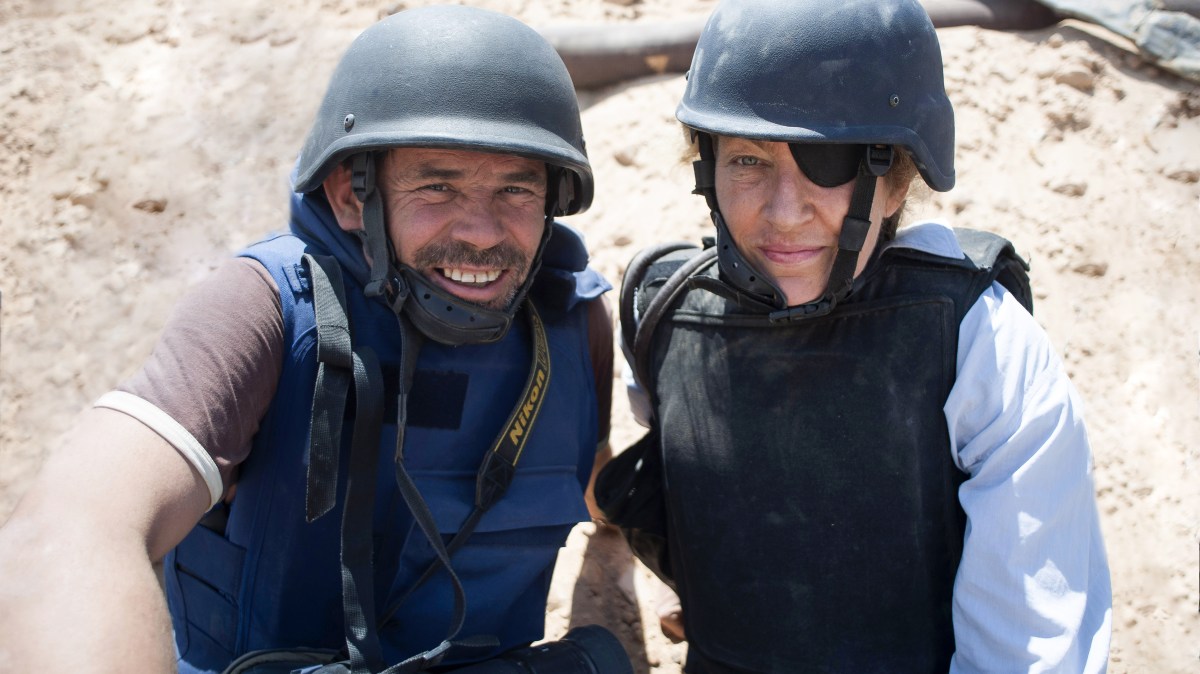
When mortars struck the rebel media centre in Baba Amr, where Paul Conroy and the Sunday Times reporter Marie Colvin were staying, he knew immediately that he had been badly injured in the abdomen and the thigh. “I thrust my hand into the fist-sized entry wound. To my horror it went straight through my leg and out the other side,” he wrote in his memoir, Under the Wire.
The keffiyeh scarf around his neck was not enough to staunch the bleeding but he found a yellow ethernet cable lying in the ruins, which he tied round his thigh as a tourniquet. With a presence of mind rooted in his indomitable character, and skills learnt as a gunner in the Royal Artillery, he had saved his own life.
He could not, however, save Marie, who was lying dead at the doorway, having been hit by another rocket as she tried to run into the street. This was February 2012, when revolution had morphed into war and Bashar al-Assad’s forces, which had targeted Marie, were now trying to find the surviving journalists.
It took more than a week for Paul to escape rebel-held Syria. The day after he got back to London, I visited him in hospital. His face brightened when he saw me and he beckoned me over to his bed. “Darlin’,” he said, as I bent over to kiss him, “She wouldn’t have felt a thing. It was instant.” He knew what had been on my mind without having to ask. From then on, we were the closest of friends.
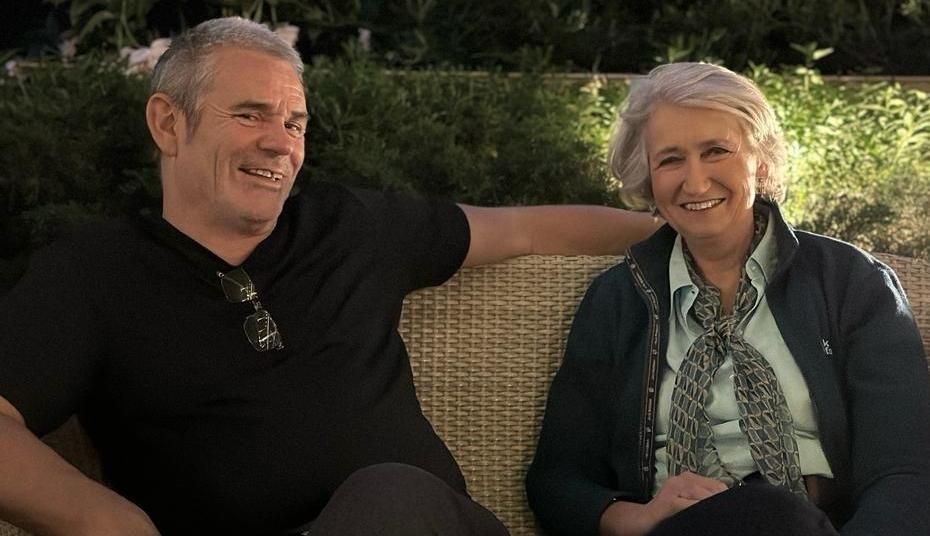
Conroy with Lindsey Hilsum
COURTESY OF LINDSEY HILSUM
I wrote Marie’s biography — she was a close friend of mine — and Paul wrote his book about their adventures together in Libya, Syria and beyond. Under the Wire was made into a film. We gave so many talks at book and film festivals that we would joke that we were like a clapped-out old band that had managed only one album and needed new material. But he was devoted to Marie’s memory, and to the people of Syria, whose suffering he vowed to highlight for the rest of his life.
• Read Paul Conroy’s account of Syria and the killing of Marie Colvin
By the time Assad was ousted in 2024, Paul was living in Kramatorsk in eastern Ukraine, another war zone where he pushed himself to the limits to tell the story of those suffering. It was one of his greatest regrets that he didn’t get back to Baba Amr to see the Syrian friends who had survived.
With his Scouse accent and wicked sense of humour, Paul was a natural raconteur. We were drawn together by the death of our mutual friend and spent time in places of acute suffering, but most of my memories are about how he made me laugh.
Some of his funniest stories were of his time in the Royal Artillery, which he joined as a teenager, having failed to think of anything else to do on leaving school. Soon after signing up he realised he had made a terrible mistake, and spent the next six years going awol in the hope that they would chuck him out.
It didn’t work like that, and he was frequently on a charge, once forced to plant thousands of daffodil bulbs in front of the colonel’s house as punishment. He took great delight in planting them upside down. Eventually he slipped some dope into his own locker, which he left unlocked, in the hope of being found out. He duly was. Instead of getting a dishonourable discharge he got several months in an army prison.
Partial hearing loss was an occupational hazard. Last year, when we were filming an artillery piece in eastern Ukraine, I noticed he wasn’t wearing ear defenders when it fired. “I never bother,” he said. “I’ve got Gunner Ear.” (Say it fast. A typical Conroy quip.)
After he was injured in Baba Amr, Paul refused to have his leg amputated, against the advice of several doctors who thought he would never walk properly again. He had a limp but could still, he insisted, run under fire. At one point he was on 13 kinds of painkiller. He thought the drugs were driving him mad and making his head fuzzy, which stopped him thinking clearly enough to write, so he decided to come off them.
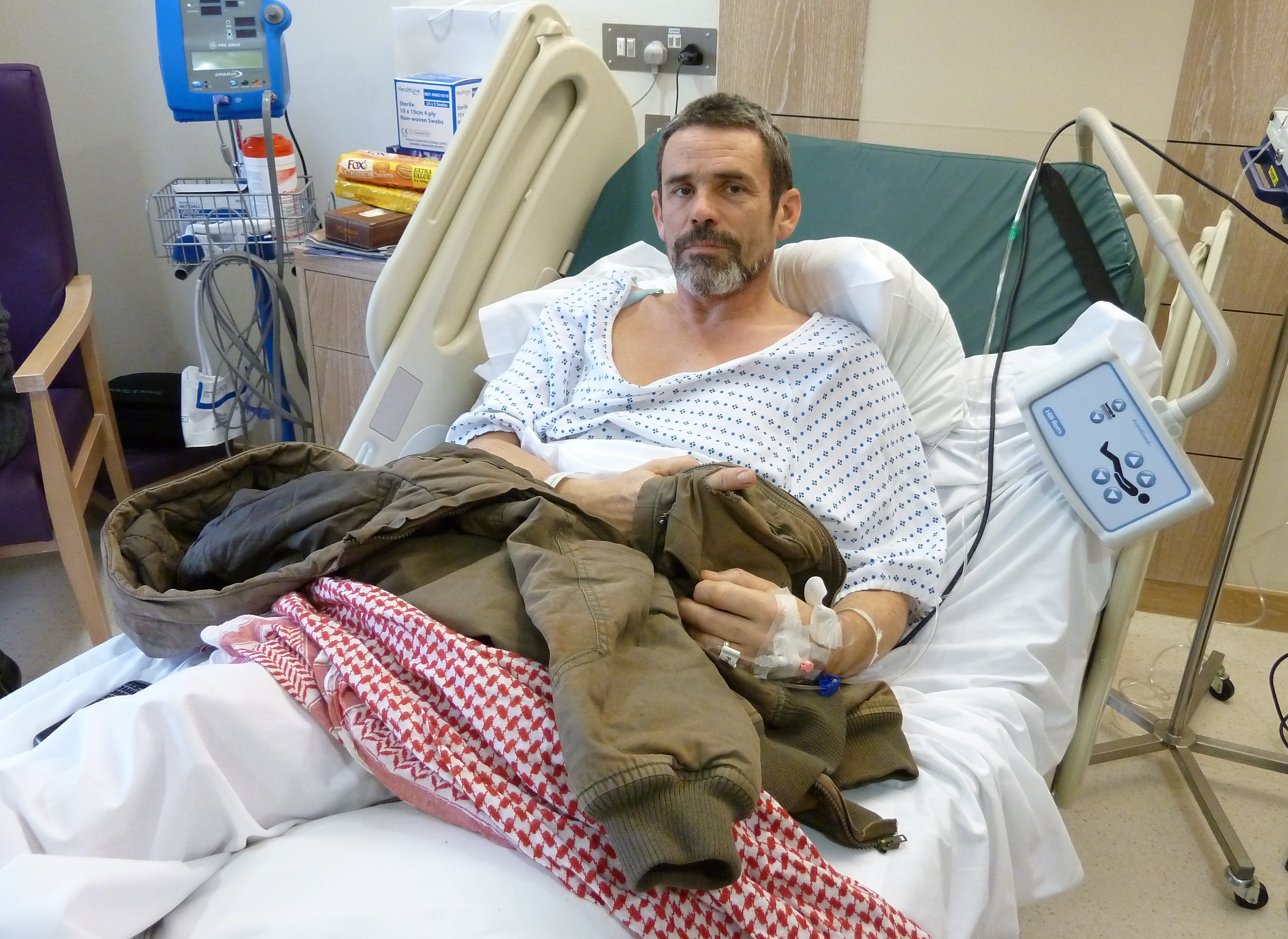
Conroy in hospital after the Baba Amr attack of 2012
RAY WELLS FOR THE SUNDAY TIMES
Doctors told him he would have to go through a process of withdrawal over several months. “F*** that,” he said. He holed himself up in a cottage in Devon and went cold turkey. A group of us took it in turns to talk to him over the phone to take his mind off the pain. My shift was midnight to 2am. We argued about which was the best Dylan album: Desire or Blood on the Tracks? (This was never resolved.)
He told me again the story of how he had lashed together inner tubes and planks and tried to cross the Tigris from Syria into Iraq during the war in 2003. We talked all weekend. He came off all the drugs but one. He could do anything he set his mind to.
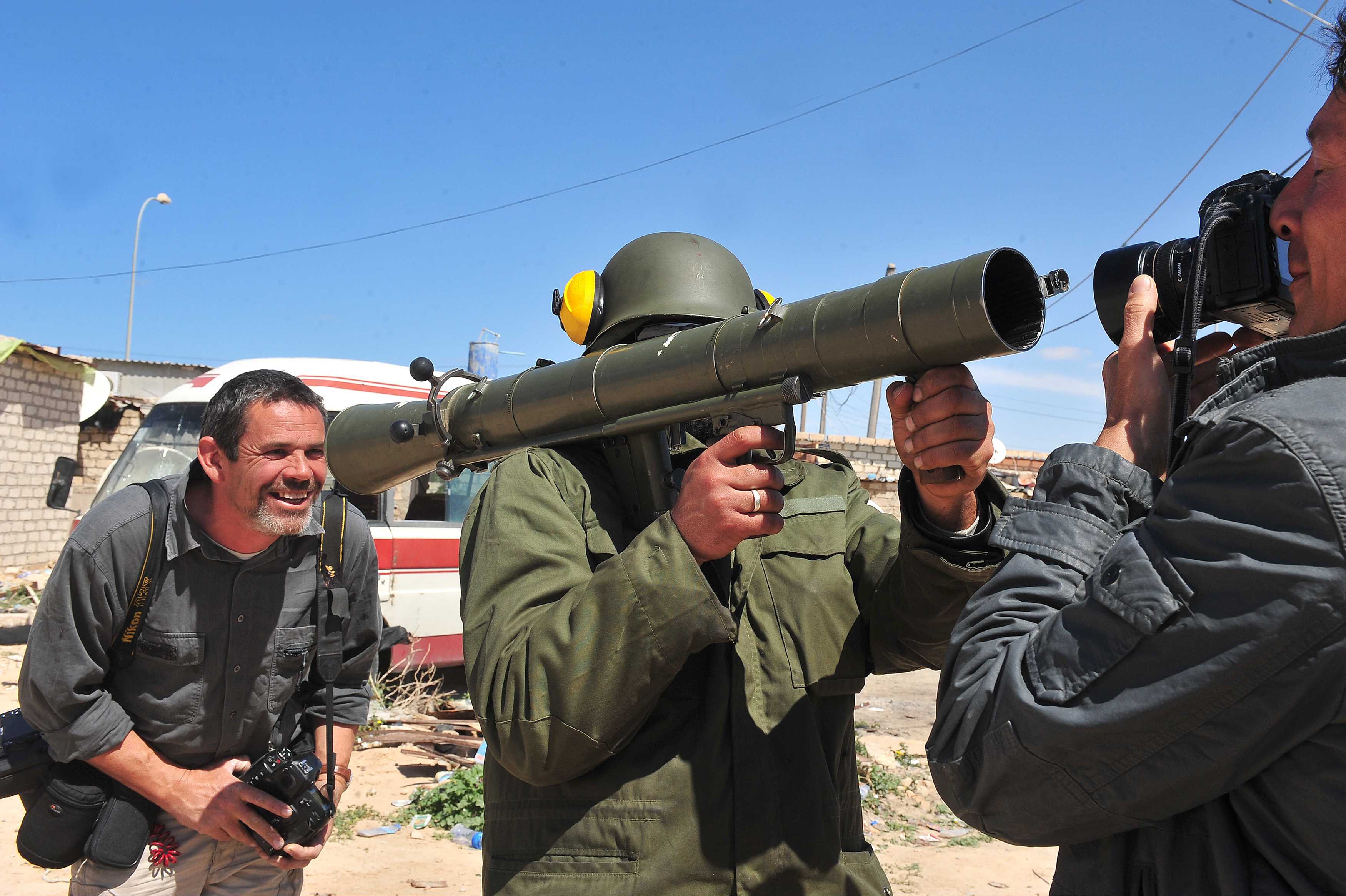
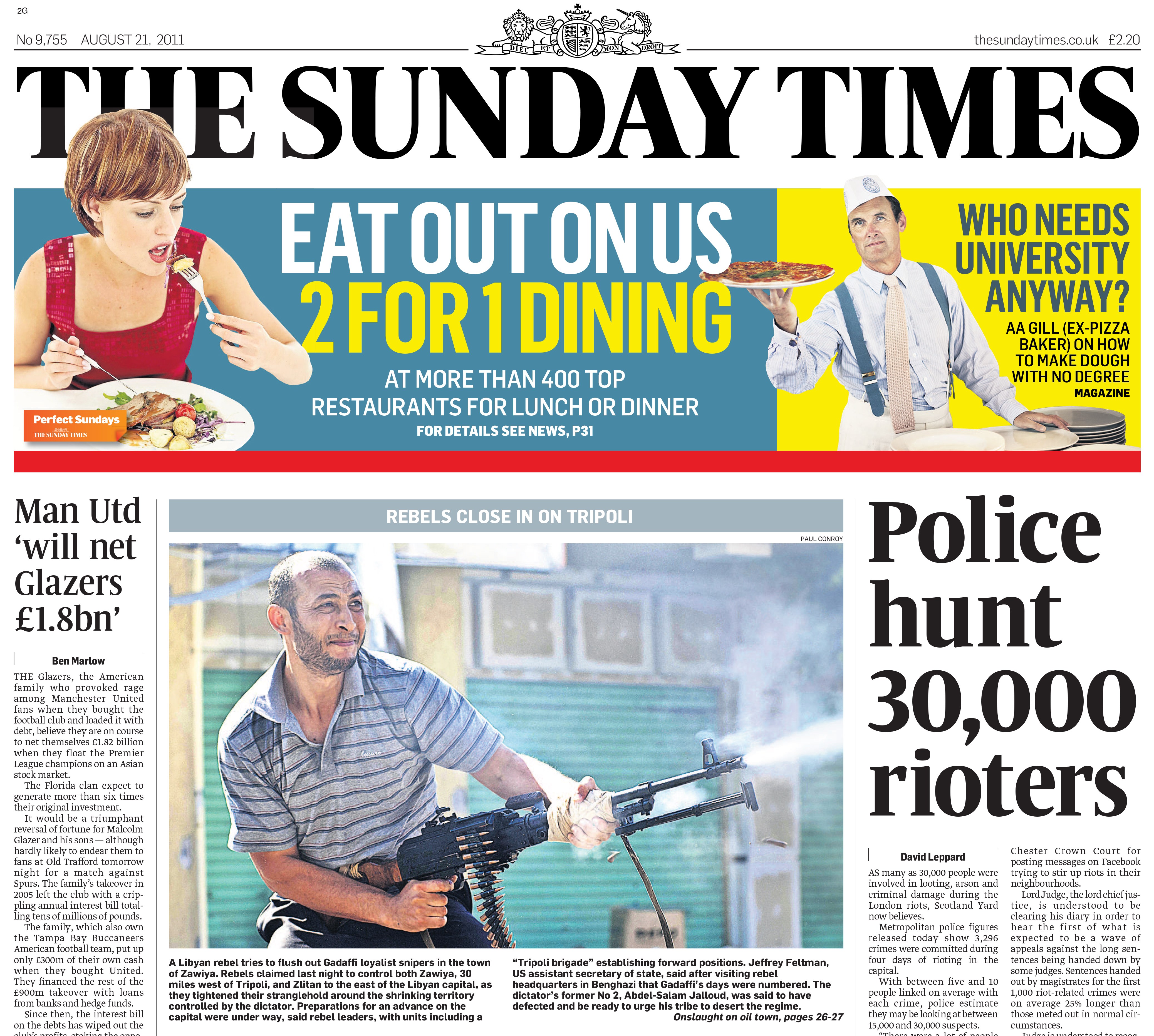
Conroy in Libya in 2011. Below, his work from Libya on the front page of The Sunday Times
SIPA/SHUTTERSTOCK
Paul moved to Ukraine after the 2022 invasion, at first training Ukrainian journalists in battlefield first aid and later reporting, taking photos and filming video. He spent a winter in Kherson, constantly under Russian shelling, and later moved to a Soviet-era apartment in Kramatorsk. His Kramatorsk Diaries, published on Substack, were testament to how humour can hide hardship.
But he got depressed and angry about the suffering he saw, some of which came out in the songs he wrote and recorded. He would look forward to taking a break at Christmas, which he would spend in Totnes with his wife, Kate, and their three sons, Max, Kim and Otto. The arrival of his grandson, Leo, gave him new joy.
Paul was a wanderer, an adventurer, the kind of person you want to be with in a sticky spot, because he would always make you laugh even at the worst of times. His death from a heart attack is hard to fathom, not least because he had survived so much. And because I can’t bear the idea that I will look at my phone in the morning and never again see a message about something ridiculous he had read, or how noisy the night of shelling in Kramatorsk had been, and then, “Darlin’, give me a bell won’t you?”
Lindsey Hilsum is international editor of Channel 4 News. She is the author of In Extremis; the Life of War Correspondent Marie Colvin and I Brought The War With Me; Stories and Poems from the Front Line.