
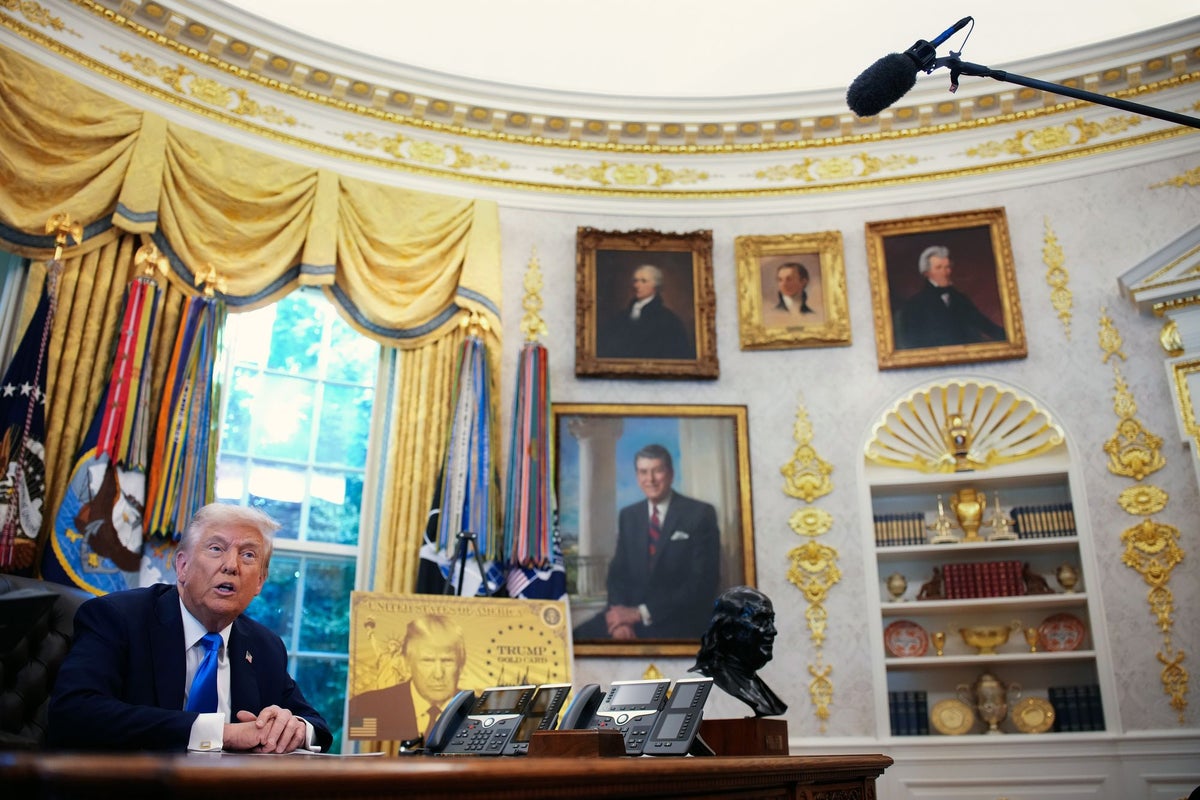
President Trump loves all things gold. The sign above the Oval Office (“The room where it happens”) is writ large in glittering letters. The White House is dominated by gilded medallions and gold curtains. Coffee tables are covered by gold drink coasters (stamped with Trump’s name, of course). Even the remote control has been gilded.
For Trump, gold means luxury, status and power. The irony of his assault on Iran and the subsequent chaos is that investing in the world’s most precious metal is now the one secure haven for people’s money. The price of gold is expected to reach an unprecedented $6,300 per ounce by the end of this year, according to JP Morgan analysts.
Gold thrives on political and economic turmoil and instability – tariffs, wars, unresolved elections, inflation and revolutions. “Real assets come to the fore in this kind of environment,” said analyst Ross Newman. “There has been a vapourising of trust. The rules are out the window. Precious metal is reflecting all of that.”
When inflation rises and paper currencies lose value, gold prices increase because it is priced independently of any currency. It is not dependent on a company’s performance. And unlike paper money, gold cannot be printed by governments. Its limited supply supports long-term value.
High gold prices are an unexpected boost for the UK economy. London remains the epicentre of the global over-the-counter gold market. More than 70 per cent of such gold trades take place in the UK, making it the single most important wholesale hub. Its dominance is reinforced by a largely invisible infrastructure in the form of a network of high-security underground vaults beneath the City of London. The Bank of England alone stores an estimated 400,000 gold bars in nine subterranean chambers on behalf of 30 nations in a vault the size of 10 football pitches. Surrounding it, clearing banks and armoured security protect these vaults while an electronic clearing system settles billions in transactions, processing more than 20 million ounces of gold every day, equivalent to tens of billions of pounds in turnover.
Paradoxically, the same forces that are driving companies away from London’s stock market – volatility and uncertainty – are strengthening gold’s appeal. In turbulent times, capital flows away from equities and back toward safe-haven assets. What is less well known is the key role gold plays in national security, which is increasingly shaped by control over critical supply chains. Analysts say this valuable metal is used by terrorists for their operations.
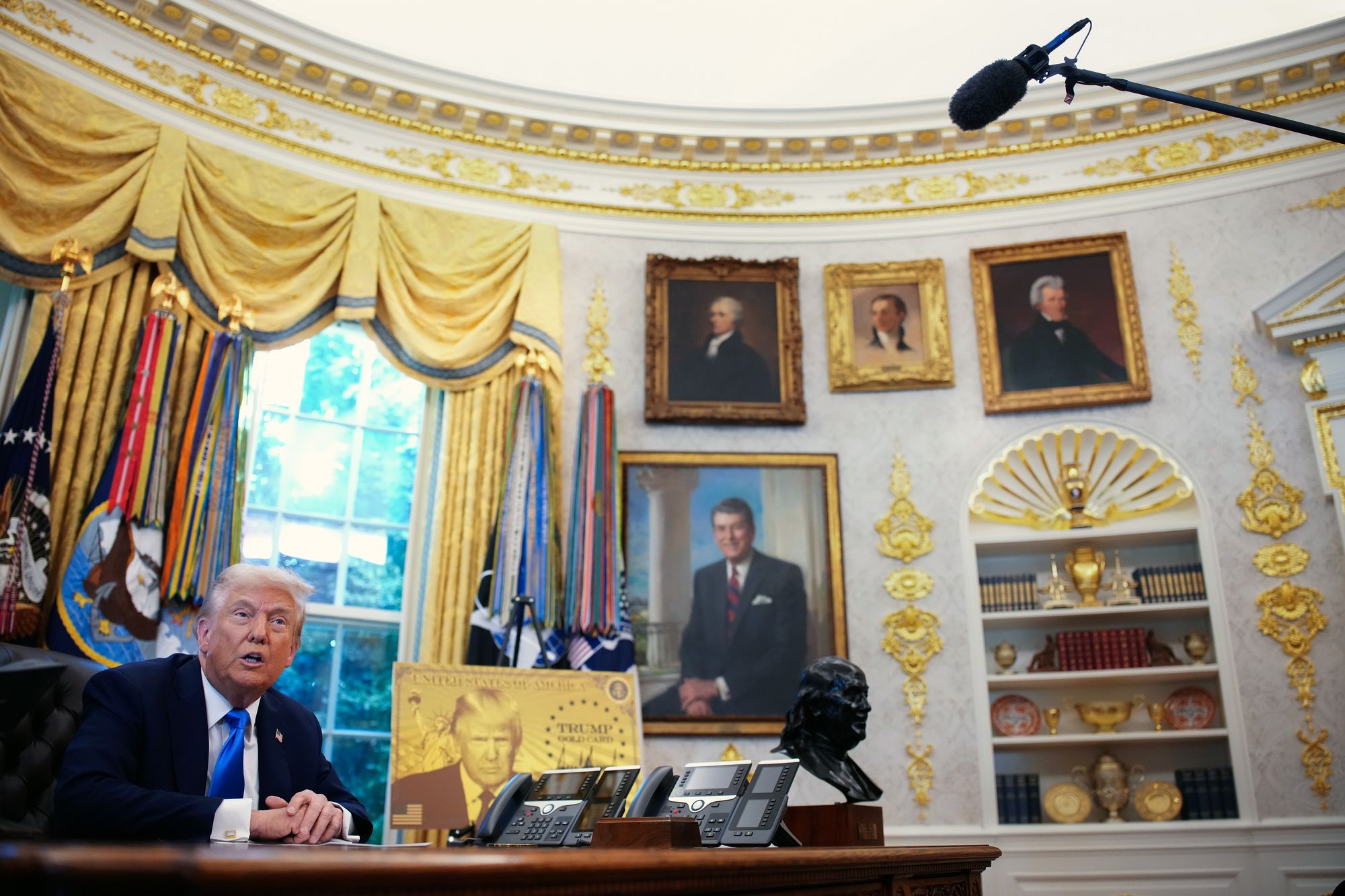 ‘For Trump, gold means luxury, status and power. The irony of his assault on Iran and the subsequent chaos is that investing in the world’s most precious metal is now the one secure haven for people’s money’ (Getty)
“Gold is increasingly being used by terrorists to fund attacks by global organised crime networks to launder the profits from drug trafficking, and by the Russian mercenary group Wagner in Sudan, Mali and the Central African Republic to evade financial sanctions and help fund the war effort in Ukraine”, says Alexander Yearsley, managing director of Martello Risk Ltd, which investigates conflict minerals and supply chains. “Gold is also vital for the Iranian regime to launder illicit oil profits and evade US economic sanctions. The West has woken up to this strategic threat but it may be too late to be effective.”
And so gold is political. It plays an essential role in state governance and underpins monetary stability in times of crisis. Since the 2008 financial crisis, central banks have steadily increased their gold holdings as a buffer against systemic shocks, such as the 9/11 terrorist attacks and Covid. This has culminated in gold replacing the US dollar as the largest world reserve currency. While some analysts focus on cryptocurrencies, demand and prices for gold have reached record levels, while digital assets exhibit major volatility.
Again, the UK’s role here is pivotal. Sanctions, anti–money laundering, origin verification, and environmental governance are now security considerations as much as regulatory ones. And as gold is influenced by political factors, leading refineries act as strategic instruments of national power. In the Middle East, Dubai has built the region’s largest physical gold trading hub. But as the war intensifies, the gold trade in the Gulf faces disruption that no regulation can mitigate – closed airspace, frozen shipping lines and soaring insurance premiums.
Turkey, by contrast, is the region’s only country which possesses military bases and a Nato infrastructure, combined with a sophisticated gold exchange through Borsa Istanbul, which makes it a strategic alternative.
Turkey’s leading gold refinery, Ahlatci Metal Refinery, presents a notable example. Designed for low emissions, it reflects how refining is evolving alongside regulatory and geopolitical priorities. “Gold refining today is no longer just about producing bullion but protecting the integrity of the financial system,” the company’s vice-chairman, Ahmet Ahlatci, told The Independent. “In a world of sanctions, conflict, and illicit finance, refineries must operate as compliance institutions as much as industrial ones. That is why we have built systems that meet – and increasingly anticipate – the standards set in London.”
In an era where supply chains and financial plumbing matter as much as military assets, gold refineries are no longer mere industrial plants. They are becoming part of the national security architecture: controlling value, enforcing standards, and anchoring sovereignty in an increasingly fragmented and volatile global economy. Gold does not rot, rust or disappear. It is a safe bet in an unsafe world.