
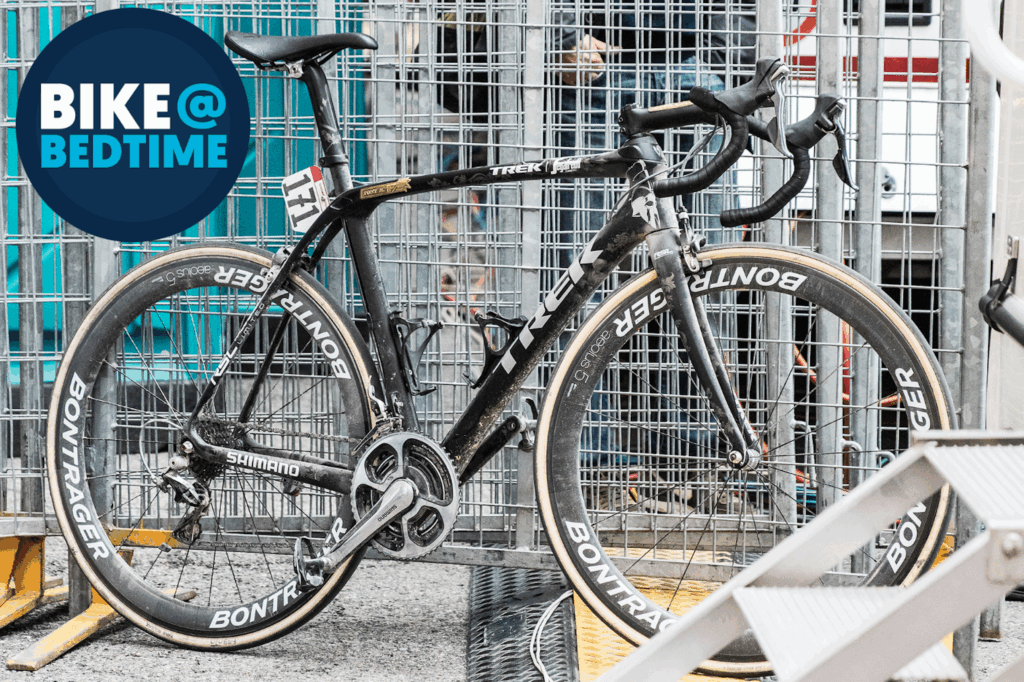
With Strade Bianche now behind us for another year, let’s take a look back at the second-generation Trek Domane that Fabian Cancellara piloted to his third – and final – Strade Bianche victory in 2016. The Swiss legend’s ride was unreleased at the time of the race, and featured Trek’s updated IsoSpeed Decoupler system, rim brakes and mechanical shifting.
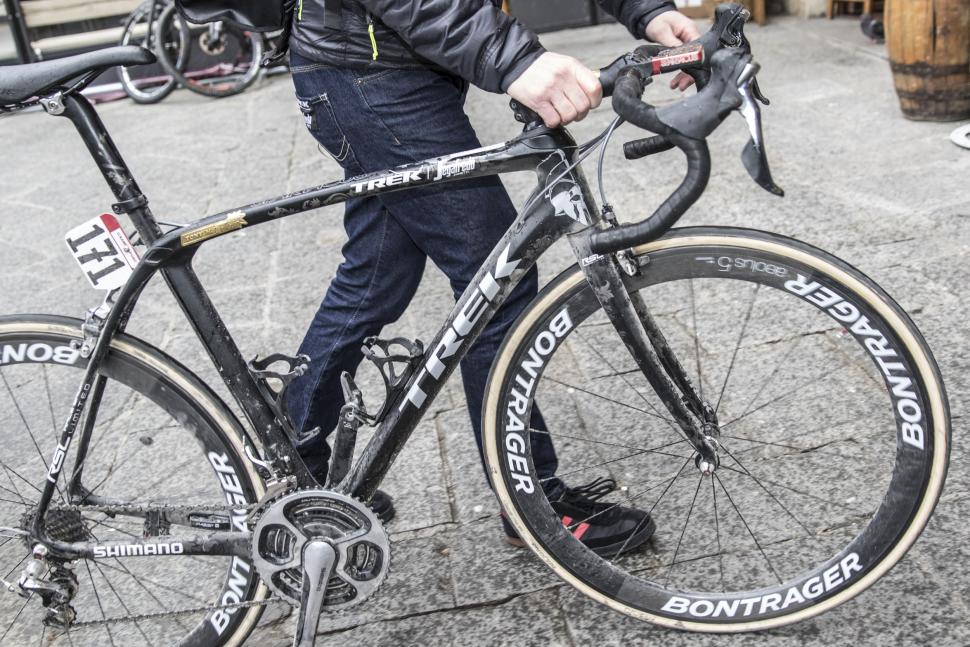 Trek Domane 2016 – drive side- ©Paolo Ciaberta (Image Credit: Paolo Ciaberta)
The Trek Domane made its debut in the spring of 2012, developed in collaboration with Swiss rider Fabian Cancellara to tackle the cobbled roads of the Spring Classics. Designed as an endurance bike, the Domane featured (and still features) space for wider tyres, a more relaxed geometry than a standard race bike, and enhanced stability.
One of its standout innovations is the IsoSpeed system, a “road-smoothing technology” that has been a defining feature of the Domane since its inception.
Although IsoSpeed has developed over the years, Trek says that it has always challenged other vibration-damping tech by maintaining the same diamond-shaped frame as traditional bikes but decoupling the seat tube from the rest of the frame.
“This allows the bike to respond and manoeuvre just like a standard race bike, while the decoupled seat tube enables enough vertical flex to elevate comfort for every rider,” Trek explains.
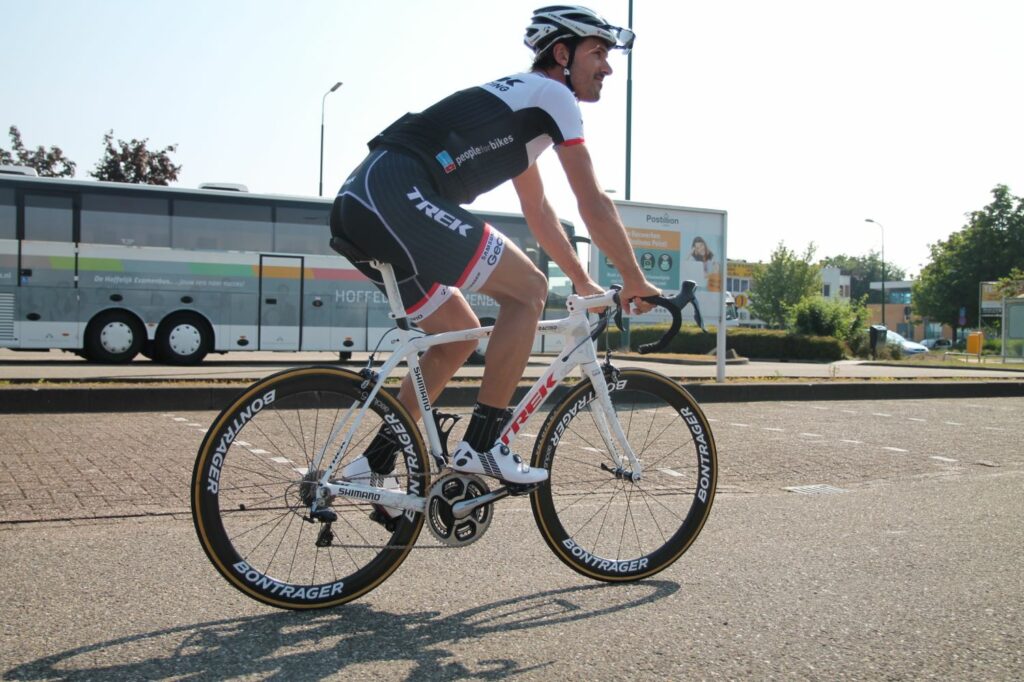 Fabian Cancellara riding a Trek Domane
Fabian Cancellara of Team Trek–Segafredo nearly always rode the Domane, whether he was on asphalt roads or the rougher stuff associated with Strade Bianche and the cobbled classics, while other riders on the team spent most of their time on Trek’s Madone or Emonda.
He also had electronic shifting at his disposal, but chose to stick with mechanical (cable-operated) shifting on his drop bar bikes regardless of the road surface. By 2016, he was just about the only rider at the very top level of professional cycling still using mechanical shifting, apparently because he preferred the ‘feel’ of mechanical. When you’re Spartacus – among the best one-day/classics/time trial riders ever – you don’t really have to justify yourself, though.
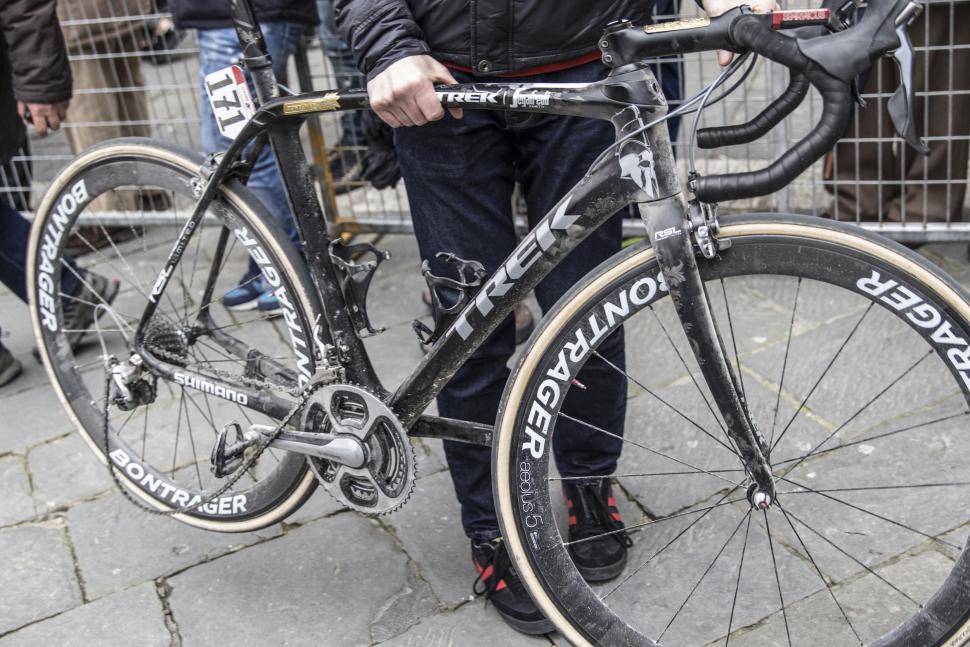 Trek Domane 2016 – Fabian Cancellara Strade Bianche winning bike – ©Paolo Ciaberta (Image Credit: Paolo Ciaberta)
As mentioned above, stock Domane bikes come with what Trek calls its “endurance geometry”, which is designed to be performance-focused and less aggressive and more stable than the brand’s race-oriented geometry.
However, the geometry of Cancellara’s 2016 Domane wasn’t the same as you or I could get if we walked into a Trek dealer. His bike was built with a long reach (the horizontal distance from the centre of the bottom bracket to the top of the head tube) and a low stack height (the vertical distance between those two points) courtesy of a lengthy top tube and a short head tube. The result is a lower and more stretched riding position, which was supposedly more efficient.
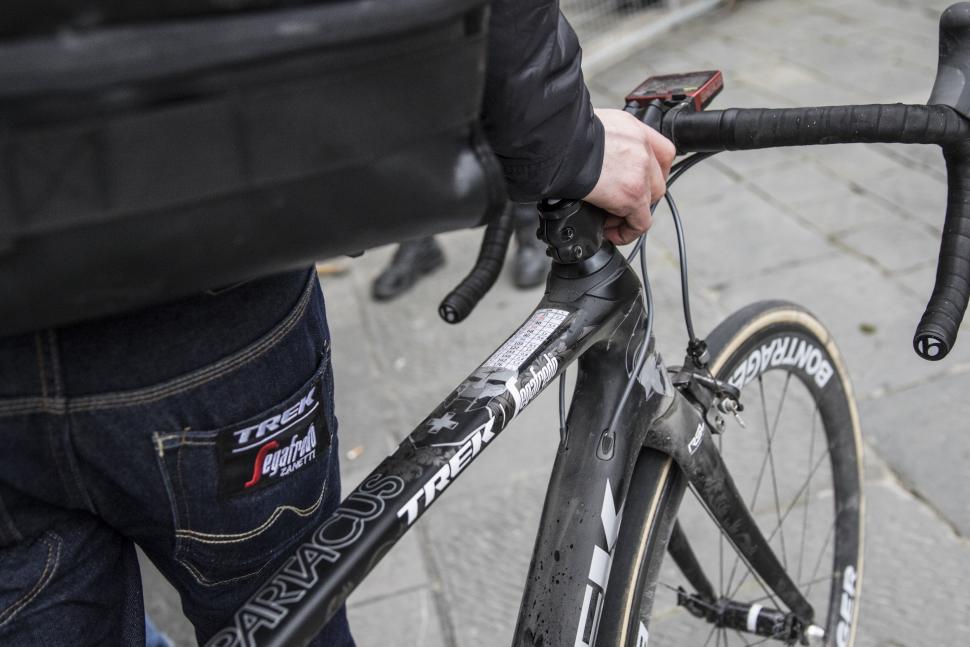 Trek Domane 2016 top tube detail – ©Paolo Ciaberta (Image Credit: Paolo Ciaberta)
The wheels used were Bontrager’s Aelous 5s (Bontrager being a Trek-owned brand) with 50mm-deep carbon rims, and the groupset was Shimano’s top-level Dura-Ace 9000 – the mechanical version, as mentioned above. Trek-sponsored WorldTour team Lidl-Trek continues to rely on Bontrager components, including the Aeolus wheel range.
Like the majority of the WorldTour peloton in 2016, Cancellara used rim brakes. The UCI (cycling’s world governing body) allowed disc brakes on a trial basis in late 2015, but the trial was temporarily suspended in April 2016 after safety concerns. The brakes on Cancellara’s Domane were direct mount with each arm attached directly on to the frame/fork rather than via a central bolt. No Domane available to the public at the time took direct mount brakes, so this was a notable new feature.
The rim brake version of the Domane SLR had room for 28mm tyres, while a disc brake version was also available with clearance for tyres up to 32mm – positively roomy for bikes at the time. These days, even aero road bikes often come with this amount of clearance.
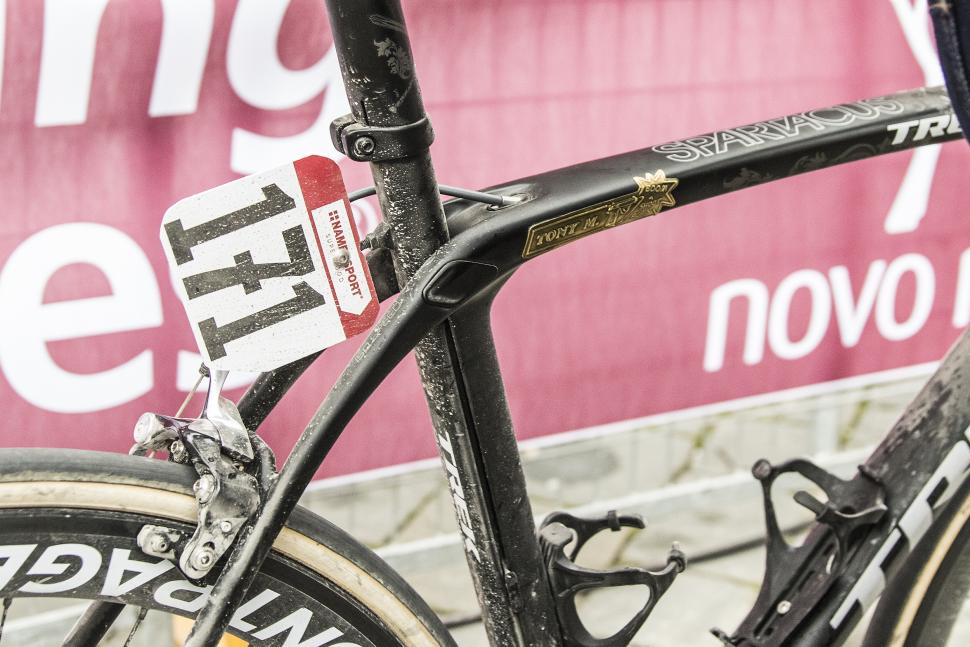 Trek Domane 2016 de-coupler close up – ©Paolo Ciaberta (Image Credit: Paolo Ciaberta)
The IsoSpeed Decoupler was updated with the addition of a front IsoSpeed decoupler to reduce vibrations further. A slider had also been introduced on Domane SLR models that allowed riders to adjust the level of damping offered by the rear IsoSpeed.
We reviewed the Trek Domane SLR 6, and David Arthur said at the time: “The Domane just got even better. It’s smoother and more comfortable than the original, and fast and fun as well”.
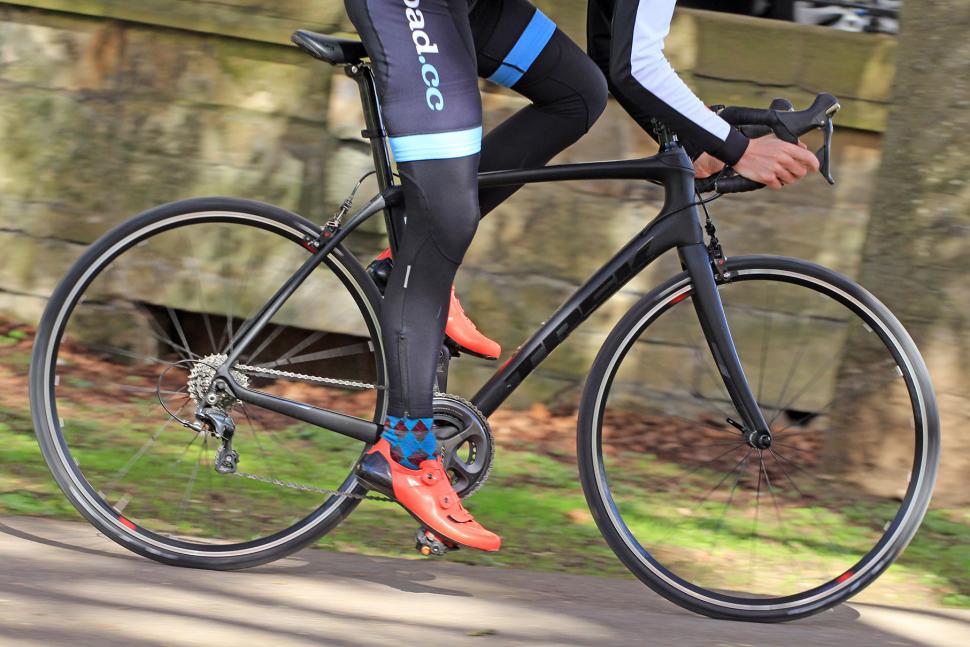 Trek Domane SLR 6 – riding 1 (Image Credit: Farrelly Atkinson)
The Domane still exists in Trek’s range – it’s described as an all-road bike these days – but we now see Lidl Trek opting for the Trek Madone at these spring classics.